Launchpad

Launchpads are decentralized platforms that facilitate early-stage fundraising for new Web3 projects through Initial DEX Offerings (IDOs). They provide investors with curated access to token sales while offering startups a community-driven capital injection. In 2026, launchpads have evolved into full-stack incubators, focusing on project quality and long-term sustainability. Follow this tag for the latest in token distribution models, tier-based participation, and the emergence of the next generation of "unicorn" protocols across various blockchain ecosystems.

2909 Articles
Created: 2026/02/02 18:52
Updated: 2026/02/02 18:52
10 Best Crypto Exchange for Beginners In 2025

10 Best Crypto Exchange for Beginners In 2025

As you step into the world of cryptocurrency, finding the best crypto exchange can transform your trading experience. The right platform not only simplifies buying and selling but also ensures your journey is secure, user-friendly, and rewarding. Whether you’re exploring the best crypto app for convenience or the best crypto trading platform for advanced tools, choosing wisely can set you up for success. In this guide, we’ll walk you through the top exchanges tailored for beginners, highlighting features that matter most, like trust score, security, and supported coins. Ready to take the first step toward confident crypto trading? Keep reading to become an informed investor. Best Crypto Exchanges, Platforms, and Apps Exchange Trust Score Rating Trading Fees (Maker/Taker) Supported Coins Key Security Features Best For Binance 9.9 / 10 Up to 0.1% / 0.1% 350+ Proof of Reserves (PoR), 2FA, SAFU Fund Massive coin selection and deep liquidity. Bybit 9.4 / 10 Up to 0.1% / 0.1% 1000+ PoR, Cold Storage, 2FA Derivatives trading and a user-friendly app. Gate.io 9.7 / 10 Up to 0.2% / 0.2% 4,000+ PoR, Cold Storage, Bug Bounties The widest variety of altcoins. Coinbase 9.8 / 10 Up to 0.4% / 0.6% 250+ PoR, Cold Storage, FDIC Insurance (USD) Simplicity and regulatory compliance. OKX 9.5 / 10 Up to 0.08% / 0.1% 300+ PoR, 2FA, Cold Wallet All-in-one platform with low fees. Bitget 9.4 / 10 Up to 0.1% / 0.1% 800+ PoR, Protection Fund, Cold Storage Copy trading and social trading features. Kraken 9.8 / 10 Up to 0.16% / 0.26% 570+ PoR, Cold Storage, 2FA, Platform Bug Bounty Top-tier security and excellent support. MEXC 9.6  / 10 0.0% / 0.0% (Spot) 3,000+ PoR, Cold Storage, 2FA Zero-fee spot trading and a huge coin list. KuCoin 9.3 / 10 Up to 0.1% / 0.1% 1,000+ PoR, 2FA, Multi-Layer Encryption Finding new and emerging “crypto gems.” Crypto.com 9.7 / 10 0%-2.99% (Varies) 250+ PoR, Cold Storage, 2FA, Insurance Large ecosystem with a crypto debit card. 10 Best Crypto Exchanges in 2025 – Our Top Picks Your choice of the best crypto app or best bitcoin exchange can significantly impact your trading success. With so many options available, it’s essential to focus on platforms that offer security, low fees, and a seamless user experience. Below, we’ve outlined the 10 best crypto exchanges in 2025, each excelling in key areas to meet diverse trading needs. 1. Binance – Best for Massive Coin Selection and Deep Liquidity Launched in 2017, Binance has quickly grown into the world’s largest cryptocurrency exchange by trading volume. With over 350 cryptocurrencies and trading pairs available, it caters to a diverse range of traders, from beginners to professionals. Binance operates in more than 100+ regions with over 275+ million users, making it a truly global platform for crypto trading. The platform is renowned for its low trading fees, starting at just 0.1%, and its robust liquidity ensures smooth transactions even for high-volume trades. Binance also offers advanced trading options, including spot, margin, futures, and options trading, making it a versatile choice for all trading strategies. Security is a top priority, with features like two-factor authentication (2FA) and Binance’s Secure Asset Fund for Users (SAFU) to protect user funds. Pros & Cons of Binance Pros Cons Low trading fees starting at 0.1%. Not available in some regions like the U.S. Over 350 cryptocurrencies and trading pairs. Complex interface for beginners. High liquidity for seamless transactions. Customer support can be slow at times. Advanced trading options (spot, futures, etc.) Regulatory scrutiny in certain jurisdictions. Strong security measures, including SAFU. User Score9.9 Promotion100 USDT Sign-Up Bonus-20% Trading FeesClaim RewardBinance Review 2. Bybit – Best for Advanced Derivatives Trading and User-Friendly Interface Bybit launched in March 2018 under the leadership of Ben Zhou and quickly became a leading cryptocurrency exchange. It serves millions of users in over 160 countries, offering a platform that combines advanced trading tools with an easy-to-use interface. Traders rely on Bybit for its high-leverage derivatives trading, which goes up to 100x. The platform also supports spot trading, staking, copy trading, and passive income opportunities. Bybit’s trading engine processes orders quickly and ensures minimal downtime, even during high market activity. Its design makes it accessible to both beginners and experienced traders. Pros & Cons of Bybit Pros Cons Offers high-leverage derivatives trading (up to 100x). Limits access in regions like the U.S. Provides an intuitive interface for all users. Includes fewer spot trading pairs than some competitors. Delivers multiple passive income options like staking. Experiences occasional delays in customer support during busy times. Implements strong security with cold storage and real-time monitoring. Faces regulatory restrictions in certain areas. User Score9.7 Promotion30,050+ USDT Sign-Up Bonus-30% Trading FeesClaim RewardBybit Review 3. Gate.io – Best for Altcoin Variety and Early Project Access You’ll find Gate.io, established in 2013, to be one of the most trusted crypto exchanges in the industry. Known for its extensive selection of altcoins, Gate.io supports over 1,700 cryptocurrencies and thousands of trading pairs, making it a top choice for traders seeking access to emerging tokens and diverse markets. As one of the best crypto trading platforms, Gate.io offers a wide range of features, including spot trading, margin trading, futures, staking, liquidity mining, and a startup launchpad for early project access. The platform also provides a Web3 wallet, enabling users to interact with decentralized applications and manage assets across multiple blockchains. Its competitive fees and earning opportunities make it appealing to both beginners and experienced traders. For those looking for the best app for crypto trading, Gate.io’s mobile app delivers access to all its features, including trading, staking, and project launches, though its interface may feel crowded for new users. With its long-standing reputation and robust security measures, Gate.io also ranks among the best bitcoin exchanges, offering a secure and reliable environment for trading Bitcoin and other cryptocurrencies. Pros & Cons of Gate.io Pros Cons Offers one of the largest selections of cryptocurrencies. Interface can feel crowded for new users. Competitive fees with discounts for GT token holders. Regional restrictions apply in some countries. Provides staking, liquidity mining, and early project access. Withdrawal fees can be higher for certain assets. Advanced security features, including cold storage and multi-factor authentication. Mobile app navigation is less intuitive compared to competitors. User Score9.7 Promotion10,000 USDT Sign-Up Bonus-30% Trading FeesClaim RewardGate.io Review 4. Coinbase Exchange – Best for Regulated Spot Trading and Deep Liquidity Coinbase Exchange has been a market leader since 2012, offering a secure and regulated platform for cryptocurrency trading. Known for its compliance with global regulations, Coinbase provides one of the deepest liquidity pools among crypto spot exchanges, making it ideal for both institutional and individual traders. As one of the best crypto trading platforms, Coinbase features a dynamic fee structure that rewards high-volume trading.  The platform also supports advanced trading through its FIX/REST APIs and WebSocket feeds, ensuring seamless order execution and real-time market data access. With its acquisition of LMX Labs, Coinbase has expanded into the futures market, offering regulated derivatives trading under the Coinbase Derivatives brand. For those looking for the best app for crypto trading, Coinbase delivers a user-friendly mobile experience, allowing traders to manage portfolios, monitor markets, and execute trades effortlessly. Its strong focus on security and compliance also places it among the most trusted crypto exchanges, providing a safe environment for buying, selling, and holding Bitcoin and other cryptocurrencies. Pros & Cons of Coinbase Pros Cons Regulated platform with deep liquidity. Higher fees compared to some competitors. Beginner-friendly interface and mobile app. Limited altcoin selection. Advanced APIs for institutional traders. Fewer earning opportunities like staking. Access to regulated futures markets. Regional restrictions in certain countries. User Score9.8 Promotion200 USDT Sign-Up Bonus-10% Trading FeesClaim RewardCoinbase Review 5. OKX – Best for Advanced Trading and Web3 Integration If you’re looking for a platform that combines advanced trading tools with cutting-edge features, OKX is the perfect choice. Since its launch in 2017, OKX has grown into a global leader in cryptocurrency trading, offering support for over 400 cryptocurrencies and a wide range of trading options, including spot, futures, margin, and options trading. What sets OKX apart is its Web3 ecosystem, which gives you access to a non-custodial OKX wallet, an NFT marketplace, and DeFi integration. These features allow you to explore decentralized finance, trade NFTs, and manage your digital assets with ease, even if you’re new to crypto or getting started with Web3 wallets. OKX also prioritizes your security, with measures like Proof of Reserves, two-factor authentication, and cold storage to keep your funds safe. If you’re a cost-conscious trader, you’ll appreciate OKX’s competitive fees, starting at just 0.08% for spot trading makers and 0.10% for takers. The platform also offers advanced tools like trading bots and copy trading, so you can automate your strategies or follow expert traders to enhance your trading experience. Pros & Cons of OKX Pros Cons Low trading fees for spot, futures, and options. Complex interface may overwhelm beginners. Advanced tools like trading bots and copy trading. Limited fiat deposit options compared to competitors. Comprehensive Web3 ecosystem with OKX wallet and NFT marketplace. Restricted in certain regions, including Canada and the USA. Strong security measures, including Proof of Reserves and cold storage. Advanced features may require a learning curve for new users. User Score9.5 Promotion10,000 USDT Sign-Up Bonus-30% Trading FeesClaim RewardOKX Review 6. Bitget – Best App for Crypto Trading and Trusted Exchange Bitget, launched in 2018, stands out as one of the most trusted crypto exchanges, offering a secure and feature-rich platform. With support for over 800 cryptocurrencies, it provides diverse trading options, including spot, futures, and margin trading. Recognized as the best app for crypto trading, Bitget’s mobile platform delivers seamless functionality, allowing you to trade, monitor markets, and manage portfolios on the go.  Its standout copy trading feature enables users to replicate strategies from top traders, making it ideal for both beginners and experts. For a deeper look at platforms that excel in this area, check out the best crypto copy trading platforms. Bitget prioritizes security with Proof of Reserves and a Protection Fund, ensuring user assets remain safe. Its advanced tools, trading bots, and APIs further enhance the trading experience for professionals. Pros & Cons of Bitget Pros Cons Copy trading for beginners and experts. Limited availability in certain regions. Supports over 800 cryptocurrencies. Advanced features may overwhelm new users. Strong security measures, including Proof of Reserves. Withdrawal fees vary by asset. User-friendly app for trading on the go. Customer support response times can vary. User Score9.4 Promotion6,200 USDT Sign-Up Bonus-20% Trading FeesClaim RewardBitget Review 7. Kraken – Best Crypto Exchange for Beginners and Advanced Traders If you’re looking for the best crypto exchange for beginners, Kraken is a fantastic choice. Established in 2011, Kraken has built a reputation as one of the most trusted and secure platforms in the crypto space. With support for over 570 cryptocurrencies and availability in 190+ countries, Kraken offers a user-friendly experience for newcomers while providing advanced tools for seasoned traders. Kraken’s intuitive interface makes it easy for you to buy, sell, and trade NFTs, whether you’re on desktop or mobile, especially if you need a clear, step-by-step guide on how to buy NFTs. For advanced users, Kraken Pro offers features like margin trading with up to 10x leverage, futures contracts, and deep liquidity for large-volume trades. The platform also emphasizes security, with robust measures like cold storage and two-factor authentication to protect your assets. Additionally, Kraken provides educational resources to help you understand blockchain, trading, and crypto concepts, ensuring you feel confident every step of the way. Pros & Cons of Kraken Pros Cons User-friendly interface for beginners. Higher fees on the standard platform. Advanced tools like margin trading and futures. Limited availability in some regions. Supports over 570 cryptocurrencies. Advanced features may require a learning curve. Strong security measures, including cold storage. Customer support response times can vary. 8. MEXC – Best for High-Leverage Trading MEXC is one of the most trusted crypto exchanges that you can invest in in 2025. The exchange was launched in 2018 by a team of blockchain enthusiasts and has since become a global leader, serving traders in over 170 countries. Known for its extensive cryptocurrency offerings, MEXC supports over 3,000 digital assets and 2,600+ spot pairs, making it the best platform for altcoin enthusiasts. With trading fees as low as 0.00% for makers and 0.05% for takers, MEXC is one of the most cost-effective exchanges for both spot and futures trading. The platform also offers leverage of up to 500x, catering to high-risk takers looking to maximize their trading potential. For beginners, MEXC provides demo accounts and copy trading features, allowing you to practice and learn from experienced traders. Security is a priority at MEXC, with measures like cold storage, two-factor authentication, and an insurance fund to protect user assets. While its advanced interface may feel complex for newcomers, the platform’s frequent updates, detailed tutorials, and responsive customer support make it easier for users to adapt and trade confidently. Pros & Cons of MEXC Pros Cons Access to over 3,000 cryptocurrencies. Limited fiat deposit and withdrawal options. Low trading fees for spot and futures markets. Interface can be complex for beginners. High leverage options, up to 500x. Restricted in certain regions, including the U.S. Supports copy trading and demo accounts. Customer support response times can vary. Frequent token listings and early access to new projects. Smaller tokens may have lower liquidity. User Score9.6 Promotion10,000 USDT Sign-Up Bonus-50% Trading FeesClaim RewardMEXC Review 9. KuCoin – Best for Altcoin Access and Flexible Trading KuCoin, launched in 2017, has established itself as one of the most versatile cryptocurrency exchanges globally. Known for its extensive range of supported cryptocurrencies, KuCoin offers access to over 700 digital assets and 1,300+ trading pairs, making it the best platform for altcoin enthusiasts and traders seeking emerging tokens. The platform provides a variety of trading options, including spot, futures, and margin trading, along with advanced tools like trading bots and a peer-to-peer (P2P) NFT marketplace. KuCoin also stands out for its early listings of new and trending cryptocurrencies, giving you the opportunity to explore projects before they gain mainstream attention. KuCoin’s competitive fee structure, starting at 0.10% for both makers and takers, becomes even more attractive when you hold its native token, KCS, which unlocks additional discounts. Beyond trading, KuCoin Earn offers flexible and fixed-term savings plans, staking, and structured financial products to help you grow your crypto holdings. Pros & Cons of KuCoin Pros Cons Access to over 700 cryptocurrencies. Limited availability in some regions. Competitive fees with discounts for KCS holders. Customer support response times can vary. Advanced trading tools, including bots and P2P marketplace. Interface may feel complex for beginners. Early listings of new and trending tokens. Trading fees can be higher for certain pairs. Flexible earning options through KuCoin Earn. Some features may require a learning curve. User Score9.3 Promotion11,000 USDT Sign-Up Bonus-10% Trading FeesClaim RewardKuCoin Review 10. Crypto.com – Best App for Crypto Trading and Buying Crypto.com is widely recognized as one of the best apps for crypto trading and the best place to buy crypto in 2025. With support for over 442 cryptocurrencies and 480+ trading pairs, Crypto.com offers a comprehensive platform for both beginners and experienced traders. Its user-friendly interface and advanced features make it a top choice for anyone looking to trade or invest in digital assets. The platform stands out for its low fees, with maker fees starting at 0% and taker fees as low as 0.15%. Crypto.com also provides a seamless mobile app experience, allowing you to trade, manage your portfolio, and access advanced tools on the go. For those looking to earn passive income, Crypto.com offers staking options with up to 13.74% APY and a crypto-earning debit card for everyday spending. Security is a priority at Crypto.com, with features like 1:1 reserves, $120 million in crime insurance, and self-custody wallet options to protect your assets. Whether you’re a beginner or a seasoned trader, Crypto.com combines accessibility, security, and advanced tools to meet your trading expectations.  Pros & Cons of Crypto.com Pros Cons Supports over 440 cryptocurrencies. Unavailable in New York. Low trading fees with maker fees starting at 0%. No phone support available. User-friendly app for trading and portfolio management. Advanced features may require a learning curve. Offers staking with up to 13.74% APY. Some features may not be available in all regions. Provides a crypto-earning debit card. Fees for fiat deposits and withdrawals can vary. User Score9.5 Promotion1 BTC Worth Sign-Up Bonus-50% Trading FeesClaim RewardCrypto.com Review What Is a Crypto Exchange? A crypto exchange is a digital platform where you can trade digital assets such as Bitcoin, Ethereum, and many others, as explained in a detailed guide on how a cryptocurrency exchange works. These platforms simplify the process of accessing cryptocurrencies, making it easier for you to participate in the digital economy. Exchanges act as a marketplace, connecting buyers and sellers while providing tools to facilitate transactions. They also offer features like price tracking, trading pairs, and secure storage options. When choosing an exchange, consider factors like fees, security, and the range of cryptocurrencies available to ensure it meets your needs. These exchanges act as a bridge, connecting buyers and sellers while providing tools to facilitate transactions. Types of Crypto Exchanges When diving into the world of cryptocurrency, you’ll encounter several types of exchanges. Each serves a unique purpose, and understanding their differences can help you choose the one that fits your needs. Centralized Exchanges (CEXs) When using a centralized exchange, you’re engaging with a platform managed by a company that facilitates cryptocurrency trading. These exchanges are known for their user-friendly interfaces, making them a great choice if you’re new to crypto. They often provide additional features like staking, lending, and customer support to enhance your trading experience. CEXs require identity verification to comply with regulations, which adds a layer of security and trust. They also offer protection measures like crime insurance and custodial services for your funds. However, since these platforms act as intermediaries, you’ll need to trust them to manage your assets securely. Decentralized Exchanges (DEXs) If you prefer more control and privacy, decentralized exchanges might be for you. These platforms operate on blockchain technology, allowing you to trade directly with others without intermediaries. Transactions are automated through smart contracts, but you’ll need to manage your own wallet and private keys. Hybrid Exchanges Combine features of centralized and decentralized exchanges, offering both user-friendly interfaces and greater control over your assets. They let you trade using a familiar, simple platform while maintaining custody of your funds during specific operations. Hybrid exchanges aim to provide faster transactions, better security, and less dependence on third-party intermediaries. This makes them a good choice for traders who want the convenience of CEXs but also value the independence offered by DEXs. Other Variations During your interaction with the best bitcoin exchanges, you’ll come across additional variations that cater to specific needs and preferences: Peer-to-Peer (P2P) Platforms: Allow you to trade directly with other users, often with customizable payment methods and no intermediaries. Instant Swap Services: Enable quick exchanges between cryptocurrencies without the need for an account or extensive verification. Futures and Derivatives Platforms: Focus on advanced trading options like futures contracts and leveraged trading for experienced users. Crypto-to-Crypto Only Exchanges: Specialize in trading between cryptocurrencies without fiat currency support. Should You Use a Broker or a Crypto Exchange? Deciding between a broker and a crypto exchange depends on your goals and how hands-on you want to be with your cryptocurrency investments. Use a Broker if: You prefer simplicity and convenience. Brokers often offer a straightforward way to buy and sell cryptocurrencies, bundling the process into a single transaction. They’re ideal if you’re new to crypto or want to invest without diving into the technical details. However, brokers may charge higher fees and offer fewer cryptocurrency options compared to exchanges. Use a Crypto Exchange if: You want more control and flexibility. Exchanges provide access to a wide range of cryptocurrencies, advanced trading tools, and lower fees. They’re a better fit if you’re comfortable managing your own trades and exploring features like staking or margin trading. Keep in mind, exchanges may require more effort to navigate and secure your assets. Crypto Exchanges Here’s what you can typically expect from using a crypto exchange; Offer a wide selection of cryptocurrencies for trading, including altcoins and emerging tokens. Provide advanced tools like staking, margin trading, and automated trading bots. Typically have lower fees compared to brokers, especially for high-volume traders. Allow you to directly own and manage your cryptocurrencies. Require you to handle your own wallet security and private keys. Traditional Brokers Below are the key characteristics of traditional brokers when it comes to crypto investing; Simplify the process of buying and selling cryptocurrencies, making them beginner-friendly. Often bundle crypto trading with other investment options like stocks and ETFs. Provide a more regulated and secure environment, with added consumer protections. May not offer direct ownership of cryptocurrencies, limiting wallet transfers. Charge higher fees and offer fewer cryptocurrency options compared to exchanges. How to Choose the Best Crypto Exchange Finding the best crypto exchange starts with identifying what matters most to you. If you are new to cryptocurrency, look for platforms that are easy to navigate, offer strong customer support, and provide educational tools. The best place to buy crypto for first-timers often includes exchanges like Coinbase or Gemini, which are known for their simplicity and security. For experienced traders, the best crypto trading platform might include advanced features like margin trading, staking, and access to a wide range of altcoins. Security should be a top priority when choosing the best crypto app. The most trusted crypto exchanges offer robust measures like two-factor authentication, cold storage for funds, and insurance against cyber threats. Additionally, consider the fees associated with trading, deposits, and withdrawals, and check out the best zero fee crypto exchanges to find platforms that maximize your profits. Platforms like Binance and Crypto.com are often regarded as the best bitcoin exchanges due to their competitive fees and extensive features, making them ideal for both beginners and seasoned traders. Your trading style also plays a role in selecting the right platform. If you prefer trading on the go, the best app for crypto trading should provide a seamless mobile experience with all the tools you need. For those who value transparency and trust, focus on platforms with a strong reputation and regulatory compliance.  How to Buy Cryptocurrency (Step-by-Step) Choose a Trusted Platform Start by selecting the best crypto exchange that suits your needs. Look for platforms with a strong reputation, user-friendly interfaces, and robust security measures. If you’re a beginner, consider exchanges like Coinbase or Kraken, which are known for their simplicity and reliability. Create and Verify Your Account Sign up for an account on your chosen platform. Most exchanges will require you to verify your identity by submitting documents like a government-issued ID. This step ensures compliance with regulations and enhances the security of your account. Deposit Funds Add money to your account using a bank transfer, credit card, or other supported payment methods. Be mindful of deposit fees, as they can vary between platforms. Some exchanges also allow you to deposit cryptocurrency directly if you already own some. Select the Cryptocurrency You Want to Buy Browse the available cryptocurrencies on the platform and choose the one you want to purchase. Whether it’s Bitcoin, Ethereum, or another altcoin, ensure you understand the asset before buying. Place Your Order Decide how much you want to invest and place your order. Most exchanges offer options like market orders (buying at the current price) or limit orders (buying at a specific price). Review the transaction details before confirming. Secure Your Investment Once your purchase is complete, transfer your cryptocurrency to a secure wallet. While exchanges offer built-in wallets, using a private wallet gives you more control and reduces the risk of hacks. Risks of Using a Crypto Exchange One of the primary risks of using a crypto exchange is security vulnerabilities. Exchanges are frequent targets for hackers, and breaches can result in the loss of funds. Even with advanced security measures like two-factor authentication and cold storage, no platform is entirely immune to cyberattacks. Additionally, if you leave your assets on the exchange instead of transferring them to a private wallet, you risk losing access if the platform experiences technical issues or shuts down. Another significant risk is regulatory uncertainty. Cryptocurrency regulations vary by country and can change rapidly, potentially affecting the operation of exchanges. Some platforms may face restrictions or even bans in certain regions, leaving users unable to access their accounts or funds. It’s crucial to choose a trusted exchange with a strong compliance record and to stay informed about the legal landscape in your area. Conclusion Choosing the best crypto exchange depends on your individual needs, whether you’re a beginner looking for simplicity or an experienced trader seeking advanced tools. The best crypto exchange for beginners should prioritize user-friendly interfaces, strong security, and reliable customer support, while seasoned traders may value features like low fees, diverse cryptocurrency options, and advanced trading capabilities. By carefully evaluating factors like security, fees, and platform reputation, you can find an exchange that aligns with your goals and provides a secure and efficient way to engage with the cryptocurrency market. FAQs What is the best crypto exchange in 2025?The best crypto exchange in 2025 depends on your needs. For overall features, Binance and Coinbase are top choices, offering a wide range of cryptocurrencies, advanced tools, and strong security. Binance is ideal for experienced traders, while Coinbase is great for simplicity and reliability. Which crypto exchange is best for beginners?The best crypto exchange for beginners is Coinbase. It provides an intuitive interface, educational resources, and excellent customer support, making it easy for newcomers to start trading. Kraken is another beginner-friendly option with strong security and straightforward tools. What is the safest and most trusted crypto exchange?The safest and most trusted crypto exchange is Kraken, known for its robust security measures, including two-factor authentication, cold storage, and regulatory compliance. Coinbase also ranks high for trustworthiness due to its insurance coverage and adherence to regulations. What crypto exchange has the lowest fees?Binance is the crypto exchange with the lowest fees, offering competitive maker and taker fees starting at 0.1%. For high-volume traders, platforms like KuCoin and Bybit also provide low-cost trading options. Which app is best for crypto trading?The best app for crypto trading is Binance for its advanced features, low fees, and wide range of cryptocurrencies. For beginners, the Coinbase app is highly recommended due to its user-friendly design and educational tools. What is the best crypto exchange for altcoins?Binance is the best crypto exchange for altcoins, offering a vast selection of cryptocurrencies, including many emerging tokens. Its advanced trading tools and liquidity make it ideal for altcoin enthusiasts. Can I use a crypto exchange without verifying my identity?Some exchanges, like KuCoin and Bybit, allow limited trading without identity verification. However, to access full features and higher withdrawal limits, most platforms require identity verification for compliance and security. What is the difference between a crypto wallet and a crypto exchange?A crypto wallet is used to store your cryptocurrencies securely, while a crypto exchange is a platform for buying, selling, and trading cryptocurrencies. For maximum security, it’s recommended to transfer your assets from an exchange to a private wallet. The post 10 Best Crypto Exchange for Beginners In 2025 appeared first on NFT Plazas.

Author: Coinstats
Bitmine Scoops Up Another 28,625 Ethereum ($82.1M) as Market Bleeds – Details

Bitmine Scoops Up Another 28,625 Ethereum ($82.1M) as Market Bleeds – Details

Ethereum is fighting to hold the $2,800 level after a brutal correction that has erased more than 45% of its value since late August. The sharp decline has flipped market sentiment decisively bearish, with many traders fearing that ETH has entered a prolonged downtrend. Bulls are struggling to establish a reliable support level, and the lack of strong buy-side reaction so far has only intensified uncertainty. Liquidity continues to thin out across major exchanges, reinforcing the narrative that the market is still deep in a risk-off phase. Related Reading: Anti-CZ Whale Loses Big: $61M in Profit Wiped Out As Ethereum and XRP Longs Collapse Yet, despite the heavy selling pressure and underwhelming price performance, not all major players are stepping back. In fact, some are doubling down. Fresh on-chain data from Lookonchain reveals that Tom Lee’s Bitmine — a well-known crypto-focused investment operation—continues to buy ETH aggressively at current prices. Bitmine has been one of the few entities consistently adding to its position during the downturn, signaling strong conviction that Ethereum remains undervalued in the long term. This divergence between retail fear and whale accumulation is becoming increasingly notable. As ETH hovers around a critical psychological level, the coming days may determine whether this whale’s confidence translates into broader market stabilization or remains an isolated bet against the prevailing trend. Bitmine’s Aggressive Accumulation Signals Confidence According to Lookonchain, Tom Lee’s Bitmine has continued its aggressive accumulation, purchasing another 28,625 ETH worth $82.11 million. This move reinforces the growing narrative that some of the market’s most sophisticated players are positioning for a rebound despite the prevailing fear and relentless selling pressure. Large-scale buying during deep corrections has historically aligned with early reversal zones, and Bitmine’s conviction adds weight to the idea that Ethereum may be approaching a significant turning point. Still, a recovery is far from guaranteed. ETH remains trapped near the $2,800 zone, a level that has acted as a fragile line of defense during this downturn. For momentum to shift, Ethereum must not only hold this area but also reclaim the $3,000 mark, which has now flipped into an important resistance zone. A decisive move above this level would signal that buyers are finally stepping back in with strength, potentially setting the stage for a broader trend reversal. Until then, the situation remains delicate. Bitmine’s accumulation offers a bullish signal, but without confirmation from price structure, Ethereum continues to walk a tightrope. A failure to hold current levels could invite another wave of capitulation, but stability here may spark the rebound whales seem to be anticipating. Related Reading: STH Panic Emerges as Bitcoin Crashes To $81K: Realized P/L Turns Negative For The First Time This Cycle Testing a Major Weekly Support Zone Ethereum’s weekly chart shows the asset sitting on a critical support zone after a steep decline from the $4,800 region. Price has now pulled back to around $2,800, a level that aligns closely with the 200-week moving average—a historically important area where ETH has often found long-term support. This zone previously acted as a launchpad during major market reversals in both 2022 and mid-2023, making its defense crucial for maintaining broader structural strength. The recent breakdown below the 50- and 100-week moving averages highlights the intensity of the current selloff. Momentum clearly shifted in favor of bears over the past weeks, with several large red candles confirming aggressive distribution. However, ETH’s current stabilization attempt above the 200-week MA signals that buyers are finally stepping in, preventing a deeper slide toward $2,400. Related Reading: Bitcoin OG Owen Gunden Deposits Final 2,499 BTC ($228M) to Kraken – Details If Ethereum can hold above this support area and reclaim the psychological $3,000 level, a recovery structure could begin to form. But if the 200-week MA breaks convincingly, the market could face a more prolonged correction. Featured image from ChatGPT, chart from TradingView.com

Author: NewsBTC
Monad's on-chain Launchpad platform has announced that it has completed a $1.1 million funding round to date.

Monad's on-chain Launchpad platform has announced that it has completed a $1.1 million funding round to date.

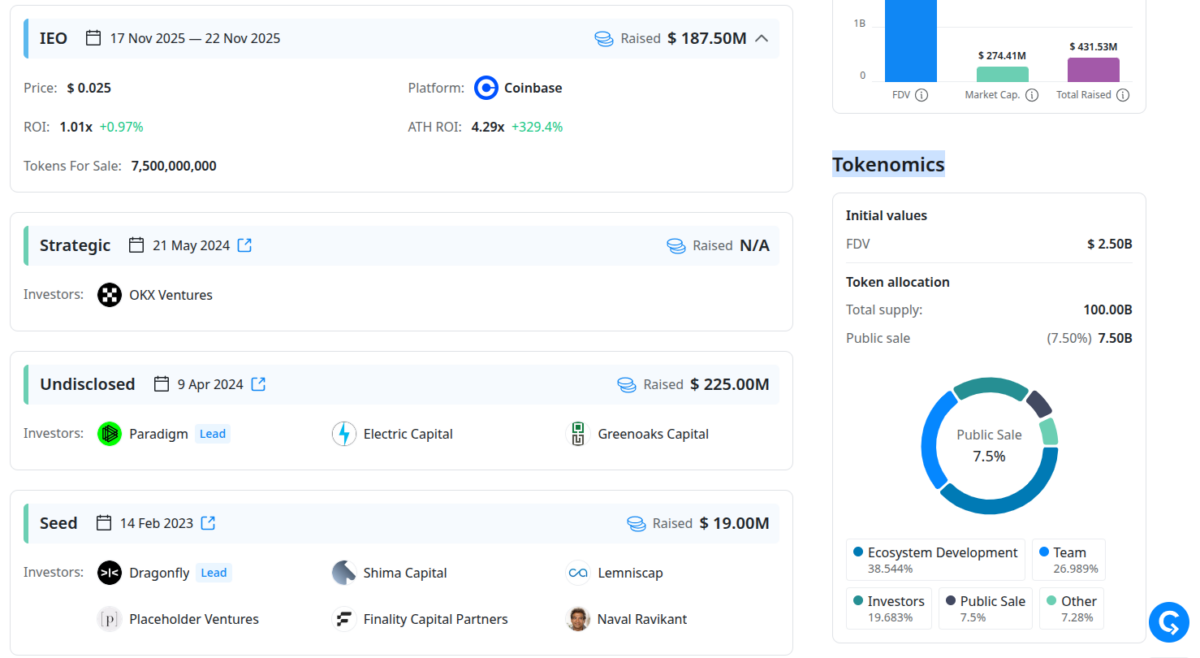
PANews reported on November 25 that Nad.fun has announced the completion of a $1.1 million funding round to date. The most recent seed round was led by Neoclassic Capital, with angel investors including Monad community members, developers, and on-chain traders. Nad.fun is a native Launchpad platform on the Monad chain, designed around community-driven Meme coin mining and leveraged price prediction markets.

Author: PANews
Monad Mainnet Officially Launches, Ushering in a New Era of High-Performance Blockchain Infrastructure

Monad Mainnet Officially Launches, Ushering in a New Era of High-Performance Blockchain Infrastructure

The much-anticipated Monad Mainnet is now live, one of the biggest blockchain rollouts of the year, and the precursor of a highly scalable, parallelized execution environment that would deliver up to 10,000 transactions per second. The message was distributed via the primary social media of the project, and Monad invited the users to visit the recently established ecosystem through the application app.monad.xyz. Monad Mainnet is now live!Check it out here: https://t.co/emewXRKtNEhttps://t.co/emewXRKtNE— Monad (mainnet arc) (@monad) November 24, 2025 Monad, an up-and-coming Layer 1 blockchain, with parallel execution features and Ethereum Virtual Machine (EVM)-compatible infrastructure, has gained massive hype in Web3 because of its ability to achieve higher throughput, quicker transaction finality and developer-friendly architecture.  Governance Takes Shape with the Mon-Genesis Eco Forum After the mainnet announcement, the community was given another significant update with the launch of the Mon-Genesis Eco Forum v0.1, a new governance and community coordination center. The forum promotes early members to get involved in governance proposals, ecosystem project and long-term development planning of Monad. The announcement states that those who contribute early can be in a position to get augmented MON allocations in Q4 and this will serve as an incentive to participate in governance in these formative months.  This layer of the governance indicates that Monad cares about decentralization and making decisions collectively as it starts to become global blockchain platform. Staking MON Goes Live Across Validator Networks The MON token staking is now on and the mainnet is active in various validator portal allowing users to stake their tokens and earn the rewards by ensuring the security of the network. Delegation is offered on the gmonads.com dashboard and in the BlockVision staking interface, with delegators having a variety of choices to allocate stake to a worldwide network of validators. The staking model makes MON holders stakeholders in the chain performance and security. With the expansion of the number of validators and delegation, the decentralized security model of Monad is set to become stronger and more varied, with the capacity to supply the increased throughput that the chain will be designed to provide Curated Vaults Expand DeFi Access for MON and AUSD The other significant item in the ecosystem rollout is the launch of curated DeFi vaults aimed at simplifying the generation of yields to the users.  The MON Vault, managed by Steakhouse, provides an actively maintained strategy to MON holders, and the statistics indicate that a total of 21.6K dollars of value is locked. MVT is issued to participants as a token of deposit, which allows the flow of liquidity and easy accounting. Simultaneously, the Agora EarnAUSD vault run by Upshift has already achieved a total value locked of 5 million dollars. The vault offers a token of liquid yield, EarnAUSD, that allows users to earn yield on AUSD and retain the flexibility to access their assets. These vaults are some of the first DeFi products on Monad and they are the start of a fast-growing financial ecosystem. DeFi at the Speed of Monad Such categories as spot trading, perpetual derivatives, launchpads, lending and borrowing protocols are now part of the Monad eco system. Having numerous applications within each category, DeFi Teams have started implementing applications that are suited to the parallel execution model of Monad.  The early users will be able to visit six spot trading platforms, two perp trading venues, five launchpad and four lending/borrowing protocols.

Author: Coinstats
Irreverent memecoin inspired by World Liberty founder rallies 130% after Trump-connected crypto project’s endorsement

Irreverent memecoin inspired by World Liberty founder rallies 130% after Trump-connected crypto project’s endorsement

World Liberty, the crypto project linked to President Donald Trump’s family, said it would invest in the SPSC memecoin.

Author: The Block
Pump.fun’s $436M Withdrawal Sparks Alarm as Memecoin Momentum Fades

Pump.fun’s $436M Withdrawal Sparks Alarm as Memecoin Momentum Fades

Pump.fun, the Solana-based memecoin launchpad, has withdrawn more than $436 million in stablecoins following the record October crypto market crash that disrupted trading activity and reduced the platform’s monthly revenue. According to blockchain data provided by Lookonchain, since October 15, Pump.fun transferred $436 million in USDC to the crypto exchange Kraken, which suggests that its […]

Author: Tronweekly
From pumps to dumps: Pump.fun transfers large stablecoin sums as PUMP token goes flat

From pumps to dumps: Pump.fun transfers large stablecoin sums as PUMP token goes flat

Memecoin launchpad Pump.fun is drawing scrutiny from crypto investors amid declining platform revenue, according to blockchain data.

Author: Crypto.news
ETH Hits 364 TPS Avg While Traders Watch Key Discount Zone

ETH Hits 364 TPS Avg While Traders Watch Key Discount Zone

The post ETH Hits 364 TPS Avg While Traders Watch Key Discount Zone appeared on BitcoinEthereumNews.com. Ethereum is entering a pivotal phase as its network processes record transaction loads, even while net supply turns modestly inflationary again. At the same time, traders highlight a repeating wave pattern with a fresh “discount zone” on the chart, framing the current pullback as a potential launchpad for the next major move. Ethereum Network Sets New TPS Record as Layer 2s Lead Activity The Ethereum ecosystem has set a new record for daily average transactions per second, according to data cited by ChainCatcher from growthepie. Over the past 7 days, average daily TPS reached 364.52, while peak throughput hit 24,192 TPS, underscoring how much activity is now flowing through the network’s broader stack. Ethereum Daily TPS Chart. Source: Joseph Young/growthepie.com At the same time, Layer 2 solutions accounted for about 95.35 percent of total TPS, highlighting their growing role in handling user demand and scaling workloads off the main chain. In addition, the Perp DEX Lighter contributed a significant share of this traffic, further reinforcing the shift of trading and derivatives activity toward Ethereum’s Layer 2 market. Ethereum Supply Turns Net Positive Over the Past Week Ethereum’s supply has ticked higher over the last seven days, with net issuance rising by 18,019 ETH, according to data from Ultrasound.money. The increase lifts the total supply to 121,234,582 ETH and reflects an annualized growth rate of about 0.776 percent. At the same time, the figures show Ethereum running in a mildly inflationary mode after recent stretches of low on-chain fees and slower burn activity. The move contrasts with earlier periods when strong demand pushed more ETH to be burned than issued, briefly turning the asset deflationary. Ethereum Chart Highlights Repeating Wave Structure Meanwhile, Ethereum’s chart shows a recurring three-wave pattern that the analyst labels as ignition, correction and expansion. The structure appears…

Author: BitcoinEthereumNews
Monad Price Down 15% in First Hours of Mainnet Launch, Listings

Monad Price Down 15% in First Hours of Mainnet Launch, Listings

Monad's mainnet went live on November 24 with MON trading at $0.024, down 15% from pre-market levels, as analysts debate weak ICO demand and airdrop dynamics. The post Monad Price Down 15% in First Hours of Mainnet Launch, Listings appeared first on Coinspeaker.

Author: Coinspeaker
Next Crypto to Explode: Best Wallet Token Tipped for 100x Gains

Next Crypto to Explode: Best Wallet Token Tipped for 100x Gains

Enjoy the videos and music you love, upload original content, and share it all with friends, family, and the world on YouTube.

Author: Blockchainreporter