Stablecoins

Stablecoins are digital assets pegged to a stable reserve, such as the US Dollar or Gold, to minimize price volatility. Serving as the primary medium of exchange in Web3, tokens like USDT, USDC, and PYUSD facilitate global payments and DeFi liquidity. In 2026, the focus has shifted toward yield-bearing stablecoins and compliant stablecoin frameworks under global regulations like MiCA. This tag covers the intersection of traditional finance (TradFi) and crypto through stable on-chain liquidity solutions.

23086 Articles
Created: 2026/02/02 18:52
Updated: 2026/02/02 18:52
The old public chain Kadena launched a $50 million incentive plan, betting on whether RWA is the solution or a repeat of the same mistakes

The old public chain Kadena launched a $50 million incentive plan, betting on whether RWA is the solution or a repeat of the same mistakes

Recently, Kadena, a well-established public chain founded in 2016, announced the launch of an incentive plan of up to US$50 million. This move seems to be intended to return to the spotlight of the cryptocurrency market through the current popular RWA track.

Author: PANews
Shopify to pilot USDC payments via Coinbase and Stripe

Shopify to pilot USDC payments via Coinbase and Stripe

Shopify will begin letting merchants accept stablecoin payments in USDC starting later this month. The move was first reported by Fortune on June 12 and marks the company’s most extensive crypto integration to date. Select U.S. merchants will be able…

Author: Crypto.news
Coinbase Research Report: Three Major Themes of the Crypto Market in the Second Half of 2025

Coinbase Research Report: Three Major Themes of the Crypto Market in the Second Half of 2025

By David Duong Compiled and edited by: BitpushNews The trend of companies purchasing crypto assets with leveraged financing may trigger systemic risks in the medium and long term, such as

Author: PANews
Trapped in the BTC invisible trader conspiracy theory? Uncovering Tether’s Bitcoin strategy

Trapped in the BTC invisible trader conspiracy theory? Uncovering Tether’s Bitcoin strategy

From Bitcoin reserve asset allocation to mining business, from ecological investment to infrastructure construction, Tether is penetrating deeply into the nerve center of the new global financial order. Because of Tether's deep penetration in the Bitcoin system, its actions have also triggered more and more conspiracy theories and heated discussions overseas, questioning whether it has artificially pushed up the price of Bitcoin by continuously issuing USDT, and built a "closed-loop bubble" with Bitcoin reserves, gold support and USDT issuance.

Author: PANews
Stablecoin Surge: Market Cap Hits Record $228B in 2025 Amid Trading Boom and Trump-Era Clarity

Stablecoin Surge: Market Cap Hits Record $228B in 2025 Amid Trading Boom and Trump-Era Clarity

The stablecoin market is booming again in 2025, with total market capitalization reaching a new all-time high of $228 billion, according to a report by CryptoQuant. That marks a $33 billion increase so far this year, a 17% rise, driven by renewed crypto trading activity, growing use in payments, and increased regulatory clarity in the United States under President Donald Trump. Source: CryptoQuant . USDT and USDC Lead $33B Market Cap Jump According to the report, Tether (USDT) and Circle’s USDC continue to lead the market. USDT now holds a $155 billion market cap, up $18 billion year-to-date. USDC has gained $17 billion, climbing to a record high of $61 billion, an increase of 39% since January. On centralized exchanges, stablecoin reserves are also surging. The total value of ERC-20 stablecoins held on exchanges has reached $50 billion. Stablecoins are booming again. Market cap hit a record $228B, up $33B (+17%) in 2025. Driven by rising trading activity, growing payment use, and clearer U.S. regulation under Trump. pic.twitter.com/76zKj49UWB — CryptoQuant.com (@cryptoquant_com) June 12, 2025 USDC reserves in particular have grown 1.6 times in 2025 alone, now totaling around $8 billion. This influx supports deeper liquidity for crypto markets. The report also noted that stablecoins are bouncing back in the yield-bearing segment. These are stablecoins that pay interest to holders, often used in DeFi. The value of staked stablecoins has reached $6.9 billion, up 28% since late May. Most of that growth has come from rising demand for sUSDe and sUSDs, which gained $1.23 billion and $700 million in market cap, respectively. A recent report from on-chain data platforms Artemis and Dune shows broader user adoption. According to the report, titled “The State of Stablecoins 2025,” active stablecoin wallets rose from 19.6 million to 30 million over the past year, a 53% increase. The report said the data “suggests wider user engagement” and pointed to stablecoins becoming a key part of digital finance. It also noted that stablecoins are increasingly used in decentralized finance (DeFi), gaming, and NFTs. “Stablecoins have emerged as a bridge between traditional finance and crypto,” it said, “and are becoming a core piece of payment and settlement infrastructure.” This surge in usage is also supported by the rise in real-world payment activity. Data from Artemis shows $94.2 billion in stablecoin transactions were settled between January 2023 and February 2025. Business-to-business (B2B) payments made up the largest chunk, reaching an annual run rate of $36 billion. Card-linked payments using stablecoins crossed $13 billion in volume. Stablecoin Legislation Gains Ground as Tech and Finance Giants Pile In Increased demand has also come alongside progress on the regulatory front. For example, the U.S. Senate advanced the “Guiding and Establishing National Innovation for U.S. Stablecoins Act” or GENIUS Act this week. Backed by President Trump, the bill is designed to create a federal framework for dollar-backed stablecoins. The legislation would require stablecoins to be fully backed by U.S. dollars or highly liquid assets. It would also mandate annual audits for issuers with over $50 billion in market cap, and include requirements for foreign issuers. 🚨 The U.S. Senate Set for Historic Stablecoin Showdown as GENIUS Act nears final vote. #Stablecoins #GeniusAct https://t.co/ZJ59XzuQcn — Cryptonews.com (@cryptonews) June 11, 2025 The Senate voted 68-30 to invoke cloture on the bill , clearing the way for final debate and vote. “This did not happen by accident,” said Senator Tim Scott, one of the bill’s co-sponsors. “To those who said Washington could not act… let’s prove them wrong.” Treasury Secretary Scott Bessent backed the legislation during a Wednesday Senate hearing. He said stablecoins could play a major role in expanding the use of the U.S. dollar globally. “I think $2 trillion is a very reasonable number,” Bessent said, referring to an estimate that the stablecoin market could exceed that level by 2028. “I could see it greatly exceeding that.” 🇺🇸 BREAKING – U.S. Treasury Secretary Bessent: – Stablecoin regulations backed by U.S. Treasuries will expand global USD usage – We could see stablecoin demand exceed $2 TRILLION This is massive for crypto. Regulated stablecoins = institutional trust Institutional trust =… pic.twitter.com/inZh9maAwW — @CryptoELlTES (@CryptooELITES) June 12, 2025 The GENIUS Act appears to be pushing traditional finance further into the stablecoin space. Large U.S. banks, including JPMorgan, Citigroup, Wells Fargo, and Bank of America, are reportedly exploring a joint stablecoin project. Meanwhile, USDC issuer Circle went public earlier this month, with shares jumping 160% on their first day of trading . 🔴 @Circle the company behind the USDC stablecoin, made a dramatic entrance on the NYSE with its shares surging as much as 160% during its trading debut. #Circle #NYSE https://t.co/EJQJ4Yy3m3 — Cryptonews.com (@cryptonews) June 5, 2025 Tech firms are also watching closely. According to Fortune , Apple, Google, Airbnb, and Elon Musk’s X are all exploring stablecoin integrations. Google has already processed two stablecoin payments. 🍎 Apple, X, and Airbnb are in early talks with crypto firms to integrate stablecoin payments. #apple #google #stablecoin https://t.co/gmEbx3i4PN — Cryptonews.com (@cryptonews) June 6, 2025 Airbnb has held talks with Worldpay to cut credit card fees using stablecoins. X is reportedly planning to include stablecoins in its X Money app.

Author: CryptoNews
PA Daily | Ant Group will apply for stablecoin licenses in Hong Kong and Singapore; X platform recently froze multiple crypto-related accounts

PA Daily | Ant Group will apply for stablecoin licenses in Hong Kong and Singapore; X platform recently froze multiple crypto-related accounts

Amber Group, Spartan Group and other institutions participated in this round of Plasma deposit activities; DWF Labs called on NEAR to reduce the inflation rate to 2.5%. If it is achieved, it will purchase an additional 10 million NEAR; CEO of U.S. Bancorp: We are studying business opportunities in the stablecoin field; China Business News: The virtual currency LABUBU is not officially issued by Pop Mart, and reminds people to be vigilant about the risks of currency speculation.

Author: PANews
Stripe's crypto layout adds a new territory and will acquire crypto wallet company Privy

Stripe's crypto layout adds a new territory and will acquire crypto wallet company Privy

Privy will continue to operate as a standalone product, helping businesses integrate crypto wallets into their user experience.

Author: PANews
PA Daily | Tesla's US stock rose 2.3% before the market opened after Musk regretted his excessive remarks against Trump; Ethereum spot ETF continued to have net inflows for 17 days

PA Daily | Tesla's US stock rose 2.3% before the market opened after Musk regretted his excessive remarks against Trump; Ethereum spot ETF continued to have net inflows for 17 days

Abraxas Capital withdrew a total of 44,612 ETH from CEX in the past 14 hours, worth US$123 million; the daily trading volume of Ethereum derivatives reached US$110 billion, surpassing Bitcoin; Tesla's US stocks rose 2.3% before the market opened; the giant whale 9a56eN unpledged 1.33 million SOL and transferred 380,000 SOL to CEX.

Author: PANews
SEC's "Innovation Exemption" ignites the DeFi engine: DeFi's top players' TVL and coin prices interpret a song of ice and fire

SEC's "Innovation Exemption" ignites the DeFi engine: DeFi's top players' TVL and coin prices interpret a song of ice and fire

The cold winter of US regulation seems to be quietly receding, and a ray of light of "innovation exemption" has shone into the DeFi field. On June 9, the positive signal released by the top SEC officials indicated that the DeFi platform may usher in a more friendly development environment.

Author: PANews
How Tether Co-Founder William Quigley Views Crypto Regulations in Trump’s Second Term

How Tether Co-Founder William Quigley Views Crypto Regulations in Trump’s Second Term

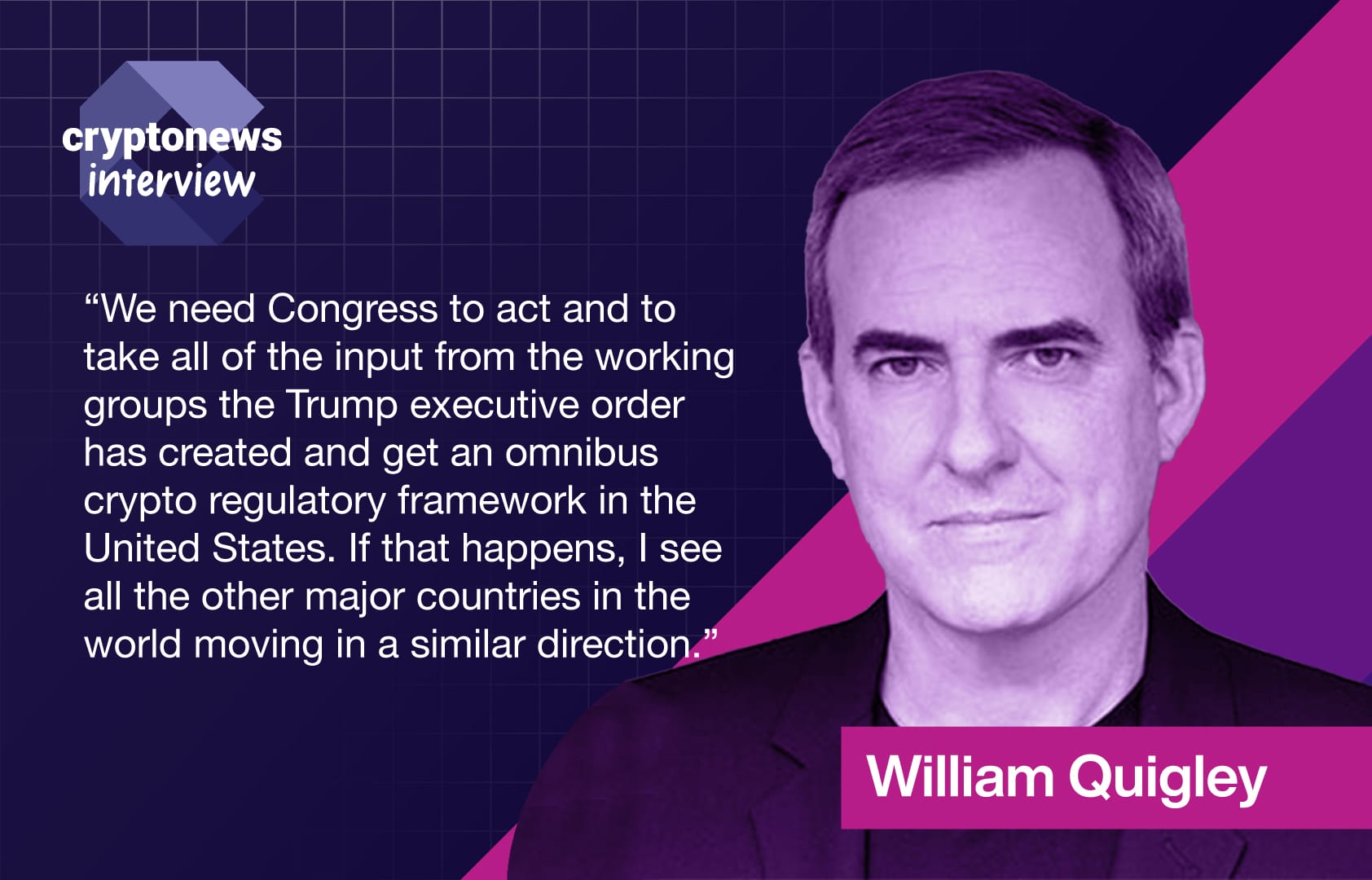
Donald Trump’s re-election has led to expectations of major changes in U.S. cryptocurrency regulations. Recent executive orders suggest that regulatory changes could soon affect the cryptocurrency industry. In an interview with Cryptonews , William Quigley, co-founder of Tether and WAX, shared his insights into what the next four years under Trump could mean for the industry. Quigley explained that the administration’s pro-crypto stance , along with key appointments and legislative efforts, could lead to clearer regulations. He also stressed the role of the private sector in shaping future of cryptocurrency regulations . Trump’s Second Term and the Future of Crypto Regulation Trump’s signals of potential changes in crypto regulations contrast sharply with previous administrations’ inconsistent approaches. Under Trump, there could be an emphasis on installing pro-crypto figures and fostering private sector involvement in virtual assets. Quigley remarked on the shift, “The Obama administration and the Biden administration in terms of how they thought about crypto, they were wary of it and Congress was not moving forward with any regulation. They didn’t seem to see it as important or terribly problematic either, with the exception of one federal agency, the SEC.” “The Trump executive order is very positive towards crypto, the statement that Trump wants the U.S. to be a leader in the crypto industry,” Quigley added. These changes are expected to create a more predictable regulatory environment, reducing uncertainty and supporting market stability. As the administration moves forward, regulatory decisions will determine how the government interacts with the digital currency sector. Establishing the Digital Asset Working Group President Trump’s executive order led to the creation of the President’s Working Group on Digital Asset Markets within the National Economic Council. This group is responsible for reviewing existing regulations and proposing clearer guidelines for the digital asset sector. Quigley shared his views on the impact of these developments, “The Trump executive order has created and get an omnibus crypto regulatory framework in the United States. And if that happens, I see all the other major countries in the world moving in a similar direction.” “To me, [the executive order] seems quite fast because there is so much to consider here, but I think before the Trump term ends, individuals will have ability to use stablecoins much more freely than they do now.,” said Quigley. The working group is tasked with crafting a federal regulatory framework specifically for digital assets like stablecoins , which will involve detailed considerations on how these assets are issued and operated within the U.S. The crypto industry awaits the Working Group’s report, due within 180 days, anticipating targeted legislative proposals that could redefine the regulatory environment and enhance market stability. Quigley Discusses Bank Reluctance The U.S. banking sector remains cautious about cryptocurrency due to unclear regulatory guidance and the potential for severe penalties. This hesitancy persists despite more positive remarks from figures like Federal Reserve Chairman Powell, who recently commended banks for their handling of cryptos . JUST IN: 🇺🇸 Federal Reserve Chair Jerome Powell says "banks are perfectly able to serve crypto customers." pic.twitter.com/IiFJhA8Qg3 — Watcher.Guru (@WatcherGuru) January 29, 2025 William Quigley highlighted the core issues, “Banks are still slow. This might be because they’ve gotten so much crosstalk over the years with what they’re allowed to do and not allowed to do.” “Any positive messaging from the White House and from the Federal Reserve is very good for us,” Quigley further explained. “But for these institutions, I think they need black and white guidance.” He also reflected on the broader implications of this reluctance, “In any major financial institution in the United States, there are thousands, maybe tens of thousands of employees who are primarily just compliance oriented people. There’s all these regulatory bodies at the federal level, and some similar ones at the state level, many of whom either give no guidance on crypto, or who give conflicting guidance.” #Bitcoin took 14 years to reach $100K. $200K could come by summer 2025. pic.twitter.com/KK1iIkAaSS — William E. Quigley (@WilliamEQuigley) January 15, 2025 In traditional banking systems, clarity and compliance remain paramount. The banking sector’s cautious approach to crypto may change in the future, but currently, this wariness serves as a major obstacle to wider acceptance and integration of these technologies. The Need for Congressional Action in Crypto Regulation Cryptocurrency regulation in the U.S. suffers from inconsistencies due to multiple agencies managing different aspects without a unified approach. This fragmented oversight has highlighted the need for a single regulatory body to provide clear and consistent governance. Trump’s recent executive order is seen as a pivotal step that might prompt Congress to establish a unified regulator, which could help reduce confusion and solidify the U.S.’s position in the global crypto market. “We can’t have the IRS calling it property, the CFTC saying, no, it’s a commodity, the SEC saying it’s a security, and then the U. S. Treasury forever saying, no, these are currencies, and that existed for years,” said Quigley.

Author: CryptoNews