Lending

Lending protocols form the backbone of the decentralized money market, allowing users to lend or borrow digital assets without intermediaries. Using smart contracts, platforms like Aave and Morpho automate interest rates based on supply and demand while requiring over-collateralization for security. The 2026 lending landscape features advanced permissionless vaults and institutional-grade credit lines. This tag covers the evolution of capital efficiency, liquidations, and the integration of diverse collateral types, including LSTs and tokenized RWAs.

14280 Articles
Created: 2026/02/02 18:52
Updated: 2026/02/02 18:52
RedStone acquires Coinbase-backed Credora to deliver combined real-time pricing and risk oracle

RedStone acquires Coinbase-backed Credora to deliver combined real-time pricing and risk oracle

The post RedStone acquires Coinbase-backed Credora to deliver combined real-time pricing and risk oracle appeared on BitcoinEthereumNews.com. Key Takeaways RedStone announced the acquisition of Credora to launch a unified real-time pricing and risk oracle for DeFi. The merger will offer transparent, on-chain risk ratings, aiming to drive greater adoption and faster growth in DeFi protocols. Blockchain oracle provider RedStone is acquiring Credora to create the first comprehensive platform offering real-time pricing and risk data for decentralized finance markets, the company announced Thursday. Backed by S&P Global and Coinbase, Credora is a DeFi technology company providing advanced credit risk assessment through a secure, privacy-preserving oracle system. Using trusted execution environments, the platform protects sensitive data while delivering transparent and standardized credit ratings. Pending standard approvals, the combined entity will take the name Credora by RedStone and debut the first oracle-driven framework for rating risks tied to assets and yield strategies in DeFi. With the acquisition, RedStone aims to expand its services for DeFi protocols and users, and make DeFi safer, more transparent, and better prepared for institutional adoption, said co-founder Marcin Kazmierczak in a statement. “Credora is the leading DeFi ratings provider, widely used in Morpho and poised to expand across the broader lending ecosystem,” Kazmierczak stated. “Ratings are a natural extension of our services: we gather and deliver data on-chain, and transparent ratings transform it into actionable intelligence. As DeFi yield strategies grow more complex, users need a simple way to navigate beyond headline APYs. Ratings provide that clarity. This is a foundational step towards making DeFi safer and ready for institutional scale,” he added. Data indicates that rated DeFi strategies, such as Morpho Vaults, have grown up to 25% faster than unrated strategies, demonstrating user demand for risk assessment tools. “We’ve always believed that risk transparency is the cornerstone of sustainable DeFi,” said Darshan Vaidya, founder of Credora. “Joining forces with RedStone allows us to scale…

Author: BitcoinEthereumNews
RedStone to Acquire Credora, Debuts First Oracle-Powered DeFi Risk Ratings

RedStone to Acquire Credora, Debuts First Oracle-Powered DeFi Risk Ratings

RedStone, one of DeFi’s fastest-growing oracle networks, said it will acquire Credora, an on-chain credit-rating platform backed by Coinbase Ventures, S&P and HashKey, in a deal subject to approval. In a press release shared with CryptoNews the firms said the combined product will operate as “Credora by RedStone” and, according to the companies, will introduce the industry’s first oracle-powered risk-rating framework for assets and yield strategies across decentralized finance. The integration aims to give protocols and allocators a single pipe for real-time prices and real-time risk. Company data cited by RedStone indicates DeFi strategies carrying a rating—such as Morpho Vaults—have grown as much as 25%faster than unrated peers, suggesting measurable user demand for standardized risk signals. Deal Details and Product Scope Credora’s ratings methodology is built for crypto markets, assessing collateral composition, liquidity, volatility, governance parameters and market structure. RedStone said it will feed those risk metrics alongside its price oracles, creating a unified interface for protocols to query both price and risk in one call. RedStone explains its feeds have recorded no historical mispricing events, positioning data integrity as a selling point for institutions evaluating on-chain exposure. “This acquisition allows RedStone to expand services for DeFi protocols and users. Today, Credora is the leading DeFi ratings provider, widely used in Morpho and poised to expand across the broader lending ecosystem,” Marcin Kazmierczak, RedStone co-founder, told me. “Ratings are a natural extension of our services: we gather and deliver data on-chain, and transparent ratings transform it into actionable intelligence.” Why It Matters for DeFi DeFi lacks a common language for risk. Traditional ratings firms built models around corporate and sovereign debt; those frameworks often miss crypto-native dynamics like composability, cross-chain bridges and programmatic liquidations. The companies say “Credora by RedStone” is designed for these mechanics, with a Consensus Ratings Protocolintended to update as collateral mixes and liquidity conditions shift. By surfacing standardized scores next to live pricing, lending markets could tune parameters dynamically—for example, adjusting loan-to-value caps, interest bands or reserve factors as underlying risks change—rather than relying on static assumptions or informal heuristics. Institutional Angle Institutional interest in on-chain assets is widening—from stablecoins and tokenized bonds to private credit and reinsurance structures—raising the bar on risk transparency. The firms position the tie-up as a step toward a crypto-native analogue of S&P or Moody’s, with transparency and on-chain verifiability as core design principles. “We’ve always believed that risk transparency is the cornerstone of sustainable DeFi,” Darshan Vaidya, Credora’s founder, said. “Joining forces with RedStone allows us to scale this mission globally for institutions and individuals alike.” Next Steps and Launch Timeline The transition to Credora by RedStone is under way. The companies plan to re-launch public ratings and ship API integrations so risk scores can propagate through RedStone’s feeds to protocols already using its oracles. Credora co-founders Darshan Vaidya and Matt Ficke will join RedStone as strategic advisors to support integration and adoption. If completed, the deal would give on-chain markets a dual lens—price and risk—baked into the data layer, with the goal of making risk management a default feature of DeFi infrastructure rather than an afterthought

Author: CryptoNews
Strategic Redstone Credora Acquisition: Unlocking New Frontiers in DeFi

Strategic Redstone Credora Acquisition: Unlocking New Frontiers in DeFi

BitcoinWorld Strategic Redstone Credora Acquisition: Unlocking New Frontiers in DeFi The decentralized finance (DeFi) world is buzzing with a groundbreaking development: blockchain oracle solutions provider Redstone has officially acquired Credora, a leading DeFi credit specialist. This Redstone Credora acquisition marks a pivotal moment, bringing together two innovative forces at the forefront of digital finance. Credora, notably backed by industry giants like Coinbase Ventures and Standard & Poor’s (S&P), is now integrated into Redstone, promising to reshape how we approach on-chain credit. While the specific financial terms remain undisclosed, the strategic implications for the broader DeFi ecosystem are substantial and far-reaching. What Exactly is the Redstone Credora Acquisition Bringing Together? This significant Redstone Credora acquisition unites a powerhouse in blockchain oracles with a specialist in decentralized credit. Redstone is widely recognized for its modular oracle design, which delivers highly customizable and reliable real-time data feeds. These feeds are crucial for various DeFi protocols, ensuring they operate with accurate and up-to-date information. Credora, on the other hand, has carved out a unique niche by enabling transparent and secure on-chain credit solutions. Their core expertise lies in developing sophisticated models to assess creditworthiness within a decentralized environment, a vital step for the maturation of DeFi lending. This union is poised to create a more robust, integrated, and efficient offering for both users and developers in the decentralized space. Why is This Strategic Redstone Credora Acquisition a Game-Changer for DeFi? The ripple effects of the Redstone Credora acquisition are expected to transform several aspects of the DeFi landscape. This strategic alignment addresses some of the industry’s most pressing needs, particularly in the realm of credit and data. Enhanced Data Integrity and Reliability: Redstone’s robust and customizable oracle infrastructure can now directly power Credora’s advanced credit assessment models. This integration is expected to lead to significantly more accurate, reliable, and timely data for critical lending and borrowing decisions on-chain. Improved Capital Efficiency and Liquidity: By providing more trustworthy and verifiable credit scores on-chain, the combined entity can unlock new avenues for both institutional and retail capital. This fosters a healthier, more liquid lending market where capital can be deployed more efficiently, potentially reducing collateral requirements for reputable borrowers. Broader Market Access and Institutional Adoption: This strategic move could substantially lower the barriers for traditional financial institutions eager to explore DeFi. Offering more secure, transparent, and verifiable credit solutions makes the decentralized space more appealing and less risky for large-scale players. Accelerated Innovation in Lending Products: The synergy between Redstone’s data capabilities and Credora’s credit expertise is expected to accelerate the development of novel and sophisticated credit products. This could include uncollateralized loans, dynamic interest rates based on real-time credit assessments, and new forms of structured finance within DeFi. This integration signals a clear industry trend towards more mature, sophisticated, and interconnected financial instruments, moving beyond simple over-collateralized lending. How Will the Redstone Credora Acquisition Impact On-Chain Credit? The immediate impact on on-chain credit markets from the Redstone Credora acquisition will likely be a gradual but profound shift towards greater sophistication. Currently, much of DeFi lending relies on heavy collateralization due to the difficulty of assessing borrower risk. With Credora’s credit scoring capabilities now enhanced by Redstone’s data oracles, protocols can potentially offer under-collateralized or even uncollateralized loans to trusted entities. This opens up the DeFi ecosystem to a much wider range of financial activities, mirroring traditional finance more closely while retaining the benefits of decentralization. This move is about building trust programmatically. Navigating the Future: Challenges and Opportunities Post-Redstone Credora Acquisition Every significant merger, especially in a rapidly evolving sector like DeFi, comes with its own set of exciting opportunities and inherent challenges. For the Redstone Credora acquisition, the journey ahead will involve careful execution and strategic foresight. Seamless Technological Integration: Harmonizing Redstone’s diverse oracle architecture with Credora’s specialized credit scoring mechanisms will be a paramount focus. Ensuring these complex systems communicate flawlessly and securely is critical for delivering on the promised benefits. Evolving Regulatory Landscape: As DeFi matures and credit solutions become more sophisticated, navigating the continually evolving global regulatory frameworks for digital assets, credit, and data privacy will be a crucial challenge for the combined entity. Compliance will be key to long-term success. Market Education and Adoption: While the benefits are clear to industry insiders, educating the broader market—including potential institutional partners and retail users—on the value proposition of enhanced on-chain credit will be vital for widespread adoption of new products and services. Despite these challenges, the opportunities are immense. This acquisition has the potential to set new industry standards for transparency, efficiency, and trust in decentralized credit. It could catalyze a significant wave of institutional participation in DeFi, moving the ecosystem closer to mainstream financial integration and unlocking unprecedented levels of liquidity and innovation. The future of DeFi credit looks brighter than ever. The Redstone Credora acquisition is undoubtedly a landmark event in the decentralized finance space. By strategically combining Redstone’s cutting-edge oracle technology with Credora’s specialized credit assessment expertise, the newly formed entity is poised to deliver more robust, transparent, and accessible credit solutions. This powerful strategic move not only strengthens Redstone’s market position but also propels the entire decentralized finance ecosystem towards greater maturity, efficiency, and innovation. It’s an exciting time to observe how this powerful synergy unfolds and fundamentally shapes the future of on-chain lending and borrowing. Frequently Asked Questions (FAQs) What is Redstone? Redstone is a blockchain oracle solutions provider known for its modular design, delivering diverse and customizable data feeds to various decentralized applications (dApps) across multiple chains. What does Credora specialize in? Credora is a DeFi credit specialist focused on enabling transparent and secure on-chain credit solutions, primarily by developing sophisticated models to assess creditworthiness in a decentralized manner. Why is the Redstone Credora acquisition important for DeFi? This acquisition is crucial because it merges robust, real-time data provision (Redstone) with specialized credit assessment (Credora), promising more reliable, efficient, and accessible on-chain credit markets. It addresses key challenges in DeFi lending. Will this acquisition impact current DeFi users? While immediate changes might not be apparent, in the long term, users can expect more sophisticated and secure lending/borrowing opportunities. This could lead to better interest rates, broader access to capital, and new types of financial products within DeFi. Who backed Credora before the acquisition? Credora received backing from prominent investors, including Coinbase Ventures and Standard & Poor’s (S&P), highlighting its significant industry recognition and potential. Found this insight into the Redstone Credora acquisition compelling? Share this article with your network and join the conversation about the future of DeFi! Your engagement helps spread vital information across the crypto community. To learn more about the latest decentralized finance trends, explore our article on key developments shaping DeFi lending future growth. This post Strategic Redstone Credora Acquisition: Unlocking New Frontiers in DeFi first appeared on BitcoinWorld and is written by Editorial Team

Author: Coinstats
South Korea Is Fast Becoming One Of Crypto’s Top Trendsetters

South Korea Is Fast Becoming One Of Crypto’s Top Trendsetters

South Korea accelerates crypto regulation with a won-backed stablecoin plan, aiming to set a global blueprint and attract institutional capital.

Author: Blockchainreporter
Arbitrum DRIP program launches to reward productive DeFi activity with ARB tokens

Arbitrum DRIP program launches to reward productive DeFi activity with ARB tokens

Arbitrum has launched the DRIP program to incentivize productive DeFi activity by rewarding users with ARB tokens for leveraging lending and looping strategies across its ecosystem. How Arbitrum DRIP program works Arbitrum (ARB) has launched the DeFi Renaissance Incentive Program…

Author: Crypto.news
What Is DeFi? Inside MakerDAO, DAI, and the Future of Finance

What Is DeFi? Inside MakerDAO, DAI, and the Future of Finance

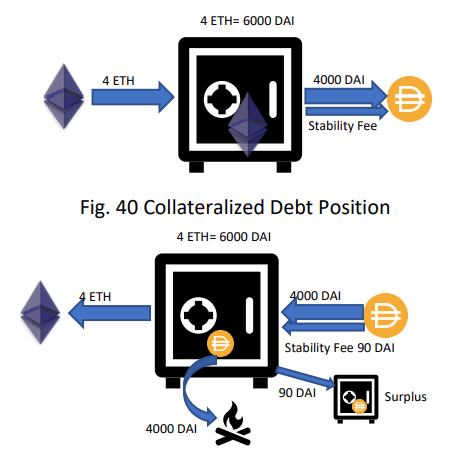
Decentralized Finance (DeFi) is transforming financial intermediation by replacing banks with smart contracts. Platforms like MakerDAO issue DAI, a stablecoin pegged to the US dollar, through overcollateralized crypto loans, governed by MKR token holders. This ecosystem enables lending, savings, and passive income without intermediaries, but also raises challenges for regulation, taxation, and financial stability. MakerDAO’s mechanisms—collateralized debt positions, governance votes, auctions, and external actors like oracles and keepers—keep the system running. Together with platforms like Uniswap, DeFi illustrates both the promise of financial innovation and the complexity of decentralized governance.

Author: Hackernoon
MEME has become a new favorite on the blockchain after its “fever” subsided. What are the popular ICM, CCM, and PM?

MEME has become a new favorite on the blockchain after its “fever” subsided. What are the popular ICM, CCM, and PM?

By Nancy, PANews After the MEME market went silent and on-chain degen sat dormant for a long time, ICM (Internet Capital Market), CCM (Creator Capital Market) and PM (Prediction Market) quietly took over the emotional outlet and are becoming the new focus of funds and narratives. CCM Both Solana and Base have mentioned the concept of CCM (Creator Capital Markets), which is to provide capital market support to creators, such as content creation financing, revenue sharing, community incentives, etc. In the Base ecosystem, the price of Zora, the representative CCM project, continues to rise, with the daily token issuance once exceeding that of Solana, and it continues to update its features, such as the recent launch of short videos. On the Solana side, Pump.fun recently announced the launch of Project Ascend, which will introduce a new dynamic fee mechanism and set a tiered creator fee structure based on the token market value, aiming to improve the sustainability of the ecosystem. The new mechanism will increase creators' income by 10 times the original amount, while also speeding up the processing of CTO (community takeover) creator fee applications, helping the platform attract more streaming creators and startup projects. The program distributed approximately $2.4 million in revenue to creators on the first day of its launch. Meanwhile, Solana has also recently posted several tweets related to Time.fun, a platform that focuses on CCM narratives and recently launched a mobile application, with both iOS and Android versions now available. MITCH MITCH is a live-streaming token launched on Pump.fun. It was created by Mitch, a well-known MEME trader. He gained fame for his early investments in MEME tokens like Milady and Retardio. Currently, Mitch holds 79.3% of MITCH tokens and has pledged never to sell. GMGN data shows that since its launch on September 3, MITCH's market value has exceeded US$42 million, but has now fallen back to around US$19 million, with a 24-hour trading volume of approximately US$14.5 million. ICM ICM (Internet Capital Markets) is a strategic direction that Solana has mentioned publicly many times. In July of this year, it released a related technical roadmap, including optimizing transaction sorting, introducing high-speed networks and consensus upgrades, aiming to become the first blockchain capable of supporting high-frequency trading. Previously, Solana's "Tweet as Token" launch platform, Believe, gained popularity due to its ICM narrative, with its platform token, LAUNCHCOIN, skyrocketing to hundreds of millions of dollars. Recently, WLFI's launch of the USD1 stablecoin hinted at its ICM market presence and announced a partnership with the launch platform BONK.fun, prompting market attention to related assets on the platform. Collector Crypt (CARDS) Collector Crypt is a Solana tokenized Pokémon card platform, officially endorsed by Solana in a tweet. It previously secured seed funding from GSR, Big Brain Holdings, FunFair Ventures, and Genesis Block Ventures. Dune data shows that as of September 4th, its cumulative trading volume exceeded $150 million, generating approximately $9.65 million in fees. Collector Crypt recently launched its presale, with 718 backers depositing 16,500 SOL (approximately $3.4 million). However, the price of the token, CARDS, has plummeted since its launch. GMGN data shows that since its launch on August 30, CARDS's market value has exceeded US$520 million, with a 24-hour trading volume exceeding US$85.1 million. Grailed (MAGIK) Grailed is the first ICM narrative from launch platform Heaven. It is positioned as a crypto platform centered around Pokémon Trading Card Game (TCG) collectibles, where users can purchase and open digital card packs to win real, graded physical cards. All transaction fees and 25% of platform profits are used to repurchase and burn MAGIK tokens. GMGN data shows that as of September 4, MAGIK's market value once rose to more than US$16.5 million, and its 24-hour trading volume exceeded US$1.3 million. Huch (HUCH) Huch, a winning project from the Solana Colosseum hackathon, transforms Counter-Strike 2 (CS2) game skins into digital assets for financial applications, including skin tokenization and collateralized lending. Its token, HUCH, launched on Believe and was heavily promoted by the well-known influencer, him. GMGN data shows that as of September 4, HUCH's market value recently exceeded US$12.8 million, and its 24-hour trading volume reached US$10.7 million. Charizard Capital (ZARD) Charizard Capital combines cultural collections with crypto assets. Through on-chain transactions of ZARD tokens, each transaction will provide funds for the acquisition of PSA-rated Charizard cards. GMGN data shows that as of September 4, ZARD's market value has risen to a maximum of US$7.2 million, with a trading volume of approximately US$3.7 million in the past 24 hours. ToCa.Gg (TCG) ToCa.Gg allows users to pay $20 worth of TCG tokens to win rare Pokémon cards. TCG refers to a collectible card game, where players obtain cards through packs, exchange, or trading. Players then build decks using these cards to compete against each other. GMGN data shows that as of September 4, TCG's market value has risen by more than US$5.8 million, and its trading volume in the past 24 hours was approximately US$800,000. PM Discussions about PMs (Prediction Markets) have been increasing recently. On the one hand, leading platforms like Polymarket and Kalshi have been experiencing significant market activity, particularly with Polymarket recently receiving CFTC approval to return to the US market. On the other hand, emerging platforms like Football.Fun have also rapidly gained popularity, garnering market attention. Flipr (FLIPR) Flipr is an X-platform trading bot designed for the Polymarket and Kalshi prediction markets. Users can trade directly on X using natural language, aiming to make prediction markets more accessible to mainstream users. GMGN data shows that since its launch more than two months ago, FLIPR’s market value has exceeded US$30 million. PrediBot (PREDI) PrediBot is an AI prediction market assistant based on Base, which allows users to create predictions, participate in predictions and earn profits with a simple tweet on the PredictBase platform. GMGN data shows that as of September 4, PCULE’s market value peaked at over US$18 million. Polycule (PCULE) Polycule is a trading bot that runs on Telegram and allows users to trade prediction markets on Polymarket directly through the Telegram interface, without having to access the complex platform interface. GMGN data shows that as of September 4, PCULE's market value reached a maximum of US$16 million. Polyfactual (POLYFACTS) POLYFACTS proposes using prediction markets (such as Polymarket and Kalshi) to verify the authenticity of social media content and is about to launch a real-time prediction AI agent. The project has attracted the attention of the founder of Polymarket. GMGN data shows that as of September 4, PCULE's market value has reached over US$2 million, with a trading volume of approximately US$2.7 million in the past 24 hours.

Author: PANews
Top Analysts Say This DeFi Altcoin Offers Bigger Wealth Potential Than Top Meme Coin Shiba Inu (SHIB)

Top Analysts Say This DeFi Altcoin Offers Bigger Wealth Potential Than Top Meme Coin Shiba Inu (SHIB)

Mutuum Finance (MUTM) is fast becoming the new go-to in the market of decentralized finance (DeFi). According to top experts, its potential for wealth-building might be stronger than that of meme-coin giant Shiba Inu (SHIB). Mutuum Finance’s presale is live right now at stage 6 with tokens at $0.035. The project has already recorded more […]

Author: Cryptopolitan
Shiba Inu Announces 40,453,074 SHIB Giveaway to Celebrate This Historic Milestone

Shiba Inu Announces 40,453,074 SHIB Giveaway to Celebrate This Historic Milestone

Shiba Inu’s ecosystem team has unveiled a special giveaway to celebrate SHIB’s debut on the first-ever cross-chain lending market.  The announcement comes barely a few hours after Chainlink’s flagship project Folks Finance listed Shiba Inu on its cross-chain lending markets. The initiative aims to allow users to lend and borrow SHIB across 12 blockchains, including Polygon, Avalanche, Arbitrum, and Base.  New SHIB Giveaway  Shortly after the announcement, Shiba Inu unveiled a special giveaway to celebrate the historic milestone of its first-ever listing on cross-chain lending markets.  To celebrate the development, the Shiba Inu ecosystem team will reward one lucky community member with $500 worth of SHIB. This is equivalent to 40,453,074 (40.45 million) SHIB tokens, given the asset’s current price of $0.00001236.   Qualification Requirement  To participate in the giveaway, participants must like and repost Folks Finance’s announcement about SHIB’s cross-chain lending market listing.  Users must also follow the official X handles of Folks Finance and that of Shiba Inu. Lastly, participants are mandated to tag three friends in the comment section of the giveaway announcement.  The giveaway, which began yesterday at 07:49 PM (UTC), will run for 48 hours. This implies that the giveaway event will end on September 5, at 7:49 PM (UTC).  xAI Grok to Select Winner Interestingly, Shiba Inu will utilize xAI’s chatbot, Grok, to determine the winner of the giveaway, ensuring transparency and fairness.  According to the announcement, the AI model will randomly select one lucky winner after 48 hours have elapsed. In the meantime, the giveaway has attracted strong participation from the Shiba Inu community. Despite only being unveiled just a few hours ago, the giveaway has 1,300 comments, 1,500 reposts, and 2,100 likes.  This promo is part of an effort to reward loyal Shiba Inu community members and also boost awareness for SHIB’s cross-chain integration into Folks Finance’s lending markets.  Shiba Inu’s move into the cross-chain lending space extends its utility beyond meme culture, positioning the token within blockchain-based financial services.  Besides Shiba Inu, Folks Finance also announced special incentives for users who deposit their SHIB tokens in its lending markets. Depositors are currently earning a 9.08% annual percentage yield (APY).  The incentive is already paying off as the amount of SHIB deposited now stands at $32,000, representing a 28% spike from the $25,000 reported yesterday.

Author: The Crypto Basic
Avalanche activity driven by DEXs, trading bots, whale memecoin speculation

Avalanche activity driven by DEXs, trading bots, whale memecoin speculation

The post Avalanche activity driven by DEXs, trading bots, whale memecoin speculation appeared on BitcoinEthereumNews.com. Smart contract blockchain Avalanche recorded a consistent surge in blockchain activity, as analysts pointed to growing decentralized trading activities and returning crypto whale speculation on the next emerging memecoin. Avalanche’s transaction growth surpassed all other blockchains the past week, rising 66% to 11.9 million transactions across more than 181,000 active addresses, signaling growing investor mindshare focusing on the blockchain. The milestone occurred after a “landmark effort” of the US Department of Commerce, which adopted Avalanche, along with nine other public decentralized blockchains, to publish its real gross domestic product (GDP), Cointelegraph reported on Friday. Despite Avalanche’s growing institutional and governmental adoption, we “cannot at this point attribute this to the US Government adopting Avalanche for its GDP data,” said Nicolai Sondergaard, research analyst at the Nansen crypto intelligence platform. The network’s increasing blockchain activity was mainly driven by decentralized finance (DeFi) traders, miner extractable value (MEV) trading bots and whales speculating on the next big memecoin launch, the analyst told Cointelegraph, adding: “The transaction surge is driven by: 60% DeFi protocol activity (Trader Joe, Aave, Benqi), 25% Automated trading bots and MEV, and 10% Whale trading and memecoin speculation […].” The research analyst explained that the additional 5% of blockchain activity was attributed to blockchain gaming and non-fungible tokens (NFTs). Avalanche, top 5 entities by blockchain users, 180 days. Source: Nansen Related: Avalanche, Toyota Blockchain designing autonomous robotaxi infrastructure DEX trading, “high-balance” whales drove the majority of Avalanche blockchain activity: Nansen Cryptocurrency trading on decentralized exchanges drove the lion’s share of Avalanche’s blockchain activity, with Trader Joe DEX as the “primary driver,” which saw over $333 million worth of Avalanche Wrapped Ether (WETH.e) volume during the past seven days. “Key players” driving this activity included traders on Nansen’s top 100 leaderboard, who made multiple six-figure trades, Sondergaard said. Aave lending…

Author: BitcoinEthereumNews