Lending

Lending protocols form the backbone of the decentralized money market, allowing users to lend or borrow digital assets without intermediaries. Using smart contracts, platforms like Aave and Morpho automate interest rates based on supply and demand while requiring over-collateralization for security. The 2026 lending landscape features advanced permissionless vaults and institutional-grade credit lines. This tag covers the evolution of capital efficiency, liquidations, and the integration of diverse collateral types, including LSTs and tokenized RWAs.

14622 Articles
Created: 2026/02/02 18:52
Updated: 2026/02/02 18:52
Alcohol Still Leads Restaurant Beverage Orders, According To Harris Poll

Alcohol Still Leads Restaurant Beverage Orders, According To Harris Poll

The post Alcohol Still Leads Restaurant Beverage Orders, According To Harris Poll appeared on BitcoinEthereumNews.com. A new Harris Poll reveals millennials and Gen X still drive alcohol sales in restaurants, while Gen Z mixes drinks, formats, and expectations. Alcohol may still be the default for many American diners, but the latest Harris Poll suggests drinking habits are shifting. While older generations continue to reach for beer, wine, and cocktails, Gen Z is redefining what it means to drink out, focusing more on flexibility, aesthetics, and mood than tradition. Millennials are still loyal alcohol buyers when dining out, but Gen Z’s beverage habits are harder to pin down, according to new Harris Poll data. getty What the new Harris Poll reveals about U.S. beverage behavior In a nationally representative survey conducted by Harris in partnership with eMarketer, 36 percent of Americans reported that alcohol is their preferred restaurant beverage, slightly ahead of soda at 29 percent and water at 21 percent. But in practice, the most commonly ordered items are still non-alcoholic: 89 percent said they ordered water in the past 30 days, and 78 percent ordered soda. Alcohol remains a strong presence, with 69 percent of diners saying they ordered at least one alcoholic drink recently. Cocktails topped the alcohol category, followed by beer, spirits, and wine. While the overall preference is clear, the details begin to diverge once you look at generational breakdowns. Millennials still drive alcohol sales, especially with repeat orders Millennials continue to be the most reliable customers for restaurants selling alcohol. Fifty percent say alcohol is their default drink when dining out, compared to just 25 percent of Gen Z. They also reported significantly more repeat orders over the past month—especially for beer, spirits, and wine. This makes millennials a priority for alcohol brands and on-premise sales strategies. Libby Rodney, the Chief Strategy Officer at The Harris Poll, explained it this…

Author: BitcoinEthereumNews
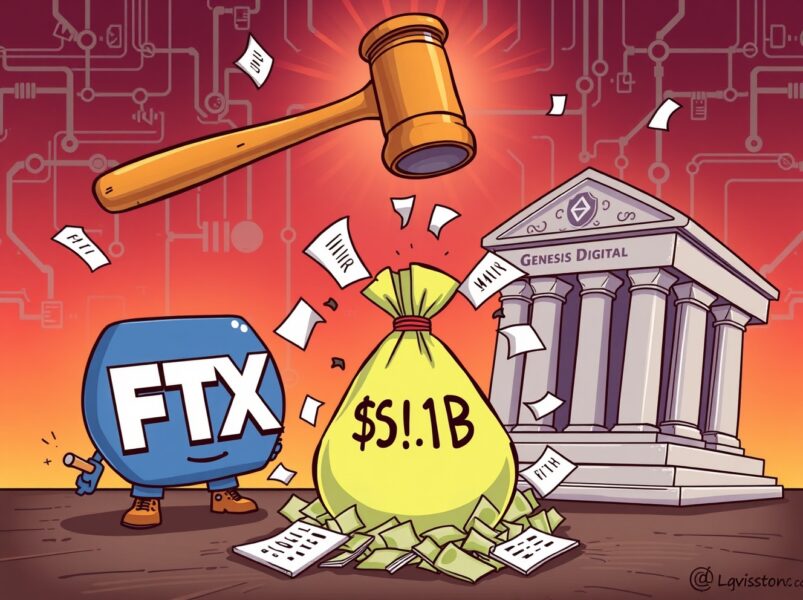
FTX Genesis Lawsuit: A Massive $1.15 Billion Legal Battle Unfolds

FTX Genesis Lawsuit: A Massive $1.15 Billion Legal Battle Unfolds

BitcoinWorld FTX Genesis Lawsuit: A Massive $1.15 Billion Legal Battle Unfolds The crypto world is once again abuzz with significant legal developments. The FTX Trust has officially filed a substantial FTX Genesis lawsuit, seeking to recover a staggering $1.15 billion from Genesis Digital. This move marks another crucial chapter in the ongoing saga of FTX’s collapse and its creditors’ efforts to reclaim lost funds. This lawsuit isn’t just about a large sum of money; it represents a deeper dive into the complex web of financial transactions that occurred before FTX’s dramatic downfall. It highlights the intricate relationships and potential vulnerabilities within the broader digital asset ecosystem. What’s Behind the FTX Genesis Lawsuit? The core of this legal action, as reported by Bloomberg, centers on claims of preferential transfers. Essentially, the FTX Trust alleges that Genesis Digital received substantial payments from FTX shortly before the crypto exchange filed for bankruptcy. These payments are now being scrutinized as potentially unfair to other creditors. In bankruptcy proceedings, a “preferential transfer” refers to payments made by a debtor to certain creditors within a specific period (usually 90 days) before filing for bankruptcy. If these transfers gave those creditors more than they would have received in the bankruptcy process, they can be clawed back to ensure fair distribution among all creditors. Unpacking the Claims: How Did Genesis Get Involved? Genesis Digital, a prominent player in the crypto lending space and a subsidiary of Digital Currency Group (DCG), had significant dealings with FTX. The FTX Genesis lawsuit specifically targets these transactions, asserting that they unfairly benefited Genesis at the expense of other FTX creditors. The lawsuit details how Genesis allegedly received these transfers, which include both cash and digital assets. The FTX Trust’s goal is to reverse these transactions, thereby increasing the pool of assets available to repay FTX’s numerous customers and investors who suffered losses. Alleged Preferential Transfers: Payments made to Genesis Digital just prior to FTX’s bankruptcy filing. Significant Sum: The lawsuit seeks to recover $1.15 billion, a substantial amount for any bankruptcy estate. Creditor Recovery: The primary aim is to maximize funds available for FTX’s creditors. What Are the Broader Implications of the FTX Genesis Lawsuit? This FTX Genesis lawsuit carries significant weight for both companies and the wider crypto industry. For FTX, a successful recovery would be a major win, providing more resources for its ongoing bankruptcy proceedings and potentially increasing the payout to victims. Conversely, for Genesis Digital and its parent company, DCG, this lawsuit adds another layer of complexity to their already challenging financial situation. Genesis itself faced severe liquidity issues following the collapse of Three Arrows Capital and FTX, leading to its own bankruptcy filing. Moreover, this case underscores the increasing scrutiny on inter-company transactions within the crypto sector. Regulators and bankruptcy courts are paying close attention to how funds moved between interconnected entities before major collapses, setting precedents for future cases. What Does This Mean for the Crypto Community? The outcome of the FTX Genesis lawsuit could shape how bankruptcy estates pursue claims against related parties in the future. It emphasizes the importance of transparency and robust financial practices in the volatile crypto market. For investors, it’s a stark reminder of the risks involved and the potential for long, drawn-out legal battles to recover assets. This legal action also serves as a crucial example of the ongoing efforts to bring accountability to the crypto industry. As the sector matures, such lawsuits become more common, reflecting a push towards greater legal clarity and investor protection. Concluding Thoughts on the FTX Genesis Lawsuit The filing of the $1.15 billion FTX Genesis lawsuit is a critical development in the arduous process of untangling FTX’s financial mess. It highlights the aggressive stance taken by the FTX Trust to reclaim assets and underscores the interconnectedness of major crypto players. As this legal battle unfolds, its resolution will undoubtedly have lasting implications for the involved parties and contribute to the evolving legal framework governing digital assets. The crypto community will be watching closely to see how this significant claim progresses. Frequently Asked Questions (FAQs) What is the FTX Trust? The FTX Trust, or the Debtors, refers to the entities managing the bankruptcy proceedings of FTX and its affiliated companies. Their primary role is to recover assets and distribute them fairly among creditors. Who is Genesis Digital? Genesis Digital is a subsidiary of Digital Currency Group (DCG) and was a major player in the crypto lending market. It filed for bankruptcy in early 2023 following significant losses and liquidity issues. What are “preferential transfers” in a bankruptcy context? Preferential transfers are payments made by a company to certain creditors shortly before filing for bankruptcy. These payments can be clawed back by the bankruptcy estate if they unfairly favored those creditors over others. What is the goal of the FTX Genesis lawsuit? The main goal of the lawsuit is to recover $1.15 billion that the FTX Trust alleges was preferentially transferred to Genesis Digital. This recovered money would then be used to repay FTX’s creditors. How might this lawsuit affect the crypto market? While direct market impact might be limited, the lawsuit contributes to the ongoing narrative of regulatory scrutiny and accountability in crypto. It could set precedents for future bankruptcy cases involving digital assets and influence investor confidence in the long term. If you found this article insightful, consider sharing it with your network! Stay informed about the latest developments in the crypto space by sharing this crucial update. To learn more about the latest crypto market trends, explore our article on key developments shaping digital asset price action. This post FTX Genesis Lawsuit: A Massive $1.15 Billion Legal Battle Unfolds first appeared on BitcoinWorld.

Author: Coinstats
Liquidium launches native liquid staking framework for Bitcoin Runes protocol tokens

Liquidium launches native liquid staking framework for Bitcoin Runes protocol tokens

The post Liquidium launches native liquid staking framework for Bitcoin Runes protocol tokens appeared on BitcoinEthereumNews.com. The Liquidium Foundation has released a liquid staking framework for Rune-based tokens operating on Bitcoin’s layer-1 network.  The protocol enables users to stake tokens while maintaining their native Bitcoin format, using Internet Computer’s chain fusion technology for wallet security. The framework initially supports staking of Liquidium’s LIQ tokens, which follow the Runes standard developed for Bitcoin.  Users receive liquid sLIQ tokens representing their staked positions, allowing them to continue trading while earning rewards. The open-source protocol design permits third-party developers to integrate additional Runes-based assets. Staking rewards derive from protocol revenue rather than token inflation. Liquidium allocates 30% of daily revenue from its lending platforms to purchase LIQ tokens, which are then redistributed to stakers.  The company reserves 70% of revenue for operational expenses. This mechanism aims to create token scarcity while generating sustainable yields. The Runes protocol, introduced as a Bitcoin-native token standard, enables the creation of fungible tokens directly on the BTC blockchain. Technical implementation The staking system operates through a decentralized Bitcoin wallet secured by Internet Computer’s chain fusion technology.  The wallet operates independently, executing only predefined staking contract logic without requiring third-party control. All transactions occur directly on Bitcoin’s mainnet without requiring wrapped assets or off-chain custody. Robin Obermaier, Liquidium’s co-founder and CEO, stated the framework connects to the company’s existing products.  LiquidiumWTF, the platform’s peer-to-peer lending protocol, generates revenue through Bitcoin-collateralized loans. LiquidiumFi, scheduled to launch later this year, will enable cross-chain lending across Bitcoin, Ethereum, and Solana networks. The staking framework integrates with Liquidium’s existing operations on Bitcoin Layer 1. Since launch, the platform has processed over 102,000 loans, generating $8 million in lender interest and facilitating $450 million in borrowing volume.  The protocol supports Ordinals, Runes, and BRC-20 tokens as collateral through Partially Signed Bitcoin Transactions (PSBTs) and multi-signature Discreet Log Contracts for…

Author: BitcoinEthereumNews
ETFs Set Price Target For Gold and Bitcoin

ETFs Set Price Target For Gold and Bitcoin

The post ETFs Set Price Target For Gold and Bitcoin appeared on BitcoinEthereumNews.com. Welcome to the US Crypto News Morning Briefing—your essential rundown of the most important developments in crypto for the day ahead. Grab a coffee to read how markets are moving this September. From ETF (exchange-traded fund) flows to sudden liquidations, gold and Bitcoin (BTC) are shaping very different stories as investors search for stability and opportunity. Crypto News of the Day: Gold Outshines Bitcoin as ETF Inflows Signal Shifting Market Trends September has been marked by surging ETF inflows into both gold and Bitcoin. However, gold is stealing the spotlight. Sponsored Sponsored On a 30-day rolling basis, inflows into gold funds are outpacing Bitcoin ETFs, with gold nearing its strongest yearly gain. Experts highlight the growing demand for hard assets like gold and Bitcoin, noting that the trend could continue as the Federal Reserve signals more rate cuts ahead. “Gold is outpacing Bitcoin…close to its strongest surge of the year, fueling a run of new highs…with the Fed signaling more rate cuts ahead, the trend is likely to continue,” wrote ecoinometrics, a popular account on X. It aligns with a recent US Crypto News publication that indicated that Fed rate cuts could push Bitcoin to $145,000. Amid the optimism, Deutsche Bank sees Bitcoin joining gold on central bank balance sheets by 2030, as indicated in the previous US Crypto News publication. The yellow metal has repeatedly set fresh highs, reflecting a sharp rise in investor demand for hard assets as the Federal Reserve signals more rate cuts. Meanwhile, experts also note the divergence between the two inflation hedges. While Bitcoin’s momentum has cooled after a wave of liquidations, gold’s rally has accelerated. Sponsored Sponsored Gold as Collateral in a Shaken Crypto Market However, not everyone sees this as positive for crypto. Gold advocate Peter Schiff argued that gold’s recent outperformance…

Author: BitcoinEthereumNews
Top Altcoins to Watch This Week as September Nears an End

Top Altcoins to Watch This Week as September Nears an End

With September nearing its conclusion, Ethereum (ETH) remains in the spotlight, backed by its enormous decentralized app ecosystem and continued leadership within the smart contract space. With Ethereum (ETH) providing the security of a leading altcoin, investors who want stronger growth opportunities are increasingly looking to Mutuum Finance (MUTM).  Still at stage 6 of its […]

Author: Cryptopolitan
Morgan Stanley’s E*Trade to Launch Crypto Trading via Zerohash Deal

Morgan Stanley’s E*Trade to Launch Crypto Trading via Zerohash Deal

Morgan Stanley will introduce cryptocurrency trading to its ETrade platform in early 2026, partnering with Zerohash to offer Bitcoin, Ethereum, and Solana trading to millions of retail investors. The post Morgan Stanley’s ETrade to Launch Crypto Trading via Zerohash Deal appeared first on Coinspeaker.

Author: Coinspeaker
Bitcoin Miner CleanSpark Taps Coinbase for $100M Credit Line

Bitcoin Miner CleanSpark Taps Coinbase for $100M Credit Line

The U.S. mining company has expanded its credit line with Coinbase Prime by $100 million, giving it fresh capital to […] The post Bitcoin Miner CleanSpark Taps Coinbase for $100M Credit Line appeared first on Coindoo.

Author: Coindoo
Top 9 Viral Crypto Tokens To Watch

Top 9 Viral Crypto Tokens To Watch

The post Top 9 Viral Crypto Tokens To Watch appeared on BitcoinEthereumNews.com. Selecting the right meme coin in today’s shifting crypto landscape has become more than just a gamble. The market is saturated with projects that capture attention through community hype and viral culture, yet only a handful will secure long-term momentum. With new meme coin launches arriving rapidly, investors face one crucial challenge: identifying tokens that deliver not only excitement but also rewards, exclusivity, and strong ecosystems. Missing the next breakthrough could mean sitting on the sidelines while others ride explosive gains. This year, one project has captured the spotlight with its bold entry: MoonBull ($MOBU). Alongside established names such as Dogecoin (DOGE), Shiba Inu (SHIB), Pepe (PEPE), Useless Coin (USELESS), Notcoin (NOT), Official Melania (MELANIA), ANDY (ANDY), and Tutorial (TUT), MoonBull stands out by offering early backers exclusive staking rewards, secret token drops, and presale benefits. As excitement builds around its whitelist, the new coin launch in 2025 positions MoonBull as the must-watch opportunity for meme coin enthusiasts aiming to secure an early edge in the upcoming crypto wave. 1.MoonBull ($MOBU) MoonBull ($MOBU) has quickly ignited excitement with its presale launch. Built on Ethereum, it combines the reliability of smart contracts with the viral power of meme culture. Designed for degens and meme coin enthusiasts, MoonBull offers unique features that differentiate it from other upcoming meme coin projects in 2025. Whitelist members hold a significant edge. This first-come, first-served opportunity is limited, ensuring only early registrants enjoy its benefits. Once spots are gone, they will never reopen. By joining the whitelist, participants secure the lowest entry price, unlock bonus allocations, and gain exclusive insights into MoonBull’s roadmap before public release. MoonBull isn’t just another meme token. Its whitelist offers: Entry at the lowest price before the public sale. Secret staking rewards for whitelisted members. Bonus token allocations are unavailable elsewhere.…

Author: BitcoinEthereumNews
Ethereum (ETH) Price to 2x Before the End of 2025, But Traders Are Looking at This Penny Coin for the Next 100x Windfall

Ethereum (ETH) Price to 2x Before the End of 2025, But Traders Are Looking at This Penny Coin for the Next 100x Windfall

Ethereum (ETH) remains the backbone of decentralized finance, and experts are forecasting the token price to double by the end of 2025 as network upgrades and institutional demand keep driving demand. But while ETH is bringing stability and settled market supremacy, investors seeking much bigger returns are going for Mutuum Finance (MUTM).  The platform is […]

Author: Cryptopolitan
Austin Winch’s Xauras Sets New Standard for DeFi Lending, Crossing $90M TVL Within Weeks

Austin Winch’s Xauras Sets New Standard for DeFi Lending, Crossing $90M TVL Within Weeks

Xauras is a governance-first DeFi lending protocol dedicated to transparency, scalability, and security. It enables decentralized borrowing and lending across multiple chains. Polygon, Optimism, and Solana are set to join by Q4 2025.

Author: Hackernoon