Index

A crypto Index provides a way for investors to gain diversified exposure to a specific basket of digital assets through a single tokenized product. These indices often track specific sectors, such as DeFi, DePIN, or RWA, and are automatically rebalanced via smart contracts. In 2026, AI-managed thematic indices have become the gold standard for passive investing, allowing users to track the "blue chips" of the Web3 economy without manual portfolio management. This tag covers index methodology, rebalancing frequency, and the benefits of diversified crypto baskets.

25329 Articles
Created: 2026/02/02 18:52
Updated: 2026/02/02 18:52
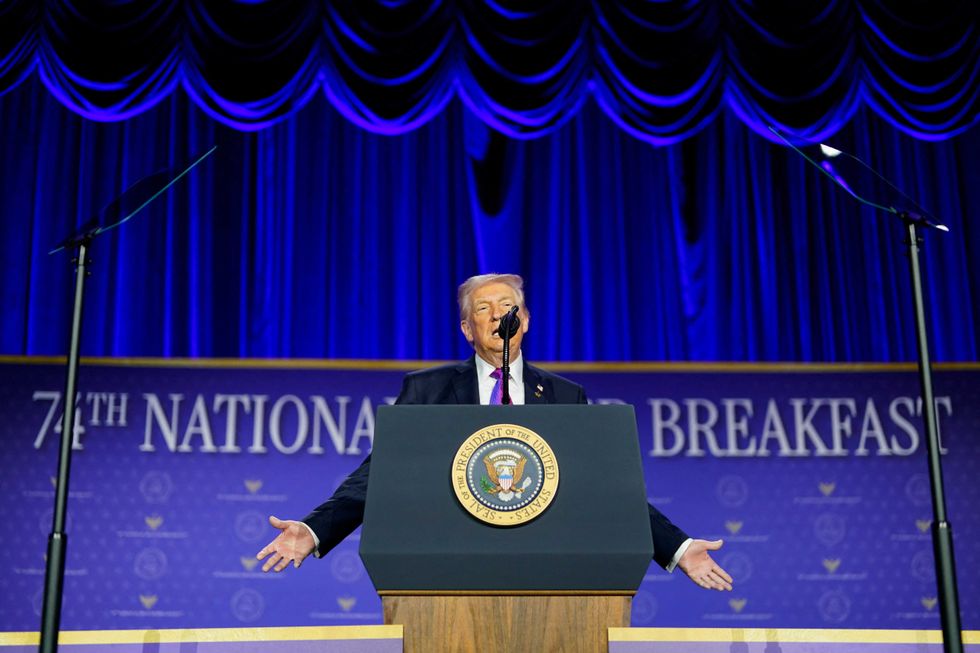
US President Donald Trump says he’s prepared for fight as Cook vows to sue — Bloomberg

US President Donald Trump says he’s prepared for fight as Cook vows to sue — Bloomberg

The post US President Donald Trump says he’s prepared for fight as Cook vows to sue — Bloomberg appeared on BitcoinEthereumNews.com. US President Donald Trump said he was ready for a legal fight with Federal Reserve (Fed) Governor Lisa Cook after he moved to oust her from her post following allegations that she falsified mortgage documents, Bloomberg reported late Tuesday.  Trump spoke at a Cabinet meeting on Tuesday, saying that he was also prepared to abide by any court decision but indicated he was not concerned about Cook’s challenge. Market reaction At the time of press, the US Dollar Index (DXY) was up 0.03% on the day at 98.25. Fed FAQs Monetary policy in the US is shaped by the Federal Reserve (Fed). The Fed has two mandates: to achieve price stability and foster full employment. Its primary tool to achieve these goals is by adjusting interest rates. When prices are rising too quickly and inflation is above the Fed’s 2% target, it raises interest rates, increasing borrowing costs throughout the economy. This results in a stronger US Dollar (USD) as it makes the US a more attractive place for international investors to park their money. When inflation falls below 2% or the Unemployment Rate is too high, the Fed may lower interest rates to encourage borrowing, which weighs on the Greenback. The Federal Reserve (Fed) holds eight policy meetings a year, where the Federal Open Market Committee (FOMC) assesses economic conditions and makes monetary policy decisions. The FOMC is attended by twelve Fed officials – the seven members of the Board of Governors, the president of the Federal Reserve Bank of New York, and four of the remaining eleven regional Reserve Bank presidents, who serve one-year terms on a rotating basis. In extreme situations, the Federal Reserve may resort to a policy named Quantitative Easing (QE). QE is the process by which the Fed substantially increases the flow of credit in a…

Author: BitcoinEthereumNews
David Rubenstein, Worth $2.8 Billion, Reveals His Prediction for the Fed’s Decision in September

David Rubenstein, Worth $2.8 Billion, Reveals His Prediction for the Fed’s Decision in September

The post David Rubenstein, Worth $2.8 Billion, Reveals His Prediction for the Fed’s Decision in September appeared on BitcoinEthereumNews.com. Carlyle Group Co-Chairman and Co-Founder David Rubenstein announced that he expects the Fed to cut interest rates by 25 basis points in September. Speaking on Bloomberg Surveillance, Rubenstein assessed President Donald Trump’s moves that have revived debates about the Fed’s independence and the markets’ reaction to them. Rubenstein stated that Trump’s attempt to remove Fed Board Member Lisa Cook is part of his goal to lower interest rates, saying, “The president wants interest rates lowered and is very determined on this issue. Jerome Powell has also signaled his expectation of a rate cut in his recent remarks.” Rubenstein stated that he didn’t expect any surprises in the markets, saying, “I think we’ll see a 25 basis point cut in September. I’d be very surprised if there’s a larger cut.” Rubenstein emphasized the importance of the Fed’s independence, saying that while this process will likely be resolved in the courts, markets were largely unaffected by Trump’s actions. Rubenstein, noting that Trump has recently taken unusual steps in Washington, said that his attempt to partner with Intel and his efforts to dismiss Fed members were not unexpected by investors: “Markets don’t like uncertainty, but President Trump’s style is well-known. Investors have priced in these moves, and the indices are still trading near their peaks.” Rubenstein stated that the FED has been among the most respected institutions since 1913 and that this process will not completely shake confidence in the institution. *This is not investment advice. Follow our Telegram and Twitter account now for exclusive news, analytics and on-chain data! Source: https://en.bitcoinsistemi.com/david-rubenstein-worth-2-8-billion-reveals-his-prediction-for-the-feds-decision-in-september/

Author: BitcoinEthereumNews
Spot Bitcoin ETFs Break Six-Day Outflow Streak With $219M Inflows

Spot Bitcoin ETFs Break Six-Day Outflow Streak With $219M Inflows

The post Spot Bitcoin ETFs Break Six-Day Outflow Streak With $219M Inflows appeared on BitcoinEthereumNews.com. Spot Bitcoin exchange-traded funds (ETFs) ended a six-day streak of net outflows on Monday, with $219 million in daily inflows.  ETF data platform SoSoValue showed that spot Bitcoin (BTC) ETFs rebounded on Monday, marking a shift in sentiment after six consecutive trading days of net outflows.  The outflow streak started on Aug. 15 and extended through Friday, with the biggest outflows coming at $523.31 million on Aug. 19, followed by $311.57 million on Wednesday.  The week of outflows followed a Bitcoin market correction after the asset reached record highs. On Aug. 14, CoinGecko data showed that Bitcoin reached a new all-time high of $124,128. Since then, the asset had dropped 11% to $110,186. Spot Bitcoin ETFs see net outflows on six consecutive trading days. Source: SoSoValue Fidelity, BlackRock lead spot Bitcoin ETF rebound Fidelity and BlackRock ETFs led the rebound on Monday, driving a majority of the daily net inflows. The Fidelity’s Wise Origin Bitcoin Fund (FBTC) led the pack, bringing in $65.56 million.  BlackRock’s iShares Bitcoin Trust (IBIT) followed closely with $63.38 million, while ARK Invest’s ARK 21Shares Bitcoin ETF (ARKB) added $61.21 million. Other issuers saw smaller but positive contributions to the day’s inflows. Bitwise’s BITB saw $15.18 million in net inflows, while Grayscale’s Bitcoin Trust (BTC) and VanEck’s HODL fund recorded $7.35 million and $6.32 million, respectively. US Spot Bitcoin ETFs’ performance on Monday. Source: SoSoValue Related: Bitcoin is rallying on US deficit concerns, not hype: Analyst ETF sell-off comes from “polarized” investor sentiment On Monday, CoinShares’ head of research, James Butterfill, said the recent outflows from crypto funds were their biggest losses since March. Butterfill attributed the sell-off to the “increasingly polarized” investor sentiment over US monetary policy.  He said pessimism around the Federal Reserve’s stance drove $2 billion in outflows. However, the analyst said the…

Author: BitcoinEthereumNews
XRP Jumps 6% to Top Market Gainers as Bitcoin Retakes $111K

XRP Jumps 6% to Top Market Gainers as Bitcoin Retakes $111K

The post XRP Jumps 6% to Top Market Gainers as Bitcoin Retakes $111K appeared on BitcoinEthereumNews.com. Altcoins bounced back sharply on Tuesday after a steep sell-off over the prior 48 hours, with traders seizing lower prices as an opportunity to re-enter the market. XRP led the recovery, gaining 6% over the past 24 hours. Solana (SOL) and dogecoin (DOGE) each climbed about 4.5%, while ethereum (ETH) added 5% over the same period. Open interest across these tokens also ticked higher, signaling renewed speculative activity. XRP once again stood out, with its open interest rising 4.2% in the past day. The uptick comes as CME Group announced earlier Tuesday that its crypto futures suite surpassed $30 billion in notional open interest for the first time. SOL and XRP futures each crossed the $1 billion mark, with XRP becoming the fastest contract to reach that level—doing so in just over three months. Analysts see this milestone as evidence of market maturity and growing institutional participation in crypto derivatives, not to mention the sort of interest a spot XRP ETF might generate. “Think people might be underestimating demand for spot XRP ETFs,” wrote ETF expert Nate Geraci. The broader market also strengthened, with the CoinDesk 20 Index (CD20) up 3.6% on Tuesday. Bitcoin (BTC) lagged behind, gaining only about 1%, but did cross back over the $111,000 mark after dropping below $109,000 at one point hours earlier. Both bitcoin and ether hit record highs earlier this month, lifted by expectations of monetary easing and increased institutional demand. Yet sentiment may be running too hot, according to blockchain analytics firm Santiment. In a report published Sunday, the firm warned that optimism around a potential Federal Reserve rate cut in September has reached levels that often precede corrections. “While optimism about a rate cut is fueling the market, social data suggests caution is warranted,” Santiment said, pointing to a spike in…

Author: BitcoinEthereumNews
Asia FX Confronts Volatility: Fed Independence Worries & Australian Dollar’s Resilient Surge

Asia FX Confronts Volatility: Fed Independence Worries & Australian Dollar’s Resilient Surge

BitcoinWorld Asia FX Confronts Volatility: Fed Independence Worries & Australian Dollar’s Resilient Surge The global financial landscape is a complex tapestry woven with threads of economic data, geopolitical shifts, and central bank policies. Recently, two distinct narratives have emerged, capturing the attention of investors and shaping Forex trends: the cautious downturn in Asia FX amidst growing concerns over Federal Reserve independence, and the remarkable resilience of the Australian Dollar following robust CPI data. Understanding these divergent forces is crucial for anyone navigating the intricate world of currency markets. Asia FX Under Pressure: Decoding Fed Independence Concerns Why are whispers about the Federal Reserve’s independence causing ripples across Asian markets? The Federal Reserve, often considered the world’s most influential central bank, traditionally operates with a degree of autonomy from political interference. This independence is vital as it allows the Fed to make monetary policy decisions—like setting interest rates—based purely on economic indicators, free from short-term political pressures. When this perceived independence is questioned, it creates uncertainty. What Exactly is Fed Independence, and Why Does it Matter Now? Autonomy in Policy: The Fed’s ability to set interest rates and manage the money supply without direct political intervention. This ensures decisions are made for long-term economic stability, not political cycles. Market Confidence: Investors trust that the Fed will act decisively against inflation or recession, even if those actions are unpopular. Erosion of this trust can lead to market instability. Recent Worries: Concerns have mounted due to public commentary from political figures regarding interest rate paths and the Fed’s performance. Such remarks can be interpreted as attempts to influence policy, triggering anxiety among market participants. For Asia FX, the implications are significant. A less independent Fed might be perceived as more susceptible to political pressure, potentially leading to less aggressive inflation fighting or delayed rate cuts. This uncertainty can trigger capital outflows from riskier emerging markets in Asia, as investors seek the perceived safety of the U.S. Dollar. Consequently, currencies like the Korean Won, Malaysian Ringgit, and Indian Rupee may face downward pressure, impacting trade and investment flows across the region. Australian Dollar’s Resilience: What Hot CPI Data Reveals In stark contrast to the cautious mood in Asian markets, the Australian Dollar has shown impressive strength. This surge is primarily attributed to recent, unexpectedly strong CPI data. The Consumer Price Index (CPI) is a critical economic indicator that measures the average change over time in the prices paid by urban consumers for a market basket of consumer goods and services. Essentially, it’s the primary gauge of inflation. Why is ‘Hot’ CPI Data So Important for the Aussie? Inflationary Pressure: When CPI data comes in ‘hot’—meaning higher than economists’ forecasts—it signals that inflation remains persistent in the economy. Central Bank Response: High inflation typically prompts central banks, like the Reserve Bank of Australia (RBA), to consider tightening monetary policy, primarily through raising interest rates, to cool down the economy and bring inflation back to target levels. Yield Attraction: Higher interest rates in Australia make the Australian Dollar more attractive to global investors seeking better returns on their investments (known as ‘carry trade’). This increased demand for the currency leads to its appreciation. The recent robust CPI data has fueled expectations that the RBA may need to implement further rate hikes or keep rates elevated for longer than previously anticipated. This hawkish outlook has significantly bolstered the Australian Dollar, allowing it to firm against other major currencies, even amidst broader global uncertainties. This divergence highlights how domestic economic strength can insulate a currency from external pressures, at least temporarily. Navigating Global Currency Markets Amidst Divergent Trends The simultaneous narrative of a cautious Asia FX and a strong Australian Dollar creates a fascinating dynamic within global currency markets. Investors are now grappling with a landscape where different regions are reacting to unique internal and external factors. This divergence underscores the importance of a nuanced approach to currency trading and investment. How Do These Trends Interact on the Global Stage? Safe-Haven Flows: Worries about Fed independence can boost the U.S. Dollar as a traditional safe-haven asset, potentially putting more pressure on Asian currencies. Carry Trade Opportunities: The higher yields offered by the Australian Dollar due to strong CPI data can attract capital from countries with lower interest rates, creating profitable carry trade opportunities for investors. Commodity Link: Australia is a major commodity exporter. Strong commodity prices, coupled with higher interest rates, further support the Aussie, while some Asian economies, being net importers, might feel additional pressure from a stronger USD. Understanding these interactions is key to forecasting future Forex trends. While the Australian Dollar benefits from its domestic economic strength, Asian currencies face a more complex environment influenced by global risk sentiment and the perceived stability of major central banks. The table below provides a snapshot of how these forces might be playing out: Currency/Region Key Driver Impact on Currency Outlook Asia FX Fed Independence Worries, USD Strength Downward pressure, increased volatility Cautious, dependent on global risk sentiment Australian Dollar Hot CPI Data, RBA Rate Hike Expectations Upward momentum, yield appeal Positive, supported by domestic data U.S. Dollar Safe-haven demand, Fed policy uncertainty Potential for continued strength Strong, especially during periods of global risk aversion Actionable Insights for Forex Traders: Strategies in a Volatile Landscape In an environment characterized by divergent central bank policies and varying economic data, successful navigation of Forex trends requires vigilance and a well-defined strategy. For traders and investors, these dynamics present both challenges and opportunities. What Should Traders Consider Amidst These Shifting Sands? Monitor Central Bank Communications: Pay close attention to statements from the Federal Reserve, Reserve Bank of Australia, and Asian central banks. Any shift in tone or policy guidance can significantly impact currency valuations. Focus on Economic Data: Key economic releases, especially inflation figures (like CPI data), employment reports, and GDP growth, will continue to be primary drivers of currency movements. Strong data in one region can create arbitrage opportunities against weaker regions. Risk Management is Paramount: Given the heightened volatility, employing robust risk management techniques, such as setting stop-loss orders and managing position sizes, is more crucial than ever. Diversification and Hedging: Consider diversifying currency exposure across different regions to mitigate risks. For businesses with international operations, hedging strategies can protect against adverse currency movements. Technical vs. Fundamental Analysis: While fundamental factors like interest rates and economic data are driving long-term trends, technical analysis can help identify short-term entry and exit points in a volatile market. The current environment demands a proactive approach. Understanding the underlying causes of market movements, from concerns over Fed independence to the impact of strong CPI data, empowers traders to make more informed decisions. The interplay between global and local factors will continue to shape the direction of global currency markets, making adaptability a key trait for success. Conclusion: Navigating the New Normal in Currency Markets The currency markets are constantly evolving, presenting a fascinating interplay of global and local forces. The recent divergence between a cautious Asia FX and a firm Australian Dollar serves as a powerful reminder of this complexity. While concerns over Fed independence cast a shadow of uncertainty over some emerging markets, robust CPI data in Australia has provided a solid foundation for the Aussie’s strength. For investors and traders, these contrasting narratives highlight the critical need for continuous analysis, agile strategies, and a deep understanding of the factors driving Forex trends. As we move forward, monitoring central bank actions, economic indicators, and geopolitical developments will be paramount to successfully navigate these dynamic global currency markets. To learn more about the latest Forex market trends, explore our article on key developments shaping global currency movements and central bank policies. This post Asia FX Confronts Volatility: Fed Independence Worries & Australian Dollar’s Resilient Surge first appeared on BitcoinWorld and is written by Editorial Team

Author: Coinstats
Morning brief: Yuan soars to strongest since Nov; Australian CPI jumps to 2.8%

Morning brief: Yuan soars to strongest since Nov; Australian CPI jumps to 2.8%

A day of dramatic economic recalibration is unfolding across the Asia-Pacific, as a surprise inflation shock in Australia dashes rate-cut hopes, the Chinese yuan surges to a ten-month high, and a top investment bank forecasts a looming crash in oil prices. This flurry of activity comes as South Korea looks to capitalize on a successful diplomatic mission to Washington, setting the stage for a period of significant market volatility.Here’s your one-stop stand to catch up on all the headlines you may have missed.South Korea tests the waters with a dollar bond saleBuoyed by the success of President Lee Jae Myung’s recent summit with Donald Trump, South Korea is now preparing to test the waters of global investor sentiment. The government is considering a sale of dollar-denominated bonds and has sent out a request for proposals to major banks for a potential issuance of up to about 1.8 billion dollars in the coming months. The move, following a successful charm offensive in Washington that helped defuse trade tensions, is a clear signal that Seoul is eager to capitalize on the renewed goodwill and record-low credit spreads in the international debt markets.The dragon’s ascent: Yuan hits 10-month highThe Chinese yuan has emerged as a formidable force, advancing to its strongest level against the dollar since November. The currency climbed as much as 0.1 percent to 7.1447 per dollar, powered by a potent combination of a weakening greenback and a powerful rally in local equities. Investor sentiment is being further supported by expectations of sustained capital inflows ahead of the country’s September 3 ‘Victory Day’ parade. The People’s Bank of China has added its own muscle to the move, repeatedly strengthening its daily reference rate for the currency.The Australian inflation shockIn a blow to hopes for monetary easing, Australian consumer prices jumped by far more than expected in July. Data from the Australian Bureau of Statistics showed the monthly consumer price index rose 2.8 percent from a year earlier, a sharp acceleration from 1.9 percent in June and well above forecasts of 2.3 percent. The spike was driven by a surge in electricity costs. The hotter-than-expected reading immediately forced investors to slash their bets on a near-term rate cut from the Reserve Bank of Australia, with the probability of a move next month falling from 30 percent to just 22 percent.Goldman’s bearish call: an oil glut loomsAdding another layer of drama to the day, Goldman Sachs has issued a stark warning for the oil market. The US investment bank said in a new client note that it expects the price of Brent crude to decline to the low 50s a barrel by late 2026. The bearish forecast is based on an expected increase in the global oil surplus, which the bank projects will widen to an average of 1.8 million barrels per day through 2026, leading to a massive rise in global stockpiles. The bank said this glut, coupled with reduced demand, will fundamentally lower the fair value of Brent from its current mid-70s range.The post Morning brief: Yuan soars to strongest since Nov; Australian CPI jumps to 2.8% appeared first on Invezz

Author: Coinstats
Bitcoin Faces $1 Billion ETF Outflows and Weak On-Chain Signals in Volatile Week

Bitcoin Faces $1 Billion ETF Outflows and Weak On-Chain Signals in Volatile Week

Santiment reported that US-listed Bitcoin ETFs are on their sixth straight day of net outflows, marking the longest negative streak since early April when tariff fears gripped markets. At that time, similar withdrawals signaled uncertainty but later paved the way for a rebound. Santiment noted that current outflows increasingly appear retail-driven rather than dominated by […]

Author: Tronweekly
What This Means For Your Portfolio

What This Means For Your Portfolio

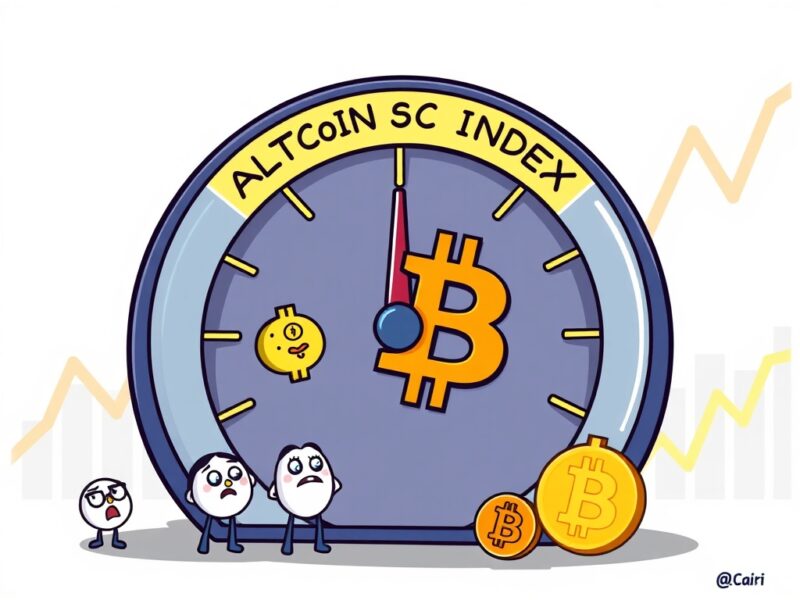
The post What This Means For Your Portfolio appeared on BitcoinEthereumNews.com. Altcoin Season Index Plunges: What This Means For Your Portfolio Skip to content Home Crypto News Altcoin Season Index Plunges: What This Means for Your Portfolio Source: https://bitcoinworld.co.in/altcoin-season-index-plunges-6/

Author: BitcoinEthereumNews
Canary Files for ‘American-Made’ Crypto ETF—Will XRP, Solana and Cardano Make the Cut?

Canary Files for ‘American-Made’ Crypto ETF—Will XRP, Solana and Cardano Make the Cut?

The post Canary Files for ‘American-Made’ Crypto ETF—Will XRP, Solana and Cardano Make the Cut? appeared on BitcoinEthereumNews.com. In brief Canary Capital has applied for a “Made in America” crypto ETF. The fund, if approved, would give investors exposure to digital coins created in the U.S. or primarily backed by U.S. operations. Canary Capital has applied for a number of altcoin ETFs, including Litecoin and Tron. Crypto fund manager Canary Capital has applied for a new ETF that would give investors exposure to digital coins and tokens minted on U.S. soil.  The Canary American-Made Crypto ETF, if approved by the SEC, would track the Made-in-America Blockchain Index, a list of American-made cryptocurrencies or crypto projects that have mining or staking operations mostly based in the States, a Monday S-1 registration filing shows.  Nashville, Tennessee-based Canary Capital has already filed applications with the U.S. Securities and Exchange Commission for a number of other crypto ETFs, including Litecoin, Sei, and Tron investment vehicles. If approved, the latest product would trade on the Cboe BZX Exchange. The SEC S-1 filing did not specify exactly which coins and tokens the fund would track. Canary Capital did not immediately respond to Decrypt‘s questions. Solana, XRP, and Cardano are among the prominent assets created by American founders. Price tracker CoinGecko includes those coins in a “Made in USA” category, along with others like Chainlink, Sui, and Avalanche.  U.S. President Donald Trump last year said—along with other pro-crypto pledges—that he wanted all remaining coins to be mined on American soil, although he has provided few specifics about how this might be accomplished. Experts have told Decrypt that it is highly unlikely if not impossible to shift all Bitcoin production to the U.S. Bitcoin’s decentralized nature means that anyone in the world can technically establish a mining operation and start minting new coins, although the biggest share of the coin’s hash rate does indeed come…

Author: BitcoinEthereumNews
Altcoin Season Index Plunges: What This Means for Your Portfolio

Altcoin Season Index Plunges: What This Means for Your Portfolio

BitcoinWorld Altcoin Season Index Plunges: What This Means for Your Portfolio The crypto world is buzzing with recent market shifts, and a key indicator, the Altcoin Season Index, has just sent a compelling signal. According to CoinMarketCap data, this crucial index has recently fallen three points, landing at 43. This dip from its previous day’s score isn’t just a number; it reflects a significant change in the market’s pulse, suggesting a shift away from widespread altcoin outperformance. What Exactly is the Altcoin Season Index? Understanding the Altcoin Season Index is fundamental for any crypto investor. This unique metric helps determine whether current market conditions are favoring altcoins or if Bitcoin is taking the lead. It does this by meticulously comparing the price performance of the top 100 cryptocurrencies (excluding stablecoins and wrapped tokens) against Bitcoin over a 90-day period. Here’s how it works: The index measures how many of these top 100 altcoins have outperformed Bitcoin. An ‘altcoin season’ is officially declared when at least 75% of these altcoins surpass Bitcoin’s performance within that 90-day window. A score closer to 100 indicates a much stronger and more pervasive altcoin trend, while a lower score suggests Bitcoin’s dominance. Why is the Altcoin Season Index Signaling a Shift? The recent decline of the Altcoin Season Index to 43 is a clear indicator that Bitcoin is currently showing stronger performance relative to a majority of altcoins. This often happens during periods of market uncertainty or when investors seek the relative stability of Bitcoin as the leading cryptocurrency. Several factors can contribute to such a shift: Bitcoin Halving Cycle: Historically, Bitcoin tends to consolidate or rally post-halving, sometimes drawing capital away from altcoins. Macroeconomic Factors: Broader economic conditions, interest rate changes, or geopolitical events can influence investor sentiment, often leading to a flight to perceived safety, which in crypto is often Bitcoin. Market Dominance: When Bitcoin’s market dominance increases, it naturally pulls the Altcoin Season Index down as fewer altcoins are outperforming it. Navigating Your Portfolio When the Altcoin Season Index Dips For investors holding altcoins, a falling Altcoin Season Index presents both challenges and potential opportunities. It’s a moment to re-evaluate strategies and consider market dynamics. Here are some key considerations: Re-evaluate Risk: Altcoins can be more volatile than Bitcoin. A period of Bitcoin dominance might signal increased risk for less established altcoins. Diversification: Ensure your portfolio is adequately diversified. While altcoins offer high reward potential, a balanced approach including Bitcoin can mitigate risk during these phases. Research is Key: Focus on altcoins with strong fundamentals, active development, and clear use cases. These projects might be more resilient even when the overall index is low. Patience: Market cycles are natural. A dip in the index doesn’t mean altcoin seasons are over indefinitely; rather, it suggests a current phase of consolidation or Bitcoin strength. The current reading of the Altcoin Season Index at 43 serves as a vital signal for cryptocurrency investors. It underscores the dynamic nature of the crypto market and the ongoing tug-of-war between altcoins and Bitcoin. While the index currently points to Bitcoin strength, understanding these cycles empowers investors to make informed decisions, adapt their strategies, and prepare for future market shifts. Staying informed about these key indicators is paramount for navigating the exciting, yet volatile, world of digital assets. Frequently Asked Questions (FAQs) Q1: What does the Altcoin Season Index measure? A: The Altcoin Season Index measures whether altcoins or Bitcoin are outperforming over a 90-day period, specifically by comparing the performance of the top 100 altcoins (excluding stablecoins and wrapped tokens) against Bitcoin. Q2: What score indicates an Altcoin Season? A: An Altcoin Season is declared when 75% or more of the top 100 altcoins outperform Bitcoin over the 90-day period. A score closer to 100 indicates a stronger altcoin trend. Q3: Why did the Altcoin Season Index fall to 43? A: The fall to 43 suggests that Bitcoin is currently outperforming a significant majority of altcoins. This can be due to factors like Bitcoin’s halving cycle, broader macroeconomic trends, or increased Bitcoin market dominance. Q4: How does the Altcoin Season Index impact my investment strategy? A: A declining Altcoin Season Index signals a period of Bitcoin strength. Investors might consider re-evaluating risk, diversifying their portfolios, focusing on altcoins with strong fundamentals, and exercising patience during these market phases. Q5: Are stablecoins included in the Altcoin Season Index calculation? A: No, stablecoins and wrapped coins are explicitly excluded from the calculation of the Altcoin Season Index to provide a clearer picture of speculative asset performance. Did this article help you understand the recent shift in the crypto market? Share your thoughts and this valuable insight with your fellow crypto enthusiasts on social media! To learn more about the latest crypto market trends, explore our article on key developments shaping altcoin price action. This post Altcoin Season Index Plunges: What This Means for Your Portfolio first appeared on BitcoinWorld and is written by Editorial Team

Author: Coinstats