Index

A crypto Index provides a way for investors to gain diversified exposure to a specific basket of digital assets through a single tokenized product. These indices often track specific sectors, such as DeFi, DePIN, or RWA, and are automatically rebalanced via smart contracts. In 2026, AI-managed thematic indices have become the gold standard for passive investing, allowing users to track the "blue chips" of the Web3 economy without manual portfolio management. This tag covers index methodology, rebalancing frequency, and the benefits of diversified crypto baskets.

25415 Articles
Created: 2026/02/02 18:52
Updated: 2026/02/02 18:52
Bitcoin Hyper ($HYPER) Live News Today: Latest Insights for Bitcoin Maxis (August 29)

Bitcoin Hyper ($HYPER) Live News Today: Latest Insights for Bitcoin Maxis (August 29)

Stay Ahead with Our Immediate Analysis of Today’s Bitcoin & Bitcoin Hyper Insights Check out our Live Bitcoin Hyper Updates for August 29, 2025! In 2010, Bitcoin was worth a few cents. One year later, it hit $20. In six years, it was $17,000, and now it’s sitting at over $100K, after hitting an ATH […]

Author: Bitcoinist
Why One Small Parameter Can Make or Break Your Medical Image Retrieval

Why One Small Parameter Can Make or Break Your Medical Image Retrieval

This article explores the key approaches to medical image retrieval—volume-based, region-based, and localized retrieval—and explains when each is most effective. It also introduces the concept of localization-ratio, showing how parameter choices (like the value of L) directly impact retrieval accuracy. By highlighting trade-offs and optimization strategies, the piece provides a clear guide for improving organ-level image search in real-world medical imaging tasks.

Author: Hackernoon
Chainlink, Pyth Become Oracle Providers for US Government

Chainlink, Pyth Become Oracle Providers for US Government

The post Chainlink, Pyth Become Oracle Providers for US Government appeared on BitcoinEthereumNews.com. The US government has tapped Chainlink and Pyth, two blockchain oracle providers, to publish economic data onchain. Chainlink was selected to provide data feeds from the Bureau of Economic Analysis (BEA), and will publish additional data feeds in response to consumer demand or at the behest of the US government, a Chainlink spokesperson told Cointelegraph. These feeds include real gross domestic product (GDP), Personal Consumption Expenditures (PCE) price index, and real final sales to private domestic purchasers, the company said. The Department of Commerce also selected Pyth to be a publisher of gross domestic product (GDP) data — the total economic output in a year — according to an announcement on Thursday. Source: Pyth Network Publishing government data onchain is part of the Trump administration’s plan to make government spending more transparent in a bid to improve accountability and make the US a “world capital” of crypto. Related: Philippine lawmaker to propose putting government budget on blockchain Bringing government economic data onchain will provide positive benefits to spot crypto markets, a Chainlink spokesperson said. These include automated trading strategies that execute based on changing government data, real-time prediction markets for macroeconomic developments and risk-management strategies for decentralized finance (DeFi) protocols. Stablecoins, tokenized government bonds, perpetual futures contracts, real-world tokenized assets (RWAs) and other digital financial instruments reliant on macroeconomic inputs also stand to benefit from onchain government economic data. Proposals to bring public spending data and other macroeconomic figures onchain are currently fomenting in the Philippines, the United Kingdom and El Salvador. Traders eye potential gains for crypto markets The price of Pyth (PYTH) surged by nearly 70% on the news, and Chainlink (LINK) posted modest gains of over 3% before falling back to about $25. LINK has rallied by about 61% since the start of August, going from a…

Author: BitcoinEthereumNews
Bitcoin Top Fears Spark Capital Shift to Ethereum

Bitcoin Top Fears Spark Capital Shift to Ethereum

The post Bitcoin Top Fears Spark Capital Shift to Ethereum appeared on BitcoinEthereumNews.com. Key Notes Bitcoin fails to hold $113K, flashing a bearish divergence similar to 2021. Long-term holders are distributing while short-term traders fuel BTC demand. Whales remain cautious, leaving ETH as the preferred rotation play. Bitcoin BTC $110 033 24h volatility: 2.7% Market cap: $2.19 T Vol. 24h: $37.39 B has once again failed to hold above the critical $113,000 mark, slipping back to $111,139 at press time, a 1.6% decline over the past 24 hours. The move has led to speculations of the leading digital asset reaching its cycle top, with signs of capital rotation into Ethereum ETH $4 363 24h volatility: 5.3% Market cap: $527.03 B Vol. 24h: $29.35 B becoming increasingly evident. Divergence Signals Echo the 2021 Cycle Top Ali Martinez highlighted a worrying technical signal on Bitcoin’s weekly chart, i.e., a bearish divergence between price and Relative Strength Index (RSI). While Bitcoin continues to print higher highs, RSI has trended lower, a classic sign that momentum is weakening even as price climbs. Bitcoin $BTC is making higher highs while RSI makes lower lows. This is the same divergence seen before the 2021 cycle top! pic.twitter.com/tR0IT25AVf — Ali (@ali_charts) August 29, 2025 Martinez noted that this setup mirrors the divergence seen just before the 2021 market top, where Bitcoin peaked around $69,000 before entering a prolonged bear cycle, also known as the crypto winter. Short-Term Optimism, Long-Term Caution Swissblock’s Altcoin Vector shared a breakdown of Bitcoin’s net position change across different market participants: Long-Term Holders (LTHs) are distributing. Short-Term Holders (STHs) are accumulating aggressively. Whales remain indecisive, not committing significant inflows to Bitcoin just yet. Exchanges show mild outflows, though not enough to signal large-scale distribution. It’s no secret that profit-taking is happening in $BTC, with much of that capital rotating into $ETH.https://t.co/UeAvwWOydf — Bitcoin Vector (@bitcoinvector) August…

Author: BitcoinEthereumNews
Bitcoin Drops Below $111K, BAY Miner Mobile App Opens Profitable BTC, ETH, and XRP Mining Opportunities

Bitcoin Drops Below $111K, BAY Miner Mobile App Opens Profitable BTC, ETH, and XRP Mining Opportunities

The post Bitcoin Drops Below $111K, BAY Miner Mobile App Opens Profitable BTC, ETH, and XRP Mining Opportunities appeared on BitcoinEthereumNews.com. Bitcoin experienced significant volatility again this week, breaking through key support and falling below $111,900 on the 28th, wiping out over $120 billion in market capitalization in a single day. This price correction has drawn significant attention from global investors and presented new investment opportunities for the mining ecosystem and blockchain applications. Amidst market volatility, the BAY Miner mobile app has officially launched, offering multi-currency mining access to Bitcoin (BTC), Ethereum (ETH), and Ripple (XRP) to users worldwide. With just a smartphone, users can participate in blockchain computing power allocation with minimal barriers to entry, achieving stable daily output and an estimated daily compound yield of up to 5.3%. This innovative model not only breaks the barriers of high investment and energy consumption associated with traditional mining machines, but also creates potential for value-added returns for millions of ordinary users. BAY Miner Mobile App: Mining Made Simple Mining Without Hardware BAY Miner removes the barriers that have kept everyday people out of mining. No heavy equipment. No noise. No maintenance. Users simply download the app, register, and choose a contract. From that point, mining begins automatically. Prices are credited daily and the withdrawal is just one pressure away. What makes BAY Miner even more appealing is its global accessibility. Whether you’re in Asia, Europe, or the Americas, everybody with a phone and internet connection can begin incomes crypto right away. The app supports each Android and iOS, ensuring no consumer is left behind. Flexible contract for each budget Whether you’re testing the waters or planning a long-term strategy, BAY Miner provides contracts for every type of user: Bitcoin Basic Plan – $100 | 2 Days | $4 Daily | Return: $108 XRP Classic Plan – $600 | 6 Days | $7.20 Daily | Return: $643.20 Long-Term Plan – $3,000 |…

Author: BitcoinEthereumNews
A historic step: US official GDP data will be stored on 9 major public chains including Bitcoin and Ethereum

A historic step: US official GDP data will be stored on 9 major public chains including Bitcoin and Ethereum

By Frank, PANews On August 28, the U.S. Department of Commerce announced that it would publish real gross domestic product (GDP) data on a blockchain, starting with data from July 2025. The first six data types will include real GDP, the personal consumption expenditures (PCE) price index, and actual final sales to domestic private buyers. This data on-chain migration involves nine public blockchains and two oracle networks. For the crypto industry, this signifies that the core data of the world's most important economies is moving from traditional centralized institutions to native on-chain availability. On the one hand, this government-led data on-chain migration provides new credibility for the crypto world. On the other hand, it represents another symbolic move by the Trump administration to promote its "Crypto Capital" initiative. Two-tier architecture of "certificate storage" and "application" First, from a technical perspective, PANews will sort out the process of uploading data to the chain. According to the U.S. Department of Commerce's official statement, the core operation involves embedding the cryptographic hash of the official GDP report PDF file, known as its unique "digital fingerprint," into transactions on nine blockchains. The first blockchain networks to be adopted are Bitcoin, Ethereum, Solana, TRON, Stellar, Avalanche, Arbitrum One, Polygon PoS, and Optimism. Through this operation, anyone can verify whether the report has been tampered with by comparing the hash value on the chain with the hash value of the official report. Furthermore, Chainlink and Python, two leading oracle platforms, were selected for this data on-chain integration. These platforms serve as middleware services between blockchain and the real world. Oracles' primary mission is to securely and reliably feed real-world external (off-chain) data to the blockchain network. GDP data contract on Ethereum Therefore, choosing Chainlink and Python can better distribute this on-chain data to the applications and ecosystems that need it. Chainlink's official website currently has a dashboard function for these six data points. However, unlike the nine public chains announced by the U.S. Department of Commerce, Chainlink's information shows that it currently supports ten public chain networks, including Arbitrum, Avalanche, Base, Botanix, Ethereum, Linea, Mantle, Optimism, Sonic and ZKsync. This may seem like a discrepancy, but it's not due to a synchronization error. Rather, the blockchains mentioned in the two lists play different roles in the process. Simply put, the nine public chains listed by the US Department of Commerce are original data verification networks used for evidence storage. The ten blockchain networks announced by Chainlink are the initial group of blockchains supported by its data feed service. These chains share a common characteristic: they are all active smart contract platforms (primarily Ethereum and its Layer 2 expansion network). Political “showmanship”? But it benefits on-chain products What are the actual pain points of this data chain? The real reasons behind it may come from two aspects. From the perspective of the crypto industry, this data on-chain, especially the connection to leading oracles such as Chainlink and Pyth, can provide the crypto industry with a more direct and authoritative source of GDP and other core US economic data, which is conducive to the stability of products such as stablecoins, RWAs, and prediction markets that are linked to this official data. From another perspective, the move to put data on the blockchain has a profound and complex relationship with President Trump and his administration's historical behavior of questioning the reliability of official data. During his presidency, Trump has repeatedly publicly accused unfavorable economic data (such as GDP growth or employment data) of being "manipulated" or "biased." In August, he fired Erika McEntarfer, director of the Bureau of Labor Statistics, over a poor jobs report and accused her of releasing "fake" data. From the perspective of the U.S. Department of Commerce, putting data like GDP on-chain seems to be a proactive response to Trump's skepticism about the data's authenticity. However, many in the U.S. media have argued that such manipulation cannot completely solve the problem of data falsification. After all, putting data on-chain only provides data evidence, but it cannot guarantee the objectivity and authenticity of the data's core source. PYTH skyrocketed, while public chain tokens remained “indifferent” Regardless of the ultimate goal and actual effect, this data chain initiative led by the US government can ultimately be summarized as a further recognition of blockchain. However, judging by the list of public chains released by the U.S. Department of Commerce, the governance tokens of these chains did not seem to experience a surge in value due to the news. Chainlink's LINK token, which is part of the partnership, did experience a rapid surge on the evening of the 28th, but subsequently fell again as the broader market weakened. The only one that was significantly stimulated by this news was Pyth. The price of its token quickly rose from around $0.11 before the news was released to a high of $0.25, with a daily increase of up to 110%, and its market value increased by more than $600 million. Judging from this divergence, the surge in PYTH tokens may be due to active capital support. The actual support for this news may not be strong. However, this may just be the beginning. Commerce Secretary Lutnick made it clear during his announcement that the department plans to expand this blockchain-based data infrastructure to all federal agencies once it finalizes all the details. This means that in the future, all types of public data from the U.S. government may be published in a similar manner. Overall, while the US data blockchain initiative may not have a strong short-term impact on the market, its long-term impact on the entire crypto industry may be greater. This marks the beginning of a new era for mainstream public blockchains as the core layer of data storage.

Author: PANews
US Department of Commerce Puts Macro Data on Chain, Boosting Bitcoin Hyper Use Case

US Department of Commerce Puts Macro Data on Chain, Boosting Bitcoin Hyper Use Case

The US government further expanded its venture into DeFi by publishing its economic data on-chain via a partnership with Pyth and Chainlink oracles. This signals growing adoption of blockchain technology and another step towards the continued evolution of the crypto market. At the same time, as crypto becomes mainstream and network demands soar, the development […]

Author: Bitcoinist
What to know and why it matters

What to know and why it matters

The post What to know and why it matters appeared on BitcoinEthereumNews.com. President Donald Trump sent shockwaves through global markets Monday night by saying he would fire Federal Reserve Board Governor Lisa Cook. Trump’s decision not only put investors and economists on alert, but brought attention to the complicated innerworkings of the U.S. central bank. It also marks the latest escalation of Trump’s monthslong pressure campaign against the Fed, historically politically independent, to lower interest rates. Here are the key facts to know: Why do we follow the Federal Reserve? The Federal Reserve manages monetary policy for the United States. Its dual mandate, set out in a 1977 act of Congress that amended the Federal Reserve Act, is to maximize full employment and ensure stable prices. Because the U.S. is home to the world’s largest economy, the 111-year-old central bank also helps set the economic tone for all other developed as well as emerging markets. The Fed also supervises and regulates banks and their financial activities through a series of examinations, stress testing and corrective actions, and attempts to identify and mitigate systemic risks. A 12-person group within the Fed called the Federal Open Market Committee, or FOMC, sets the key overnight borrowing rate, currently set at 4.25% to 4.50%. The fed funds rate is the target interest rate that banks charge each other for overnight loans to meet their reserve requirements, and helps set the cost of home mortgages, car loans and credit card debt. The FOMC holds regularly scheduled meetings at least eight times a year. Who is Lisa Cook? Cook, the first African-American woman to sit on the Fed, has served as governor since 2022, according to her bank biography. Reappointed the following year, her 15-year term is due to expire in 2038. Before joining the Fed, Cook was a professor of economics and international relations at Michigan State University. A holder of…

Author: BitcoinEthereumNews
DreamSim and the Future of Embedding Models in Radiology AI

DreamSim and the Future of Embedding Models in Radiology AI

This article explores how different embedding approaches perform in medical image retrieval tasks. Self-supervised models slightly edge out supervised ones, though the performance gap across architectures is narrow. Surprisingly, pretraining on natural images (ImageNet) outperforms domain-specific sets (RadImageNet), while fractal-based embeddings achieve unexpectedly strong results given their synthetic origins. DreamSim, an ensemble of ViT embeddings fine-tuned with synthetic data, delivers the best recall overall, making it the current leader in embedding generation. Isolated anomalies—like poor recall for certain anatomies—remain unexplained, pointing to fertile ground for future research.

Author: Hackernoon
How Dataset Imbalances Shape Medical Image Retrieval Accuracy

How Dataset Imbalances Shape Medical Image Retrieval Accuracy

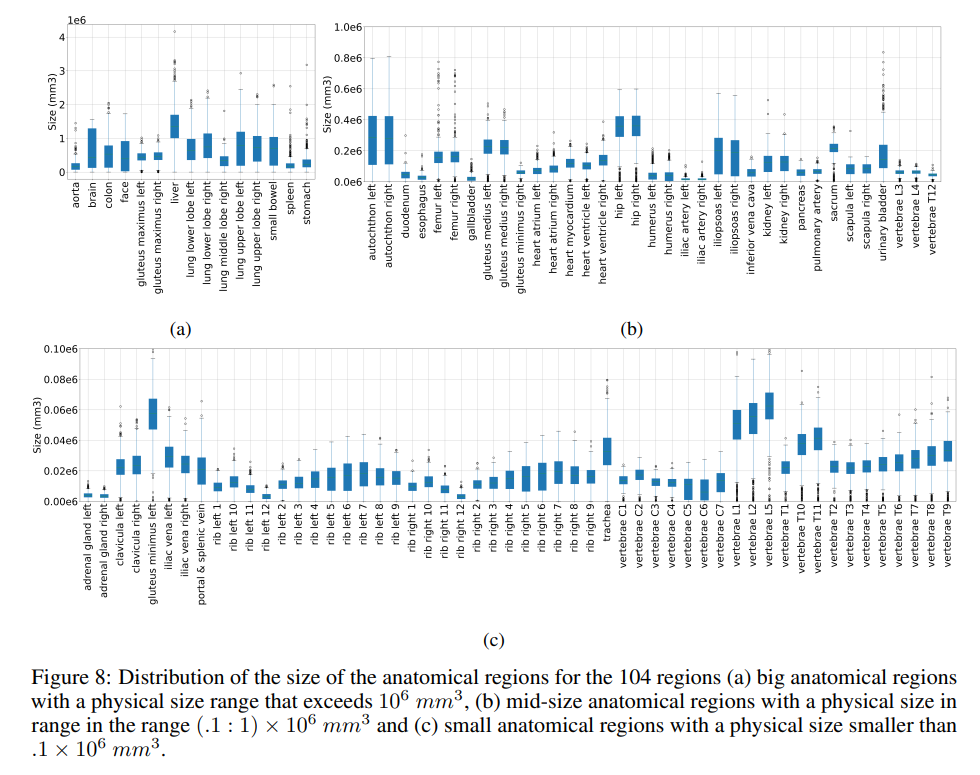
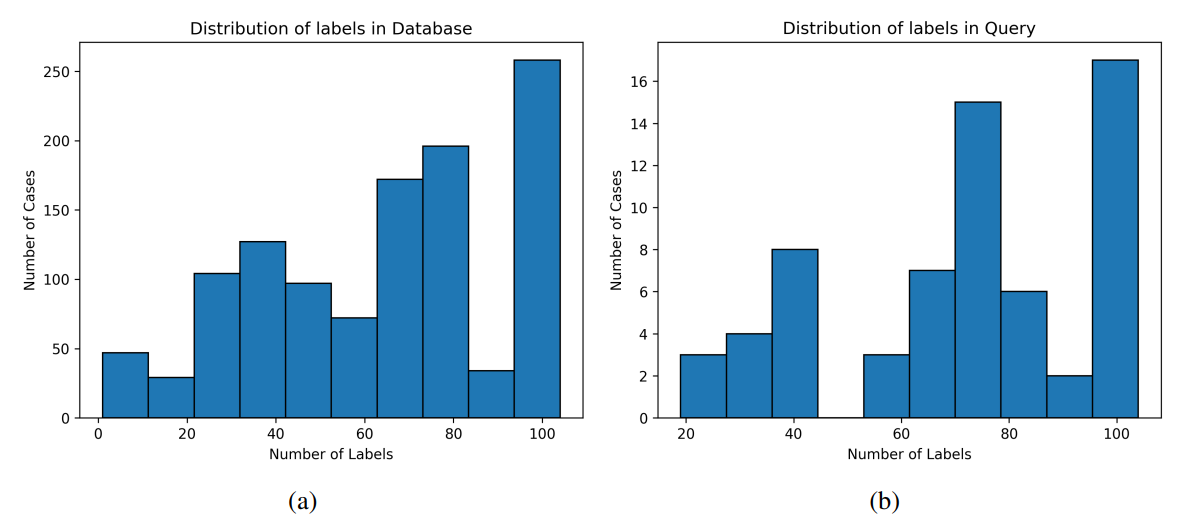
This article explores challenges and innovations in medical image retrieval, focusing on dataset imbalance, organ size and shape biases, and recall accuracy interpretation. It highlights a novel application of ColBERT-inspired re-ranking, demonstrating its feasibility in refining CBIR results by incorporating context such as user behavior and medical relevance. While no strong link was found between anatomical region size and retrieval recall, the study opens new pathways for improving image retrieval systems, balancing computational costs, and enhancing real-world usability.

Author: Hackernoon