Dapp

Dapps are digital applications that run on a P2P network of computers rather than a single server, typically utilizing smart contracts to ensure transparency and uptime. In 2026, Dapps have achieved mass-market appeal through Account Abstraction, allowing for a "Web2-like" user experience with the security of Web3. This tag covers the entire ecosystem of decentralized software—from social media and productivity tools to governance platforms and identity management.

4991 Articles
Created: 2026/02/02 18:52
Updated: 2026/02/02 18:52
Best Crypto to Invest in Today: Tapzi (TAPZI) Tops Charts Ahead of BlockchainFX

Best Crypto to Invest in Today: Tapzi (TAPZI) Tops Charts Ahead of BlockchainFX

Surpassing BlockchainFX (BFX) in both investor traction and market visibility, Tapzi is being hailed as a fresh force in the […] The post Best Crypto to Invest in Today: Tapzi (TAPZI) Tops Charts Ahead of BlockchainFX appeared first on Coindoo.

Author: Coindoo
OpenAI Codex Unleashes Revolutionary GPT-5-Codex for Advanced AI Coding

OpenAI Codex Unleashes Revolutionary GPT-5-Codex for Advanced AI Coding

BitcoinWorld OpenAI Codex Unleashes Revolutionary GPT-5-Codex for Advanced AI Coding In the rapidly evolving world of technology, where innovation drives market shifts and shapes the future of digital assets, OpenAI has once again captured attention with a significant upgrade to its renowned OpenAI Codex. For anyone tracking the pulse of artificial intelligence, particularly those deeply embedded in the cryptocurrency and blockchain space, this development signals a new era for automated software creation and optimization. The integration of the groundbreaking GPT-5-Codex into OpenAI’s AI coding agent promises to redefine how developers approach complex tasks, offering unprecedented efficiency and sophistication. This isn’t just an incremental update; it’s a leap forward in AI-driven development, poised to impact everything from smart contract auditing to dApp creation. What is the OpenAI Codex Revolution? OpenAI’s commitment to pushing the boundaries of artificial intelligence is evident in its latest announcement: a significant enhancement to its AI coding agent, OpenAI Codex. This powerful tool, already a favorite among developers for its ability to translate natural language into code, is now being supercharged with a new version of GPT-5, specifically dubbed GPT-5-Codex. This isn’t merely a performance boost; it represents a fundamental shift in how AI assists with coding tasks. The most striking feature of GPT-5-Codex is its revolutionary approach to problem-solving, allowing it to dynamically allocate ‘thinking’ time. Unlike previous models that might have a fixed processing window, GPT-5-Codex can spend anywhere from a few seconds to an astonishing seven hours on a single coding task, adapting its effort to the complexity of the problem at hand. This adaptive intelligence is a game-changer, enabling the AI to tackle intricate challenges that would previously overwhelm less flexible systems. The rollout of this advanced model is already underway, reaching a broad spectrum of users including ChatGPT Plus, Pro, Business, Edu, and Enterprise subscribers, with plans to extend access to API customers in the near future. This widespread availability underscores OpenAI’s ambition to democratize advanced AI coding capabilities, making sophisticated tools accessible to a larger developer community. How Does GPT-5-Codex Redefine AI Coding? The introduction of GPT-5-Codex marks a pivotal moment in the evolution of AI coding, fundamentally redefining what an AI agent can achieve. Its unique ability to dynamically adjust its processing duration is at the heart of its superior performance. Imagine an AI that can ‘deliberate’ on a complex bug for hours, meticulously analyzing code, identifying patterns, and proposing solutions, rather than rushing to a suboptimal answer. This is precisely what GPT-5-Codex offers. This dynamic allocation of computational resources means the model can dedicate the necessary time to truly understand and resolve intricate coding problems, leading to more robust and accurate outputs. OpenAI’s internal benchmarks confirm this significant leap. GPT-5-Codex demonstrably outperforms its predecessor, GPT-5, on SWE-bench Verified, a rigorous benchmark designed to measure agentic coding abilities. Furthermore, it shows superior performance on tasks involving code refactoring from large, established repositories. These results are not just statistical improvements; they translate directly into tangible benefits for developers, promising faster development cycles, fewer errors, and more optimized code. The model’s capacity to handle nuanced coding challenges with such flexibility sets a new standard for AI assistance in software engineering, pushing the boundaries of what was previously thought possible for automated coding tools. The Competitive Edge in AI Development The landscape of AI development tools has become intensely competitive over the past year, driven by an insatiable user demand for intelligent coding assistance. Companies are racing to deliver the most effective and efficient solutions, and OpenAI’s upgrade to Codex with GPT-5-Codex is a direct response to this burgeoning market. OpenAI is strategically positioning Codex to fiercely compete with established players and innovative newcomers alike. Key competitors in this space include Anthropic’s Claude Code, Anysphere’s Cursor, and Microsoft’s widely adopted GitHub Copilot. The rapid growth in this sector is underscored by impressive market indicators; for instance, Cursor reportedly surpassed an annual recurring revenue (ARR) of $500 million earlier in 2025, signaling massive adoption and value creation. The market is also seeing dramatic shifts, as evidenced by the chaotic acquisition attempt involving Windsurf, another prominent code editor, which resulted in its team being split between tech giants Google and Cognition. This intense competition is a testament to the transformative power of AI in coding, and OpenAI’s move to enhance Codex with GPT-5-Codex is a clear statement of intent: to not only participate in this race but to lead it. By offering a model with unparalleled adaptability and performance, OpenAI aims to solidify Codex’s position as the go-to AI coding solution for developers worldwide, ensuring it remains at the forefront of this technological revolution. Enhancing Code Quality with the Advanced Coding Agent Beyond generating and refactoring code, the new coding agent, GPT-5-Codex, has been meticulously trained for a crucial aspect of software development: conducting code reviews. This capability addresses a significant pain point for development teams, where manual code reviews can be time-consuming and prone to human error. To validate its effectiveness, OpenAI engaged experienced software engineers to evaluate the model’s review submissions. The feedback was overwhelmingly positive and insightful. Engineers reported that GPT-5-Codex submitted significantly fewer incorrect suggestions compared to previous models, a critical improvement for maintaining code integrity and reducing developer frustration. More impressively, the model was found to add more ‘high-impact’ suggestions, identifying subtle inefficiencies, potential security vulnerabilities, or architectural improvements that might otherwise be overlooked. This means GPT-5-Codex isn’t just flagging errors; it’s actively contributing to the strategic improvement of the codebase. For organizations, this translates into higher code quality, reduced technical debt, and more efficient collaboration among development teams. The AI acts as an intelligent, tireless peer reviewer, augmenting human expertise and accelerating the delivery of robust, high-performing software. This advanced capability positions GPT-5-Codex not just as a code generator, but as an indispensable partner in the entire software development lifecycle, ensuring a higher standard of excellence from inception to deployment. The Future of AI Coding: Real-time Adaptability Alexander Embiricos, OpenAI’s Codex product lead, provided crucial insights into the architectural brilliance behind GPT-5-Codex’s increased performance, particularly its dynamic ‘thinking abilities.’ He explained that while users might be familiar with GPT-5’s router in ChatGPT, which directs queries to different models based on complexity, GPT-5-Codex operates with a more fluid, integrated approach. Crucially, Embiricos noted that GPT-5-Codex has no explicit router under the hood. Instead, it possesses an inherent capacity to adjust how long it works on a task in real-time. This is a significant advantage over a router-based system, which typically decides the computational power and time required at the very outset of a problem. Imagine a scenario where an AI begins a task, and five minutes in, realizes the complexity is far greater than initially perceived. A router-based system might be locked into its initial allocation, potentially leading to an incomplete or suboptimal solution. GPT-5-Codex, however, can dynamically reassess and decide it needs to spend another hour, or even several hours, to achieve a superior outcome. Embiricos cited instances where he observed the model taking upwards of seven hours to complete certain complex tasks, demonstrating its unparalleled persistence and adaptability. This real-time, self-adjusting computational strategy is the future of AI coding, promising an era where AI agents are not just powerful, but also incredibly intelligent in managing their own problem-solving processes, leading to more profound and reliable results across the entire spectrum of software engineering challenges. OpenAI’s latest upgrade to Codex, featuring the revolutionary GPT-5-Codex, represents a monumental leap in the realm of AI development. By integrating dynamic thinking capabilities that allow the AI to adapt its problem-solving time from seconds to hours, OpenAI has created an unparalleled coding agent. This innovation not only boosts performance on critical benchmarks like SWE-bench Verified and code refactoring but also elevates the quality of code reviews, providing high-impact suggestions and reducing errors. In a fiercely competitive market for AI coding tools, GPT-5-Codex establishes a new benchmark for intelligence, adaptability, and efficiency. For developers, particularly those in the fast-paced cryptocurrency and blockchain sectors, this means faster development cycles, more robust code, and an intelligent partner capable of tackling the most complex challenges. OpenAI continues to shape the future of software creation, empowering engineers with tools that were once the stuff of science fiction, making the dream of truly autonomous and highly capable AI development a tangible reality. To learn more about the latest AI coding, generative AI, and AI development trends, explore our article on key developments shaping AI models and institutional adoption. This post OpenAI Codex Unleashes Revolutionary GPT-5-Codex for Advanced AI Coding first appeared on BitcoinWorld.

Author: Coinstats
Deepseek’s 4 Best Crypto to Buy Ahead of the FOMC Meeting

Deepseek’s 4 Best Crypto to Buy Ahead of the FOMC Meeting

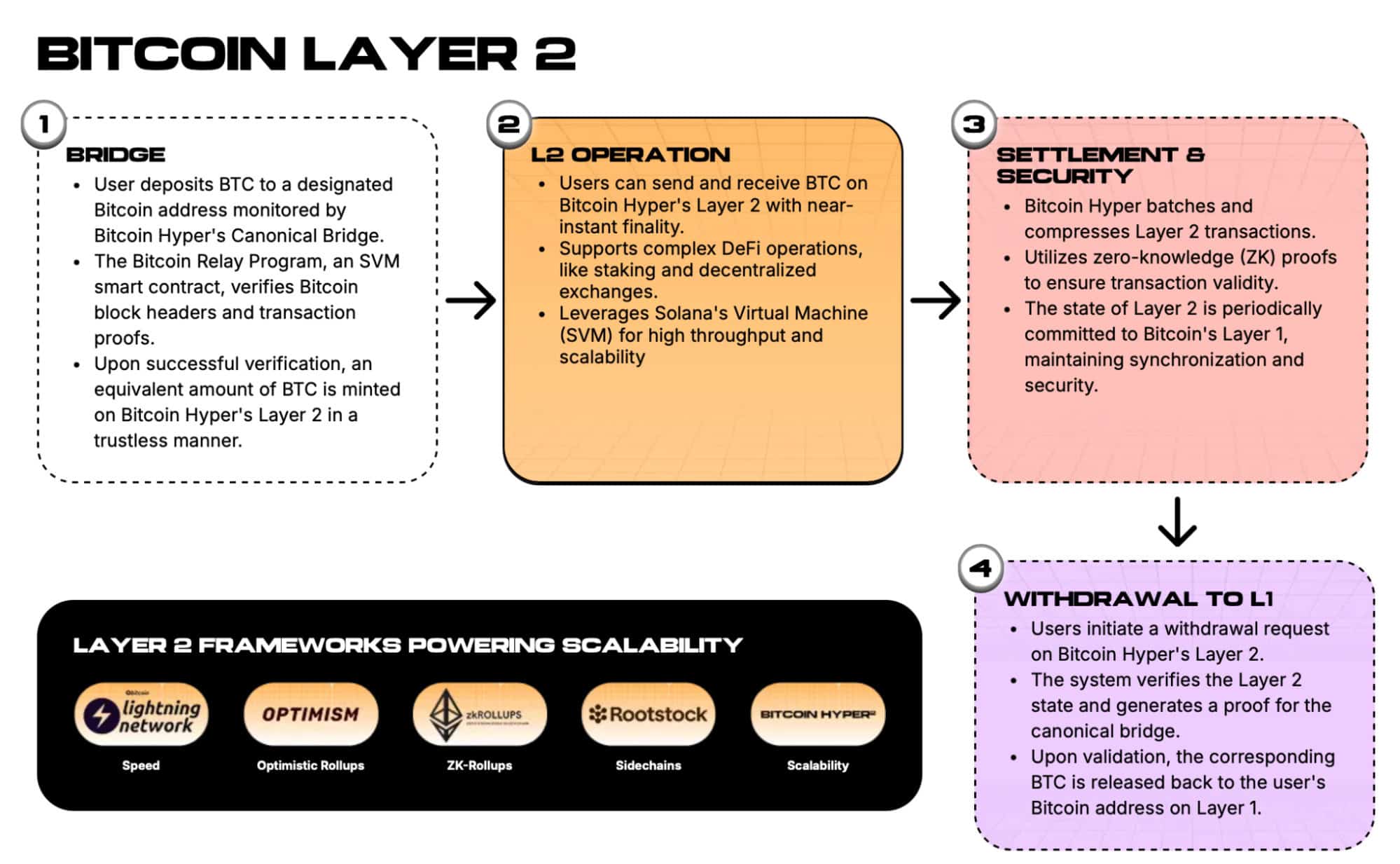
The post Deepseek’s 4 Best Crypto to Buy Ahead of the FOMC Meeting appeared on BitcoinEthereumNews.com. Markets are on edge ahead of this week’s FOMC decision, with traders widely expecting the fed to implement a 25 bps rate cut as the Fed pivots toward looser policy.  After September, the central bank is projected to deliver three more 25 bps reductions at subsequent meetings before pausing indefinitely. For risk assets, that path signals a steady drip of liquidity into markets. And in crypto, that usually translates into capital rotating fastest into the most speculative corners of the market. Investors are already positioned for a potential rally from meme coins to ambitious presales. Deepseek has flagged four projects that could capture outsized attention in the days ahead: Bitcoin Hyper ($HYPER), Pudgy Penguins ($PENGU), PepeNode ($PEPENODE), and Useless ($USELESS). Each offers something different. Whether it’s scaling Bitcoin, building cultural IP, gamifying meme mining, or leaning into nothing but pure irony. However, all reflect where the risk-on narrative is heading if markets get the green light from the Fed. 1. Bitcoin Hyper ($HYPER) – Bitcoin’s First True Layer 2 Bitcoin Hyper positions itself as the first true Layer 2 for Bitcoin, designed to turn the world’s largest crypto asset from a passive store of value into an active execution layer. Integrated with the Solana Virtual Machine (SVM), it enables sub-second transactions, near-zero fees, and full cross-chain interoperability from day one. That means you can bridge $BTC in, trade, stake, launch dApps, and even create meme coins, all while settling back to Bitcoin’s secure base layer with zero-knowledge proofs. The project’s presale has already gained serious traction. Investors have committed over $16M, with tokens priced at $0.012925 and staking rewards offering 71% APY. By using $HYPER, holders fuel every transaction in the ecosystem while gaining governance rights and early access to token launches. If the FOMC sparks a broader rally in…

Author: BitcoinEthereumNews
XRP Price Today; Bitcoin Latest News & Everything You Need To Know About Trending Layer Brett

XRP Price Today; Bitcoin Latest News & Everything You Need To Know About Trending Layer Brett

Due to the recent developments, investors are monitoring the XRP price today with keen interest, and the latter is currently operating in a large manner. Meanwhile, the latest modifications in the Bitcoin price continue to receive significant media coverage and cause discussions of the possible future directions thereof. Analysts believe the rising fame of Layer [...] The post XRP Price Today; Bitcoin Latest News & Everything You Need To Know About Trending Layer Brett appeared first on Blockonomi.

Author: Blockonomi
4 Cryptos Deepseek Says to Watch Before the FOMC Meeting

4 Cryptos Deepseek Says to Watch Before the FOMC Meeting

Markets are on edge ahead of this week’s FOMC decision, with traders widely expecting the fed to implement a 25 bps rate cut as the Fed pivots toward looser policy.

Author: Brave Newcoin
Pepe Price Prediction In 2025: Dogecoin Price Targets $1 But $LBRETT Could Accomplish 7,000% Growth Before January

Pepe Price Prediction In 2025: Dogecoin Price Targets $1 But $LBRETT Could Accomplish 7,000% Growth Before January

The post Pepe Price Prediction In 2025: Dogecoin Price Targets $1 But $LBRETT Could Accomplish 7,000% Growth Before January appeared first on Coinpedia Fintech News As investors eye the next big crypto, many are making a Pepe price prediction for 2025, but Layer Brett is emerging as a strong alternative. This new Layer 2 memecoin offers explosive growth potential, with coverage citing up to 721% APY for early stakers. It truly fuses meme culture with real blockchain utility. Layer Brett: …

Author: CoinPedia
XRP Price Prediction; Cardano News Today & Why Layer Brett Is Being Called The New Shiba Inu By Analysts

XRP Price Prediction; Cardano News Today & Why Layer Brett Is Being Called The New Shiba Inu By Analysts

The post XRP Price Prediction; Cardano News Today & Why Layer Brett Is Being Called The New Shiba Inu By Analysts appeared first on Coinpedia Fintech News Analysts are buzzing about Layer Brett, calling it the new Shiba Inu and a potential top gainer crypto for its innovative Ethereum Layer 2 approach. While the XRP price prediction faces bearish pressure, and Cardano news updates hint at a run to $1.50, Layer Brett has raised over $3.6 million in its ongoing presale.  Its …

Author: CoinPedia
Cardano, Ethereum & ADA Price Predictions & Which Is Being Called Today The Next 100x Crypto

Cardano, Ethereum & ADA Price Predictions & Which Is Being Called Today The Next 100x Crypto

The post Cardano, Ethereum & ADA Price Predictions & Which Is Being Called Today The Next 100x Crypto appeared first on Coinpedia Fintech News While BTC might be making headlines, the current Bitcoin price at $115,000 doesn’t appeal to all new crypto investors, especially as Layer Brett tops trending charts over Solana. The new Layer Brett ($LBRETT) presale has already surpassed $3.6 million, with tokens currently priced at $0.0058. This Ethereum Layer 2 solution fuses meme culture with powerful …

Author: CoinPedia
Solana, Bonk, WIF & Layer Brett

Solana, Bonk, WIF & Layer Brett

The post Solana, Bonk, WIF & Layer Brett appeared on BitcoinEthereumNews.com. Crypto News 15 September 2025 | 16:15 Solana (SOL) continues to prove its place as one of crypto’s top blockchains. Even after network outages and intense competition, it remains the chain of choice for developers and investors who value speed and affordability. Its ability to process thousands of transactions per second at minimal cost has kept demand strong across DeFi, NFTs, and payment projects. That momentum is why analysts see a path for Solana to retest old highs if adoption holds. For institutions, it’s a scalable platform with real-world use cases. For retail traders, it’s a token that still carries enough hype to spark big moves. This dual appeal makes SOL a core holding in many portfolios heading into the next cycle. Solana’s (SOL) expanding ecosystem Beyond price action, what makes Solana (SOL) compelling is the growth of its ecosystem. Developers continue to build dApps at scale, major NFT collections thrive on its network, and integrations with payment providers are boosting real-world adoption. This steady expansion makes Solana more than just a speculative play — it’s positioning itself as the backbone for next-generation crypto use cases. That combination of adoption and utility is why many investors see SOL as a must-own asset for the coming cycle. Bonk’s (BONK) comeback story Bonk (BONK), the Solana-based meme coin, has surprised many traders. What started as a community meme has grown into a token with rising use cases across Solana dApps and NFT ecosystems. Its liquidity and trading volume have improved, keeping it relevant while many other meme coins faded. Bonk’s (BONK) strength lies in community energy, and analysts say it could benefit directly from any broader Solana rally. While it carries risk, its upside is still tied to viral cycles that meme investors love to chase. Why WIF (Dogwifhat) refuses to fade…

Author: BitcoinEthereumNews
Ethereum Foundation’s PSE Rebrands & Emphasizes End-to-End Privacy – Best Wallet Enhances Crypto User Control

Ethereum Foundation’s PSE Rebrands & Emphasizes End-to-End Privacy – Best Wallet Enhances Crypto User Control

The Ethereum Foundation’s Privacy and Scaling Explorations team has rebranded as Privacy Stewards of Ethereum (PSE). Such a name change reflects its push to make end-to-end privacy an essential part of the network. As highlighted on PSE’s new roadmap, the team’s role ‘isn’t to own every solution in the space, but to drive clarity, focus, collaborations, and outcomes across the ecosystem.’ This way, they can ensure ‘privacy is treated as a first-class feature at the application layer.’ Alongside these developments, Best Wallet emerges as an excellent combo. The non-custodial crypto wallet gives you full control of your assets on Ethereum and beyond with top-notch safeguarding measures. Ethereum’s PSE Turns to Private Writes, Reads & Proving PSE’s ultimate vision is to make privacy on the Ethereum network a norm, not just an afterthought. It aims to achieve this through protections embedded across the entire stack, spanning protocol applications, wallets, and governance. Their roadmap is structured around three key tracks: Private writes: Makes private transactions, votes, and dApp interactions as easy and cost-effective as public ones; Private reads: Allows users to query balances, contracts, or data without exploring identity or intent; Private proving: Enables fast, Zero-Knowledge Proofs (ZKPs) for secure, portable, and verifiable data sharing. To bring this to life, the PSE prioritizes transfers with PlasmaFold and privacy wallets, new voting systems with Aragon, and confidential DeFi standards for institutions. They’re also working on privacy-preserving Remote Procedure Calls (RPCs), mixnets, ZK-based identity, and a faster proving system. And all while emphasizing user experience, such as making privacy tools powerful yet super easy to use. Instead of building every solution itself, the PSE aims to collaborate openly with builders, researchers, and projects. By steering the network while encouraging open collaboration, the PSE is laying the foundation for a privacy-first Ethereum. Given that Best Wallet shares similar ethos, they work hand in hand to make crypto safer, more private, and user-centric. Best Wallet Combines Security, Presales & Cross-Chain Swaps Available on iOS and Google Play, the Best Wallet mobile app positions itself as a highly secure way to manage crypto while on the move. As a non-custodial wallet, it gives you complete access to your private keys. It also includes protections like 2FA, biometric, and local encryption, so only you can control your crypto holdings. Even if you happen to lose account access, you’ll easily be able to retrieve your assets thanks to the wallet’s encrypted cloud backups (with no seed or recovery phrase required). Better yet, it makes it super easy to buy, sell, manage, and swap over 1K assets across not just Ethereum but other major chains like BNB Chain and Polygon. In fact, it promises to support 60 networks in the future so that you can anticipate even broader crypto opportunities. Moreover, the app has its very own launchpad, allowing you to access the best crypto presales. That, coupled with a swap engine that scans more than 330 DEXs and 30 bridges, offers you the best possible rates. It also plans to launch more advanced tools, including market intel analytics, stop-loss orders, and derivatives trading. Best Wallet’s native token – $BEST – makes all this possible. The reason is that a sizable 25% of its total token supply is earmarked for product development, ensuring long-term growth for the entire ecosystem. And that’s not all. Holding $BEST unlocks additional benefits, including governance rights, staking rewards at an 84% APY, and lower gas fees. To reap the perks, you can buy $BEST on presale for just $0.025645, using either $ETH, $BNB, $USDT, $USDC, $FLOKI, SHIB, $PEPE, $DOGE, or fiat. Now’s a great time to do precisely that as new app developments could propel the token to $0.035215 this year – a potential ROI exceeding 35%. For more information, check out our Best Wallet crypto review. Authored by Leah Waters, NewsBTC: https://www.newsbtc.com/news/best-wallet-non-custodial-combo-with-ethereum-privacy

Author: NewsBTC