Brazil and Peru Capital Flows: The Startling Divergence Reshaping Latin American Markets
BitcoinWorld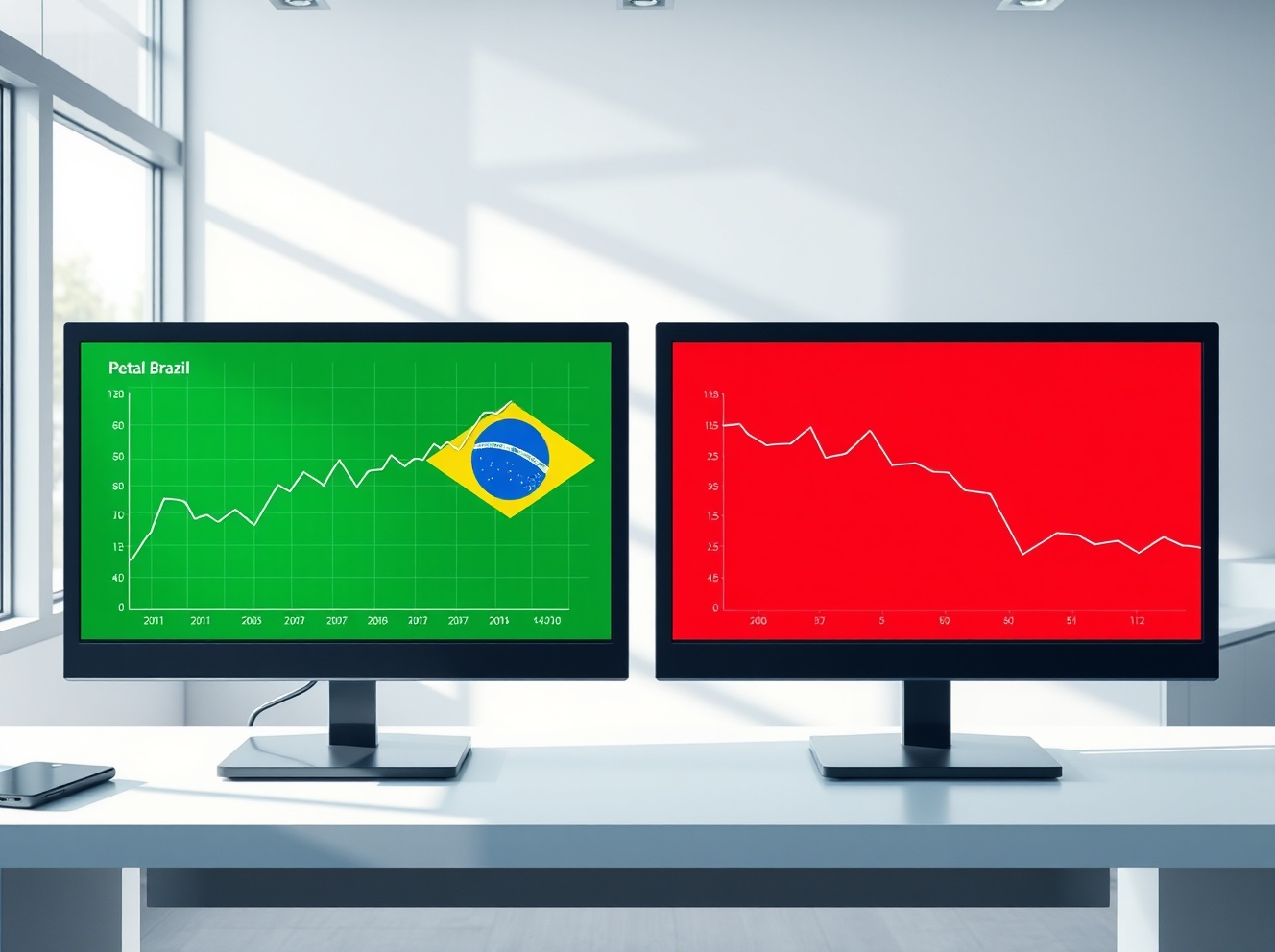
Brazil and Peru Capital Flows: The Startling Divergence Reshaping Latin American Markets
Latin American financial markets are witnessing a remarkable divergence in capital flows during early 2025, with Brazil attracting substantial investment while Peru experiences significant outflows, according to recent analysis from BNY Mellon. This emerging pattern reflects deeper structural differences between South America’s two largest economies and carries important implications for regional stability and investor strategies. The divergence comes at a critical juncture for Latin America as global capital seeks emerging market opportunities amid shifting monetary policies worldwide.
Brazil’s Capital Flow Surge: Policy Reforms and Market Confidence
Brazil has experienced a notable resurgence in foreign investment during the first quarter of 2025. Several key factors are driving this positive trend. First, comprehensive fiscal reforms implemented throughout 2024 have strengthened investor confidence. Second, the Central Bank of Brazil’s measured approach to interest rate adjustments has maintained attractive yield differentials. Third, renewed infrastructure investment programs have created tangible opportunities for capital deployment.
The country recorded $8.2 billion in net portfolio inflows during January and February 2025 alone. This represents a 34% increase compared to the same period last year. Foreign direct investment has also shown resilience, particularly in technology and renewable energy sectors. Market analysts attribute this performance to Brazil’s diversified economy and improved governance frameworks.
Structural Advantages Supporting Brazilian Inflows
Brazil benefits from several structural advantages that continue to attract international capital. The country maintains deep and liquid capital markets that provide multiple entry points for investors. Additionally, Brazil’s commodity exports have remained robust despite global economic headwinds. The agricultural sector, in particular, has demonstrated remarkable resilience. Furthermore, recent technological advancements in financial services have improved market accessibility.
BNY’s analysis highlights Brazil’s improved current account position as another positive factor. The country has reduced its external financing needs significantly since 2023. This reduction has decreased vulnerability to sudden shifts in global risk sentiment. Consequently, Brazil now presents a more stable investment proposition compared to previous years.
Peru’s Capital Outflow Challenge: Political Uncertainty and Economic Headwinds
Peru presents a contrasting picture with net capital outflows reaching $1.8 billion during the first quarter of 2025. This represents a concerning reversal from the $650 million in inflows recorded during the same period last year. Political instability remains the primary driver of this negative trend. The country has experienced three presidential changes since 2021, creating persistent policy uncertainty.
Economic growth projections for Peru have been revised downward multiple times. The International Monetary Fund now forecasts 2.1% GDP growth for 2025, down from earlier estimates of 3.4%. This revision reflects multiple challenges including reduced mining output and weaker domestic demand. The mining sector, traditionally Peru’s economic engine, faces both operational and regulatory hurdles.
Comparative Economic Indicators: Brazil vs. Peru
| Indicator | Brazil (2025 Q1) | Peru (2025 Q1) |
|---|---|---|
| Net Portfolio Flows | +$8.2B | -$1.8B |
| Foreign Direct Investment | +$4.1B | +$0.9B |
| GDP Growth Forecast | 2.8% | 2.1% |
| Policy Interest Rate | 10.25% | 6.25% |
| Inflation Rate | 3.9% | 4.2% |
Several specific factors are contributing to Peru’s capital outflow situation. First, domestic investors are increasingly diversifying portfolios internationally. Second, foreign institutional investors have reduced exposure to Peruvian assets. Third, corporate investment decisions have been delayed pending greater political clarity. These combined pressures have created a challenging environment for capital retention.
Regional Implications and Market Dynamics
The Brazil-Peru divergence reflects broader trends across Latin American financial markets. Regional integration efforts face new challenges when member countries experience opposing capital flow patterns. Additionally, currency markets have responded differently to these flows. The Brazilian real has appreciated 5.2% against the dollar year-to-date, while the Peruvian sol has depreciated 3.8%.
Other Latin American economies are watching these developments closely. Chile and Colombia, in particular, face similar challenges to Peru regarding political transitions and economic diversification. Mexico, meanwhile, continues to benefit from nearshoring trends that somewhat insulate it from regional capital flow volatility. The Andean region specifically requires coordinated policy responses to address investor concerns.
Expert Perspectives on Sustainable Solutions
Financial analysts emphasize that Peru needs to address several structural issues. First, political institutions require strengthening to provide policy consistency. Second, economic diversification beyond mining must accelerate. Third, infrastructure investment needs substantial increases. Fourth, financial market development should remain a priority. These improvements could help reverse current capital flow trends.
Brazil, conversely, must maintain its reform momentum. The country faces upcoming municipal elections that could test policy continuity. Additionally, global economic conditions remain uncertain. Brazil’s export-dependent economy remains vulnerable to international demand fluctuations. Therefore, continued prudent economic management is essential for sustaining positive capital flows.
Historical Context and Future Projections
Capital flow patterns in Latin America have historically shown significant volatility. The region experienced substantial outflows during the 2013 “Taper Tantrum” and again during the 2020 pandemic. However, the current Brazil-Peru divergence represents a more selective pattern. Investors are increasingly differentiating between countries based on specific fundamentals rather than treating the region as a homogeneous bloc.
Looking forward, several developments could influence these trends. Global interest rate trajectories will impact yield-seeking capital flows. Commodity price movements will affect export revenues across the region. Political developments in both Brazil and Peru will shape investor perceptions. Technological advancements in financial services may improve market access and transparency.
BNY’s analysis suggests that differentiation among Latin American economies will continue. Countries with strong institutions and consistent policies will likely attract disproportionate capital inflows. Meanwhile, nations facing political or economic challenges may experience continued outflows. This selective approach represents a maturation of emerging market investment strategies.
Conclusion
The diverging capital flow patterns between Brazil and Peru highlight the increasing sophistication of emerging market investment decisions. Brazil’s positive flows reflect successful policy implementation and economic diversification. Peru’s challenges demonstrate the costs of political instability and concentrated economic structures. This Brazil and Peru capital flow divergence serves as a case study in how domestic policies directly influence international investment decisions. The regional implications suggest that Latin American economies must prioritize institutional strength and policy consistency to compete for global capital in an increasingly selective investment environment.
FAQs
Q1: What are the main factors driving capital into Brazil?
Brazil attracts capital through fiscal reforms, attractive interest rate differentials, infrastructure investments, diversified economy, improved governance, and strong commodity exports.
Q2: Why is Peru experiencing capital outflows?
Peru faces capital outflows due to political instability with multiple presidential changes, reduced mining output, weaker economic growth forecasts, and delayed corporate investment decisions.
Q3: How do these capital flows affect currency values?
Capital inflows strengthen Brazil’s real (5.2% appreciation), while outflows weaken Peru’s sol (3.8% depreciation), affecting import costs, inflation, and monetary policy decisions.
Q4: What does this divergence mean for other Latin American countries?
The divergence signals increased investor selectivity, pushing countries like Chile and Colombia to strengthen institutions while Mexico benefits from nearshoring trends separate from regional volatility.
Q5: Can Peru reverse its capital outflow trend?
Yes, through political stabilization, economic diversification beyond mining, increased infrastructure investment, financial market development, and consistent policy implementation.
This post Brazil and Peru Capital Flows: The Startling Divergence Reshaping Latin American Markets first appeared on BitcoinWorld.


Ayrıca Şunları da Beğenebilirsiniz

Ondo Finance Launches USDY Yieldcoin on Stellar, Bringing Tokenized U.S. Treasuries to Users

MetaMask Token is Coming ‘Sooner’ Than Expected: Consensys CEO