Solana Mobile has ended software update and security patch support for its Saga smartphone. The company warned that compatibility with new software or services “Solana Mobile has ended software update and security patch support for its Saga smartphone. The company warned that compatibility with new software or services “

Solana Mobile ended Saga security patches, exposing owners to a critical wallet risk you can’t ignore

Solana Mobile has ended software update and security patch support for its Saga smartphone.

The company warned that compatibility with new software or services “cannot be guaranteed,” and that Saga-specific customer support is now limited to general inquiries, according to Solana Mobile’s help-center notice.

Solana Mobile said the change “does not affect Seeker devices,” which will continue to receive updates and patches.

What ending Saga support signals for Solana Mobile’s next phase

The move sets a time limit on the first wave of “crypto-native phone” adoption as Solana Mobile seeks to expand from a single handset into a distribution layer for apps, identity, and token incentives.

Ending patches for a key-carrying endpoint creates a straightforward tradeoff: a smaller long-tail footprint to maintain, and a larger trust burden to carry into the Seeker era.

In that next phase, users are being asked to place more daily signing and custody behavior on-device.

Support duration is also colliding with the broader direction of the phone market.

Apple’s service policy sets “vintage” status at 5–7 years from when a product was last distributed for sale, and “obsolete” after 7 years.

Google says Pixel 8 and later receive 7 years of OS and security updates.

Samsung has pledged 7 years of updates for the Galaxy S24 line.

Qualcomm and Google have pushed Android’s ecosystem toward longer lifecycles on newer Snapdragon programs.

Against that backdrop, a phone positioned around custody and signing faces a higher bar than a typical Android device.

Why long-term software support matters for crypto-first smartphones

The downside of unpatched software is not only app breakage, but also potential exposure of keys, approvals, and wallet workflows.

Device / PolicyPublic support postureSource
Solana SagaNo further software updates or security patches; compatibility not guaranteedSolana Mobile Help Center
Google Pixel 8 and later7 years of OS and security updatesGoogle Help
Samsung Galaxy S24 series7 years of updates pledgeEngadget
Apple service classificationVintage at 5–7 years, obsolete after 7 years (service availability rules vary)Apple Support

Solana Mobile is attempting to shift the narrative away from “device lifecycle” and toward “platform lifecycle.”

Its disclosures are designed to anchor that pivot.

At Breakpoint 2024, the company said Seeker had surpassed 150,000 preorders across 57 countries, according to its blog post. Solana Mobile later said Seeker would start shipping worldwide on Aug. 4, 2025.

That framing recasts Saga’s end-of-support as a controlled handoff from an early cohort to a larger install base.

The company’s next lever is SKR, an incentive layer that ties hardware ownership and usage to token distribution.

Over time, that system is also intended to support a governance and review model that Solana Mobile calls “Guardians.”

Solana Mobile said SKR is planned to launch in January 2026 with a total supply of 10 billion tokens and an allocation that includes 30% earmarked for airdrops.

The post also said “over $100M in economic activity” has flowed through 175+ dApps during “Seeker Season” over the past few months.

That positions the phone as an alternative distribution rail rather than a one-time hardware sale.

What the SKR airdrop math suggests for Seeker holders

Those figures allow setting expectation ranges without relying on token price assumptions.

If 30% of SKR supply is reserved for airdrops, that implies 3 billion SKR designated for distribution, based on Solana Mobile’s published allocation.

If 150,000 Seeker preorder holders were eligible on equal terms, that would be 20,000 SKR per device.

If eligibility were limited to “active” devices and 60% qualified, that rises to about 33,333 SKR per active device.

If allocations include developers, non-device users, or multiple campaigns, the per-device figure declines accordingly.

SKR airdrop pool assumptionEligible participantsImplied SKR per participantMath basis
30% of 10B = 3B SKR150,000 devices20,0003,000,000,000 / 150,000
30% of 10B = 3B SKR90,000 active devices (60%)33,3333,000,000,000 / 90,000

A parallel range can be sketched for platform throughput using Solana Mobile’s “Seeker Season” activity claim.

If “past few months” is interpreted as three to five months, $100 million equates to roughly $20 million to $33 million per month flowing through participating dApps, using only the company’s stated totals.

Whether that flow becomes recurring depends on two measurable milestones already on the calendar: SKR’s distribution mechanics in January 2026 and the rollout of Guardians in 2026.

The Guardians rollout is intended to decentralize app review and attribution, according to the same SKR post.

Saga’s end-of-support notice is also arriving as Solana’s on-chain activity keeps pushing mobile distribution from a branding exercise into a strategic surface.

DefiLlama data shows Solana stablecoin market cap at about $15.218 billion, up 16.79% over 30 days. DefiLlama also shows Solana DEX volume at about $94.439 billion over 30 days.

Visa’s stablecoin settlement expansion includes USDC settlement over Solana for participating banks, with broader rollout expected through 2026.

If Solana is competing on payments and trading throughput, a phone-level channel that bundles custody, signing, and a curated app marketplace becomes a distribution advantage.

But it also concentrates reputational exposure around update policy and post-sale security maintenance.

That is the core tension Solana Mobile faces as it sunsets Saga.

Token incentives can accelerate adoption, but they can also shift consumer intent toward episodic airdrop behavior.

A shorter support window can amplify the cost of any security incident into a brand-level event.

Solana Mobile’s help center language clearly sets expectations, stating that Saga will no longer receive security patches and that new service compatibility is not guaranteed.

The notice also states that Seeker will continue to receive updates and patches.

The post Solana Mobile ended Saga security patches, exposing owners to a critical wallet risk you can’t ignore appeared first on CryptoSlate.

Piyasa Fırsatı
Helium Mobile Logosu
Helium Mobile Fiyatı(MOBILE)
$0,0002142
$0,0002142$0,0002142
-3,42%
USD
Helium Mobile (MOBILE) Canlı Fiyat Grafiği
Sorumluluk Reddi: Bu sitede yeniden yayınlanan makaleler, halka açık platformlardan alınmıştır ve yalnızca bilgilendirme amaçlıdır. MEXC'nin görüşlerini yansıtmayabilir. Tüm hakları telif sahiplerine aittir. Herhangi bir içeriğin üçüncü taraf haklarını ihlal ettiğini düşünüyorsanız, kaldırılması için lütfen service@support.mexc.com ile iletişime geçin. MEXC, içeriğin doğruluğu, eksiksizliği veya güncelliği konusunda hiçbir garanti vermez ve sağlanan bilgilere dayalı olarak alınan herhangi bir eylemden sorumlu değildir. İçerik, finansal, yasal veya diğer profesyonel tavsiye niteliğinde değildir ve MEXC tarafından bir tavsiye veya onay olarak değerlendirilmemelidir.

Ayrıca Şunları da Beğenebilirsiniz

U.S. Coinbase Premium Turns Negative Amid Asian Buying Surge
U.S. Coinbase Premium Turns Negative Amid Asian Buying Surge

U.S. institutional demand falls as Asian markets buy Bitcoin dips, causing negative Coinbase premium.
Paylaş
CoinLive2025/12/23 14:20
Crucial ETH Unstaking Period: Vitalik Buterin’s Unwavering Defense for Network Security

Crucial ETH Unstaking Period: Vitalik Buterin’s Unwavering Defense for Network Security

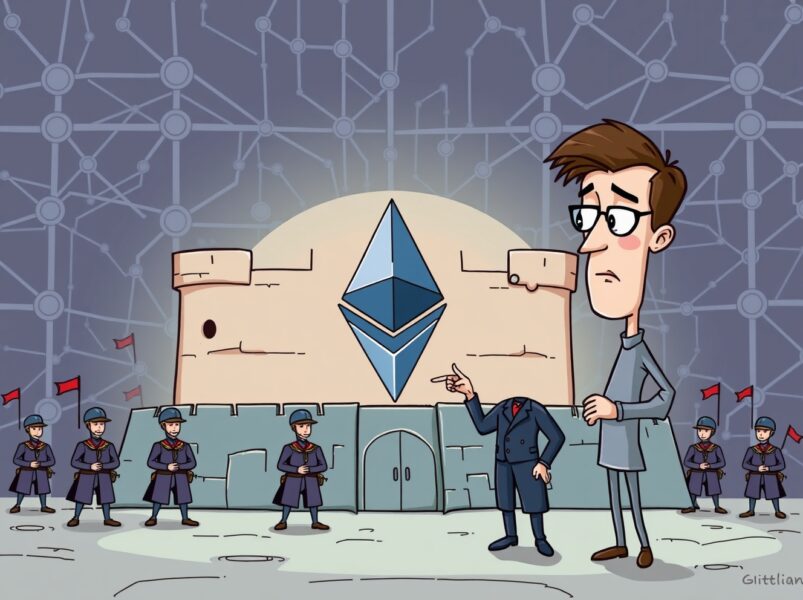
BitcoinWorld Crucial ETH Unstaking Period: Vitalik Buterin’s Unwavering Defense for Network Security Ever wondered why withdrawing your staked Ethereum (ETH) isn’t an instant process? It’s a question that often sparks debate within the crypto community. Ethereum founder Vitalik Buterin recently stepped forward to defend the network’s approximately 45-day ETH unstaking period, asserting its crucial role in safeguarding the network’s integrity. This lengthy waiting time, while sometimes seen as an inconvenience, is a deliberate design choice with profound implications for security. Why is the ETH Unstaking Period a Vital Security Measure? Vitalik Buterin’s defense comes amidst comparisons to other networks, like Solana, which boast significantly shorter unstaking times. He drew a compelling parallel to military operations, explaining that an army cannot function effectively if its soldiers can simply abandon their posts at a moment’s notice. Similarly, a blockchain network requires a stable and committed validator set to maintain its security. The current ETH unstaking period isn’t merely an arbitrary delay. It acts as a critical buffer, providing the network with sufficient time to detect and respond to potential malicious activities. If validators could instantly exit, it would open doors for sophisticated attacks, jeopardizing the entire system. Currently, Ethereum boasts over one million active validators, collectively staking approximately 35.6 million ETH, representing about 30% of the total supply. This massive commitment underpins the network’s robust security model, and the unstaking period helps preserve this stability. Network Security: Ethereum’s Paramount Concern A shorter ETH unstaking period might seem appealing for liquidity, but it introduces significant risks. Imagine a scenario where a large number of validators, potentially colluding, could quickly withdraw their stake after committing a malicious act. Without a substantial delay, the network would have limited time to penalize them or mitigate the damage. This “exit queue” mechanism is designed to prevent sudden validator exodus, which could lead to: Reduced decentralization: A rapid drop in active validators could concentrate power among fewer participants. Increased vulnerability to attacks: A smaller, less stable validator set is easier to compromise. Network instability: Frequent and unpredictable changes in validator numbers can lead to performance issues and consensus failures. Therefore, the extended period is not a bug; it’s a feature. It’s a calculated trade-off between immediate liquidity for stakers and the foundational security of the entire Ethereum ecosystem. Ethereum vs. Solana: Different Approaches to Unstaking When discussing the ETH unstaking period, many point to networks like Solana, which offers a much quicker two-day unstaking process. While this might seem like an advantage for stakers seeking rapid access to their funds, it reflects fundamental differences in network architecture and security philosophies. Solana’s design prioritizes speed and immediate liquidity, often relying on different consensus mechanisms and validator economics to manage security risks. Ethereum, on the other hand, with its proof-of-stake evolution from proof-of-work, has adopted a more cautious approach to ensure its transition and long-term stability are uncompromised. Each network makes design choices based on its unique goals and threat models. Ethereum’s substantial value and its role as a foundational layer for countless dApps necessitate an extremely robust security posture, making the current unstaking duration a deliberate and necessary component. What Does the ETH Unstaking Period Mean for Stakers? For individuals and institutions staking ETH, understanding the ETH unstaking period is crucial for managing expectations and investment strategies. It means that while staking offers attractive rewards, it also comes with a commitment to the network’s long-term health. Here are key considerations for stakers: Liquidity Planning: Stakers should view their staked ETH as a longer-term commitment, not immediately liquid capital. Risk Management: The delay inherently reduces the ability to react quickly to market volatility with staked assets. Network Contribution: By participating, stakers contribute directly to the security and decentralization of Ethereum, reinforcing its value proposition. While the current waiting period may not be “optimal” in every sense, as Buterin acknowledged, simply shortening it without addressing the underlying security implications would be a dangerous gamble for the network’s reliability. In conclusion, Vitalik Buterin’s defense of the lengthy ETH unstaking period underscores a fundamental principle: network security cannot be compromised for the sake of convenience. It is a vital mechanism that protects Ethereum’s integrity, ensuring its stability and trustworthiness as a leading blockchain platform. This deliberate design choice, while requiring patience from stakers, ultimately fortifies the entire ecosystem against potential threats, paving the way for a more secure and reliable decentralized future. Frequently Asked Questions (FAQs) Q1: What is the main reason for Ethereum’s long unstaking period? A1: The primary reason is network security. A lengthy ETH unstaking period prevents malicious actors from quickly withdrawing their stake after an attack, giving the network time to detect and penalize them, thus maintaining stability and integrity. Q2: How long is the current ETH unstaking period? A2: The current ETH unstaking period is approximately 45 days. This duration can fluctuate based on network conditions and the number of validators in the exit queue. Q3: How does Ethereum’s unstaking period compare to other blockchains? A3: Ethereum’s unstaking period is notably longer than some other networks, such as Solana, which has a two-day period. This difference reflects varying network architectures and security priorities. Q4: Does the unstaking period affect ETH stakers? A4: Yes, it means stakers need to plan their liquidity carefully, as their staked ETH is not immediately accessible. It encourages a longer-term commitment to the network, aligning staker interests with Ethereum’s stability. Q5: Could the ETH unstaking period be shortened in the future? A5: While Vitalik Buterin acknowledged the current period might not be “optimal,” any significant shortening would likely require extensive research and network upgrades to ensure security isn’t compromised. For now, the focus remains on maintaining robust network defenses. Found this article insightful? Share it with your friends and fellow crypto enthusiasts on social media to spread awareness about the critical role of the ETH unstaking period in Ethereum’s security! To learn more about the latest Ethereum trends, explore our article on key developments shaping Ethereum’s institutional adoption. This post Crucial ETH Unstaking Period: Vitalik Buterin’s Unwavering Defense for Network Security first appeared on BitcoinWorld.
Paylaş
Coinstats2025/09/18 15:30
USD/JPY jumps to near 148.30 as Fed Powell’s caution on rate cuts boosts US Dollar

USD/JPY jumps to near 148.30 as Fed Powell’s caution on rate cuts boosts US Dollar

The post USD/JPY jumps to near 148.30 as Fed Powell’s caution on rate cuts boosts US Dollar appeared on BitcoinEthereumNews.com. USD/JPY climbs to near 148.30 as Fed’s Powell didn’t endorse aggressive dovish stance. Fed’s Powell warns of slowing job demand and upside inflation risks. Japan’s Jibun Bank Manufacturing PMI declines at a faster pace in September. The USD/JPY pair trades 0.45% higher to near 148.30 during the European trading session on Wednesday. The pair gains sharply as the US Dollar (USD) outperforms a majority of its peers, following comments from Federal Reserve (Fed) Chair Jerome Powell that the central bank needs to be cautious on further interest rate cuts. During the press time, the US Dollar Index (DXY), which tracks the Greenback’s value against six major currencies, rises almost 0.4% to near 97.60. The USD Index resumes its upside journey after a two-day corrective move. On Tuesday, Fed’s Powell stated at the Greater Providence Chamber of Commerce that the upside inflation risks and labor market concerns have posed a challenging situation for the central bank, which is prompting officials to exercise caution on further monetary policy easing. Powell also stated that the current interest rate range is “well positioned to respond to potential economic developments”. Fed Powell’s comments were similar to statements from Federal Open Market Committee (FOMC) members St. Louis Fed President Alberto Musalem, Atlanta Fed President Raphael Bostic, and Cleveland Fed President Beth Hammack who stated on Monday that the central bank needs to cautious over unwinding monetary policy restrictiveness further, citing persistent inflation risks. Going forward, investors will focus on the US Durable Goods Orders and Personal Consumption Expenditure Price Index (PCE) data for August, which will be released on Thursday and Friday, respectively. In Japan, the manufacturing business activity has declined again in September. Preliminary Jibun Bank Manufacturing PMI data came in lower at 48.4 against 49.7 in August. Economists had anticipated the Manufacturing PMI to…
Paylaş
BitcoinEthereumNews2025/09/25 01:31
