Solana’s Ecosystem Faces Growing Challenges Despite Developer Initiatives Despite recent technological advancements and an active developer community, Solana’s Solana’s Ecosystem Faces Growing Challenges Despite Developer Initiatives Despite recent technological advancements and an active developer community, Solana’s

SOL Price Drops as TVL Declines and Memecoin Hype Fades
2025/12/13 06:17
Sol Price Drops As Tvl Declines And Memecoin Hype Fades

Solana’s Ecosystem Faces Growing Challenges Despite Developer Initiatives

Despite recent technological advancements and an active developer community, Solana’s native token (SOL) has experienced sustained price weakness over the past month. Market signals indicate waning investor confidence amid declining on-chain activity and a broader slowdown in blockchain application demand, raising concerns about Solana’s near-term trajectory.

Key Takeaways

  • SOL’s funding rates indicate diminished bullish momentum after a 46% price decline, signaling cautious trader sentiment.
  • Decreased decentralized application (DApp) revenues and falling total value locked (TVL) suggest increasing market fatigue, even as ecosystem developments continue.
  • Network activity on Solana remains relatively stable compared to competitors, yet transaction volumes have not translated into renewed investor interest.
  • Recent protocol upgrades, like the launch of Firedancer, aim to improve scalability and performance but have yet to reverse bearish trends.

Market Indicators Reflect Caution

Solana’s token has struggled to hold above the $145 level, with on-chain metrics highlighting a rapid decline in ecosystem engagement. The total value locked, a key measure of user and investor confidence, has fallen more than $10 billion since its September peak of $15 billion. Correspondingly, DApp revenues have shrunk from $37 million to about $26 million weekly, reflecting cooling demand for decentralized applications on the network.

Solana TVL (left) vs. 7-day DApp revenues (right), USD. Source: DefiLlama

Overall network activity remains relatively resilient compared to other blockchains. Fees on Solana have decreased by 21% in the past month, less steep than on BNB Chain (down 67%) and Ethereum (down 41%). Transaction volume on Solana increased by 6%, contrasting with a 42% drop on BNB Chain, suggesting some retained network interest despite the broader market downturn.

Trader Sentiment Under Pressure

Analyzing futures market data reveals a subdued risk appetite among traders. The perpetual futures funding rate, which indicates market sentiment, stood at 6%, reflecting tepid bullish conditions. An unusual negative rate of 11% briefly appeared but was quickly stabilized, hinting at cautious optimism rather than strong bearish pressure. The recent 46% price drop over three months has likely dampened bullish sentiment, requiring time to rebuild confidence.
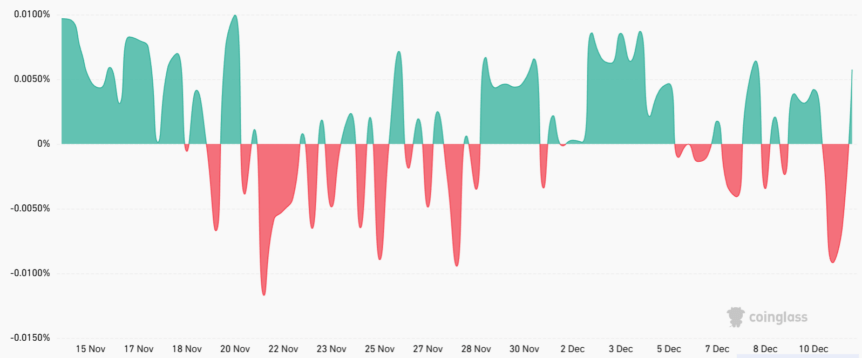
SOL perpetual futures funding rateSOL perpetual futures 8-hour funding rate. Source: CoinGlass

Meanwhile, recent strategic developments aim to stabilize and grow the ecosystem. The launch of Firedancer, an innovative validator client developed over three years with Jump Trading, seeks to boost transaction capacity. Early responses, such as a validator node re-synced in under two minutes, signal promising technical improvements.

Additionally, Kamino, the second-largest Solana DApp by TVL, unveiled new products including fixed-rate loans, off-chain collateral, and Bitcoin-backed institutional credit, with annualized fees of $69 million and an average yield of 10%. These moves suggest ongoing ecosystem expansion despite cautious investor sentiment, which has yet to translate into a sustained bullish trend for SOL. Whether the token can reclaim levels around $190 remains uncertain, especially if broader macro conditions persist.

This article was originally published as SOL Price Drops as TVL Declines and Memecoin Hype Fades on Crypto Breaking News – your trusted source for crypto news, Bitcoin news, and blockchain updates.

Sorumluluk Reddi: Bu sitede yeniden yayınlanan makaleler, halka açık platformlardan alınmıştır ve yalnızca bilgilendirme amaçlıdır. MEXC'nin görüşlerini yansıtmayabilir. Tüm hakları telif sahiplerine aittir. Herhangi bir içeriğin üçüncü taraf haklarını ihlal ettiğini düşünüyorsanız, kaldırılması için lütfen service@support.mexc.com ile iletişime geçin. MEXC, içeriğin doğruluğu, eksiksizliği veya güncelliği konusunda hiçbir garanti vermez ve sağlanan bilgilere dayalı olarak alınan herhangi bir eylemden sorumlu değildir. İçerik, finansal, yasal veya diğer profesyonel tavsiye niteliğinde değildir ve MEXC tarafından bir tavsiye veya onay olarak değerlendirilmemelidir.

Ayrıca Şunları da Beğenebilirsiniz

Aave DAO to Shut Down 50% of L2s While Doubling Down on GHO

Aave DAO to Shut Down 50% of L2s While Doubling Down on GHO

The post Aave DAO to Shut Down 50% of L2s While Doubling Down on GHO appeared on BitcoinEthereumNews.com. Aave DAO is gearing up for a significant overhaul by shutting down over 50% of underperforming L2 instances. It is also restructuring its governance framework and deploying over $100 million to boost GHO. This could be a pivotal moment that propels Aave back to the forefront of on-chain lending or sparks unprecedented controversy within the DeFi community. Sponsored Sponsored ACI Proposes Shutting Down 50% of L2s The “State of the Union” report by the Aave Chan Initiative (ACI) paints a candid picture. After a turbulent period in the DeFi market and internal challenges, Aave (AAVE) now leads in key metrics: TVL, revenue, market share, and borrowing volume. Aave’s annual revenue of $130 million surpasses the combined cash reserves of its competitors. Tokenomics improvements and the AAVE token buyback program have also contributed to the ecosystem’s growth. Aave global metrics. Source: Aave However, the ACI’s report also highlights several pain points. First, regarding the Layer-2 (L2) strategy. While Aave’s L2 strategy was once a key driver of success, it is no longer fit for purpose. Over half of Aave’s instances on L2s and alt-L1s are not economically viable. Based on year-to-date data, over 86.6% of Aave’s revenue comes from the mainnet, indicating that everything else is a side quest. On this basis, ACI proposes closing underperforming networks. The DAO should invest in key networks with significant differentiators. Second, ACI is pushing for a complete overhaul of the “friendly fork” framework, as most have been unimpressive regarding TVL and revenue. In some cases, attackers have exploited them to Aave’s detriment, as seen with Spark. Sponsored Sponsored “The friendly fork model had a good intention but bad execution where the DAO was too friendly towards these forks, allowing the DAO only little upside,” the report states. Third, the instance model, once a smart…
Paylaş
BitcoinEthereumNews2025/09/18 02:28
Shytoshi Kusama Addresses $2.4 Million Shibarium Bridge Exploit

Shytoshi Kusama Addresses $2.4 Million Shibarium Bridge Exploit

The post Shytoshi Kusama Addresses $2.4 Million Shibarium Bridge Exploit appeared on BitcoinEthereumNews.com. The lead developer of Shiba Inu, Shytoshi Kusama, has publicly addressed the Shibarium bridge exploit that occurred recently, draining $2.4 million from the network. After days of speculation about his involvement in managing the crisis, the project leader broke his silence. Kusama emphasized that a special “war room” has been set up to restore stolen finances and enhance network security. The statement is his first official words since the bridge compromise occurred. “Although I am focusing on AI initiatives to benefit all our tokens, I remain with the developers and leadership in the war room,” Kusama posted on social media platform X. He dismissed claims that he had distanced himself from the project as “utterly preposterous.” The developer said that the reason behind his silence at first was strategic. Before he could make any statements publicly, he must have taken time to evaluate what he termed a complex and deep situation properly. Kusama also vowed to provide further updates in the official Shiba Inu channels as the team comes up with long-term solutions. As highlighted in our previous article, targeted Shibarium’s bridge infrastructure through a sophisticated attack vector. Hackers gained unauthorized access to validator signing keys, compromising the network’s security framework. The hackers executed a flash loan to acquire 4.6 million BONE ShibaSwap tokens. The validator power on the network was majority held by them after this purchase. They were able to transfer assets out of Shibarium with this control. The response of Shibarium developers was timely to limit the breach. They instantly halted all validator functions in order to avoid additional exploitation. The team proceeded to deposit the assets under staking in a multisig hardware wallet that is secure. External security companies were involved in the investigation effort. Hexens, Seal 911, and PeckShield are collaborating with internal developers to…
Paylaş
BitcoinEthereumNews2025/09/18 03:46
