Shiba Inu has restored BONE transfers on Shibarium’s Plasma bridge, re-enabling deposits and withdrawals between Ethereum and the layer-2 network following a security incident that forced a month-long pause. In an October 14 post, core contributor Kaal Dhairya wrote that the “Plasma Bridge is back online for BONE, following a comprehensive review and a series […]Shiba Inu has restored BONE transfers on Shibarium’s Plasma bridge, re-enabling deposits and withdrawals between Ethereum and the layer-2 network following a security incident that forced a month-long pause. In an October 14 post, core contributor Kaal Dhairya wrote that the “Plasma Bridge is back online for BONE, following a comprehensive review and a series […]

Shiba Inu Reopens Shibarium Bridge After 1-Month Freeze

2025/10/16 13:30

Shiba Inu has restored BONE transfers on Shibarium’s Plasma bridge, re-enabling deposits and withdrawals between Ethereum and the layer-2 network following a security incident that forced a month-long pause. In an October 14 post, core contributor Kaal Dhairya wrote that the “Plasma Bridge is back online for BONE, following a comprehensive review and a series of security enhancements,” adding that users can now bridge BONE “with a safer, stronger, and more resilient experience.”

Shiba Inu Relaunches The Shibarium Bridge

The relaunch comes after Shibarium’s bridge was restricted in mid-September following a validator-key compromise that enabled a malicious exit on the PoS bridge. In a September 21 incident report, Dhairya stated that “on September 12, 2025 at 18:44 UTC, unauthorized validator signing power was used to push a malicious state/exit through the PoS bridge, withdrawing multiple assets,” prompting immediate containment measures and a broader hardening program. The team said at the time it would publish full technical details once it was safe to do so and that “bridging remains restricted during containment/hardening.”

Shibarium’s team is positioning the re-opened BONE bridge as the first step in a phased restoration of services, backed by new policy-level and operational controls. The most visible change for users is a mandatory delay before withdrawals finalize: “All BONE Plasma withdrawals now include a 7-day finalization delay. This buffer gives operators and security teams time to monitor and respond to unusual activity before funds finalize—significantly improving defense without removing user access.” The post frames the delay as reinforcing Plasma’s fraud-resistance guarantees.

Another control introduced at the bridge layer is proactive address blacklisting. According to the team, the new mechanism “lets us flag and block suspicious addresses at the bridge layer,” with the intent of preventing repeat abuse across the ecosystem. The Shiba Inu team also emphasized that critical code changes underwent an external review: “All critical changes were reviewed by Hexens, adding an independent layer of expert scrutiny.” The relaunch followed a validation sequence that included unit tests, end-to-end simulations, deployment on the public testnet (“Puppynet”), and “multi-timeframe” monitoring before production activation.

The October 14 update also addresses a separate strand of the September incident involving KNINE and minor OSCAR token flows. The Shiba Inu team disclosed that the attacker “drained and sold roughly $600 worth of OSCAR tokens from the bridge but ignored the 5 ETH recovery offer for KNINE tokens,” which now remain blacklisted and unusable to the attacker. The previously announced KNINE bounty “has expired,” the team said, but it plans “one final, conditional bounty (amount TBD) for complete return of all KNINE held by attacker-controlled addresses,” stressing that partial returns will not qualify and that terms will appear only on verified channels.

While only BONE is live on the Plasma bridge today, Shibarium signaled a broader roadmap. The team plans “gradual re-enablement for other tokens” and is “finalizing a fair and transparent repayment framework for affected users,” with specifics to be published once doing so would not increase risk. The post underscores a measured posture after the September compromise: “Safety first: We won’t publish specifics that could be gamed while security work is ongoing. Expect measured, verifiable updates.”

Context around the month-long outage highlights the extent of remediation behind the scenes. In late September, Shibarium detailed rotations of validator signers, migrations of contract control to multi-party hardware custody, targeted contract-level protections, live monitoring and exchange coordination, and the engagement of independent security and incident-response specialists. The September 21 update also acknowledged decentralization shortcomings in validator operations and outlined a hardening plan “in progress collaboration with Hexens,” with restoration gated on third-party sign-offs and successful drills on test environments.

For now, the reopening restores a critical path for validators, liquidity providers and users who rely on BONE mobility between Ethereum and Shibarium. As the post concludes, the new safeguards—including blacklisting and the 7-day challenge window—are intended to align the bridge’s user experience with the practical realities of operating a Plasma-style system under adversarial conditions: “Every new safeguard, every extra check, and yes—even the 7-day delay—reflects one core principle: protecting the community.”

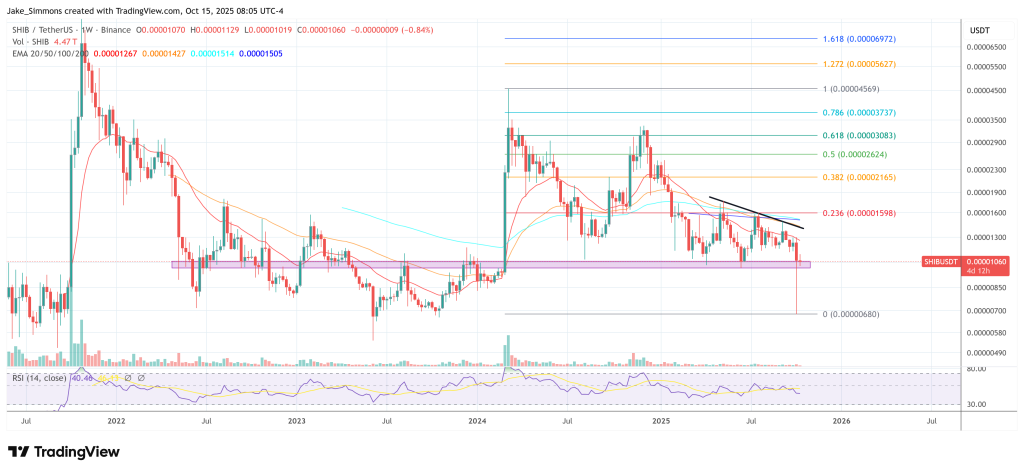
At press time, the Shiba Inu (SHIB) token traded at $0.00001060.
Shiba Inu price
Piyasa Fırsatı
BitShiba Logosu
BitShiba Fiyatı(SHIBA)
$0,000000000427
$0,000000000427$0,000000000427
+2,39%
USD
BitShiba (SHIBA) Canlı Fiyat Grafiği
Sorumluluk Reddi: Bu sitede yeniden yayınlanan makaleler, halka açık platformlardan alınmıştır ve yalnızca bilgilendirme amaçlıdır. MEXC'nin görüşlerini yansıtmayabilir. Tüm hakları telif sahiplerine aittir. Herhangi bir içeriğin üçüncü taraf haklarını ihlal ettiğini düşünüyorsanız, kaldırılması için lütfen service@support.mexc.com ile iletişime geçin. MEXC, içeriğin doğruluğu, eksiksizliği veya güncelliği konusunda hiçbir garanti vermez ve sağlanan bilgilere dayalı olarak alınan herhangi bir eylemden sorumlu değildir. İçerik, finansal, yasal veya diğer profesyonel tavsiye niteliğinde değildir ve MEXC tarafından bir tavsiye veya onay olarak değerlendirilmemelidir.

Ayrıca Şunları da Beğenebilirsiniz

The Channel Factories We’ve Been Waiting For

The Channel Factories We’ve Been Waiting For

The post The Channel Factories We’ve Been Waiting For appeared on BitcoinEthereumNews.com. Visions of future technology are often prescient about the broad strokes while flubbing the details. The tablets in “2001: A Space Odyssey” do indeed look like iPads, but you never see the astronauts paying for subscriptions or wasting hours on Candy Crush.  Channel factories are one vision that arose early in the history of the Lightning Network to address some challenges that Lightning has faced from the beginning. Despite having grown to become Bitcoin’s most successful layer-2 scaling solution, with instant and low-fee payments, Lightning’s scale is limited by its reliance on payment channels. Although Lightning shifts most transactions off-chain, each payment channel still requires an on-chain transaction to open and (usually) another to close. As adoption grows, pressure on the blockchain grows with it. The need for a more scalable approach to managing channels is clear. Channel factories were supposed to meet this need, but where are they? In 2025, subnetworks are emerging that revive the impetus of channel factories with some new details that vastly increase their potential. They are natively interoperable with Lightning and achieve greater scale by allowing a group of participants to open a shared multisig UTXO and create multiple bilateral channels, which reduces the number of on-chain transactions and improves capital efficiency. Achieving greater scale by reducing complexity, Ark and Spark perform the same function as traditional channel factories with new designs and additional capabilities based on shared UTXOs.  Channel Factories 101 Channel factories have been around since the inception of Lightning. A factory is a multiparty contract where multiple users (not just two, as in a Dryja-Poon channel) cooperatively lock funds in a single multisig UTXO. They can open, close and update channels off-chain without updating the blockchain for each operation. Only when participants leave or the factory dissolves is an on-chain transaction…
Paylaş
BitcoinEthereumNews2025/09/18 00:09
XRP Price Prediction: Can Ripple Rally Past $2 Before the End of 2025?

XRP Price Prediction: Can Ripple Rally Past $2 Before the End of 2025?

The post XRP Price Prediction: Can Ripple Rally Past $2 Before the End of 2025? appeared first on Coinpedia Fintech News The XRP price has come under enormous pressure
Paylaş
CoinPedia2025/12/16 19:22
BlackRock boosts AI and US equity exposure in $185 billion models

BlackRock boosts AI and US equity exposure in $185 billion models

The post BlackRock boosts AI and US equity exposure in $185 billion models appeared on BitcoinEthereumNews.com. BlackRock is steering $185 billion worth of model portfolios deeper into US stocks and artificial intelligence. The decision came this week as the asset manager adjusted its entire model suite, increasing its equity allocation and dumping exposure to international developed markets. The firm now sits 2% overweight on stocks, after money moved between several of its biggest exchange-traded funds. This wasn’t a slow shuffle. Billions flowed across multiple ETFs on Tuesday as BlackRock executed the realignment. The iShares S&P 100 ETF (OEF) alone brought in $3.4 billion, the largest single-day haul in its history. The iShares Core S&P 500 ETF (IVV) collected $2.3 billion, while the iShares US Equity Factor Rotation Active ETF (DYNF) added nearly $2 billion. The rebalancing triggered swift inflows and outflows that realigned investor exposure on the back of performance data and macroeconomic outlooks. BlackRock raises equities on strong US earnings The model updates come as BlackRock backs the rally in American stocks, fueled by strong earnings and optimism around rate cuts. In an investment letter obtained by Bloomberg, the firm said US companies have delivered 11% earnings growth since the third quarter of 2024. Meanwhile, earnings across other developed markets barely touched 2%. That gap helped push the decision to drop international holdings in favor of American ones. Michael Gates, lead portfolio manager for BlackRock’s Target Allocation ETF model portfolio suite, said the US market is the only one showing consistency in sales growth, profit delivery, and revisions in analyst forecasts. “The US equity market continues to stand alone in terms of earnings delivery, sales growth and sustainable trends in analyst estimates and revisions,” Michael wrote. He added that non-US developed markets lagged far behind, especially when it came to sales. This week’s changes reflect that position. The move was made ahead of the Federal…
Paylaş
BitcoinEthereumNews2025/09/18 01:44