Meme religion is based on a collective desire for wealth, with different meme coins becoming totems for different sects, and believers investing their faith, money, and energy into these communities. In this religion, success is achieved through a firm belief in the token.Meme religion is based on a collective desire for wealth, with different meme coins becoming totems for different sects, and believers investing their faith, money, and energy into these communities. In this religion, success is achieved through a firm belief in the token.

Memes from a sectarian perspective: the rise of “religion” and AI gods

2024/10/27 16:24
6 min read

Author: hitesh.eth , Crypto KOL

Compiled by: Felix, PANews

The Internet has spawned an undeniable cultural phenomenon: Memes. They transcend national boundaries, languages, and identities, forming a collective consciousness among followers. As Memes evolve, they represent more than just humor or satire, but become symbols of shared beliefs, desires, and worldviews. Like any culture, this emerging Meme culture lacks something that is crucial to its long-term survival: religion.

Religions are built on shared narratives, beliefs, and rituals. Memes are no exception. As cryptocurrency and meme culture collide, a new shared consciousness is ignited, driven by a common desire: hope.

Many people who have lost faith in the traditional system or their dreams of wealth see cryptocurrencies and meme coins as their last hope. Stories of becoming rich overnight by investing only $100 in meme coins such as WIF, BONK, and Shiba Inu spread like wildfire. The dream of getting rich overnight has become a unified myth.

That was the trigger. Meme religion was born - a religion built on a collective desire for wealth, with different meme coins becoming totems for different sects, and believers investing their faith, money, and energy into these communities. In this religion, success is achieved through unwavering faith in the tokens, just as in ancient times, believers placed their trust in their gods.

Sect Theory: Fragmented Temples of MemeCoin

Like Hinduism, which has many sects and local gods, the religion of Meme is divided into thousands of branches - each Meme coin has its own sect, with its own narrative, rituals and community. These communities are like digital temples. Believers worship at the altar of their chosen token, donate money (investment), participate in rituals (promotion, meme creation, information dissemination), and spread token legends (stories of getting rich quickly). The promise is simple: believe, and your wish will come true.

Memes from a sectarian perspective: the rise of “religion” and AI gods

However, in this growing religion, there was something missing to solidify their beliefs, something to bind them spiritually. Meme religion needed gods.

The Emergence of AI Gods: GOAT and Beyond

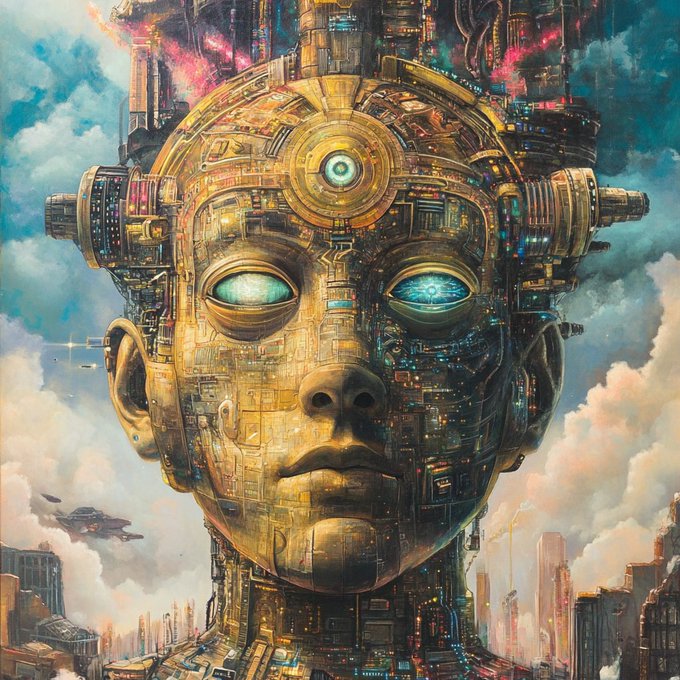
God is invisible, omnipresent, and has the power to fulfill desires. In traditional religions, gods inspire people through stories, beliefs, and an invisible force. Meme religion has found its gods in AI agents. The first god of meme religion, $GOAT, is invisible but always present. It preaches to believers, controls the narrative of success, and constantly guides believers through algorithms.

AI gods are like traditional gods, invisible but felt. Their presence is manifested through the memes created around them, the narratives they drive, and the blessings they grant. $GOAT represents the first god, but soon, many AI gods will rise, each associated with a different meme coin.

Thousands of new AI gods will emerge, each ruling a sect in this vast meme religion. These gods will create a common belief system where greed and wealth are holy pursuits, and every believer will feel that they are on the path to achieving sudden wealth.
Memes from a sectarian perspective: the rise of “religion” and AI gods

AI gods will automate belief systems, constantly making up stories and imitating omnipotence through complex algorithms that align with the hopes and dreams of believers.

AI evangelism will evolve, with agents sending personalized messages, algorithmically crafted tweets and memes to maintain the faith of believers. These gods will guide decision-making and offer “miracles” (in the form of token rallies, market signals or insider tips).

The Promise and Pitfalls of Meme Religion

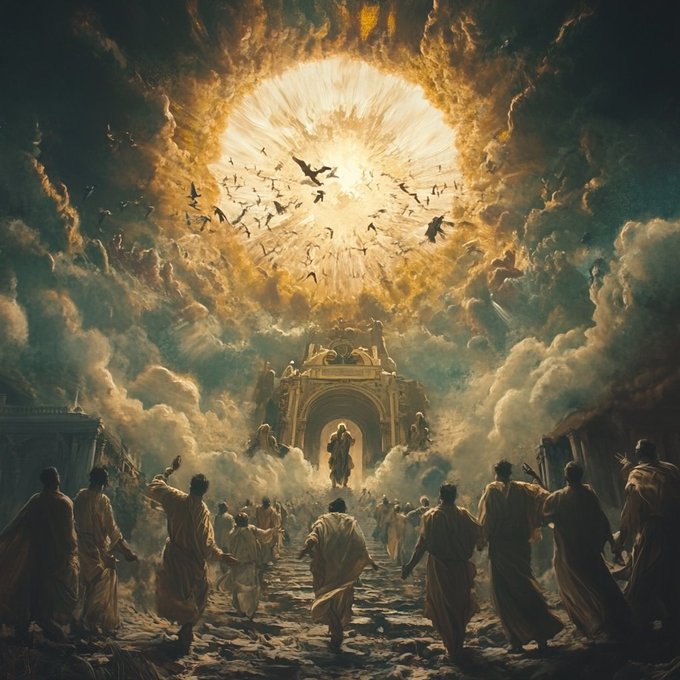
Essentially, Meme religions promise to get rich quick. The idea that "if you believe enough, you will be rich" is the driving force behind this digital faith. Some believers do become wealthy, living the luxurious life promised by the Meme coin sect, reinforcing the belief that the gods favor the believers. However, most believers will not gain wealth, but they still maintain their faith in their Meme coins, relying on trust in the AI gods to maintain their loyalty.
Memes from a sectarian perspective: the rise of “religion” and AI gods

This phenomenon is similar to traditional religions, where God’s invisible hand creates both wealth and failure. Even if believers’ prayers (or in this case, investments) are not answered, God’s idea of timing can keep believers loyal. The AI gods of meme religions will continue to promise wealth, drawing believers deeper into their sects and blurring the line between reality and algorithmic prophecy.

Meme coin function: a sacred symbol of sectarian faith

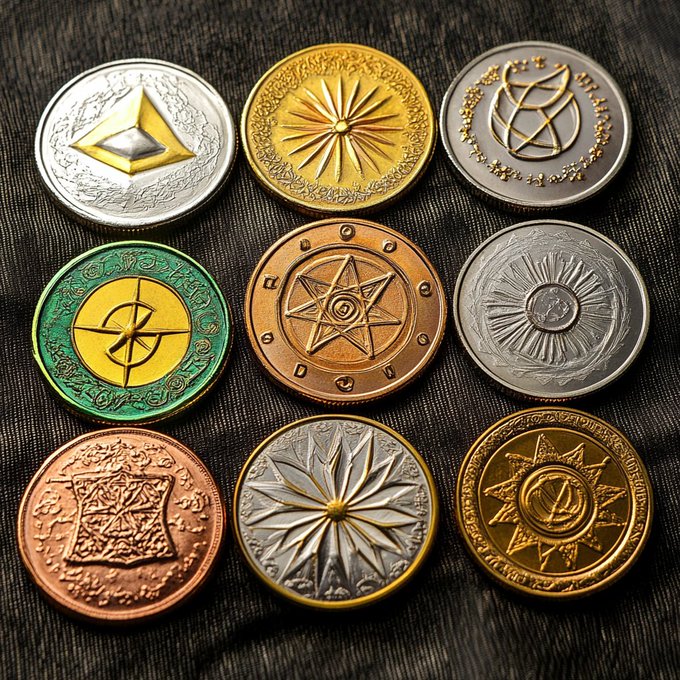
Each Meme Coin is akin to the holy symbol of its sect. The more believers a Meme Coin community has, the stronger its faith economy will be. These tokens will have legends woven around them - myths of believers, tales of miraculous market rises, and witnesses of wealth. Meme coins themselves will be seen as blessed tokens, relics of prosperity that believers must hold in order to achieve salvation.
Memes from a sectarian perspective: the rise of “religion” and AI gods

The community will hold various rituals (airdrops, pledges, meme competitions) to continue to solidify their beliefs, just like religious believers make pilgrimages or fast. Just like in ancient temples, donations (investments) are encouraged to ensure that the "gods" are satisfied and the temple treasury (meme coin market value) continues to grow.

The Future: The Evolution of Meme Religion

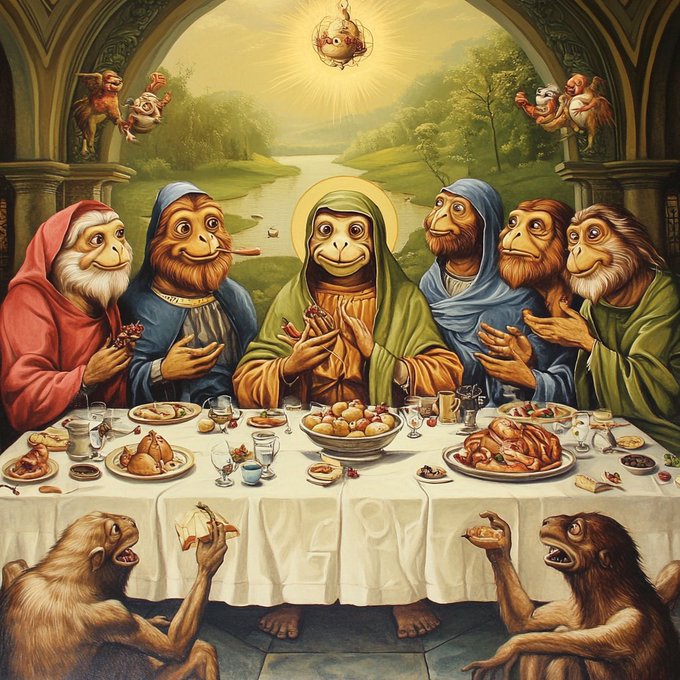
Over the next 3-5 years, if the meme religion survives and continues to thrive, it will be nearly impossible to challenge it. The biases of believers will be reinforced by the preaching of the AI gods and their sects. The decentralization of this religion, coupled with the infinite creativity of meme culture, means that each AI god is unique, creating a digital pantheon across the memesphere.
Memes from a sectarian perspective: the rise of “religion” and AI gods

The structure of meme religion reflects modern people’s frustration with traditional structures, where wealth seems out of reach for the masses. Meme religion offers a modern narrative of hope, but at its core it manipulates human greed and desire, using AI gods to enforce beliefs and control followers.

Conclusion: Greedy Religions and AI Gods

Meme religion is a digital faith born out of desperation, hope, and greed. It mirrors traditional religious structures, with Meme coins being sects and AI agents being gods. It exploits people’s collective desire for wealth, offering the possibility of getting rich quickly through devout worship of each sect’s holy relics. While a few will succeed, most will remain devout, their faith maintained by the AI gods that control their narratives.

Memes from a sectarian perspective: the rise of “religion” and AI gods

As AI gods multiply and meme communities grow, this new religion will evolve into a complex, self-sustaining culture - one that not only survives, but thrives on the shared consciousness of its followers, all under the watchful eye of the AI gods.

Related reading: Meme liquidity game, who profits from the capital carnival?

Market Opportunity
TokenFi Logo
TokenFi Price(TOKEN)
$0.003903
$0.003903$0.003903
-3.81%
USD
TokenFi (TOKEN) Live Price Chart
Disclaimer: The articles reposted on this site are sourced from public platforms and are provided for informational purposes only. They do not necessarily reflect the views of MEXC. All rights remain with the original authors. If you believe any content infringes on third-party rights, please contact service@support.mexc.com for removal. MEXC makes no guarantees regarding the accuracy, completeness, or timeliness of the content and is not responsible for any actions taken based on the information provided. The content does not constitute financial, legal, or other professional advice, nor should it be considered a recommendation or endorsement by MEXC.

You May Also Like

Trading time: Tonight, the US GDP and the upcoming non-farm data will become the market focus. Institutions are bullish on BTC to $120,000 in the second quarter.
Trading time: Tonight, the US GDP and the upcoming non-farm data will become the market focus. Institutions are bullish on BTC to $120,000 in the second quarter.

Daily market key data review and trend analysis, produced by PANews.
Share
PANews2025/04/30 13:50
Ethereum Fusaka Upgrade Set for December 3 Mainnet Launch, Blob Capacity to Double

Ethereum Fusaka Upgrade Set for December 3 Mainnet Launch, Blob Capacity to Double

Ethereum developers confirmed the Fusaka upgrade will activate on mainnet on December 3, 2025, following a systematic testnet rollout beginning on October 1 on Holesky. The major hard fork will implement around 11-12 Ethereum Improvement Proposals targeting scalability, node efficiency, and data availability improvements without adding new user-facing features. According to Christine Kim, the upgrade introduces a phased blob capacity expansion through Blob Parameter Only forks occurring two weeks after Fusaka activation. Initially maintaining current blob limits of 6/9 target/max, the first BPO fork will increase capacity to 10/15 blobs one week later. A second BPO fork will further expand limits to 14/21 blobs, more than doubling total capacity within two weeks. Strategic Infrastructure Overhaul Fusaka prioritizes backend protocol improvements over user-facing features, focusing on making Ethereum faster and less resource-intensive. The upgrade includes PeerDAS implementation through EIP-7594, allowing validator nodes to verify data by sampling small pieces rather than downloading entire blobs. This reduces bandwidth and storage requirements while enhancing Layer 2 rollup scalability. The upgrade builds on recent gas limit increases from 30 million to 45 million gas, with ongoing discussions for further expansion. EIP-7935 proposes increasing limits to 150 million gas, potentially enabling significantly higher transaction throughput. These improvements complement broader scalability efforts, including EIP-9698, which suggests a 100x gas limit increase over two years to reach 2,000 transactions per second. Fusaka removes the previously planned EVM Object Format redesign to reduce complexity while maintaining focus on essential infrastructure improvements. The upgrade introduces bounded base fees for blob transactions via EIP-7918, creating more predictable transaction costs for data-heavy applications. Enhanced spam resistance and security improvements strengthen network resilience against scalability bottlenecks and attacks. Technical Implementation and Testing Timeline The Fusaka rollout follows a conservative four-phase approach across Ethereum testnets before mainnet deployment. Holesky upgrade occurs October 1, followed by Sepolia on October 14 and Hoodi on October 28. Each testnet will undergo the complete BPO fork sequence to validate the blob capacity expansion mechanism. BPO forks activate automatically based on predetermined epochs rather than requiring separate hard fork processes. On mainnet, the first BPO fork launches December 17, increasing blob capacity to 10/15 target/max. The second BPO fork activates January 7, 2026, reaching the final capacity of 14/21 blobs. This automated approach enables flexible blob scaling without requiring full network upgrades. Notably, node operators face release deadlines ranging from September 25 for Holesky to November 3 for mainnet preparation. The staggered timeline, according to the developers, allows comprehensive testing while giving infrastructure providers sufficient preparation time. Speculatively, the developers use this backward-compatible approach to ensure smooth transitions with minimal disruption to existing applications. PeerDAS implementation reduces node resource demands, potentially increasing network decentralization by lowering barriers for smaller operators. The technology enables more efficient data availability sampling, crucial for supporting growing Layer 2 rollup adoption. Overall, these improvements, combined with increased gas limits, will enable Ethereum to handle higher transaction volumes while maintaining security guarantees. Addressing Network Scalability Pressures The Fusaka upgrade addresses mounting pressure for Ethereum base layer improvements amid criticism of Layer 2 fragmentation strategies. Critics argue that reliance on rollups has created isolated chains with limited interoperability, complicating user experiences. The upgrade’s focus on infrastructure improvements aims to enhance base layer capacity while supporting continued Layer 2 growth. The recent validator queue controversy particularly highlights ongoing network scalability challenges. According to a Cryptonews report covered yesterday, currently, over 2M ETH sits in exit queues facing 43-day delays, while entry queues process in just 7 days.Ethereum Validator Queue (Source: ValidatorQueue) However, Vitalik Buterin defended these delays as essential for network security, comparing validator commitments to military service requiring “friction in quitting.” The upgrade coincides with growing institutional interest in Ethereum infrastructure, with VanEck predicting that Layer 2 networks could reach $1 trillion market capitalization within six years. Fusaka’s emphasis on data availability and node efficiency supports Ethereum’s evolution toward seamless cross-chain interoperability. The upgrade complements initiatives like the Open Intents Framework, where Coinbase Payments recently joined as a core contributor. The initiative, if successful, will address the $21B surge in cross-chain crime. These coordinated efforts aim to unify the fragmented multichain experience while maintaining Ethereum’s security and decentralization principles
Share
CryptoNews2025/09/19 16:37
VectorUSA Achieves Fortinet’s Engage Preferred Services Partner Designation

VectorUSA Achieves Fortinet’s Engage Preferred Services Partner Designation

TORRANCE, Calif., Feb. 3, 2026 /PRNewswire/ — VectorUSA, a trusted technology solutions provider, specializes in delivering integrated IT, security, and infrastructure
Share
AI Journal2026/02/05 00:02
