By Axel Bitblaze Compiled by Tim, PANews Many people must be wondering whether the current trend of the crypto market is a fluctuation before breaking through new highs, or a signal that the market has reached its peak? In reality, it’s not that simple. The short, medium, and long term scenarios can look very different. I will provide a comprehensive analysis of BTC, ETH, and altcoins before they enter each stage: Now let’s get straight to the point: the next few months will determine how this cycle plays out, and I think this tweet is worth revisiting. Let’s start with what’s happening now. Data last Friday showed the unemployment rate climbed to 4.3%, the highest level since 2021. Nonfarm payrolls showed just 22,000 jobs added, compared to expectations for more than three times that. The U.S. job market has been surprisingly strong for years. Even as growth slows, hiring remains strong. This report changes that trend. This is the first time since the outbreak that both unemployment and hiring rates have turned red at the same time. The market reacted immediately to the news. Futures market pricing shows that the market believes the probability of a rate cut in September has reached 100%. Most expect a 25 basis point rate cut, but the Fed could still opt for a 50 basis point cut. Beyond that, traders see a greater than 75% chance of three or more rate cuts in 2025. The turning point finally came. But there is one thing you need to understand, a rate cut does not mean that everything will immediately go up and not down. The reason is that interest rate cuts will not affect everything overnight. For cryptocurrencies, the short-term, medium-term, and long-term outlooks will be very different. Short-term impact The short-term impact is likely to be bearish. When unemployment rises, it first triggers fears of a recession in the market. This is why gold is hitting new all-time highs while risk assets are underperforming. Here's what might happen: Bitcoin may retest its recent lows. Ethereum and altcoins could drop 10–20% or more. But that doesn't mean the cycle is over. This reflects how traders behave when negative economic data first hits: they sell risky assets and move into safe assets. Medium-term impact With the Fed's rate cuts imminent, the bond market will adjust and yields will fall. Lower yields mean more borrowing and lending, leading to higher spending. It will also help companies increase borrowing to expand their businesses or conduct buybacks. Increased spending means higher profits for companies, and their stock prices will soar. When stocks rise, Bitcoin and altcoins tend to rise even more. A new change has emerged in this cycle: institutional entry. Spot Bitcoin and Ethereum ETFs have opened up direct channels for pension funds and asset management companies; approval of altcoin ETFs is also imminent. In addition, there is $7.2 trillion in funds parked in money market funds, which will see outflows if Treasury yields start to fall. Imagine if even just 1% of the funds flowed into cryptocurrencies, it would be enough to push Bitcoin and altcoins to new highs. That's why the fourth quarter of 2025 looks so important. Liquidity will start to return. The stock saw more buying. And cryptocurrencies may be the biggest winners among all risk assets. Bitcoin typically leads trends while altcoins lag, but in past cycles their biggest gains have come near the end. If history repeats itself, early 2026 could be a frenzy phase for altcoins as Bitcoin stabilizes at higher levels. Long-term effects After the mid-term rebound, risks reappear. The tariffs introduced earlier this year will take another 6-8 months to fully show up in inflation data. This suggests that early 2026 could be the time when inflation starts to rise again. If inflation climbs while unemployment remains high, the Fed may be forced to pause its rate cuts or even raise them again due to concerns about stagflation. The combination of a weak job market and rising prices has historically typically marked the end of an economic cycle. It is environmental factors that may trigger a stock market crash and a crypto bear market. So the script is this: Short term (next 3-4 weeks): market volatility, pullbacks, and panic trading. Medium term (Q4 2025 to January 2026): Liquidity returns, Bitcoin hits new highs, and altcoins enter a frenzy phase. Long term (from Q1 2026): Inflation risks rise and the Fed’s response could mark a cycle top. Final Thoughts Last Friday's weak jobs data suggested one thing: the Fed is about to pivot. Typically, a shift in Fed policy signals poor economic conditions, so a short-term adjustment seems likely. But as things unfold, I think the crypto market will be the biggest winner by Q4 2025.By Axel Bitblaze Compiled by Tim, PANews Many people must be wondering whether the current trend of the crypto market is a fluctuation before breaking through new highs, or a signal that the market has reached its peak? In reality, it’s not that simple. The short, medium, and long term scenarios can look very different. I will provide a comprehensive analysis of BTC, ETH, and altcoins before they enter each stage: Now let’s get straight to the point: the next few months will determine how this cycle plays out, and I think this tweet is worth revisiting. Let’s start with what’s happening now. Data last Friday showed the unemployment rate climbed to 4.3%, the highest level since 2021. Nonfarm payrolls showed just 22,000 jobs added, compared to expectations for more than three times that. The U.S. job market has been surprisingly strong for years. Even as growth slows, hiring remains strong. This report changes that trend. This is the first time since the outbreak that both unemployment and hiring rates have turned red at the same time. The market reacted immediately to the news. Futures market pricing shows that the market believes the probability of a rate cut in September has reached 100%. Most expect a 25 basis point rate cut, but the Fed could still opt for a 50 basis point cut. Beyond that, traders see a greater than 75% chance of three or more rate cuts in 2025. The turning point finally came. But there is one thing you need to understand, a rate cut does not mean that everything will immediately go up and not down. The reason is that interest rate cuts will not affect everything overnight. For cryptocurrencies, the short-term, medium-term, and long-term outlooks will be very different. Short-term impact The short-term impact is likely to be bearish. When unemployment rises, it first triggers fears of a recession in the market. This is why gold is hitting new all-time highs while risk assets are underperforming. Here's what might happen: Bitcoin may retest its recent lows. Ethereum and altcoins could drop 10–20% or more. But that doesn't mean the cycle is over. This reflects how traders behave when negative economic data first hits: they sell risky assets and move into safe assets. Medium-term impact With the Fed's rate cuts imminent, the bond market will adjust and yields will fall. Lower yields mean more borrowing and lending, leading to higher spending. It will also help companies increase borrowing to expand their businesses or conduct buybacks. Increased spending means higher profits for companies, and their stock prices will soar. When stocks rise, Bitcoin and altcoins tend to rise even more. A new change has emerged in this cycle: institutional entry. Spot Bitcoin and Ethereum ETFs have opened up direct channels for pension funds and asset management companies; approval of altcoin ETFs is also imminent. In addition, there is $7.2 trillion in funds parked in money market funds, which will see outflows if Treasury yields start to fall. Imagine if even just 1% of the funds flowed into cryptocurrencies, it would be enough to push Bitcoin and altcoins to new highs. That's why the fourth quarter of 2025 looks so important. Liquidity will start to return. The stock saw more buying. And cryptocurrencies may be the biggest winners among all risk assets. Bitcoin typically leads trends while altcoins lag, but in past cycles their biggest gains have come near the end. If history repeats itself, early 2026 could be a frenzy phase for altcoins as Bitcoin stabilizes at higher levels. Long-term effects After the mid-term rebound, risks reappear. The tariffs introduced earlier this year will take another 6-8 months to fully show up in inflation data. This suggests that early 2026 could be the time when inflation starts to rise again. If inflation climbs while unemployment remains high, the Fed may be forced to pause its rate cuts or even raise them again due to concerns about stagflation. The combination of a weak job market and rising prices has historically typically marked the end of an economic cycle. It is environmental factors that may trigger a stock market crash and a crypto bear market. So the script is this: Short term (next 3-4 weeks): market volatility, pullbacks, and panic trading. Medium term (Q4 2025 to January 2026): Liquidity returns, Bitcoin hits new highs, and altcoins enter a frenzy phase. Long term (from Q1 2026): Inflation risks rise and the Fed’s response could mark a cycle top. Final Thoughts Last Friday's weak jobs data suggested one thing: the Fed is about to pivot. Typically, a shift in Fed policy signals poor economic conditions, so a short-term adjustment seems likely. But as things unfold, I think the crypto market will be the biggest winner by Q4 2025.

US economic data disappoints again, leaving the crypto market in a state of flux. A complete analysis of short-term, medium-term, and long-term trends.

2025/09/08 19:25
4 min read

By Axel Bitblaze

Compiled by Tim, PANews

Many people must be wondering whether the current trend of the crypto market is a fluctuation before breaking through new highs, or a signal that the market has reached its peak?

In reality, it’s not that simple. The short, medium, and long term scenarios can look very different.

I will provide a comprehensive analysis of BTC, ETH, and altcoins before they enter each stage:

Now let’s get straight to the point: the next few months will determine how this cycle plays out, and I think this tweet is worth revisiting.

Let’s start with what’s happening now.

Data last Friday showed the unemployment rate climbed to 4.3%, the highest level since 2021.

Nonfarm payrolls showed just 22,000 jobs added, compared to expectations for more than three times that.
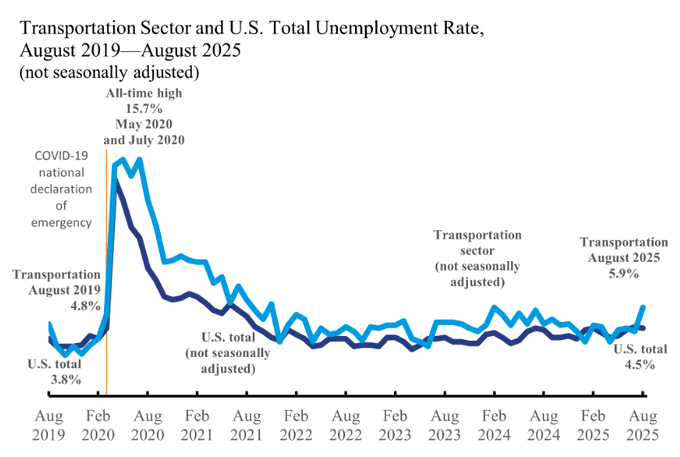
The U.S. job market has been surprisingly strong for years.

Even as growth slows, hiring remains strong.

This report changes that trend.

This is the first time since the outbreak that both unemployment and hiring rates have turned red at the same time.

The market reacted immediately to the news.

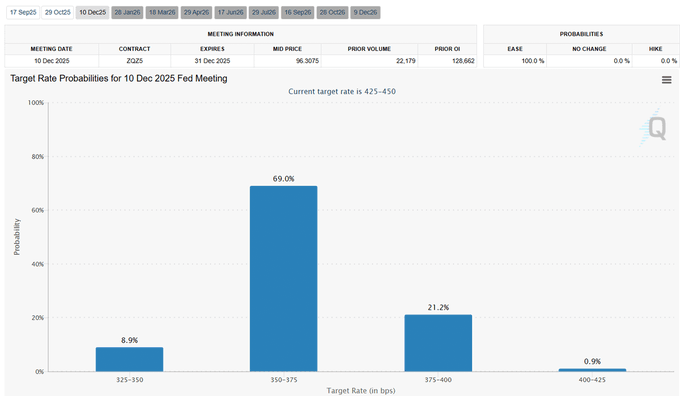
Futures market pricing shows that the market believes the probability of a rate cut in September has reached 100%.

Most expect a 25 basis point rate cut, but the Fed could still opt for a 50 basis point cut.

Beyond that, traders see a greater than 75% chance of three or more rate cuts in 2025.

The turning point finally came.
But there is one thing you need to understand, a rate cut does not mean that everything will immediately go up and not down.

The reason is that interest rate cuts will not affect everything overnight.

For cryptocurrencies, the short-term, medium-term, and long-term outlooks will be very different.

Short-term impact

The short-term impact is likely to be bearish.

When unemployment rises, it first triggers fears of a recession in the market.

This is why gold is hitting new all-time highs while risk assets are underperforming.
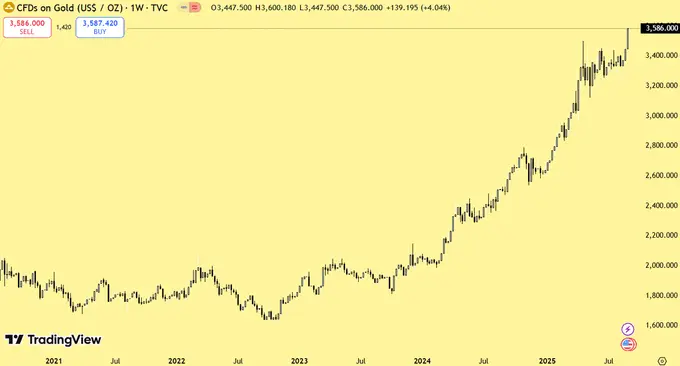
Here's what might happen:

  • Bitcoin may retest its recent lows.
  • Ethereum and altcoins could drop 10–20% or more.

But that doesn't mean the cycle is over.

This reflects how traders behave when negative economic data first hits: they sell risky assets and move into safe assets.

Medium-term impact

With the Fed's rate cuts imminent, the bond market will adjust and yields will fall.

Lower yields mean more borrowing and lending, leading to higher spending.

It will also help companies increase borrowing to expand their businesses or conduct buybacks.

Increased spending means higher profits for companies, and their stock prices will soar.

When stocks rise, Bitcoin and altcoins tend to rise even more.

A new change has emerged in this cycle: institutional entry.

Spot Bitcoin and Ethereum ETFs have opened up direct channels for pension funds and asset management companies; approval of altcoin ETFs is also imminent.

In addition, there is $7.2 trillion in funds parked in money market funds, which will see outflows if Treasury yields start to fall.

Imagine if even just 1% of the funds flowed into cryptocurrencies, it would be enough to push Bitcoin and altcoins to new highs.
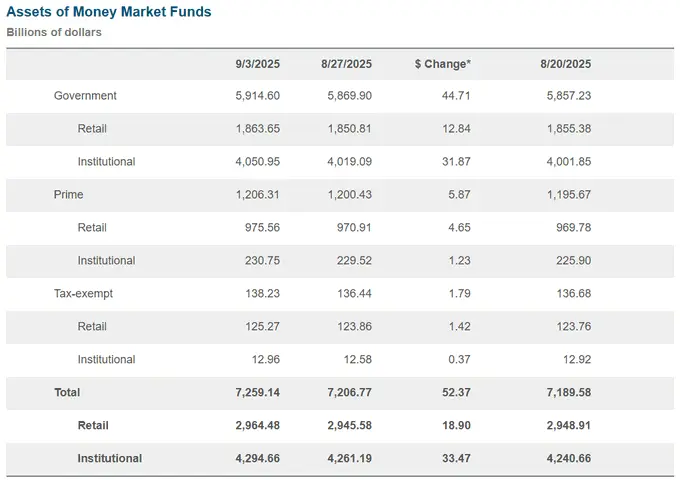
That's why the fourth quarter of 2025 looks so important.

Liquidity will start to return.

The stock saw more buying.

And cryptocurrencies may be the biggest winners among all risk assets.

Bitcoin typically leads trends while altcoins lag, but in past cycles their biggest gains have come near the end.

If history repeats itself, early 2026 could be a frenzy phase for altcoins as Bitcoin stabilizes at higher levels.

Long-term effects

After the mid-term rebound, risks reappear.

The tariffs introduced earlier this year will take another 6-8 months to fully show up in inflation data.

This suggests that early 2026 could be the time when inflation starts to rise again.
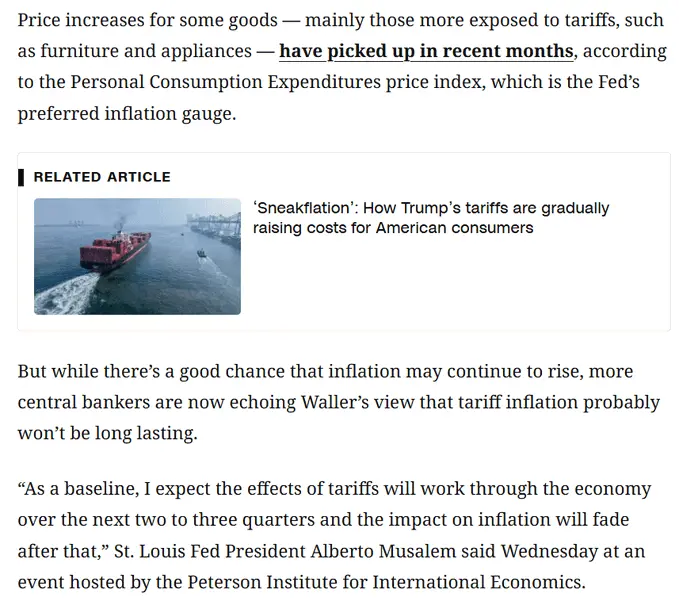
If inflation climbs while unemployment remains high, the Fed may be forced to pause its rate cuts or even raise them again due to concerns about stagflation.

The combination of a weak job market and rising prices has historically typically marked the end of an economic cycle.

It is environmental factors that may trigger a stock market crash and a crypto bear market.

So the script is this:

  • Short term (next 3-4 weeks): market volatility, pullbacks, and panic trading.
  • Medium term (Q4 2025 to January 2026): Liquidity returns, Bitcoin hits new highs, and altcoins enter a frenzy phase.
  • Long term (from Q1 2026): Inflation risks rise and the Fed’s response could mark a cycle top.

Final Thoughts

Last Friday's weak jobs data suggested one thing: the Fed is about to pivot.

Typically, a shift in Fed policy signals poor economic conditions, so a short-term adjustment seems likely.

But as things unfold, I think the crypto market will be the biggest winner by Q4 2025.

Market Opportunity
NEAR Logo
NEAR Price(NEAR)
$1.079
$1.079$1.079
+1.50%
USD
NEAR (NEAR) Live Price Chart
Disclaimer: The articles reposted on this site are sourced from public platforms and are provided for informational purposes only. They do not necessarily reflect the views of MEXC. All rights remain with the original authors. If you believe any content infringes on third-party rights, please contact service@support.mexc.com for removal. MEXC makes no guarantees regarding the accuracy, completeness, or timeliness of the content and is not responsible for any actions taken based on the information provided. The content does not constitute financial, legal, or other professional advice, nor should it be considered a recommendation or endorsement by MEXC.

You May Also Like

U.S. Moves Grip on Crypto Regulation Intensifies

U.S. Moves Grip on Crypto Regulation Intensifies

The post U.S. Moves Grip on Crypto Regulation Intensifies appeared on BitcoinEthereumNews.com. The United States is contending with the intricacies of cryptocurrency regulation as newly enacted legislation stirs debate over centralized versus decentralized finance. The recent passage of the GENIUS Act under Bo Hines’ leadership is perceived to skew favor towards centralized entities, potentially disadvantaging decentralized innovations. Continue Reading:U.S. Moves Grip on Crypto Regulation Intensifies Source: https://en.bitcoinhaber.net/u-s-moves-grip-on-crypto-regulation-intensifies
Share
BitcoinEthereumNews2025/09/18 01:09
The Role of Blockchain in Building Safer Web3 Gaming Ecosystems

The Role of Blockchain in Building Safer Web3 Gaming Ecosystems

The gaming industry is in the midst of a historic shift, driven by the rise of Web3. Unlike traditional games, where developers and publishers control assets and dictate in-game economies, Web3 gaming empowers players with ownership and influence. Built on blockchain technology, these ecosystems are decentralized by design, enabling true digital asset ownership, transparent economies, and a future where players help shape the games they play. However, as Web3 gaming grows, security becomes a focal point. The range of security concerns, from hacking to asset theft to vulnerabilities in smart contracts, is a significant issue that will undermine or erode trust in this ecosystem, limiting or stopping adoption. Blockchain technology could be used to create security processes around secure, transparent, and fair Web3 gaming ecosystems. We will explore how security is increasing within gaming ecosystems, which challenges are being overcome, and what the future of security looks like. Why is Security Important in Web3 Gaming? Web3 gaming differs from traditional gaming in that players engage with both the game and assets with real value attached. Players own in-game assets that exist as tokens or NFTs (Non-Fungible Tokens), and can trade and sell them. These game assets usually represent significant financial value, meaning security failure could represent real monetary loss. In essence, without security, the promises of owning “something” in Web3, decentralized economies within games, and all that comes with the term “fair” gameplay can easily be eroded by fraud, hacking, and exploitation. This is precisely why the uniqueness of blockchain should be emphasized in securing Web3 gaming. How Blockchain Ensures Security in Web3 Gaming?
  1. Immutable Ownership of Assets Blockchain records can be manipulated by anyone. If a player owns a sword, skin, or plot of land as an NFT, it is verifiably in their ownership, and it cannot be altered or deleted by the developer or even hacked. This has created a proven track record of ownership, providing control back to the players, unlike any centralised gaming platform where assets can be revoked.
  2. Decentralized Infrastructure Blockchain networks also have a distributed architecture where game data is stored in a worldwide network of nodes, making them much less susceptible to centralised points of failure and attacks. This decentralised approach makes it exponentially more difficult to hijack systems or even shut off the game’s economy.
  3. Secure Transactions with Cryptography Whether a player buys an NFT or trades their in-game tokens for other items or tokens, the transactions are enforced by cryptographic algorithms, ensuring secure, verifiable, and irreversible transactions and eliminating the risks of double-spending or fraudulent trades.
  4. Smart Contract Automation Smart contracts automate the enforcement of game rules and players’ economic exchanges for the developer, eliminating the need for intermediaries or middlemen, and trust for the developer. For example, if a player completes a quest that promises a reward, the smart contract will execute and distribute what was promised.
  5. Anti-Cheating and Fair Gameplay The naturally transparent nature of blockchain makes it extremely simple for anyone to examine a specific instance of gameplay and verify the economic outcomes from that play. Furthermore, multi-player games that enforce smart contracts on things like loot sharing or win sharing can automate and measure trustlessness and avoid cheating, manipulations, and fraud by developers.
  6. Cross-Platform Security Many Web3 games feature asset interoperability across platforms. This interoperability is made viable by blockchain, which guarantees ownership is maintained whenever assets transition from one game or marketplace to another, thereby offering protection to players who rely on transfers for security against fraud. Key Security Dangers in Web3 Gaming Although blockchain provides sound first principles of security, the Web3 gaming ecosystem is susceptible to threats. Some of the most serious threats include:
Smart Contract Vulnerabilities: Smart contracts that are poorly written or lack auditing will leave openings for exploitation and thereby result in asset loss. Phishing Attacks: Unintentionally exposing or revealing private keys or signing transactions that are not possible to reverse, under the assumption they were genuine transaction requests. Bridge Hacks: Cross-chain bridges, which allow players to move their assets between their respective blockchains, continually face hacks, requiring vigilance from players and developers. Scams and Rug Pulls: Rug pulls occur when a game project raises money and leaves, leaving player assets worthless. Regulatory Ambiguity: Global regulations remain unclear; risks exist for players and developers alike. While blockchain alone won’t resolve every issue, it remediates the responsibility of the first principles, more so when joined by processes such as auditing, education, and the right governance, which can improve their contribution to the security landscapes in game ecosystems. Real Life Examples of Blockchain Security in Web3 Gaming Axie Infinity (Ronin Hack): The Axie Infinity game and several projects suffered one of the biggest hacks thus far on its Ronin bridge; however, it demonstrated the effectiveness of multi-sig security and the effective utilization of decentralization. The industry benefited through learning and reflection, thus, as projects have implemented changes to reduce the risks of future hacks or misappropriation. Immutable X: This Ethereum scaling solution aims to ensure secure NFT transactions for gaming, allowing players to trade an asset without the burden of exorbitant fees and fears of being a victim of fraud. Enjin: Enjin is providing a trusted infrastructure for Web3 games, offering secure NFT creation and transfer while reiterating that ownership and an asset securely belong to the player. These examples indubitably illustrate that despite challenges to overcome, blockchain remains the foundational layer on which to build more secure Web3 gaming environments. Benefits of Blockchain Security for Players and Developers For Players: Confidence in true ownership of assets Transparency in in-game economies Protection against nefarious trades/scams For Developers: More trust between players and the platform Less reliance on centralized infrastructure Ability to attract wealth and players based on provable fairness By incorporating blockchain security within the mechanics of game design, developers can create and enforce resilient ecosystems where players feel reassured in investing time, money, and ownership within virtual worlds. The Future of Secure Web3 Gaming Ecosystems As the wisdom of blockchain technology and industry knowledge improves, the future for secure Web3 gaming looks bright. New growing trends include: Zero-Knowledge Proofs (ZKPs): A new wave of protocols that enable private transactions and secure smart contracts while managing user privacy with an element of transparency. Decentralized Identity Solutions (DID): Helping players control their identities and decrease account theft risks. AI-Enhanced Security: Identifying irregularities in user interactions by sampling pattern anomalies to avert hacks and fraud by time-stamping critical events. Interoperable Security Standards: Allowing secured and seamless asset transfers across blockchains and games. With these innovations, blockchain will not only secure gaming assets but also enhance the overall trust and longevity of Web3 gaming ecosystems. Conclusion Blockchain is more than a buzzword in Web3; it is the only way to host security, fairness, and transparency. With blockchain, players confirm immutable ownership of digital assets, there is a decentralized infrastructure, and finally, it supports smart contracts to automate code that protects players and developers from the challenges of digital economies. The threats, vulnerabilities, and scams that come from smart contracts still persist, but the industry is maturing with better security practices, cross-chain solutions, and increased formal cryptographic tools. In the coming years, blockchain will remain the base to digital economies and drive Web3 gaming environments that allow players to safely own, trade, and enjoy their digital experiences free from fraud and exploitation. While blockchain and gaming alone entertain, we will usher in an era of secure digital worlds where trust complements innovation. The Role of Blockchain in Building Safer Web3 Gaming Ecosystems was originally published in Coinmonks on Medium, where people are continuing the conversation by highlighting and responding to this story
Share
Medium2025/09/18 14:40
Why your phone number shows as private and how to remove it

Why your phone number shows as private and how to remove it

Table of contents How to remove private number on your Android How to remove private number on your iPhone (iOS) What to do if your number still shows as Private
Share
Techcabal2026/02/07 00:23