Kinto (K) announced it is shutting down after failing to recover from a series of blows, including a $1 million debt burden and the lingering effects of a July exploit. The news triggered a dramatic sell-off, with the K token plunging almost 85% in the past 24 hours. Kinto Shuts Down: Everything Users Need to Know The DeFi project revealed the decision in a statement posted to X (Twitter), conceding that it had exhausted every possible avenue to continue. With every effort proving unsuccessful, it is now conducting an orderly wind-down. The project emphasized that users can still withdraw their assets until September 30. Meanwhile, Phoenix lenders will recover around 76% of their principal. Morpho victims, who were hit hardest by the July exploit, can claim up to $1,100 each from a goodwill fund set up by the founder. “It’s time to accept reality. I pursued this venture to the best of my ability, but didn’t achieve a successful outcome. The CPIMP exploit was a black swan, yet I am contributing over $130,000 to offer relief to affected users,” stated Kinto founder Ramon Recuero. The project stressed that while its wallets, Layer-2 infrastructure, and core systems were never hacked, the July CPIMP proxy exploit drained 577 ETH. Reportedly, this compelled Kinto to raise debt in a desperate attempt to recover. The incident caused the K price to drop by over 90% on July 10. Since the announcement to shut down, the Kinto ecosystem’s powering token has decreased by over 85%. Kinto (K) Price Performance. Source: TradingView Market conditions, combined with the new liabilities, ultimately killed its chances of further fundraising. “The team has been unpaid since July. It’s time to face reality and shut down responsibly,” the project said. What Users Need To Do Amid Withdrawal Difficulty The sudden closure has sparked backlash from some users, with some slamming the Ethereum L2 for winding down after making money. However, Kinto insists that neither the team nor investors had unlocked a single token, disputing the idea that the shutdown was a rug pull. Other users call for leeway to withdraw their assets, so Kinto urged users to submit requests for assistance to customer support. “Create a help ticket in Discord if you ned help withdrawing,” Kinto noted. Security researchers are reportedly still tracing the stolen 577 ETH, with Kinto pledging that any recovery will first go to the victims. A perpetual claim contract is also expected to handle outstanding withdrawals and repayments in early October. Against this backdrop,Kinto has begun consolidating roughly $800,000 of the remaining assets into a Foundation SAFE. Allegedly, all funds are earmarked to repay creditors and victims. Despite the wind-down, the project also confirmed that the pending ERA crypto airdrop will still be distributed in October. While Kinto insists it is shutting down responsibly, the collapse is a stark reminder of the fragility of early-stage DeFi projects.Kinto (K) announced it is shutting down after failing to recover from a series of blows, including a $1 million debt burden and the lingering effects of a July exploit. The news triggered a dramatic sell-off, with the K token plunging almost 85% in the past 24 hours. Kinto Shuts Down: Everything Users Need to Know The DeFi project revealed the decision in a statement posted to X (Twitter), conceding that it had exhausted every possible avenue to continue. With every effort proving unsuccessful, it is now conducting an orderly wind-down. The project emphasized that users can still withdraw their assets until September 30. Meanwhile, Phoenix lenders will recover around 76% of their principal. Morpho victims, who were hit hardest by the July exploit, can claim up to $1,100 each from a goodwill fund set up by the founder. “It’s time to accept reality. I pursued this venture to the best of my ability, but didn’t achieve a successful outcome. The CPIMP exploit was a black swan, yet I am contributing over $130,000 to offer relief to affected users,” stated Kinto founder Ramon Recuero. The project stressed that while its wallets, Layer-2 infrastructure, and core systems were never hacked, the July CPIMP proxy exploit drained 577 ETH. Reportedly, this compelled Kinto to raise debt in a desperate attempt to recover. The incident caused the K price to drop by over 90% on July 10. Since the announcement to shut down, the Kinto ecosystem’s powering token has decreased by over 85%. Kinto (K) Price Performance. Source: TradingView Market conditions, combined with the new liabilities, ultimately killed its chances of further fundraising. “The team has been unpaid since July. It’s time to face reality and shut down responsibly,” the project said. What Users Need To Do Amid Withdrawal Difficulty The sudden closure has sparked backlash from some users, with some slamming the Ethereum L2 for winding down after making money. However, Kinto insists that neither the team nor investors had unlocked a single token, disputing the idea that the shutdown was a rug pull. Other users call for leeway to withdraw their assets, so Kinto urged users to submit requests for assistance to customer support. “Create a help ticket in Discord if you ned help withdrawing,” Kinto noted. Security researchers are reportedly still tracing the stolen 577 ETH, with Kinto pledging that any recovery will first go to the victims. A perpetual claim contract is also expected to handle outstanding withdrawals and repayments in early October. Against this backdrop,Kinto has begun consolidating roughly $800,000 of the remaining assets into a Foundation SAFE. Allegedly, all funds are earmarked to repay creditors and victims. Despite the wind-down, the project also confirmed that the pending ERA crypto airdrop will still be distributed in October. While Kinto insists it is shutting down responsibly, the collapse is a stark reminder of the fragility of early-stage DeFi projects.

Why Kinto’s K Token Collapsed Before Unlocking

3 min read

Kinto (K) announced it is shutting down after failing to recover from a series of blows, including a $1 million debt burden and the lingering effects of a July exploit.

The news triggered a dramatic sell-off, with the K token plunging almost 85% in the past 24 hours.

Kinto Shuts Down: Everything Users Need to Know

The DeFi project revealed the decision in a statement posted to X (Twitter), conceding that it had exhausted every possible avenue to continue. With every effort proving unsuccessful, it is now conducting an orderly wind-down.

The project emphasized that users can still withdraw their assets until September 30. Meanwhile, Phoenix lenders will recover around 76% of their principal.

Morpho victims, who were hit hardest by the July exploit, can claim up to $1,100 each from a goodwill fund set up by the founder.

The project stressed that while its wallets, Layer-2 infrastructure, and core systems were never hacked, the July CPIMP proxy exploit drained 577 ETH. Reportedly, this compelled Kinto to raise debt in a desperate attempt to recover.

The incident caused the K price to drop by over 90% on July 10. Since the announcement to shut down, the Kinto ecosystem’s powering token has decreased by over 85%.
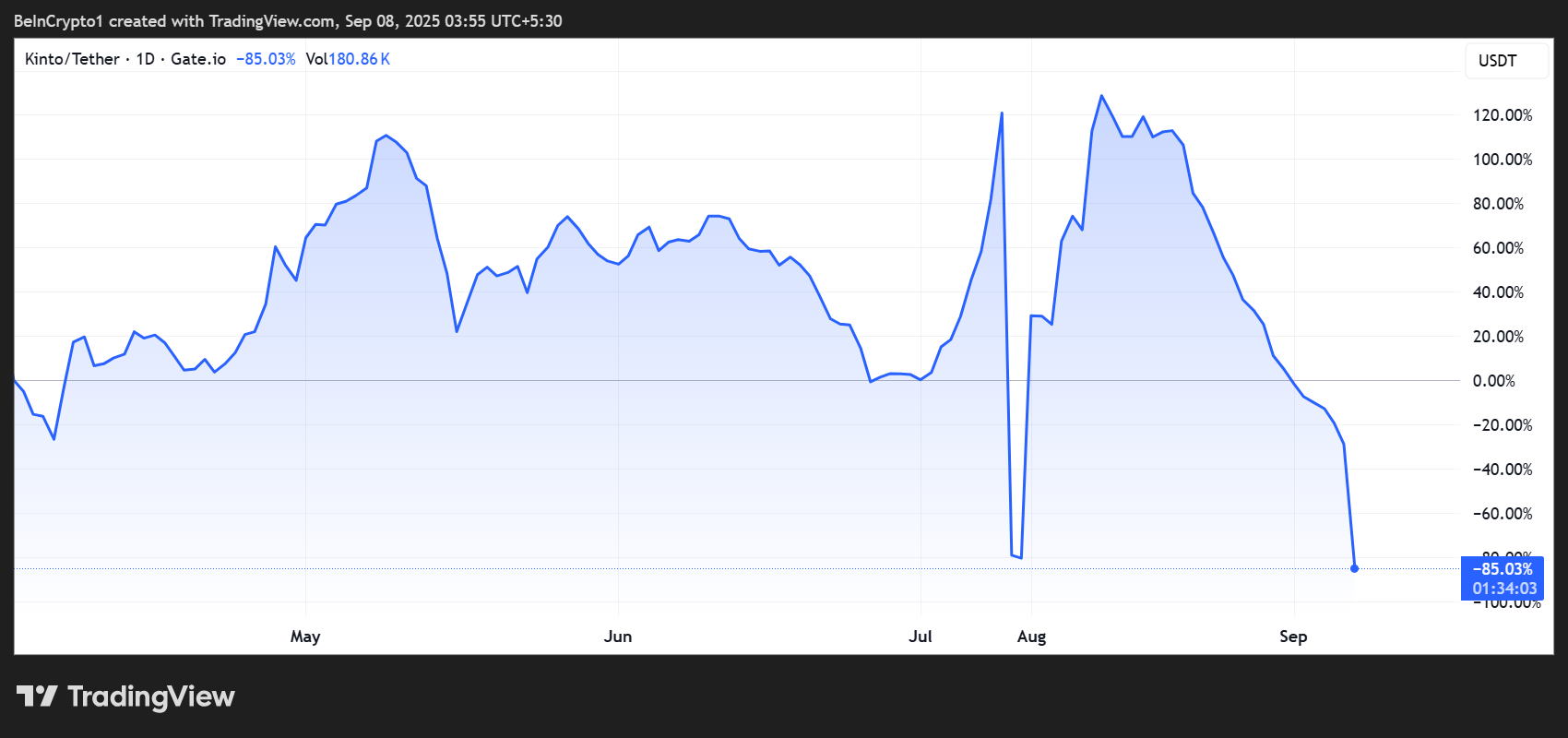
Kinto (K) Price PerformanceKinto (K) Price Performance. Source: TradingView

Market conditions, combined with the new liabilities, ultimately killed its chances of further fundraising.

What Users Need To Do Amid Withdrawal Difficulty

The sudden closure has sparked backlash from some users, with some slamming the Ethereum L2 for winding down after making money.

However, Kinto insists that neither the team nor investors had unlocked a single token, disputing the idea that the shutdown was a rug pull.

Other users call for leeway to withdraw their assets, so Kinto urged users to submit requests for assistance to customer support.

Security researchers are reportedly still tracing the stolen 577 ETH, with Kinto pledging that any recovery will first go to the victims.

A perpetual claim contract is also expected to handle outstanding withdrawals and repayments in early October.

Against this backdrop,Kinto has begun consolidating roughly $800,000 of the remaining assets into a Foundation SAFE. Allegedly, all funds are earmarked to repay creditors and victims.

Despite the wind-down, the project also confirmed that the pending ERA crypto airdrop will still be distributed in October.

While Kinto insists it is shutting down responsibly, the collapse is a stark reminder of the fragility of early-stage DeFi projects.

Market Opportunity
Sidekick Logo
Sidekick Price(K)
$0.003206
$0.003206$0.003206
-4.61%
USD
Sidekick (K) Live Price Chart
Disclaimer: The articles reposted on this site are sourced from public platforms and are provided for informational purposes only. They do not necessarily reflect the views of MEXC. All rights remain with the original authors. If you believe any content infringes on third-party rights, please contact service@support.mexc.com for removal. MEXC makes no guarantees regarding the accuracy, completeness, or timeliness of the content and is not responsible for any actions taken based on the information provided. The content does not constitute financial, legal, or other professional advice, nor should it be considered a recommendation or endorsement by MEXC.

You May Also Like

Marathon Digital BTC Transfers Highlight Miner Stress

Marathon Digital BTC Transfers Highlight Miner Stress

The post Marathon Digital BTC Transfers Highlight Miner Stress appeared on BitcoinEthereumNews.com. In a tense week for crypto markets, marathon digital has drawn
Share
BitcoinEthereumNews2026/02/06 15:16
This U.S. politician’s suspicious stock trade just returned over 200% in weeks

This U.S. politician’s suspicious stock trade just returned over 200% in weeks

The post This U.S. politician’s suspicious stock trade just returned over 200% in weeks appeared on BitcoinEthereumNews.com. United States Representative Cloe Fields has seen his stake in Opendoor Technologies (NASDAQ: OPEN) stock return over 200% in just a matter of weeks. According to congressional trade filings, the lawmaker purchased a stake in the online real estate company on July 21, 2025, investing between $1,001 and $15,000. At the time, the stock was trading around $2 and had been largely stagnant for months. Receive Signals on US Congress Members’ Stock Trades Stocks Stay up-to-date on the trading activity of US Congress members. The signal triggers based on updates from the House disclosure reports, notifying you of their latest stock transactions. Enable signal The trade has since paid off, with Opendoor surging to $10, a gain of nearly 220% in under two months. By comparison, the broader S&P 500 index rose less than 5% during the same period. OPEN one-week stock price chart. Source: Finbold Assuming he invested a minimum of $1,001, the purchase would now be worth about $3,200, while a $15,000 stake would have grown to nearly $48,000, generating profits of roughly $2,200 and $33,000, respectively. OPEN’s stock rally Notably, Opendoor’s rally has been fueled by major corporate shifts and market speculation. For instance, in August, the company named former Shopify COO Kaz Nejatian as CEO, while co-founders Keith Rabois and Eric Wu rejoined the board, moves seen as a return to the company’s early innovative spirit.  Outgoing CEO Carrie Wheeler’s resignation and sale of millions in stock reinforced the sense of a new chapter. Beyond leadership changes, Opendoor’s surge has taken on meme-stock characteristics. In this case, retail investors piled in as shares climbed, while short sellers scrambled to cover, pushing prices higher.  However, the stock is still not without challenges, where its iBuying model is untested at scale, margins are thin, and debt tied to…
Share
BitcoinEthereumNews2025/09/18 04:02
Apollo secures $50 million in backing to launch new tokenized credit fund

Apollo secures $50 million in backing to launch new tokenized credit fund

PANews reported on September 18 that according to CoinDesk, the blockchain-based RWA institution Centrifuge and Plume jointly launched the "Anemoy Tokenized Apollo Diversified Credit Fund (ACRDX)", which received a $50 million anchor investment from Grove, a credit infrastructure protocol within the Sky ecosystem. The fund enables blockchain investors to participate in Apollo's diversified global credit strategy, covering direct corporate loans, asset-backed loans, and mismatched credit. ACRDX will be issued through Plume's Nest Credit Vault with the token code nACRDX, enabling institutional investors to participate in the strategy on-chain. Chronicle will serve as the oracle provider, and Wormhole will be responsible for cross-chain connections. After approval, Anemoy will serve as the fund's manager.
Share
PANews2025/09/18 10:26