MoonPay and PayPal have introduced PYUSDx, a new infrastructure platform that allows developers to launch application specific stablecoins backed by PayPal USD.MoonPay and PayPal have introduced PYUSDx, a new infrastructure platform that allows developers to launch application specific stablecoins backed by PayPal USD.

MoonPay and PayPal Launch PYUSDx Stablecoin Platform

2026/02/28 03:50
5 min read

MoonPay and PayPal have introduced PYUSDx, a new infrastructure platform that allows developers to launch application specific stablecoins backed by PayPal USD.

Key Takeaways

  • PYUSDx enables developers to create branded stablecoins backed by PayPal USD.
  • The platform reduces launch time from months to days.
  • USD.ai is the first project building on PYUSDx.
  • MoonPay Digital Assets will issue the tokens, while PYUSD remains issued by Paxos Trust Company.

What Happened?

MoonPay, PayPal, and M0 have unveiled PYUSDx, a framework that allows developers to issue custom stablecoins backed by PayPal USD, also known as PYUSD. The platform combines MoonPay’s issuance and distribution network with M0’s stablecoin infrastructure to simplify the process of launching branded digital tokens.

The companies say the goal is to help developers build application level stablecoins without having to create complex technical and operational systems from scratch.

A New Layer for Stablecoin Innovation

The stablecoin market is evolving rapidly. According to the companies, the number of stablecoins with supplies exceeding 10 million dollars rose by 89 percent in 2025 alone. This growth has fueled demand for more efficient tools that allow fintech builders and crypto developers to launch tailored digital currencies for specific ecosystems and business models.

PYUSDx is designed to fill that gap. Instead of issuing a stablecoin from the ground up, developers can now create branded tokens backed by PayPal USD, leveraging an established and regulated reserve asset.

Under the structure, PYUSD is issued by Paxos Trust Company, NA, a federally regulated national trust bank. Meanwhile, PYUSDx tokens are issued by MoonPay Digital Assets Limited, which recently received a New York trust charter allowing it to act as an issuer.

It is important to note that PYUSDx tokens are separate from PayPal’s native PYUSD token. They are not PayPal products or services and cannot be stored, sent, or received within PayPal or Venmo accounts.

Faster Launch, Lower Complexity

One of the key selling points of PYUSDx is speed. The platform allows developers to move from testing to launch in a matter of days rather than months.

Ivan Soto Wright, CEO and co founder of MoonPay, said:

Building and managing stablecoins at the application layer requires dependable infrastructure. Through PYUSDx, the MoonPay Group is extending its issuance and distribution capabilities to make PYUSD more accessible to developers, reducing the technical and operational complexity of bringing application specific stablecoins to market.

M0 plays a central role in the structure by separating reserve management from token issuance. This design allows issuers to delegate reserve management, making it significantly faster to deploy new stablecoins while maintaining built in liquidity and interoperability.

Luca Prosperi, CEO of M0, said:

Developers of crypto applications have been early adopters of custom stablecoin backed technology, but they still don’t have a trusted platform they can use to quickly bootstrap solutions. PYUSDx will allow developers to iterate much more quickly within an interoperable solution and with built in liquidity. We believe every fintech developer will eventually utilize a solution like PYUSDx.

The platform also offers cross chain compatibility, on chain reserve reporting, and flexible economic models designed to compete with other stablecoin backed products.

Expanding PayPal’s Stablecoin Strategy

Since launching PYUSD in 2023, PayPal has steadily expanded its stablecoin ecosystem. In April 2025, users began earning 3.7 percent annually on PYUSD balances. Later that year, Stellar and Arbitrum were added to increase transaction speed and reduce costs.

May Zabaneh, Senior Vice President and General Manager of Crypto at PayPal, said:

The next phase of stablecoin adoption is happening at the application layer. Developers want to build differentiated experiences, but they shouldn’t have to rebuild trusted monetary infrastructure from scratch. We’re excited to see MoonPay and M0 use PYUSDx to help bring new, application specific stablecoins to market, anchored in a regulated, trusted foundation.

USD.ai has been named as the first developer building on PYUSDx. The project is using the framework to back an application focused stablecoin designed for artificial intelligence infrastructure.

The companies also noted that regulatory treatment of PYUSDx tokens may vary by jurisdiction. Compliance responsibilities will fall on individual issuers. The launch also raises potential questions around how US stablecoin legislation, including the GENIUS Act, could impact where these tokens are permitted to operate.

CoinLaw’s Takeaway

In my view, this is a smart move by MoonPay and PayPal. Instead of competing in a crowded stablecoin market with yet another token, they are offering infrastructure. In my experience covering crypto markets, infrastructure plays often have longer staying power than standalone coins.

I found the separation between reserve management and issuance especially interesting. It lowers barriers for developers while still anchoring new tokens to a regulated foundation like PYUSD. If stablecoins are truly moving toward application level use cases, platforms like PYUSDx could become essential building blocks for the next wave of fintech innovation.

The post MoonPay and PayPal Launch PYUSDx Stablecoin Platform appeared first on CoinLaw.

Disclaimer: The articles reposted on this site are sourced from public platforms and are provided for informational purposes only. They do not necessarily reflect the views of MEXC. All rights remain with the original authors. If you believe any content infringes on third-party rights, please contact crypto.news@mexc.com for removal. MEXC makes no guarantees regarding the accuracy, completeness, or timeliness of the content and is not responsible for any actions taken based on the information provided. The content does not constitute financial, legal, or other professional advice, nor should it be considered a recommendation or endorsement by MEXC.

You May Also Like

XRP Volume Rises 212%, Bitcoin ETFs Back in Demand With $506 Million, Dogecoin Price Reclaims $0.10 — U.Today Crypto Digest
XRP Volume Rises 212%, Bitcoin ETFs Back in Demand With $506 Million, Dogecoin Price Reclaims $0.10 — U.Today Crypto Digest

Crypto news digest: 212% increase was seen in XRP volume; BTC ETFs have recovered from the low capital; DOGE price jumps 8%.
Share
Coinstats2026/02/28 05:27
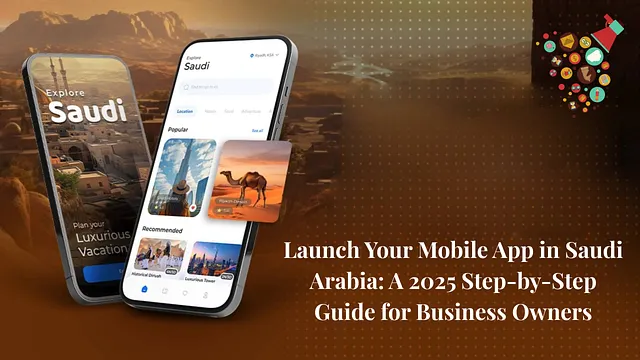
From Idea to App Store: The Complete Guide to Mobile App Development in Saudi Arabia

From Idea to App Store: The Complete Guide to Mobile App Development in Saudi Arabia

Saudi Arabia is at the forefront of digital transformation. With Vision 2030 driving innovation and a rapidly growing population of tech-savvy users, mobile apps have become a core driver of business growth in the Kingdom. From e-commerce and fintech to healthcare, logistics, and on-demand services, Saudi businesses are embracing mobile apps to connect with customers and scale faster. But how do you take a mobile app idea and turn it into a successful launch on the App Store or Google Play? This guide breaks down the complete mobile app development process in Saudi Arabia — step by step. Step 1: Validate Your App Idea for the Saudi Market Before you start building, ask: What problem does my app solve for Saudi users? Is there a cultural or market gap my app can fill? How do local competitors approach the same challenge? For example, apps related to digital payments, e-learning, delivery services, and healthcare are in high demand across Saudi Arabia. Conducting market research and aligning your app idea with local user behavior is critical. Step 2: Plan Features with Local Needs in Mind Your app should start with an MVP (Minimum Viable Product) — a core version that solves the main problem. Later, you can scale with advanced features. In Saudi Arabia, consider adding: Arabic language support (essential for user adoption) Integration with local payment gateways like STC Pay, Mada, or Apple Pay Regulatory compliance (especially for fintech and health apps) Localization for user preferences (Hijri calendar, cultural UI elements) Step 3: Select the Right Development Approach You can choose: Native Apps (Swift for iOS, Kotlin for Android) — Great for scalability and performance. Cross-Platform Apps (Flutter, React Native) — Cost-effective for startups targeting both iOS and Android simultaneously. Hybrid Apps — Suitable for simpler apps with limited features. For Saudi startups and enterprises, cross-platform development is often preferred to reach a wider audience quickly and efficiently. Step 4: Design With a Local Touch The design must balance global usability standards with local cultural relevance. UI (User Interface): Clean, modern visuals that align with Saudi branding. UX (User Experience): Simple navigation, clear Arabic text support, and intuitive flows. Wireframing & Prototyping: Test early with Saudi users to ensure adoption. A user-friendly design is one of the top reasons apps succeed in the Kingdom’s competitive market. Step 5: Develop Your Mobile App Once the design is ready, the coding begins. Saudi app development companies often follow Agile methodology, ensuring flexibility and faster delivery. Front-End Development: Interface and user interactions. Back-End Development: Databases, servers, and APIs. Integration: Secure connections between front-end and back-end. Strong collaboration between developers, designers, and business analysts ensures your app aligns with Saudi market needs. Step 6: Testing Across Devices and Networks Saudi users rely on different devices and network speeds. That’s why rigorous testing is critical: Functionality Testing: Features work as expected. Performance Testing: The app runs smoothly on both 4G and 5G networks. Localization Testing: Arabic text displays correctly, without alignment issues. Security Testing: Data protection compliance with Saudi cybersecurity standards. Step 7: App Store & Google Play Launch in Saudi Arabia To publish your app: Apple App Store (iOS): Requires an Apple Developer account and strict guideline compliance. Google Play Store (Android): Faster approval but still requires detailed app info. You’ll also need metadata in both English and Arabic — titles, descriptions, and screenshots — to maximize visibility among Saudi users. Step 8: Market Your App in Saudi Arabia Launching an app is only the beginning. You need a marketing strategy tailored to the Kingdom: App Store Optimization (ASO): Use Arabic and English keywords. Social Media Campaigns: Leverage platforms like Snapchat, Twitter (X), and Instagram, which are highly popular in Saudi Arabia. Influencer Marketing: Collaborate with Saudi influencers for early traction. Paid Ads: Google Ads and Saudi-focused Facebook/Instagram ads. Partnerships: Collaborate with local businesses to reach a wider audience. Step 9: Gather Feedback and Optimize Once your app is live, monitor: User reviews on app stores Analytics on engagement, retention, and churn rates Suggestions from Saudi users for culturally relevant features Continuous updates and improvements are vital to stay competitive. Step 10: Scale With Advanced Features Once your MVP gains traction, you can expand with advanced features such as: AI and machine learning for personalization Blockchain-based payments for fintech apps AR/VR features for retail and gaming apps IoT integration for smart home and mobility solutions Saudi Arabia’s digital ecosystem is growing rapidly — apps that adapt quickly will thrive. Conclusion Mobile app development in Saudi Arabia is not just about building an app — it’s about aligning with Vision 2030, cultural needs, and user expectations. By following a clear process — from idea validation to launch and beyond — you can transform your concept into a profitable digital product. Whether you’re a startup or an enterprise in Saudi Arabia, the opportunity is massive. With the right strategy, you can move from idea to App Store and create an app that truly resonates with Saudi users. From Idea to App Store: The Complete Guide to Mobile App Development in Saudi Arabia was originally published in Coinmonks on Medium, where people are continuing the conversation by highlighting and responding to this story
Share
Medium2025/09/18 14:46
Shiba Inu’s (SHIB) Price Prediction for 2025 Points to 4x Growth, But Mutuum Finance (MUTM) Looks Set for 50x Returns

Shiba Inu’s (SHIB) Price Prediction for 2025 Points to 4x Growth, But Mutuum Finance (MUTM) Looks Set for 50x Returns

As Shiba Inu (SHIB) takes over the limelight with experts predicting a potential 4x increase by 2025, a far more disruptive competitor, Mutuum Finance (MUTM), is emerging in the cryptocurrency market. Unlike SHIB, which is depending upon community-driven momentum and speculative buying, Mutuum Finance is building a decentralized protocol for lending and borrowing that will […]
Share
Cryptopolitan2025/09/18 02:30