The post What Supreme Court tariff ruling means for global trade, U.S. economy appeared on BitcoinEthereumNews.com. The Supreme Court struck down U.S. PresidentThe post What Supreme Court tariff ruling means for global trade, U.S. economy appeared on BitcoinEthereumNews.com. The Supreme Court struck down U.S. President

What Supreme Court tariff ruling means for global trade, U.S. economy

The Supreme Court struck down U.S. President Donald Trump’s tariffs on Friday, but the trade tax turmoil is far from over. Fallout over the ruling is already threatening to further strain global trade relations, and the U.S. economy is likely to suffer, economists told CNBC.

In 6-3 decision, the high court ruled that President Trump did not have the legal authority to implement his sweeping tariffs imposed last April under the International Emergency Economic Powers Act (IEEPA).

Trump later leveled new tariffs up to 15% effective immediately on an array of U.S. trading partners, further escalating global trade tensions. European Union leaders expressed dismay over the new tariffs, arguing that the U.S. policy shift would upend trade deals already reached with with the EU as well as the U.K. last year. On Monday, the EU again postponed a key vote on its deal with the U.S.

The pushback against the latest U.S. tariff threat underscores deep frustration over the president’s erratic trade policies, and could push foreign governments to scale back U.S. trade and lead businesses to curb expansion, investment and hiring.

The result might hobble the U.S. economy. “It shifts how trade is done with the largest economy in the world, and that has economic consequences,” Mike Reid, head of U.S. economics at Royal Bank of Canada told CNBC, referring to the Supreme Court ruling and new tariff push.

Downside

The trade war drama is likely to contribute to a climate of caution among businesses and foreign governments alike, said Mark Zandi, chief economist at Moody’s Analytics, leading to “nothing but downside,” for the U.S. economy.

“Businesses don’t know” what’s going to happen next, Zandi told CNBC. “They’re going to invest less, they’re going to hire less, they’re going to be less aggressive in their expansions,” limiting U.S. growth.

Foreign governments could react similarly amid rising uncertainty, leading them to “continue to pull away from the U.S,” according to the economist.

“They’ve got to be pulling their hair out over all of this,” Zandi said. “Perceptions of the U.S. are increasingly that we’re a poorly managed economy, and objectively speaking, they’re right. It’s a bit of a mess that feels like it’s getting messier.”

That perception could lead to efforts to divert trade away from the U.S. to a variety of other trading partners, including China.

China’s exports grew 6.6% in U.S. dollar terms last December compared to the same month a year earlier, topping analyst expectations and sending the nation’s annual trade surplus to a record, according to Chinese customs data. Imports increased at their fastest pace in three months, the same data showed.

Trump trade taxes

The Trump administration will continue implementing its trade policy, and now plans to use a variety of sections in the Tariff Act of 1974, according to U.S. Trade Representative Jamieson Greer.

President Trump is pointing to section 122 of the Tariff Act to justify his new tariffs enacted this weekend, although that section limits their effectiveness to 150 days, until mid July, after which they would have to be approved by Congress.  

But the administration is likely to use sections 232 and 301 of the Tariff Act to supplement its new section 122 tariffs, meaning the U.S. could continue to impose tariffs against its foreign trading partners over the next few years, at least.

Others say neither investors nor economists shouldn’t sound the alarm just yet.

The implementation of the new trade taxes “implies little change in the effective tariff rate or our inflation forecasts in the near term,” Citigroup economist Veronica Clark said in a note to clients.

“Eventual Section 301/232 tariffs could have an impact on certain goods prices in the future, but details are still highly uncertain,” Clark wrote. “While a 10% Section 122 tariff would likely have lowered the effective tariff rate by 3-4 [percentage points], a 15% tariff should keep the effective tariff rate essentially unchanged (if anything, lower by ~1pp or so).

While the total impact of the new tariffs remains uncertain, a few things are clear, Zandi said.

“The U.S. is pulling away from the world, and the rest of the world is now pulling away from the U.S.,” the economist said. “Deglobalization is a weight on the economy, and ultimately, the end state is a weakened economy.”

— With additional reporting provided by CNBC’s Alex Harring

Source: https://www.cnbc.com/2026/02/23/what-supreme-court-tariff-ruling-means-for-global-trade-us-economy.html

Market Opportunity
Union Logo
Union Price(U)
$0,000807
$0,000807$0,000807
+1,38%
USD
Union (U) Live Price Chart
Disclaimer: The articles reposted on this site are sourced from public platforms and are provided for informational purposes only. They do not necessarily reflect the views of MEXC. All rights remain with the original authors. If you believe any content infringes on third-party rights, please contact service@support.mexc.com for removal. MEXC makes no guarantees regarding the accuracy, completeness, or timeliness of the content and is not responsible for any actions taken based on the information provided. The content does not constitute financial, legal, or other professional advice, nor should it be considered a recommendation or endorsement by MEXC.

You May Also Like

The Stunning ASEAN Winner Emerges As Manufacturing Shifts Accelerate

The Stunning ASEAN Winner Emerges As Manufacturing Shifts Accelerate

The post The Stunning ASEAN Winner Emerges As Manufacturing Shifts Accelerate appeared on BitcoinEthereumNews.com. Vietnam US Tariffs: The Stunning ASEAN Winner
Share
BitcoinEthereumNews2026/02/24 08:20
MySQL Single Leader Replication with Node.js and Docker

MySQL Single Leader Replication with Node.js and Docker

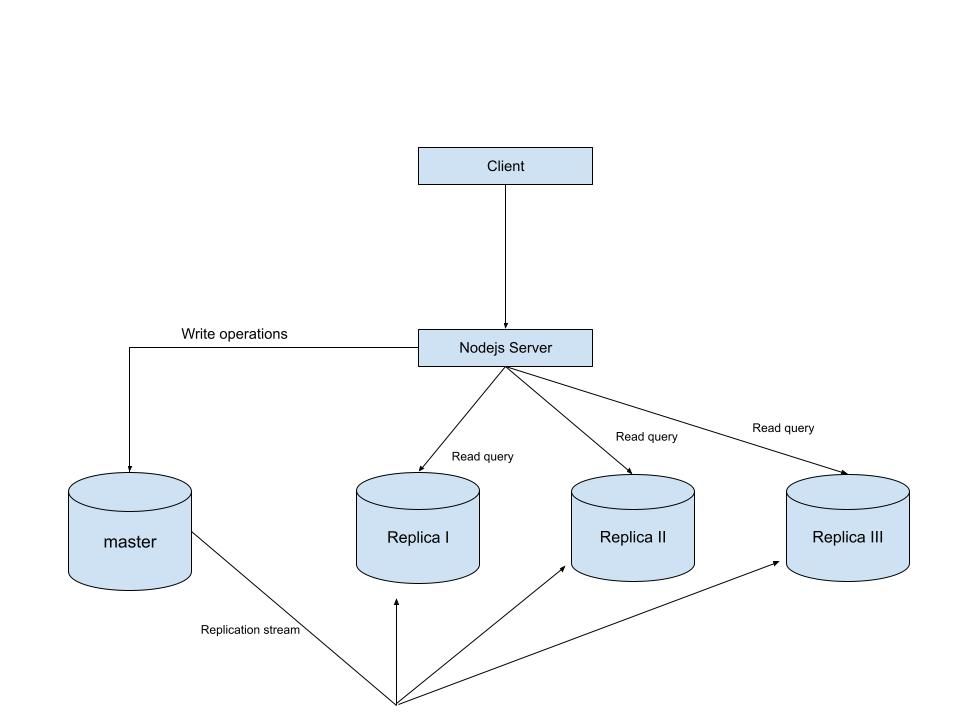
Modern applications demand high availability and the ability to scale reads without compromising performance. One of the most common strategies to achieve this is Replication. In this setup, we configured a single database to act as the leader (master) and handle all write operations, while three replicas handle read operations. In this article, we’ll walk through how to set up MySQL single-leader replication on your local machine using Docker. Once the replication is working, we’ll connect it to a Node.js application using Sequelize ORM, so that reads are routed to the replica and writes go to the master. By the end, you’ll have a working environment where you can see replication in real time Prerequisites knowledge of database replication Background knowledge of docker and docker compose Background knowledge of Nodejs and how to run a NodeJS server An Overview of what we are building Setup Setup our database servers on docker compose in the root of our project directory, create a file named docker-compose.yml with the following content to setup our mysql primary and replica databases. \ \ name: "learn-replica" volumes: mysqlMasterDatabase: mysqlSlaveDatabase: mysqlSlaveDatabaseII: mysqlSlaveDatabaseIII: networks: mysql-replication-network: services: mysql-master: image: mysql:latest container_name: mysql-master command: --server-id=1 --log-bin=ON environment: MYSQL_ROOT_PASSWORD: master MYSQL_DATABASE: replicaDb ports: - "3306:3306" volumes: - mysqlMasterDatabase:/var/lib/mysql networks: - mysql-replication-network mysql-slave: image: mysql:latest container_name: mysql-slave command: --server-id=2 --log-bin=ON environment: MYSQL_ROOT_PASSWORD: slave MYSQL_DATABASE: replicaDb MYSQL_ROOT_HOST: "%" ports: - "3307:3306" volumes: - mysqlSlaveDatabase:/var/lib/mysql depends_on: - mysql-master networks: - mysql-replication-network mysql-slaveII: image: mysql:latest container_name: mysql-slaveII command: --server-id=2 --log-bin=ON environment: MYSQL_ROOT_PASSWORD: slave MYSQL_DATABASE: replicaDb MYSQL_ROOT_HOST: "%" ports: - "3308:3306" volumes: - mysqlSlaveDatabaseII:/var/lib/mysql depends_on: - mysql-master networks: - mysql-replication-network mysql-slaveIII: image: mysql:latest container_name: mysql-slaveIII command: --server-id=3 --log-bin=ON environment: MYSQL_ROOT_PASSWORD: slave MYSQL_DATABASE: replicaDb MYSQL_ROOT_HOST: "%" ports: - "3309:3306" volumes: - mysqlSlaveDatabaseIII:/var/lib/mysql depends_on: - mysql-master networks: - mysql-replication-network In this setup, I’m creating a master database container called mysql-master and 3 replica containers called mysql-slave, mysql-slaveII and mysql-slaveIII. I won’t go too deep into the docker-compose.yml file since it’s just a basic setup, but I do want to walk you through the command line instructions used in all four services because that’s where things get interesting.
command: --server-id=1 --log-bin=ON The --server-id option gives each MySQL server in your replication setup its own name tag. Each one has to be unique and without it, replication won’t work at all. Another cool option not included here is binlog_format=ROW. This tells MySQL how to keep track of changes before passing them along to the replicas. By default, MySQL already uses row-based replication, but you can explicitly set it to ROW to be sure or switch it to STATEMENT if you’d rather log the actual SQL statements instead of row-by-row changes. \ Run our containers on docker Now, in the terminal, we can run the following command to spin up our database containers: docker-compose up -d \ Setting Up Our Master (Primary) Server To configure our master server, we would have to first access the running instance on docker using the following command docker exec -it mysql-master bash This command opens an interactive Bash shell inside the running Docker container named mysql-master, allowing us to run commands directly inside that container. \ Now that we’re inside the container, we can access the MySQL server and start running commands. type: mysql -uroot -p This will log you into MySQL as the root user. You’ll be prompted to enter the password you set in your docker-compose.yml file. \ Next, we need to create a special user that our replicas will use to connect to the master server and pull data. Inside the MySQL prompt, run the following commands: \ CREATE USER 'repl_user'@'%' IDENTIFIED BY 'replication_pass'; GRANT REPLICATION SLAVE ON . TO 'repl_user'@'%'; FLUSH PRIVILEGES; Here’s what’s happening: CREATE USER makes a new MySQL user called repl_user with the password replication_pass. GRANT REPLICATION SLAVE gives this user permission to act as a replication client. FLUSH PRIVILEGES tells MySQL to reload the user permissions so they take effect immediately. \ Time to Configure the Replica (Secondary) Servers a. First, let’s access the replica containers the same way we did with the master. Run this command in your terminal for each of the replica containers: \ docker exec -it <replica_container_name> bash mysql -uroot -p <replica_container_name> should be replace with the name of the replica container you are trying to setup b. Now it’s time to tell our replica where to get its data from. While inside the replica’s MySQL shell, run the following command to configure replication using the master’s details: CHANGE REPLICATION SOURCE TO SOURCE_HOST='mysql-master', SOURCE_USER='repl_user', SOURCE_PASSWORD='replication_pass', GET_SOURCE_PUBLIC_KEY=1; With the replication settings in place, let’s fire up the replica and get it syncing with the master. Still inside the MySQL shell on the replica, run: START REPLICA; This starts the replication process. To make sure everything is working, check the replica’s status with:
SHOW REPLICA STATUS\G; Look for Replica_IO_Running and Replica_SQL_Running — if both say Yes, congratulations! 🎉 Your replica is now successfully connected to the master and replicating data in real time.
Testing Our Replication Setup from the Node.js App Now that our replication is successfully set up, we can configure our Node.js server to observe the real-time effect of data being replicated from the master server to the replica server whenever we write to it. We start by installing the following dependencies:
npm i express mysql2 sequelize \ Now create a folder called src in the root directory and add the following files inside that folder connection.js, index.js and model.js. Our current directory should look like this We can now set up our connections to our master and replica server in the connection.js file as shown below
const Sequelize = require("sequelize"); const sequelize = new Sequelize({ dialect: "mysql", replication: { write: { host: "127.0.0.1", username: "root", password: "master", database: "replicaDb", }, read: [ { host: "127.0.0.1", username: "root", password: "slave", database: "replicaDb", port: 3307 }, { host: "127.0.0.1", username: "root", password: "slave", database: "replicaDb", port: 3308 }, { host: "127.0.0.1", username: "root", password: "slave", database: "replicaDb", port: 3309 }, ], }, }); async function connectdb() { try { await sequelize.authenticate(); } catch (error) { console.error("❌ unable to connect to the follower database", error); } } connectdb(); module.exports = { sequelize, }; \ We can now create a User table in the model.js file
const {DataTypes} = require("sequelize"); const { sequelize } = require("./connection"); const User = sequelize.define("User", { name: { type: DataTypes.STRING, allowNull: false, }, email: { type: DataTypes.STRING, unique: true, allowNull: false, }, }); module.exports = User \ and finally in our index.js file we can start our server and listen for connections on port 3000. from the code sample below, all inserts or updates will be routed by sequelize to the master server. while all read queries will be routed to the read replicas.
const express = require("express"); const { sequelize } = require("./connection"); const User = require("./model"); const app = express(); app.use(express.json()); async function main() { await sequelize.sync({ alter: true }); app.get("/", (req, res) => { res.status(200).json({ message: "first step to setting server up", }); }); app.post("/user", async (req, res) => { const { email, name } = req.body; let newUser = await User.build({ name, email, }); // This INSERT will go to the write (master) connection newUser = newUser.save({ returning: false }); res.status(201).json({ message: "User successfully created", }); }); app.get("/user", async (req, res) => { // This SELECT query will go to one of the read replicas const users = await User.findAll(); res.status(200).json(users); }); app.listen(3000, () => { console.log("server has connected"); }); } main(); When you make a POST request to the /users endpoint, take a moment to check both the master and replica servers to observe how data is replicated in real time. Right now, we are relying on Sequelize to automatically route requests, which works for development but isn’t robust enough for a production environment. In particular, if the master node goes down, Sequelize cannot automatically redirect requests to a newly elected leader. In the next part of this series, we’ll explore strategies to handle these challenges
Share
Hackernoon2025/09/18 14:44
Robinhood: Investors Are Looking Beyond BTC

Robinhood: Investors Are Looking Beyond BTC

The post Robinhood: Investors Are Looking Beyond BTC appeared on BitcoinEthereumNews.com. Investors Diversifying Beyond BTC and ETH Robinhood’s crypto division
Share
BitcoinEthereumNews2026/02/24 08:32