TLDR The Federal Reserve included stablecoins in its recent policy discussions during the FOMC meeting. Officials said stablecoins could improve efficiency in payments and reduce friction across the financial system. The minutes highlighted potential risks such as maturity mismatches and reserve management challenges. Members noted that widespread adoption of stablecoins could influence Treasury markets and [...] The post Fed Sees Stablecoins Improving Efficiency but Flags Risks to U.S. Finance appeared first on CoinCentral.TLDR The Federal Reserve included stablecoins in its recent policy discussions during the FOMC meeting. Officials said stablecoins could improve efficiency in payments and reduce friction across the financial system. The minutes highlighted potential risks such as maturity mismatches and reserve management challenges. Members noted that widespread adoption of stablecoins could influence Treasury markets and [...] The post Fed Sees Stablecoins Improving Efficiency but Flags Risks to U.S. Finance appeared first on CoinCentral.

Fed Sees Stablecoins Improving Efficiency but Flags Risks to U.S. Finance

3 min read

TLDR

  • The Federal Reserve included stablecoins in its recent policy discussions during the FOMC meeting.
  • Officials said stablecoins could improve efficiency in payments and reduce friction across the financial system.
  • The minutes highlighted potential risks such as maturity mismatches and reserve management challenges.
  • Members noted that widespread adoption of stablecoins could influence Treasury markets and banking stability.
  • The OCC has allowed community banks in the United States to collaborate with stablecoin issuers.

The Federal Reserve’s recent FOMC minutes confirmed that stablecoins have entered formal policy debates, signaling their growing significance globally. Officials discussed stablecoins’ role in boosting payment efficiency while addressing risks to financial markets. The session highlighted both opportunities and potential vulnerabilities linked to these digital assets.

Stablecoins in Federal Reserve Discussions

The Federal Open Market Committee reviewed stablecoins during its latest meeting, underscoring their rising relevance to the U.S. financial system. Participants emphasized that stablecoins could reduce friction in payments and improve transaction efficiency. They also pointed out that stablecoins might create new dynamics in Treasury markets and regulatory frameworks.

The minutes noted that stablecoins could enhance settlement speed while supporting liquidity in certain financial activities. However, concerns were raised about stability and the management of underlying reserves. Officials agreed that their adoption could reshape banking operations and influence regulatory practices.

Nate Geraci, president of ETF Store, highlighted the importance of this shift on social media. He noted the Fed’s comment that “payment stablecoins could help improve the efficiency of the payment system.” His remarks emphasized how seriously policymakers view digital assets in financial infrastructure.

Risks and Challenges in Adoption

Despite benefits, the Fed also identified key risks tied to widespread stablecoin use. Members flagged possible maturity mismatches, roll-over risks, and reserve management concerns. They further noted the systemic risks that could emerge if stablecoins expand too quickly.

Participants discussed how stablecoins may impact banking stability, especially when issuers hold large amounts of Treasuries. Such concentration could influence markets and create dependencies. The committee stressed that monitoring and regulation would be critical to avoid disruptions.

Additionally, the minutes mentioned challenges regarding transparency and oversight of reserves. Some participants argued that stronger frameworks must address liquidity and redemption risks. They maintained that unchecked growth could pose threats to broader financial stability.

Global Developments in Stablecoin Policies

Beyond the U.S., governments and banks worldwide are considering stablecoin strategies. In America, the OCC has allowed community banks to collaborate with stablecoin issuers. This move marks a step toward broader adoption within traditional finance.

Meanwhile, China has shifted its stance by exploring yuan-based stablecoins. Beijing is now considering them as tools to expand the currency’s global reach. Reports suggest Hong Kong and Shanghai could lead initial rollouts under review this month.

This policy reversal contrasts sharply with China’s earlier restrictions on digital assets. It highlights stablecoins’ growing role in shaping international currency strategies. Observers note that adoption may intensify competition with the U.S. dollar globally.

The post Fed Sees Stablecoins Improving Efficiency but Flags Risks to U.S. Finance appeared first on CoinCentral.

Disclaimer: The articles reposted on this site are sourced from public platforms and are provided for informational purposes only. They do not necessarily reflect the views of MEXC. All rights remain with the original authors. If you believe any content infringes on third-party rights, please contact service@support.mexc.com for removal. MEXC makes no guarantees regarding the accuracy, completeness, or timeliness of the content and is not responsible for any actions taken based on the information provided. The content does not constitute financial, legal, or other professional advice, nor should it be considered a recommendation or endorsement by MEXC.

You May Also Like

Once Upon a Farm Announces Pricing of Initial Public Offering

Once Upon a Farm Announces Pricing of Initial Public Offering

BERKELEY, Calif.–(BUSINESS WIRE)–Once Upon a Farm today announced the pricing of its initial public offering of 10,997,209 shares of its common stock, 7,631,537
Share
AI Journal2026/02/06 08:15
Forward Industries Bets Big on Solana With $4B Capital Plan
Forward Industries Bets Big on Solana With $4B Capital Plan

The firm has filed with the U.S. Securities and Exchange Commission to launch a $4 billion at-the-market (ATM) equity program, […] The post Forward Industries Bets Big on Solana With $4B Capital Plan appeared first on Coindoo.
Share
Coindoo2025/09/18 04:15
332M accounts and $28B TVL,

332M accounts and $28B TVL,

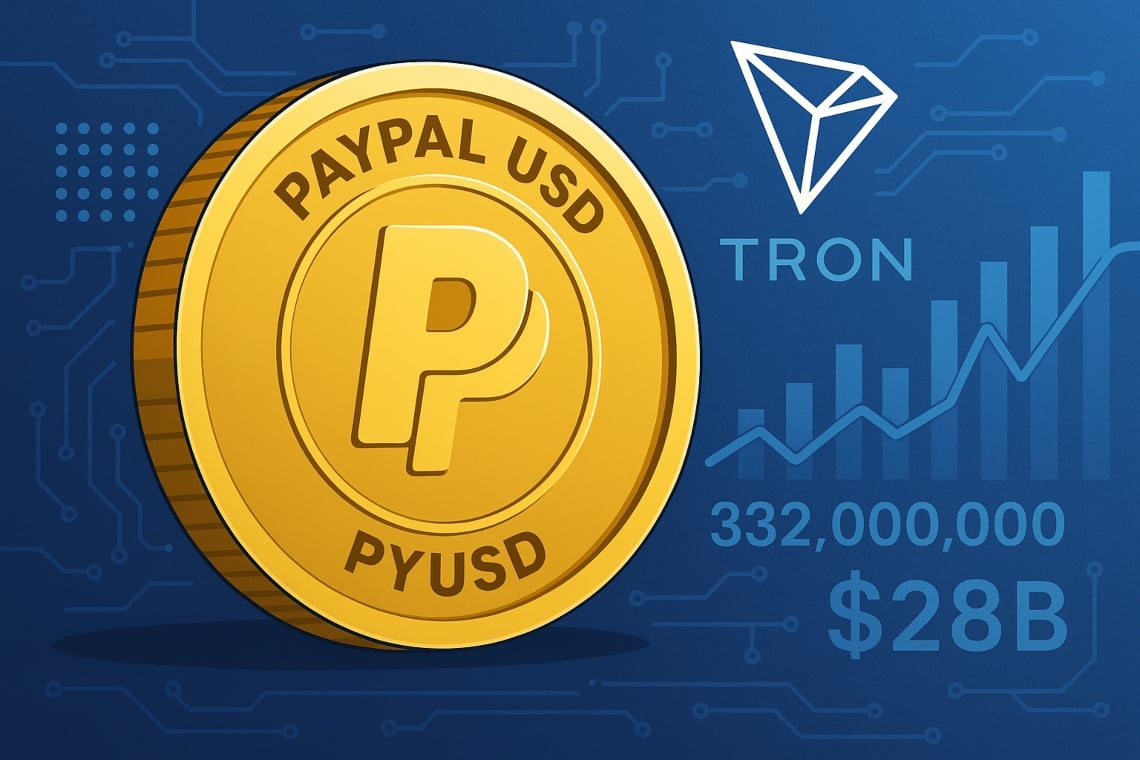
The post 332M accounts and $28B TVL, appeared on BitcoinEthereumNews.com. PayPal USD debuts on TRON as a permissionless token PYUSD0, enabled by LayerZero’s OFT standard and the Stargate Hydra extension. The announcement on September 18, 2025 (Geneva) introduces native interoperability between chains and transfers without manual steps for users; the news echoes elements already communicated by PayPal at the launch of PYUSD PayPal Newsroom. The move concerns an ecosystem that includes 332 million accounts and over $28 billion in TVL. In this context, the fungibility of a stablecoin regulated across multiple networks and the use of TRON as a settlement layer for payments and remittances is at stake. According to the data collected by TRONSCAN updated as of September 18, 2025, the network metrics confirm the cited volumes and highlighted traffic patterns. Our editorial team has verified the transaction logs and monitored the public chain metrics to corroborate the reported figures; the observations on daily flows and TVL are consistent with the network dashboards. Industry analysts observe that the entry of a regulated issuer like PayPal tends to increase institutional interest, provided there is transparency on reserves and compliance checks. What is PYUSD0 on TRON and why is it relevant PYUSD0 is the representation of PayPal USD on TRON. It is pegged one-to-one to PYUSD through the OFT standard: the two tokens remain a single stablecoin, fungible and reconciled across chains. The integration is made possible by Stargate Hydra, now operational through LayerZero. According to the founder of TRON, Justin Sun, the extension on TRON expands access and trust for users and institutions. For Bryan Pellegrino (CEO of LayerZero Labs), stablecoins represent a pillar of global payments and remittances, as the native compatibility between chains enables their operational scalability. It must be said that the alignment between issuer, cross-chain infrastructure, and settlement network is a key element. Key Numbers: TRON…
Share
BitcoinEthereumNews2025/09/19 08:18