South Korea’s government is set to fast-track pro-business crypto reforms, including stablecoin regulations. The South Korean newspaper Metro Seoul reported that the Presidential Committee on State Affairs announced its plans at a public briefing on August 13. South Korea Crypto Reform Taking Shape The committee spoke of a five-year plan for state administration, naming 123 state affairs-related tasks. Among these tasks named were “the construction of a digital asset ecosystem” and “developing the domestic cryptoasset market.” Both were identified as “key national tasks” for the administration, which took office in early June this year following the election of President Lee Jae-myung. President Lee Jae Myung on Wednesday laid out a sweeping five-year policy agenda, detailing 123 national tasks ranging from constitutional reform to industrial growth and market fairness. https://t.co/52cb7gzOvi — The Korea JoongAng Daily (@JoongAngDaily) August 13, 2025 Lee has spoken repeatedly about his intention to build up the domestic crypto sector, with deregulation and stablecoin regulation high on his agenda. The President appears keen to let domestic firms issue won-pegged stablecoins . Leading banks and IT companies have reacted by registering scores of stablecoin-related trademarks . Others are hurriedly rolling out crypto-related business plans, aware that this may allow non-financial firms to develop advanced payment platforms. However, one of President Lee’s key campaign pledges was left off the five-year plan, namely the dissolution of the Financial Services Commission (FSC). The FSC is the nation’s top financial regulator. Its Financial Intelligence Unit (FIU) polices the country’s crypto exchanges , issuing operating permits and conducting periodic on-site inspections. It also enforces anti-money laundering and terrorist financing protocols at the trading platforms. The Government Complex Building in Seoul, South Korea. (Source: Seoul Institute [CC BY 4.0]) FSC: Vociferous Critic No More? In previous years, the FSC has been a vociferous critic of the crypto sector. But in recent years, as governments have relaxed their hardline stance to the industry, it has spoken in favor of reform. Under the proposal, FSC’s supervisory duties were to transfer to the Financial Supervisory Service. The FSC’s policy-related tasks were due to transfer to the Ministry of Strategy and Finance. But Lee’s plan to scrap the FSC proved controversial, even among senior ministers. While his offices have yet to confirm that the President has shelved the policy, the five-year plan appeared to suggest the proposal may have moved to the back burner. There was no mention of the regulatory reorganization move on the plan. And seven of the 123 tasks were assigned to the FSC. The newspaper added that crypto reforms are a “key focus” for both the government and the National Assembly this year. As such, reforms are “expected to gain momentum” in the weeks ahead, Metro Seoul wrote. ‘Time to Play Catch-up’ Political leaders are concerned that South Korea is being left behind. They note that over the past two years, the global crypto market has expanded by about 262%. While crypto investment has spiked in the US, the European Union, and Japan, driven by institutionalization drives, the same cannot be said for Seoul. The outlet wrote: “Delayed institutional reforms and a lack of legislation in South Korea have left the domestic cryptoasset market significantly lagging in terms of competitiveness.” South Korea says President Lee Jae Myung to visit Japan this month https://t.co/PmtmRcPibF — Nikkei Asia (@NikkeiAsia) August 13, 2025 The FSC has prioritized its plan to allow corporations to buy and sell crypto. It also wants to tak a “more relaxed approach” to regulations. The regulator has previously spoken of its intention to roll out crypto-related regulations before the end of this year. However, skeptics say that a final decision on the fate of the FSC is yet to be taken. Talks to abolish the regulator “may resume in the future,” the newspaper explained. Unnamed financial sector officials opined that the debate over the reorganization of the financial regulators would “continue until the end of the year.” Earlier this month, the Seoul district of Gangnam announced it had recouped $144,057 in unpaid taxes in the first half of this year by seizing coins from tax evaders .South Korea’s government is set to fast-track pro-business crypto reforms, including stablecoin regulations. The South Korean newspaper Metro Seoul reported that the Presidential Committee on State Affairs announced its plans at a public briefing on August 13. South Korea Crypto Reform Taking Shape The committee spoke of a five-year plan for state administration, naming 123 state affairs-related tasks. Among these tasks named were “the construction of a digital asset ecosystem” and “developing the domestic cryptoasset market.” Both were identified as “key national tasks” for the administration, which took office in early June this year following the election of President Lee Jae-myung. President Lee Jae Myung on Wednesday laid out a sweeping five-year policy agenda, detailing 123 national tasks ranging from constitutional reform to industrial growth and market fairness. https://t.co/52cb7gzOvi — The Korea JoongAng Daily (@JoongAngDaily) August 13, 2025 Lee has spoken repeatedly about his intention to build up the domestic crypto sector, with deregulation and stablecoin regulation high on his agenda. The President appears keen to let domestic firms issue won-pegged stablecoins . Leading banks and IT companies have reacted by registering scores of stablecoin-related trademarks . Others are hurriedly rolling out crypto-related business plans, aware that this may allow non-financial firms to develop advanced payment platforms. However, one of President Lee’s key campaign pledges was left off the five-year plan, namely the dissolution of the Financial Services Commission (FSC). The FSC is the nation’s top financial regulator. Its Financial Intelligence Unit (FIU) polices the country’s crypto exchanges , issuing operating permits and conducting periodic on-site inspections. It also enforces anti-money laundering and terrorist financing protocols at the trading platforms. The Government Complex Building in Seoul, South Korea. (Source: Seoul Institute [CC BY 4.0]) FSC: Vociferous Critic No More? In previous years, the FSC has been a vociferous critic of the crypto sector. But in recent years, as governments have relaxed their hardline stance to the industry, it has spoken in favor of reform. Under the proposal, FSC’s supervisory duties were to transfer to the Financial Supervisory Service. The FSC’s policy-related tasks were due to transfer to the Ministry of Strategy and Finance. But Lee’s plan to scrap the FSC proved controversial, even among senior ministers. While his offices have yet to confirm that the President has shelved the policy, the five-year plan appeared to suggest the proposal may have moved to the back burner. There was no mention of the regulatory reorganization move on the plan. And seven of the 123 tasks were assigned to the FSC. The newspaper added that crypto reforms are a “key focus” for both the government and the National Assembly this year. As such, reforms are “expected to gain momentum” in the weeks ahead, Metro Seoul wrote. ‘Time to Play Catch-up’ Political leaders are concerned that South Korea is being left behind. They note that over the past two years, the global crypto market has expanded by about 262%. While crypto investment has spiked in the US, the European Union, and Japan, driven by institutionalization drives, the same cannot be said for Seoul. The outlet wrote: “Delayed institutional reforms and a lack of legislation in South Korea have left the domestic cryptoasset market significantly lagging in terms of competitiveness.” South Korea says President Lee Jae Myung to visit Japan this month https://t.co/PmtmRcPibF — Nikkei Asia (@NikkeiAsia) August 13, 2025 The FSC has prioritized its plan to allow corporations to buy and sell crypto. It also wants to tak a “more relaxed approach” to regulations. The regulator has previously spoken of its intention to roll out crypto-related regulations before the end of this year. However, skeptics say that a final decision on the fate of the FSC is yet to be taken. Talks to abolish the regulator “may resume in the future,” the newspaper explained. Unnamed financial sector officials opined that the debate over the reorganization of the financial regulators would “continue until the end of the year.” Earlier this month, the Seoul district of Gangnam announced it had recouped $144,057 in unpaid taxes in the first half of this year by seizing coins from tax evaders .

South Korea Takes Another Step Toward Crypto Reform Amid Talk of Regulatory Shake-up

3 min read

South Korea’s government is set to fast-track pro-business crypto reforms, including stablecoin regulations.

The South Korean newspaper Metro Seoul reported that the Presidential Committee on State Affairs announced its plans at a public briefing on August 13.

South Korea Crypto Reform Taking Shape

The committee spoke of a five-year plan for state administration, naming 123 state affairs-related tasks.

Among these tasks named were “the construction of a digital asset ecosystem” and “developing the domestic cryptoasset market.”

Both were identified as “key national tasks” for the administration, which took office in early June this year following the election of President Lee Jae-myung.

Lee has spoken repeatedly about his intention to build up the domestic crypto sector, with deregulation and stablecoin regulation high on his agenda.

The President appears keen to let domestic firms issue won-pegged stablecoins. Leading banks and IT companies have reacted by registering scores of stablecoin-related trademarks.

Others are hurriedly rolling out crypto-related business plans, aware that this may allow non-financial firms to develop advanced payment platforms.

However, one of President Lee’s key campaign pledges was left off the five-year plan, namely the dissolution of the Financial Services Commission (FSC).

The FSC is the nation’s top financial regulator. Its Financial Intelligence Unit (FIU) polices the country’s crypto exchanges, issuing operating permits and conducting periodic on-site inspections.

It also enforces anti-money laundering and terrorist financing protocols at the trading platforms.
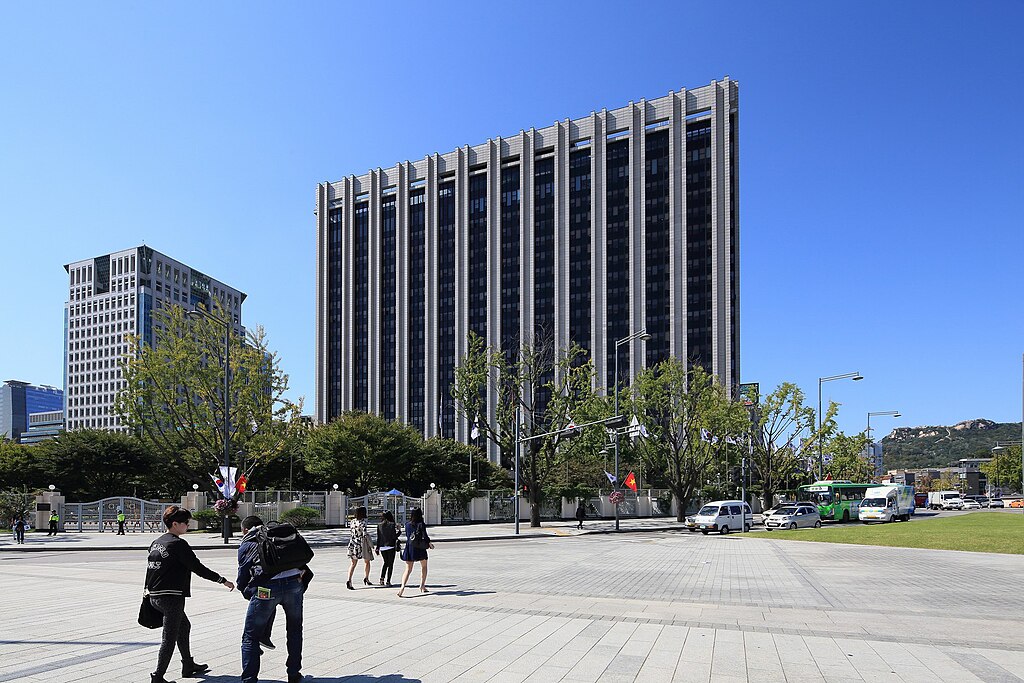
The Government Complex Building in Seoul, South Korea, where South Korea crypto reform is taking a step forward.The Government Complex Building in Seoul, South Korea. (Source: Seoul Institute [CC BY 4.0])

FSC: Vociferous Critic No More?

In previous years, the FSC has been a vociferous critic of the crypto sector. But in recent years, as governments have relaxed their hardline stance to the industry, it has spoken in favor of reform.

Under the proposal, FSC’s supervisory duties were to transfer to the Financial Supervisory Service.

The FSC’s policy-related tasks were due to transfer to the Ministry of Strategy and Finance.

But Lee’s plan to scrap the FSC proved controversial, even among senior ministers. While his offices have yet to confirm that the President has shelved the policy, the five-year plan appeared to suggest the proposal may have moved to the back burner.

There was no mention of the regulatory reorganization move on the plan. And seven of the 123 tasks were assigned to the FSC.

The newspaper added that crypto reforms are a “key focus” for both the government and the National Assembly this year.

As such, reforms are “expected to gain momentum” in the weeks ahead, Metro Seoul wrote.

‘Time to Play Catch-up’

Political leaders are concerned that South Korea is being left behind. They note that over the past two years, the global crypto market has expanded by about 262%.

While crypto investment has spiked in the US, the European Union, and Japan, driven by institutionalization drives, the same cannot be said for Seoul. The outlet wrote:

The FSC has prioritized its plan to allow corporations to buy and sell crypto. It also wants to tak a “more relaxed approach” to regulations.

The regulator has previously spoken of its intention to roll out crypto-related regulations before the end of this year.

However, skeptics say that a final decision on the fate of the FSC is yet to be taken. Talks to abolish the regulator “may resume in the future,” the newspaper explained.

Unnamed financial sector officials opined that the debate over the reorganization of the financial regulators would “continue until the end of the year.”

Earlier this month, the Seoul district of Gangnam announced it had recouped $144,057 in unpaid taxes in the first half of this year by seizing coins from tax evaders.

Disclaimer: The articles reposted on this site are sourced from public platforms and are provided for informational purposes only. They do not necessarily reflect the views of MEXC. All rights remain with the original authors. If you believe any content infringes on third-party rights, please contact service@support.mexc.com for removal. MEXC makes no guarantees regarding the accuracy, completeness, or timeliness of the content and is not responsible for any actions taken based on the information provided. The content does not constitute financial, legal, or other professional advice, nor should it be considered a recommendation or endorsement by MEXC.

You May Also Like

Trump roasts Mike Johnson for saying grace at prayer event: 'Excuse me, it's lunch!'

Trump roasts Mike Johnson for saying grace at prayer event: 'Excuse me, it's lunch!'

President Donald Trump in a speech at this year's National Prayer Breakfast roasted House Speaker Mike Johnson (R-LA) for saying grace at meals.The 79-year-old
Share
Rawstory2026/02/05 23:11
Where Can You Turn $1,000 Into $5,000 This Week? Experts Point Towards Remittix As The Best Option

Where Can You Turn $1,000 Into $5,000 This Week? Experts Point Towards Remittix As The Best Option

Cryptocurrency markets are again showing that opportunities can emerge when fundamentals, timing and demand intersect. Amid sideways price action in many major
Share
Techbullion2026/02/05 23:13
UK Looks to US to Adopt More Crypto-Friendly Approach

UK Looks to US to Adopt More Crypto-Friendly Approach

The post UK Looks to US to Adopt More Crypto-Friendly Approach appeared on BitcoinEthereumNews.com. The UK and US are reportedly preparing to deepen cooperation on digital assets, with Britain looking to copy the Trump administration’s crypto-friendly stance in a bid to boost innovation.  UK Chancellor Rachel Reeves and US Treasury Secretary Scott Bessent discussed on Tuesday how the two nations could strengthen their coordination on crypto, the Financial Times reported on Tuesday, citing people familiar with the matter.  The discussions also involved representatives from crypto companies, including Coinbase, Circle Internet Group and Ripple, with executives from the Bank of America, Barclays and Citi also attending, according to the report. The agreement was made “last-minute” after crypto advocacy groups urged the UK government on Thursday to adopt a more open stance toward the industry, claiming its cautious approach to the sector has left the country lagging in innovation and policy.  Source: Rachel Reeves Deal to include stablecoins, look to unlock adoption Any deal between the countries is likely to include stablecoins, the Financial Times reported, an area of crypto that US President Donald Trump made a policy priority and in which his family has significant business interests. The Financial Times reported on Monday that UK crypto advocacy groups also slammed the Bank of England’s proposal to limit individual stablecoin holdings to between 10,000 British pounds ($13,650) and 20,000 pounds ($27,300), claiming it would be difficult and expensive to implement. UK banks appear to have slowed adoption too, with around 40% of 2,000 recently surveyed crypto investors saying that their banks had either blocked or delayed a payment to a crypto provider.  Many of these actions have been linked to concerns over volatility, fraud and scams. The UK has made some progress on crypto regulation recently, proposing a framework in May that would see crypto exchanges, dealers, and agents treated similarly to traditional finance firms, with…
Share
BitcoinEthereumNews2025/09/18 02:21