Crypto Daybook Americas Share Share this article Copy linkX (Twitter)LinkedInFacebookEmail Crypto's rough day sets gian Crypto Daybook Americas Share Share this article Copy linkX (Twitter)LinkedInFacebookEmail Crypto's rough day sets gian

Crypto's rough day sets giants into 'plunge protection' mode

11 min read
Share
Share this article
Copy linkX (Twitter)LinkedInFacebookEmail

Crypto's rough day sets giants into 'plunge protection' mode

Your day-ahead look for Jan. 30, 2026

By Omkar Godbole|Edited by Sheldon Reback
Jan 30, 2026, 12:16 p.m.
Make us preferred on Google
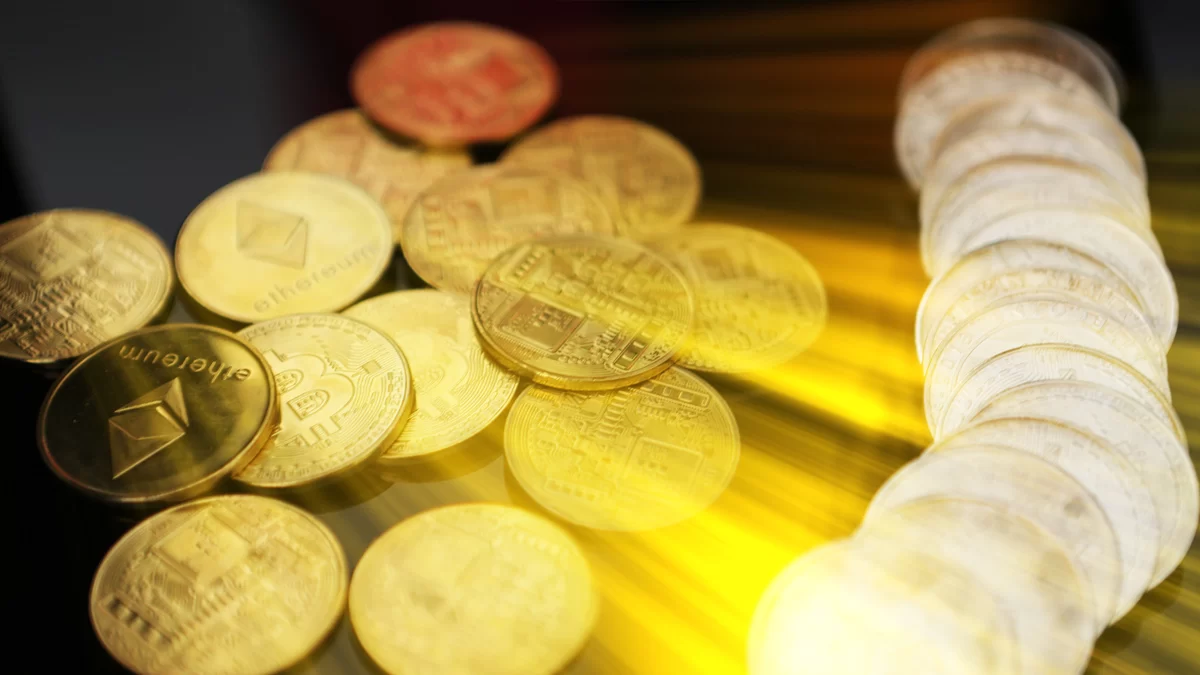
Binance led industry giants in move to protect crypto prices. (Midjourney/Modified by CoinDesk)

What to know:

You are viewing Crypto Daybook Americas, your morning briefing on what happened in the crypto markets overnight and what's expected during the coming day. Crypto Daybook Americas will kickstart your morning with comprehensive insights. If you're not already subscribed to the email, click here. You won't want to start your day without it.

:Crypto Daybook Americas

By Omkar Godbole (All times ET unless indicated otherwise)

STORY CONTINUES BELOW
Don't miss another story.Subscribe to the Crypto Daybook Americas Newsletter today. See all newsletters
Sign me up

The crypto market's beating on Thursday spurred industry heavyweights into "plunge protection" mode, a term for coordinated moves to steady a sinking ship.

As bitcoin neared $81,000, the lowest since November, and analysts warned of a deeper drop, Binance sprang into action. The largest crypto exchange by volume traded said it will switch its user protection fund into bitcoin from stablecoins and, more importantly, buy BTC to replenish the fund back to $1 billion if the value fell below $800 million.

Crypto billionaire and Tron founder Justin Sun acknowledged Binance's effort, announcing on X that Tron will also buy more bitcoin in the future.

These moves are likely aimed at calming market nerves and, potentially, putting a floor under BTC prices. But traditional markets teach us that such efforts can be overpowered by broader forces. For instance, how many times has the Bank of Japan's intervention failed to stem the yen's slide?

In other words, the market needs a clear bullish catalyst to stabilize and the odds appear stacked against that. Dollar liquidity is tightening, as noted by Maelstrom CIO Arthur Hayes, and the rise of Kevin Warsh, a former hawkish Fed official who cited inflation risks after the 2008 crash, as a preferred candidate for the central bank's chairmanship, is seen as a generally adverse development for BTC and other risk assets. Still, though a hawk, Warsh has on occasion spoken positively about bitcoin and has had investments in crypto adjacent projects in the past.

Bitcoin has shown no respite so far. It recently traded near $82,700, slightly up from overnight lows, but still down over 6% on a 24-hour basis. Other major tokens, ether ETH$2,742.63, XRP XRP$1.7626, solana SOL$113.80, DOGE$0.1130, and BNB BNB$845.99, posted similar losses.

At the same time, BTC's market dominance slipped to 59.16%. This might signal altcoins' relative resilience from underlying demand, setting them up for a big move higher once sentiment stabilizes. But that's not necessarily true: Altcoins underperformed throughout bitcoin's bull run from early 2023 to October 2025, with limited participation, it might be they're simply holding up better as the bull market unravels.

In traditional markets, precious metals like gold and silver, plus industrial copper, have pulled back sharply from record highs. Analysts noted earlier this month that once these trends run out of steam, money could rotate back to crypto. We'll see if that plays out. Stay alert!

Read more: For analysis of today's activity in altcoins and derivatives, see Crypto Markets Today

What to Watch

For a more comprehensive list of events this week, see CoinDesk's "Crypto Week Ahead".

  • Crypto
    • Nothing scheduled.
  • Macro
    • Jan. 30, 5 a.m.: European Economic Area GDP growth rate YoY (Flash) for Q4 (Prev. 1.4%), QoQ (Flash) (Prev. 0.3%)
    • Jan. 30, 8:30 a.m.: U.S. PPI YoY for December (Prev. 3%), Core PPI YoY (Prev 3%)
  • Earnings (Estimates based on FactSet data)
    • Nothing scheduled.

Token Events

For a more comprehensive list of events this week, see CoinDesk's "Crypto Week Ahead".

  • Governance votes & calls
    • Jan. 30: Conflux Network to host its quarterly community call.
    • GMX DAO is voting on a two-year funding framework for GMX Labs, establishing an annual operating budget of $7 million–$9 million sourced from V2 protocol fees. Voting ends Jan. 30.
  • Unlocks
    • Jan. 30: KMNO$0.03747 to unlock 3.68% of its circulating supply worth $11.22 million.
    • Feb. 1: SUI$1.2728 to unlock 1.15% of its circulating supply worth $65.29 million.
    • Feb. 1: EigenLayer (EIGEN) to unlock 8.88% of its circulating supply worth $12.53 million.
  • Token Launches
    • Jan. 30: Kindred Labs (KIN) to be listed on Binance Alpha, KuCoin, and others.
    • Feb. 1: Story Foundation’s planned IP token buyback program ends.

Conferences

For a more comprehensive list of events this week, see CoinDesk's "Crypto Week Ahead".

  • Day 3 of 4: WallStreetBets Live (Miami, Florida)
  • Day 1 of 2: Plan B Forum (El Salvador)
  • Day 1 of 4: CatLumpur 26 (Kuala Lumpur)

Market Movements

  • BTC is down 2.49% from 4 p.m. ET Thursday at $82,293.08 (24hrs: -5.69%)
  • ETH is down 3.37% at $2,720.41 (24hrs: -6.45%)
  • CoinDesk 20 is down 2.9% at 2,499.34 (24hrs: -5.92%)
  • Ether CESR Composite Staking Rate is up 6 bps at 2.87%
  • BTC funding rate is at 0.0009% (1.0063% annualized) on Binance
  • DXY is up 0.33% at 96.60
  • Gold futures are down 4.61% at $5,108.00
  • Silver futures are down 12.69% at $99.90
  • Nikkei 225 closed down 0.1% at 53,322.85
  • Hang Seng closed down 2.08% at 27,387.11
  • FTSE is up 0.16% at 10,188.28
  • Euro Stoxx 50 is up 0.58% at 5,926.34
  • DJIA closed on Thursday up 0.11% at 49,071.56
  • S&P 500 closed down 0.13% at 6,969.01
  • Nasdaq Composite closed down 0.72% at 23,685.12
  • S&P/TSX Composite closed down 0.48% at 33,016.13
  • S&P 40 Latin America closed up 0.24% at 3,760.03
  • U.S. 10-Year Treasury rate is up 3 bps at 4.257%
  • E-mini S&P 500 futures are down 0.75% at 6,940.50
  • E-mini Nasdaq-100 futures are down 0.87% at 25,773.75
  • E-mini Dow Jones Industrial Average Index futures are down 0.72% at 48,815.00

Bitcoin Stats

  • BTC Dominance: 59.29% (-0.09%)
  • Ether-bitcoin ratio: 0.03305 (-0.85%)
  • Hashrate (seven-day moving average): 837 EH/s
  • Hashprice (spot): $36.83
  • Total fees: 2.74 BTC / $236,749
  • CME Futures Open Interest: 117,145 BTC
  • BTC priced in gold: 16.1 oz.
  • BTC vs gold market cap: 5.54%

Technical Analysis

U.S. 10-year yield. (TradingView)
  • The chart shows weekly swings in the 10-year U.S. Treasury yield since late 2024.
  • The yield has risen over two basis points to 2.27% this week, testing the bearish trendline characterizing a year-long decline.
  • A move past this trendline would confirm what analysts call a bullish breakout — a sign that the downtrend is over and more gains lie ahead.
  • Continued hardening of the yield could dent the appeal of stocks and other risky assets.

Crypto Equities

  • Coinbase Global (COIN): closed on Thursday at $199.18 (-4.89%), -2.63% at $193.95 in pre-market
  • Circle Internet (CRCL): closed at $67.55 (-7.26%), -2.16% at $66.09
  • Galaxy Digital (GLXY): closed at $29.96 (-6.08%), -3.81% at $28.82
  • Bullish (BLSH): closed at $32.66 (-4.86%), -2.63% at $31.80
  • MARA Holdings (MARA): closed at $9.86 (-4.92%), -3.45% at $9.52
  • Riot Platforms (RIOT): closed at $16.97 (-3.30%), -3.71% at $16.34
  • Core Scientific (CORZ): closed at $18.84 (-3.34%), -2.97% at $18.28
  • CleanSpark (CLSK): closed at $12.59 (-6.39%), -4.61% at $12.01
  • CoinShares Valkyrie Bitcoin Miners ETF (WGMI): closed at $48.74 (-5.12%), -2.67% at $47.44
  • Exodus Movement (EXOD): closed at $13.98 (-2.44%)

Crypto Treasury Companies

  • Strategy (MSTR): closed at $143.19 (-9.63%), -3.45% at $138.25
  • Strive (ASST): closed at $0.79 (-2.00%), -2.93% at $0.76
  • SharpLink Gaming (SBET): closed at $9.37 (-6.02%), -3.42% at $9.05
  • Upexi (UPXI): closed at $1.83 (-6.63%)
  • Lite Strategy (LITS): closed at $1.25 (-4.58%)

ETF Flows

Spot BTC ETFs

  • Daily net flows: -$817.8 million
  • Cumulative net flows: $55.5 billion
  • Total BTC holdings ~1.29 million

Spot ETH ETFs

  • Daily net flows: -$155.7 million
  • Cumulative net flows: $12.26 billion
  • Total ETH holdings ~6.05 million

Source: Farside Investors

While You Were Sleeping

  • President Donald Trump nominates Kevin Warsh as Fed Chair (CoinDesk): The president confirmed his pick for the central bank position in a Truth Social post. Incumbent Jerome Powell's term ends in May.
  • Barring last-minute nuclear deal, US and Russia teeter on brink of new arms race (Reuters): U.S. and Russia could embark on an unrestrained nuclear arms race for the first time since the Cold War, unless they reach a deal in less than a week.
  • U.S. listed bitcoin, ether ETFs bleed nearly $1 billion in a day (CoinDesk): U.S.-listed spot bitcoin and ETFs suffered heavy redemptions, with nearly $1 billion yanked in single session as crypto prices slid sharply and risk appetite evaporated.
  • Gold and Silver Plummet as Traders Price Likely Fed Pick (Bloomberg): Falls across precious metals prices weigh on miners, while a rally across banks supports the FTSE 100. The pound drops as the dollar strengthens and gilt yields edge higher.
Crypto Daybook Americas

More For You

Pudgy Penguins: A New Blueprint for Tokenized Culture

Pudgy Penguins is building a multi-vertical consumer IP platform — combining phygital products, games, NFTs and PENGU to monetize culture at scale.

What to know:

Pudgy Penguins is emerging as one of the strongest NFT-native brands of this cycle, shifting from speculative “digital luxury goods” into a multi-vertical consumer IP platform. Its strategy is to acquire users through mainstream channels first; toys, retail partnerships and viral media, then onboard them into Web3 through games, NFTs and the PENGU token.

The ecosystem now spans phygital products (> $13M retail sales and >1M units sold), games and experiences (Pudgy Party surpassed 500k downloads in two weeks), and a widely distributed token (airdropped to 6M+ wallets). While the market is currently pricing Pudgy at a premium relative to traditional IP peers, sustained success depends on execution across retail expansion, gaming adoption and deeper token utility.

View Full Report

More For You

Bitcoin's no gold, and it's falling short for payments, too

Your day-ahead look for Jan. 29, 2026

What to know:

You are viewing Crypto Daybook Americas, your morning briefing on what happened in the crypto markets overnight and what's expected during the coming day. Crypto Daybook Americas will kickstart your morning with comprehensive insights. If you're not already subscribed to the email, click here. You won't want to start your day without it.

Read full story
Latest Crypto News

XRP-linked Ripple rolls out treasury platform after $1 billion GTreasury deal

President Donald Trump nominates Kevin Warsh as Fed Chair

Latin America’s biggest digital bank just won a key battle to offer crypto custody in U.S.

Bitcoin, ether extend declines as leverage unwind accelerates: Crypto Markets Today

Gold's six-month rally versus bitcoin shows similarities to the 2019 cycle

U.S. dollar strength and volatility surge as markets nervously await U.S. open

Top Stories

Here's why Fed contender Kevin Warsh is seen as bearish for bitcoin

Binance to shift $1 billion user protection fund into bitcoin amid market rout

Vitalik Buterin to spend $43 million on Ethereum development

Bitcoin is going nuts with biggest volatility spike since November

Plunge in gold, silver, and copper sparks $120 million rout in blockchain metal clones

Latest Crypto News

XRP-linked Ripple rolls out treasury platform after $1 billion GTreasury deal

President Donald Trump nominates Kevin Warsh as Fed Chair

Latin America’s biggest digital bank just won a key battle to offer crypto custody in U.S.

Bitcoin, ether extend declines as leverage unwind accelerates: Crypto Markets Today

Gold's six-month rally versus bitcoin shows similarities to the 2019 cycle

U.S. dollar strength and volatility surge as markets nervously await U.S. open

Top Stories

Here's why Fed contender Kevin Warsh is seen as bearish for bitcoin

Binance to shift $1 billion user protection fund into bitcoin amid market rout

Vitalik Buterin to spend $43 million on Ethereum development

Bitcoin is going nuts with biggest volatility spike since November

Plunge in gold, silver, and copper sparks $120 million rout in blockchain metal clones

Disclaimer: The articles reposted on this site are sourced from public platforms and are provided for informational purposes only. They do not necessarily reflect the views of MEXC. All rights remain with the original authors. If you believe any content infringes on third-party rights, please contact service@support.mexc.com for removal. MEXC makes no guarantees regarding the accuracy, completeness, or timeliness of the content and is not responsible for any actions taken based on the information provided. The content does not constitute financial, legal, or other professional advice, nor should it be considered a recommendation or endorsement by MEXC.

You May Also Like

The Role of Blockchain in Building Safer Web3 Gaming Ecosystems

The Role of Blockchain in Building Safer Web3 Gaming Ecosystems

The gaming industry is in the midst of a historic shift, driven by the rise of Web3. Unlike traditional games, where developers and publishers control assets and dictate in-game economies, Web3 gaming empowers players with ownership and influence. Built on blockchain technology, these ecosystems are decentralized by design, enabling true digital asset ownership, transparent economies, and a future where players help shape the games they play. However, as Web3 gaming grows, security becomes a focal point. The range of security concerns, from hacking to asset theft to vulnerabilities in smart contracts, is a significant issue that will undermine or erode trust in this ecosystem, limiting or stopping adoption. Blockchain technology could be used to create security processes around secure, transparent, and fair Web3 gaming ecosystems. We will explore how security is increasing within gaming ecosystems, which challenges are being overcome, and what the future of security looks like. Why is Security Important in Web3 Gaming? Web3 gaming differs from traditional gaming in that players engage with both the game and assets with real value attached. Players own in-game assets that exist as tokens or NFTs (Non-Fungible Tokens), and can trade and sell them. These game assets usually represent significant financial value, meaning security failure could represent real monetary loss. In essence, without security, the promises of owning “something” in Web3, decentralized economies within games, and all that comes with the term “fair” gameplay can easily be eroded by fraud, hacking, and exploitation. This is precisely why the uniqueness of blockchain should be emphasized in securing Web3 gaming. How Blockchain Ensures Security in Web3 Gaming?
  1. Immutable Ownership of Assets Blockchain records can be manipulated by anyone. If a player owns a sword, skin, or plot of land as an NFT, it is verifiably in their ownership, and it cannot be altered or deleted by the developer or even hacked. This has created a proven track record of ownership, providing control back to the players, unlike any centralised gaming platform where assets can be revoked.
  2. Decentralized Infrastructure Blockchain networks also have a distributed architecture where game data is stored in a worldwide network of nodes, making them much less susceptible to centralised points of failure and attacks. This decentralised approach makes it exponentially more difficult to hijack systems or even shut off the game’s economy.
  3. Secure Transactions with Cryptography Whether a player buys an NFT or trades their in-game tokens for other items or tokens, the transactions are enforced by cryptographic algorithms, ensuring secure, verifiable, and irreversible transactions and eliminating the risks of double-spending or fraudulent trades.
  4. Smart Contract Automation Smart contracts automate the enforcement of game rules and players’ economic exchanges for the developer, eliminating the need for intermediaries or middlemen, and trust for the developer. For example, if a player completes a quest that promises a reward, the smart contract will execute and distribute what was promised.
  5. Anti-Cheating and Fair Gameplay The naturally transparent nature of blockchain makes it extremely simple for anyone to examine a specific instance of gameplay and verify the economic outcomes from that play. Furthermore, multi-player games that enforce smart contracts on things like loot sharing or win sharing can automate and measure trustlessness and avoid cheating, manipulations, and fraud by developers.
  6. Cross-Platform Security Many Web3 games feature asset interoperability across platforms. This interoperability is made viable by blockchain, which guarantees ownership is maintained whenever assets transition from one game or marketplace to another, thereby offering protection to players who rely on transfers for security against fraud. Key Security Dangers in Web3 Gaming Although blockchain provides sound first principles of security, the Web3 gaming ecosystem is susceptible to threats. Some of the most serious threats include:
Smart Contract Vulnerabilities: Smart contracts that are poorly written or lack auditing will leave openings for exploitation and thereby result in asset loss. Phishing Attacks: Unintentionally exposing or revealing private keys or signing transactions that are not possible to reverse, under the assumption they were genuine transaction requests. Bridge Hacks: Cross-chain bridges, which allow players to move their assets between their respective blockchains, continually face hacks, requiring vigilance from players and developers. Scams and Rug Pulls: Rug pulls occur when a game project raises money and leaves, leaving player assets worthless. Regulatory Ambiguity: Global regulations remain unclear; risks exist for players and developers alike. While blockchain alone won’t resolve every issue, it remediates the responsibility of the first principles, more so when joined by processes such as auditing, education, and the right governance, which can improve their contribution to the security landscapes in game ecosystems. Real Life Examples of Blockchain Security in Web3 Gaming Axie Infinity (Ronin Hack): The Axie Infinity game and several projects suffered one of the biggest hacks thus far on its Ronin bridge; however, it demonstrated the effectiveness of multi-sig security and the effective utilization of decentralization. The industry benefited through learning and reflection, thus, as projects have implemented changes to reduce the risks of future hacks or misappropriation. Immutable X: This Ethereum scaling solution aims to ensure secure NFT transactions for gaming, allowing players to trade an asset without the burden of exorbitant fees and fears of being a victim of fraud. Enjin: Enjin is providing a trusted infrastructure for Web3 games, offering secure NFT creation and transfer while reiterating that ownership and an asset securely belong to the player. These examples indubitably illustrate that despite challenges to overcome, blockchain remains the foundational layer on which to build more secure Web3 gaming environments. Benefits of Blockchain Security for Players and Developers For Players: Confidence in true ownership of assets Transparency in in-game economies Protection against nefarious trades/scams For Developers: More trust between players and the platform Less reliance on centralized infrastructure Ability to attract wealth and players based on provable fairness By incorporating blockchain security within the mechanics of game design, developers can create and enforce resilient ecosystems where players feel reassured in investing time, money, and ownership within virtual worlds. The Future of Secure Web3 Gaming Ecosystems As the wisdom of blockchain technology and industry knowledge improves, the future for secure Web3 gaming looks bright. New growing trends include: Zero-Knowledge Proofs (ZKPs): A new wave of protocols that enable private transactions and secure smart contracts while managing user privacy with an element of transparency. Decentralized Identity Solutions (DID): Helping players control their identities and decrease account theft risks. AI-Enhanced Security: Identifying irregularities in user interactions by sampling pattern anomalies to avert hacks and fraud by time-stamping critical events. Interoperable Security Standards: Allowing secured and seamless asset transfers across blockchains and games. With these innovations, blockchain will not only secure gaming assets but also enhance the overall trust and longevity of Web3 gaming ecosystems. Conclusion Blockchain is more than a buzzword in Web3; it is the only way to host security, fairness, and transparency. With blockchain, players confirm immutable ownership of digital assets, there is a decentralized infrastructure, and finally, it supports smart contracts to automate code that protects players and developers from the challenges of digital economies. The threats, vulnerabilities, and scams that come from smart contracts still persist, but the industry is maturing with better security practices, cross-chain solutions, and increased formal cryptographic tools. In the coming years, blockchain will remain the base to digital economies and drive Web3 gaming environments that allow players to safely own, trade, and enjoy their digital experiences free from fraud and exploitation. While blockchain and gaming alone entertain, we will usher in an era of secure digital worlds where trust complements innovation. The Role of Blockchain in Building Safer Web3 Gaming Ecosystems was originally published in Coinmonks on Medium, where people are continuing the conversation by highlighting and responding to this story
Share
Medium2025/09/18 14:40
Vitalik Buterin Challenges Ethereum’s Layer 2 Paradigm

Vitalik Buterin Challenges Ethereum’s Layer 2 Paradigm

Vitalik Buterin challenges the role of layer 2 solutions in Ethereum's ecosystem. Layer 2's slow progress and Ethereum’s L1 scaling impact future strategies.
Share
Coinstats2026/02/04 04:08
USAA Names Dan Griffiths Chief Information Officer to Drive Secure, Simplified Digital Member Experiences

USAA Names Dan Griffiths Chief Information Officer to Drive Secure, Simplified Digital Member Experiences

SAN ANTONIO–(BUSINESS WIRE)–USAA today announced the appointment of Dan Griffiths as Chief Information Officer, effective February 5, 2026. A proven financial‑services
Share
AI Journal2026/02/04 04:15