Crypto Daybook Americas Share Share this article Copy linkX (Twitter)LinkedInFacebookEmail Bitcoin's no gold, and it's Crypto Daybook Americas Share Share this article Copy linkX (Twitter)LinkedInFacebookEmail Bitcoin's no gold, and it's

Bitcoin's no gold, and it's falling short for payments, too

11 min read
Share
Share this article
Copy linkX (Twitter)LinkedInFacebookEmail

Bitcoin's no gold, and it's falling short for payments, too

Your day-ahead look for Jan. 29, 2026

By Omkar Godbole|Edited by Sheldon Reback
Jan 29, 2026, 12:29 p.m.
Make us preferred on Google
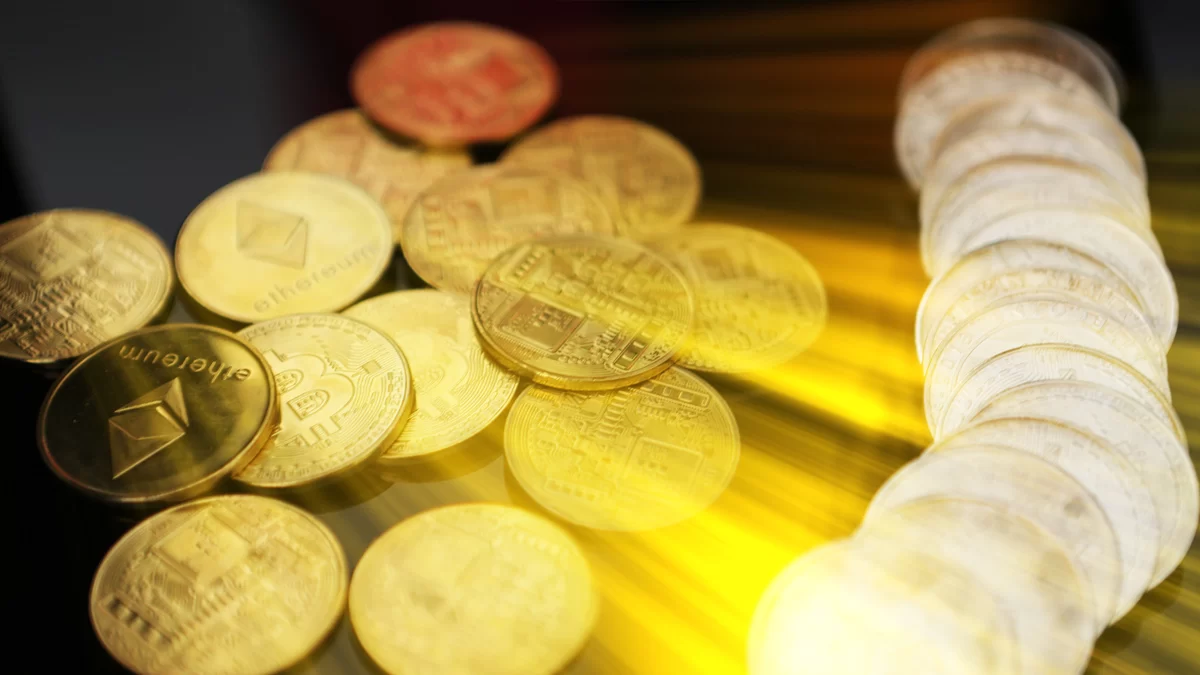
Bitcoin payments are trailing off, onchain data shows. (NFC modified by CoinDesk)

What to know:

You are viewing Crypto Daybook Americas, your morning briefing on what happened in the crypto markets overnight and what's expected during the coming day. Crypto Daybook Americas will kickstart your morning with comprehensive insights. If you're not already subscribed to the email, click here. You won't want to start your day without it.

By Omkar Godbole (All times ET unless indicated otherwise)

They said bitcoin has a dual appeal: first, as a gold-like digital token with a capped supply of 21 million, and second, as a decentralized technology that allows anyone to move money transparently without intermediaries.

STORY CONTINUES BELOW
Don't miss another story.Subscribe to the Crypto Daybook Americas Newsletter today. See all newsletters
Sign me up

As of now, it's failing to hold up as both a store of value and a payments infrastructure. Bitcoin's underperformance relative to gold, silver and other precious metals is well documented.

Equally disappointing is the slowdown in onchain activity to levels last seen in mid-2025. For instance, the 30-day average of daily confirmed payments processed on the Bitcoin blockchain has dropped to 748,368, the lowest since mid-July, according to data source Blockchain.com. The tally peaked at over 884,000 in September. A payment means the recipient(s) receive funds via an on-chain transaction.

The monthly average of the number of confirmed transactions shows a similar decline in network usage. The mempool, or "memory pool," where unconfirmed transactions wait for miners to verify them, has dried up too. It's stuck at just a few thousand unconfirmed transactions per day, a trend that's dragged on since late 2025.

"On-chain signals point to a market in consolidation rather than accumulation. Network activity has softened. The reduced institutional and retail conviction can be seen in lower active addresses and subdued transaction volumes," Vikram Subburaj, CEO of the India-based Giottus exchange, said in an email.

A token's price is tied to the active user adoption of its parent network, and the recent decline in activity at least partially explains BTC's dull price performance in recent months.

Bitcoin, the leading cryptocurrency by market value, has fallen back to $87,500 after hitting highs above $90,000 ahead of Wednesday's Fed meeting. The central bank kept interest rates unchanged, as expected. The accompanying policy statement and Chairman Jerome Powell's press conference suggested policymakers could be more cautious about rate cuts in the coming months.

With BTC's turn lower, standout sectors from early this week are now deep in the red. For instance, the CoinDesk Memecoin Index (CDMEME) has declined by more than 9% over the past 24 hours. The Metaverse Select (MTVS) and Culture and Entertainment indexes are down over 5% each.

Meanwhile, gold tokens PAXG and XAUT traded higher, drawing strength from the continued rally in spot gold prices. Worldcoin's WLD rose 5%.

In traditional markets, oil prices rose to four-month highs on both sides of the Atlantic, threatening to inject inflation into the global economy. A renewed energy-led inflationary impulse could make it even harder for the Fed to reduce rates next time. Stay alert!

Read more: For analysis of today's activity in altcoins and derivatives, see Crypto Markets Today

What to Watch

For a more comprehensive list of events this week, see CoinDesk's "Crypto Week Ahead".

  • Crypto
    • Jan. 29, 2 p.m.: CFTC Chairman Mike Selig to join SEC Chairman Paul Atkins to discuss harmonization in the crypto era.
  • Macro
    • Jan. 29, 8:30 a.m.: U.S. balance of trade for November (Prev. $331.4B)\
    • Jan. 29, 8:30 a.m.: U.S. initial jobless claims for week ending Jan. 24 (Prev. 200K)
  • Earnings (Estimates based on FactSet data)
    • Nothing scheduled.

Token Events

For a more comprehensive list of events this week, see CoinDesk's "Crypto Week Ahead".

  • Governance votes & calls
    • Jan. 29: Helium to host a Deployer Roundtable community call.
    • Jan. 29: Alchemy Pay to host a community Ask Me Anything (AMA) session on Discord.
    • Beefy DAO is voting on whether to reallocate protocol revenue to a new “Protocol Coverage Fund” to finance Nexus Mutual coverage that benefits Beefy users. Voting ends Jan. 29.
    • Sushi is voting to execute the migration of ~$57M in legacy liquidity to V3 protocol-deployed positions. Voting ends Jan. 29.
  • Unlocks
    • No major unlocks.
  • Token Launches
    • No major token launches.

Conferences

For a more comprehensive list of events this week, see CoinDesk's "Crypto Week Ahead".

  • Day 2 of 4: WallStreetBets Live (Miami, Florida)

Market Movements

  • BTC is down 1.67% from 4 p.m. ET Wednesday at $87,798.68 (24hrs: -2.39%)
  • ETH is down 2.5% at $2,941.84 (24hrs: -3.59%)
  • CoinDesk 20 is down 2.13% at 2,679.82 (24hrs: -2.9%)
  • Ether CESR Composite Staking Rate is up 1 bp at 2.81%
  • BTC funding rate is at 0.0073% (7.9628% annualized) on Binance
  • DXY is unchanged at 96.44
  • Gold futures are up 3.1% at $5,505.70
  • Silver futures are up 2.46% at $116.32
  • Nikkei 225 closed unchanged at 53,375.60
  • Hang Seng closed up 0.51% at 27,968.09
  • FTSE is up 0.44% at 10,198.87
  • Euro Stoxx 50 is up 0.39% at 5,956.17
  • DJIA closed on Wednesday unchanged at 49,015.60
  • S&P 500 closed unchanged at 6,978.03
  • Nasdaq Composite closed up 0.17% at 23,857.45
  • S&P/TSX Composite closed up 0.24% at 33,176.07
  • S&P 40 Latin America closed up 1.17% at 3,751.00
  • U.S. 10-Year Treasury rate is up 0.4 bps at 4.255%
  • E-mini S&P 500 futures are unchanged at 7,011.50
  • E-mini Nasdaq-100 futures are up 0.1% at 26,181.50
  • E-mini Dow Jones Industrial Average Index futures are unchanged at 49,137.00

Bitcoin Stats

  • BTC Dominance: 59.65% (0.1%)
  • Ether-bitcoin ratio: 0.03335 (-1.07%)
  • Hashrate (seven-day moving average): 872 EH/s
  • Hashprice (spot): $39.24
  • Total fees: 2.87 BTC / $256,633
  • CME Futures Open Interest: 113,020 BTC
  • BTC priced in gold: 15.9 oz.
  • BTC vs gold market cap: 5.88%

Technical Analysis

Bitcoin's daily chart. (TradingView)
  • The chart shows bitcoin's daily price swings since November.
  • The price has turned lower after facing rejection at the resistance of the bullish trendline, a technical analysis term for steady a uphill path.
  • That has shifted the focus to support first at $86,000 followed and then, if it falls through, at $84,445.

Crypto Equities

  • Coinbase Global (COIN): closed on Wednesday at $209.43 (-0.66%), -0.9% at $207.54 in pre-market
  • Circle Internet (CRCL): closed at $72.84 (+4.12%), -0.91% at $72.18
  • Galaxy Digital (GLXY): closed at $31.90 (-3.86%), -0.85% at $31.63
  • Bullish (BLSH): closed at $34.33 (-1.35%), -0.17% at $34.27
  • MARA Holdings (MARA): closed at $10.37 (-1.43%), -1.16% at $10.25
  • Riot Platforms (RIOT): closed at $17.55 (+0.00%), -0.4% at $17.48
  • Core Scientific (CORZ): closed at $19.49 (-2.26%), +0.15% at $19.52
  • CleanSpark (CLSK): closed at $13.45 (+1.36%), -1.49% at $13.25
  • CoinShares Valkyrie Bitcoin Miners ETF (WGMI): closed at $51.37 (+0.92%)
  • Exodus Movement (EXOD): closed at $14.33 (-7.43%)

Crypto Treasury Companies

  • Strategy (MSTR): closed at $158.45 (-1.94%), -0.71% at $157.33
  • Strive (ASST): closed at $0.80 (-2.20%), -0.51% at $0.80
  • SharpLink Gaming (SBET): closed at $9.97 (-0.2%)
  • Upexi (UPXI): closed at $1.96 (-1.01%)
  • Lite Strategy (LITS): closed at $1.31 (-0.76%), +0.76% at $1.32

ETF Flows

Spot BTC ETFs

  • Daily net flows: -$19.6 million
  • Cumulative net flows: $56.32 billion
  • Total BTC holdings ~1.29 million

Spot ETH ETFs

  • Daily net flows: $28.1 million
  • Cumulative net flows: $12.41 billion
  • Total ETH holdings ~6.04 million

Source: Farside Investors

While You Were Sleeping

  • Trump warns Iran to make nuclear deal or next attack will be 'far worse' (Reuters): President Donald Trump urged Iran to make a deal on nuclear weapons or the next U.S. attack would be far worse. Tehran replied threatening strikes on the U.S., Israel and those who support them.
  • Brent Crude Hits $70 a Barrel as Trump Ramps Up Iran Threats (Bloomberg): Brent crude futures hit $70 a barrel for the first time since September. The global oil benchmark rose as much as 2.7%. West Texas Intermediate topped $65.
  • First gold and silver, now oil is starting to rally and that's bad news for bitcoin (CoinDesk): Rising oil prices risk stoking inflation, reducing chances of near-term Fed rate cuts and pressuring bitcoin, which has struggled as macro forces tilt against risk assets.
  • Gold Shows No Signs of Slowing, Silver Hit New Records; S&P Futures Gain (Bloomberg): Gold futures neared $5,600 an ounce for the first time and silver contracts hit record highs. Copper, platinum and palladium futures rallied, too.
Crypto Daybook Americas

More For You

Pudgy Penguins: A New Blueprint for Tokenized Culture

Pudgy Penguins is building a multi-vertical consumer IP platform — combining phygital products, games, NFTs and PENGU to monetize culture at scale.

What to know:

Pudgy Penguins is emerging as one of the strongest NFT-native brands of this cycle, shifting from speculative “digital luxury goods” into a multi-vertical consumer IP platform. Its strategy is to acquire users through mainstream channels first; toys, retail partnerships and viral media, then onboard them into Web3 through games, NFTs and the PENGU token.

The ecosystem now spans phygital products (> $13M retail sales and >1M units sold), games and experiences (Pudgy Party surpassed 500k downloads in two weeks), and a widely distributed token (airdropped to 6M+ wallets). While the market is currently pricing Pudgy at a premium relative to traditional IP peers, sustained success depends on execution across retail expansion, gaming adoption and deeper token utility.

View Full Report

More For You

The Fed has an interest rate announcement today — crypto traders think it will be boring

Your day-ahead look for Jan. 28, 2026

What to know:

You are viewing Crypto Daybook Americas, your morning briefing on what happened in the crypto markets overnight and what's expected during the coming day. Crypto Daybook Americas will kickstart your morning with comprehensive insights. If you're not already subscribed to the email, click here. You won't want to start your day without it.

Read full story
Latest Crypto News

Sygnum’s new bitcoin fund pulls in $65 million from investors looking for steady yield

Crypto Markets Today: Largest tokens decline, with derivatives signaling caution ahead

Investors accuse Cere Network of $100 million fraud and token-dump scheme in lawsuit

Metaplanet is raising $137 million to pay down debt and buy even more bitcoin

Crypto payments firm BCB Group appoints Tim Renew as CEO in leadership reshuffle

More than half of bitcoin’s invested supply has a cost basis above $88,000

Top Stories

SEC clarifies rules for tokenized stocks, tightening scrutiny on synthetic equity

First gold and silver, now oil is starting to rally and that's bad news for bitcoin

White House to meet with crypto, banking executives to discuss market structure bill

Meta and Microsoft continue going big on AI spending. Here's how bitcoin miners could benefit

Bybit is adding bank accounts to its crypto platform with eye on U.S. expansion: Bloomberg

Number of wallets with 1 million XRP is rising again

Latest Crypto News

Sygnum’s new bitcoin fund pulls in $65 million from investors looking for steady yield

Crypto Markets Today: Largest tokens decline, with derivatives signaling caution ahead

Investors accuse Cere Network of $100 million fraud and token-dump scheme in lawsuit

Metaplanet is raising $137 million to pay down debt and buy even more bitcoin

Crypto payments firm BCB Group appoints Tim Renew as CEO in leadership reshuffle

More than half of bitcoin’s invested supply has a cost basis above $88,000

Top Stories

SEC clarifies rules for tokenized stocks, tightening scrutiny on synthetic equity

First gold and silver, now oil is starting to rally and that's bad news for bitcoin

White House to meet with crypto, banking executives to discuss market structure bill

Meta and Microsoft continue going big on AI spending. Here's how bitcoin miners could benefit

Bybit is adding bank accounts to its crypto platform with eye on U.S. expansion: Bloomberg

Number of wallets with 1 million XRP is rising again

Disclaimer: The articles reposted on this site are sourced from public platforms and are provided for informational purposes only. They do not necessarily reflect the views of MEXC. All rights remain with the original authors. If you believe any content infringes on third-party rights, please contact service@support.mexc.com for removal. MEXC makes no guarantees regarding the accuracy, completeness, or timeliness of the content and is not responsible for any actions taken based on the information provided. The content does not constitute financial, legal, or other professional advice, nor should it be considered a recommendation or endorsement by MEXC.

You May Also Like

The Role of Blockchain in Building Safer Web3 Gaming Ecosystems

The Role of Blockchain in Building Safer Web3 Gaming Ecosystems

The gaming industry is in the midst of a historic shift, driven by the rise of Web3. Unlike traditional games, where developers and publishers control assets and dictate in-game economies, Web3 gaming empowers players with ownership and influence. Built on blockchain technology, these ecosystems are decentralized by design, enabling true digital asset ownership, transparent economies, and a future where players help shape the games they play. However, as Web3 gaming grows, security becomes a focal point. The range of security concerns, from hacking to asset theft to vulnerabilities in smart contracts, is a significant issue that will undermine or erode trust in this ecosystem, limiting or stopping adoption. Blockchain technology could be used to create security processes around secure, transparent, and fair Web3 gaming ecosystems. We will explore how security is increasing within gaming ecosystems, which challenges are being overcome, and what the future of security looks like. Why is Security Important in Web3 Gaming? Web3 gaming differs from traditional gaming in that players engage with both the game and assets with real value attached. Players own in-game assets that exist as tokens or NFTs (Non-Fungible Tokens), and can trade and sell them. These game assets usually represent significant financial value, meaning security failure could represent real monetary loss. In essence, without security, the promises of owning “something” in Web3, decentralized economies within games, and all that comes with the term “fair” gameplay can easily be eroded by fraud, hacking, and exploitation. This is precisely why the uniqueness of blockchain should be emphasized in securing Web3 gaming. How Blockchain Ensures Security in Web3 Gaming?
  1. Immutable Ownership of Assets Blockchain records can be manipulated by anyone. If a player owns a sword, skin, or plot of land as an NFT, it is verifiably in their ownership, and it cannot be altered or deleted by the developer or even hacked. This has created a proven track record of ownership, providing control back to the players, unlike any centralised gaming platform where assets can be revoked.
  2. Decentralized Infrastructure Blockchain networks also have a distributed architecture where game data is stored in a worldwide network of nodes, making them much less susceptible to centralised points of failure and attacks. This decentralised approach makes it exponentially more difficult to hijack systems or even shut off the game’s economy.
  3. Secure Transactions with Cryptography Whether a player buys an NFT or trades their in-game tokens for other items or tokens, the transactions are enforced by cryptographic algorithms, ensuring secure, verifiable, and irreversible transactions and eliminating the risks of double-spending or fraudulent trades.
  4. Smart Contract Automation Smart contracts automate the enforcement of game rules and players’ economic exchanges for the developer, eliminating the need for intermediaries or middlemen, and trust for the developer. For example, if a player completes a quest that promises a reward, the smart contract will execute and distribute what was promised.
  5. Anti-Cheating and Fair Gameplay The naturally transparent nature of blockchain makes it extremely simple for anyone to examine a specific instance of gameplay and verify the economic outcomes from that play. Furthermore, multi-player games that enforce smart contracts on things like loot sharing or win sharing can automate and measure trustlessness and avoid cheating, manipulations, and fraud by developers.
  6. Cross-Platform Security Many Web3 games feature asset interoperability across platforms. This interoperability is made viable by blockchain, which guarantees ownership is maintained whenever assets transition from one game or marketplace to another, thereby offering protection to players who rely on transfers for security against fraud. Key Security Dangers in Web3 Gaming Although blockchain provides sound first principles of security, the Web3 gaming ecosystem is susceptible to threats. Some of the most serious threats include:
Smart Contract Vulnerabilities: Smart contracts that are poorly written or lack auditing will leave openings for exploitation and thereby result in asset loss. Phishing Attacks: Unintentionally exposing or revealing private keys or signing transactions that are not possible to reverse, under the assumption they were genuine transaction requests. Bridge Hacks: Cross-chain bridges, which allow players to move their assets between their respective blockchains, continually face hacks, requiring vigilance from players and developers. Scams and Rug Pulls: Rug pulls occur when a game project raises money and leaves, leaving player assets worthless. Regulatory Ambiguity: Global regulations remain unclear; risks exist for players and developers alike. While blockchain alone won’t resolve every issue, it remediates the responsibility of the first principles, more so when joined by processes such as auditing, education, and the right governance, which can improve their contribution to the security landscapes in game ecosystems. Real Life Examples of Blockchain Security in Web3 Gaming Axie Infinity (Ronin Hack): The Axie Infinity game and several projects suffered one of the biggest hacks thus far on its Ronin bridge; however, it demonstrated the effectiveness of multi-sig security and the effective utilization of decentralization. The industry benefited through learning and reflection, thus, as projects have implemented changes to reduce the risks of future hacks or misappropriation. Immutable X: This Ethereum scaling solution aims to ensure secure NFT transactions for gaming, allowing players to trade an asset without the burden of exorbitant fees and fears of being a victim of fraud. Enjin: Enjin is providing a trusted infrastructure for Web3 games, offering secure NFT creation and transfer while reiterating that ownership and an asset securely belong to the player. These examples indubitably illustrate that despite challenges to overcome, blockchain remains the foundational layer on which to build more secure Web3 gaming environments. Benefits of Blockchain Security for Players and Developers For Players: Confidence in true ownership of assets Transparency in in-game economies Protection against nefarious trades/scams For Developers: More trust between players and the platform Less reliance on centralized infrastructure Ability to attract wealth and players based on provable fairness By incorporating blockchain security within the mechanics of game design, developers can create and enforce resilient ecosystems where players feel reassured in investing time, money, and ownership within virtual worlds. The Future of Secure Web3 Gaming Ecosystems As the wisdom of blockchain technology and industry knowledge improves, the future for secure Web3 gaming looks bright. New growing trends include: Zero-Knowledge Proofs (ZKPs): A new wave of protocols that enable private transactions and secure smart contracts while managing user privacy with an element of transparency. Decentralized Identity Solutions (DID): Helping players control their identities and decrease account theft risks. AI-Enhanced Security: Identifying irregularities in user interactions by sampling pattern anomalies to avert hacks and fraud by time-stamping critical events. Interoperable Security Standards: Allowing secured and seamless asset transfers across blockchains and games. With these innovations, blockchain will not only secure gaming assets but also enhance the overall trust and longevity of Web3 gaming ecosystems. Conclusion Blockchain is more than a buzzword in Web3; it is the only way to host security, fairness, and transparency. With blockchain, players confirm immutable ownership of digital assets, there is a decentralized infrastructure, and finally, it supports smart contracts to automate code that protects players and developers from the challenges of digital economies. The threats, vulnerabilities, and scams that come from smart contracts still persist, but the industry is maturing with better security practices, cross-chain solutions, and increased formal cryptographic tools. In the coming years, blockchain will remain the base to digital economies and drive Web3 gaming environments that allow players to safely own, trade, and enjoy their digital experiences free from fraud and exploitation. While blockchain and gaming alone entertain, we will usher in an era of secure digital worlds where trust complements innovation. The Role of Blockchain in Building Safer Web3 Gaming Ecosystems was originally published in Coinmonks on Medium, where people are continuing the conversation by highlighting and responding to this story
Share
Medium2025/09/18 14:40
Vitalik Buterin Challenges Ethereum’s Layer 2 Paradigm

Vitalik Buterin Challenges Ethereum’s Layer 2 Paradigm

Vitalik Buterin challenges the role of layer 2 solutions in Ethereum's ecosystem. Layer 2's slow progress and Ethereum’s L1 scaling impact future strategies.
Share
Coinstats2026/02/04 04:08
USAA Names Dan Griffiths Chief Information Officer to Drive Secure, Simplified Digital Member Experiences

USAA Names Dan Griffiths Chief Information Officer to Drive Secure, Simplified Digital Member Experiences

SAN ANTONIO–(BUSINESS WIRE)–USAA today announced the appointment of Dan Griffiths as Chief Information Officer, effective February 5, 2026. A proven financial‑services
Share
AI Journal2026/02/04 04:15