

Thailand SEC Drafts Crypto ETF and Futures Trading Rules
Introduction
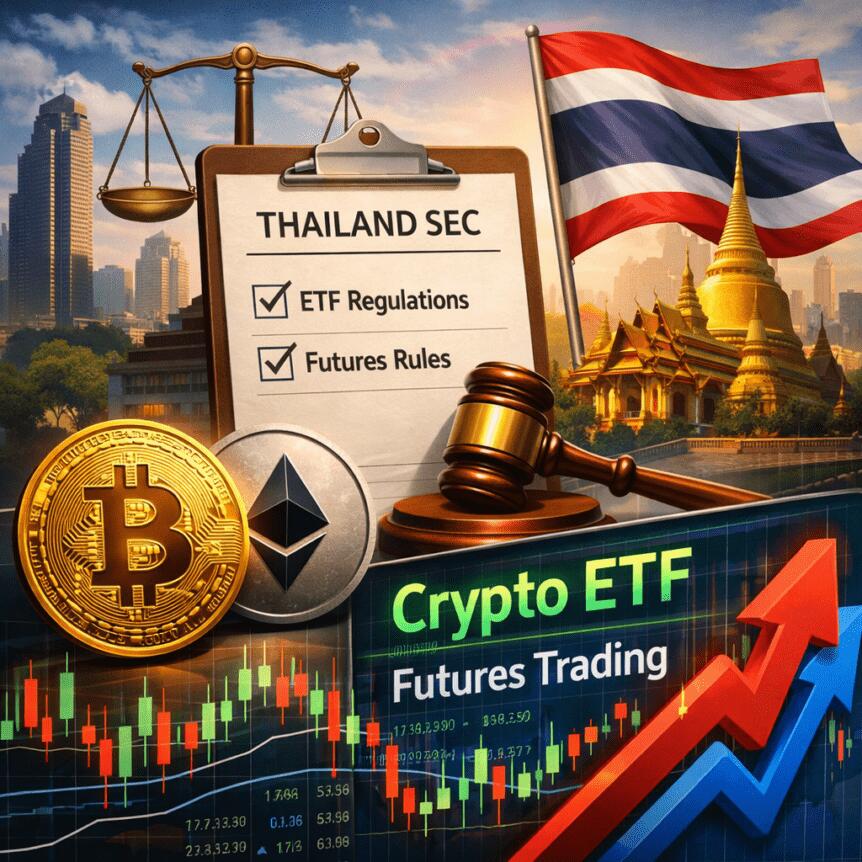
Thailand’s securities regulator is advancing a comprehensive framework to bring crypto ETFs, futures trading, and tokenized investment products into a regulated mainstream. In a briefing, SEC deputy secretary-general Jomkwan Kongsakul outlined formal guidelines for crypto ETFs slated for release early this year, along with plans to enable futures trading on the Thailand Futures Exchange and to recognize digital assets as an official asset class. The move signals a deliberate push to attract institutional capital while preserving investor protections in a market that remains popular with retail traders.
Key Takeaways
- Thailand plans formal guidelines for crypto ETFs and futures trading on TFEX, with the aim of expanding regulated access to digital assets.
- Digital assets could be recognized as an official asset class under the Derivatives Act, with investors permitted up to 5% allocation in diversified portfolios.
- A tokenization sandbox is being developed with the Bank of Thailand to explore novel products, including bond tokens and other tokenized securities, under enhanced supervision.
- The regulatory push includes tighter oversight of financial influencers and ongoing efforts to ensure market liquidity through designated liquidity providers and market makers.
Tickers mentioned:
Sentiment: Bullish
Price impact: Positive. Regulatory clarity and new product types are seen as supportive for the Thai crypto market and institutional participation.
Trading idea (Not Financial Advice): Hold. The framework suggests longer-term stability and broader product access, though risks from enforcement and market transitions remain.
Market context: The move reflects a wider regional trend toward clearer crypto rules in Southeast Asia as institutions seek regulated exposure.
Tighter rules for financial influencers
Thailand’s regulator indicated that crypto would be treated as “another asset class,” with a framework under consideration that would allow investors to allocate up to five percent of a diversified portfolio to digital assets. The SEC’s board has given in-principle approval for crypto ETFs and is finalizing the investment and operational rules that will govern their launch. In parallel, the authority is tightening oversight of crypto-related recommendations by so‑called financial influencers, stipulating that any securities or investment return guidance would require authorization as either an investment adviser or introducing broker.
Tokenization sandbox and market structure
The commission is collaborating with the Bank of Thailand on a tokenization sandbox designed to test the application of tokenized securities in a controlled environment. Issuers of bond tokens will be encouraged to participate, with a view toward greater liquidity and efficiency in fixed-income markets. In tandem, the SEC is laying groundwork to establish market makers to ensure robust liquidity for digital assets listed under the new regime, a critical step for institutional confidence and price discovery.
KuCoin Thailand moves to resolve the SEC suspension
Meanwhile, Thai authorities suspended KuCoin Thailand’s operations earlier in January after the capital adequacy metric fell below the minimum threshold for five consecutive days. The Nation reported that the issue stemmed from a shareholder dispute between Singapore’s CI Group and KuCoin Global, which impeded a planned capital increase rather than signaling a broader liquidity crisis. KuCoin, which entered the Thai market in June 2025, has signaled its intention to pursue a digital-asset broker license in Thailand, a move that would enable a wider array of crypto offerings under local regulation.
The Thai market remains active, with Bitkub, the country’s largest exchange, handling daily volumes that highlight sustained retail interest even as policy remains in flux. The SEC’s actions underscore a broader push to align Thailand’s crypto rules with international standards while preserving safeguards against market abuses and systemic risk.
The broader objective is to position Thailand as a regional hub for institutional investment in digital assets, leveraging a clear regulatory pathway to attract more sophisticated players while ensuring that innovations like tokenized securities and ETF products operate within a robust governance framework. As regulators refine the driver’s seat, market participants will be watching closely how quickly guidelines translate into live products and whether liquidity and investor protections meet the expectations of global investors.
This article was originally published as Thailand SEC Drafts Crypto ETF and Futures Trading Rules on Crypto Breaking News – your trusted source for crypto news, Bitcoin news, and blockchain updates.
You May Also Like

Woman shot 5 times by DHS to stare down Trump at State of the Union address

What is Play-to-Earn Gaming? Unlocking New Possibilities
