Pencil Finance raised $1 million for first blockchain-based student loans.Pencil Finance raised $1 million for first blockchain-based student loans.

Animoca-backed Pencil Finance issues first ever blockchain-based student loans

2 min read

Pencil Finance raises on-chain capital for student loans, issuing $1 million in real-world loans.

Real-world assets are increasingly finding applications in real life. On Thursday, July 10, Pencil Finance, the student loan real-world asset protocol, issued its first-ever student loan capital raised entirely on-chain.

The $1 million in loan capital, raised on the Pencil Finance platform, will be used to expand educational opportunities in emerging markets. The focus will be on Asia, including the Philippines and Indonesia. Capital will be distributed through ErudiFi, which will then issue student loans for tuition funding to university students.

At the same time, users who provided the capital will earn yields based on student loan repayments. Specifically, $750,000 of the capital will offer a fixed 15% annual percentage yield. Another $250,000 will offer variable APY with first-loss risk.

Blockchain to expand educational opportunities

The platform was launched with support from Hong Kong-based blockchain conglomerate Animoca Brands. Yat Siu, co-founder and executive chairman of the firm, believes that Pencil Finance demonstrates the real-world, positive use cases for blockchain.

This sentiment was echoed by Frank Li, co-founder of Pencil Finance, who stated that blockchain can have a meaningful social impact. The goal, he explained, is to make education across the world more accessible.

Animoca Brands is a game developer, NFT platform, and venture capital firm focused on crypto businesses. The company funds a large number of crypto-based startups, especially in Asia.

Market Opportunity
Everscale Logo
Everscale Price(EVER)
$0.00622
$0.00622$0.00622
+2.98%
USD
Everscale (EVER) Live Price Chart
Disclaimer: The articles reposted on this site are sourced from public platforms and are provided for informational purposes only. They do not necessarily reflect the views of MEXC. All rights remain with the original authors. If you believe any content infringes on third-party rights, please contact service@support.mexc.com for removal. MEXC makes no guarantees regarding the accuracy, completeness, or timeliness of the content and is not responsible for any actions taken based on the information provided. The content does not constitute financial, legal, or other professional advice, nor should it be considered a recommendation or endorsement by MEXC.

You May Also Like

XRP Enters ‘Washout Zone,’ Then Targets $30, Crypto Analyst Says
XRP Enters ‘Washout Zone,’ Then Targets $30, Crypto Analyst Says

XRP has entered what Korean Certified Elliott Wave Analyst XForceGlobal (@XForceGlobal) calls a “washout” phase inside a broader Elliott Wave corrective structure
Share
NewsBTC2026/02/05 08:00
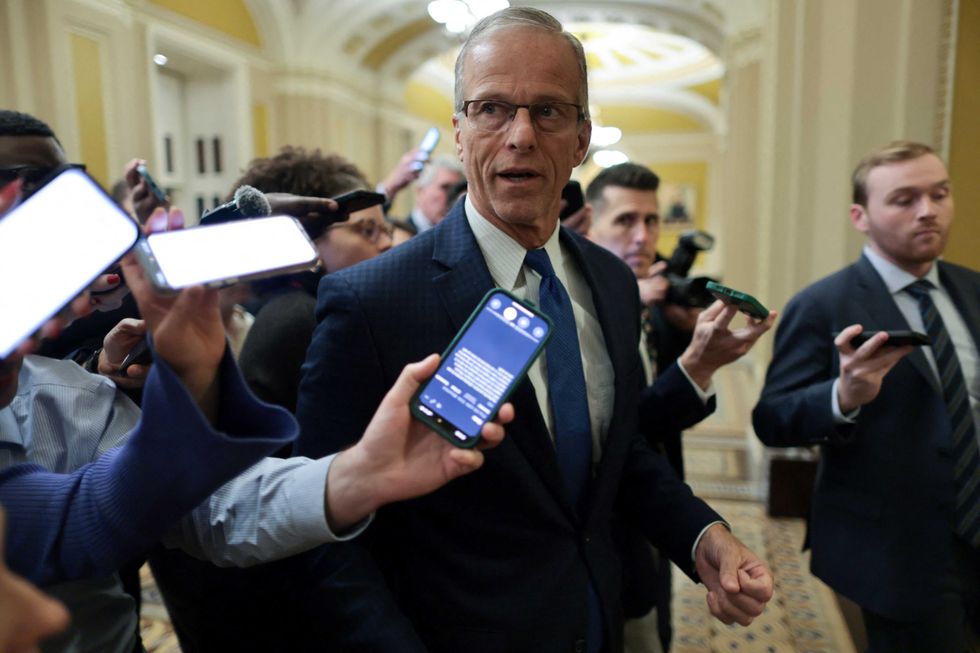
Republicans are 'very concerned about Texas' turning blue: GOP senator

Republicans are 'very concerned about Texas' turning blue: GOP senator

While Republicans in the U.S. House of Representatives have a razor-thin with just a four-seat advantage, their six-seat advantage in the U.S. Senate is seen as
Share
Alternet2026/02/05 08:38
Headwind Helps Best Wallet Token

Headwind Helps Best Wallet Token

The post Headwind Helps Best Wallet Token appeared on BitcoinEthereumNews.com. Google has announced the launch of a new open-source protocol called Agent Payments Protocol (AP2) in partnership with Coinbase, the Ethereum Foundation, and 60 other organizations. This allows AI agents to make payments on behalf of users using various methods such as real-time bank transfers, credit and debit cards, and, most importantly, stablecoins. Let’s explore in detail what this could mean for the broader cryptocurrency markets, and also highlight a presale crypto (Best Wallet Token) that could explode as a result of this development. Google’s Push for Stablecoins Agent Payments Protocol (AP2) uses digital contracts known as ‘Intent Mandates’ and ‘Verifiable Credentials’ to ensure that AI agents undertake only those payments authorized by the user. Mandates, by the way, are cryptographically signed, tamper-proof digital contracts that act as verifiable proof of a user’s instruction. For example, let’s say you instruct an AI agent to never spend more than $200 in a single transaction. This instruction is written into an Intent Mandate, which serves as a digital contract. Now, whenever the AI agent tries to make a payment, it must present this mandate as proof of authorization, which will then be verified via the AP2 protocol. Alongside this, Google has also launched the A2A x402 extension to accelerate support for the Web3 ecosystem. This production-ready solution enables agent-based crypto payments and will help reshape the growth of cryptocurrency integration within the AP2 protocol. Google’s inclusion of stablecoins in AP2 is a massive vote of confidence in dollar-pegged cryptocurrencies and a huge step toward making them a mainstream payment option. This widens stablecoin usage beyond trading and speculation, positioning them at the center of the consumption economy. The recent enactment of the GENIUS Act in the U.S. gives stablecoins more structure and legal support. Imagine paying for things like data crawls, per-task…
Share
BitcoinEthereumNews2025/09/18 01:27