BitcoinWorld Unlock Yield: Upshift, Clearstar & Flare Launch New earnXRP Product For XRP holders seeking more than just price appreciation, a new opportunity hasBitcoinWorld Unlock Yield: Upshift, Clearstar & Flare Launch New earnXRP Product For XRP holders seeking more than just price appreciation, a new opportunity has

Unlock Yield: Upshift, Clearstar & Flare Launch New earnXRP Product

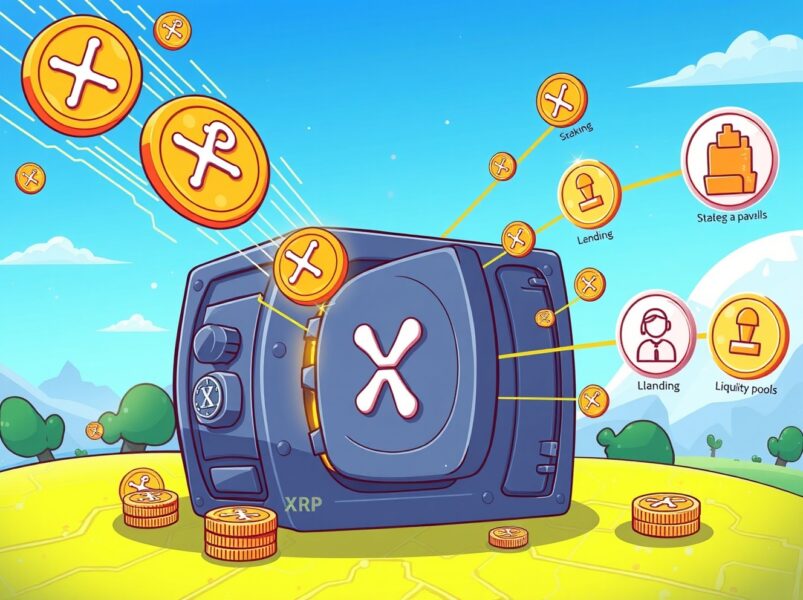
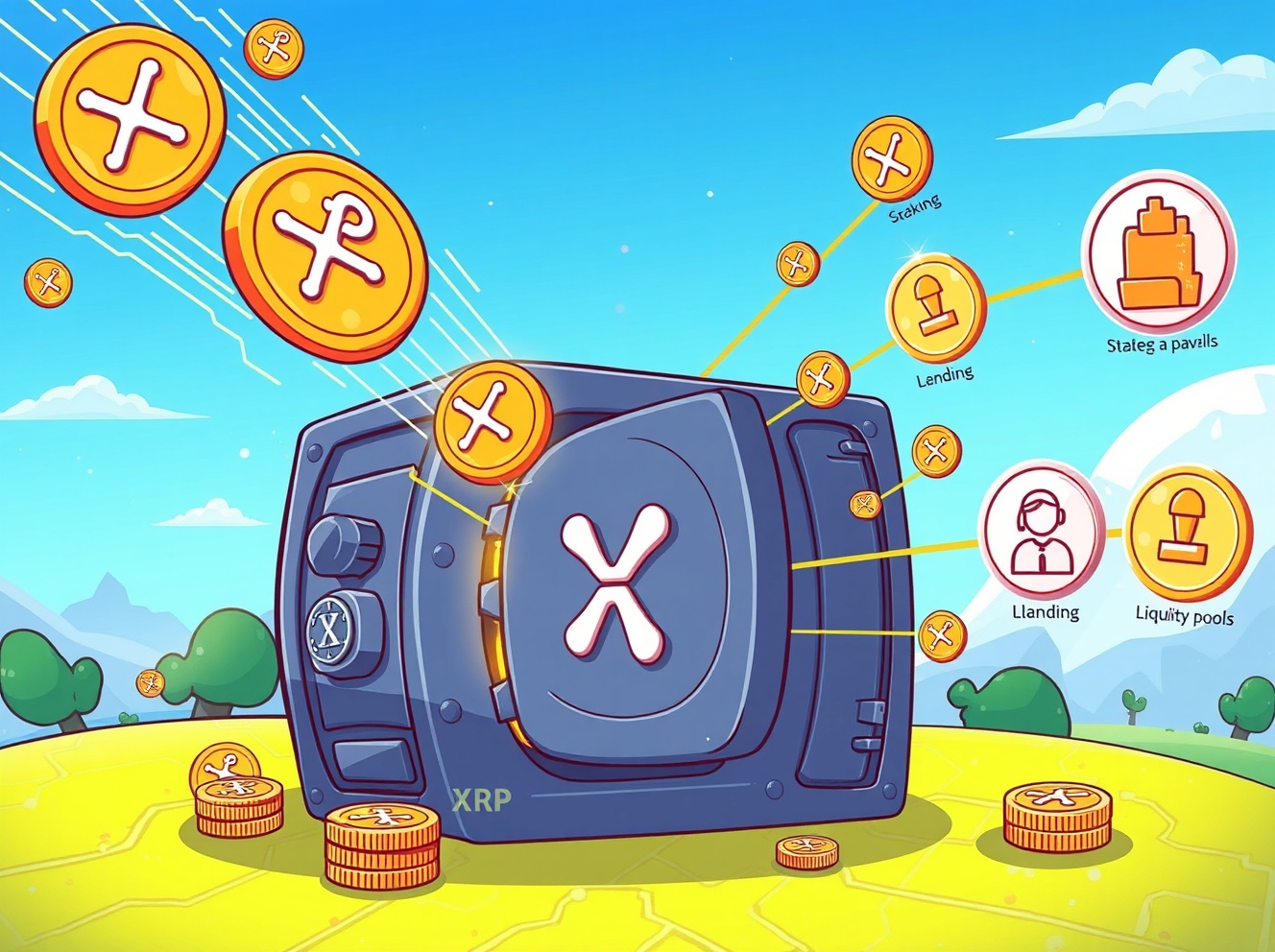
A vibrant cartoon illustration showing the earnXRP product generating XRP yield from a digital vault.

BitcoinWorld

Unlock Yield: Upshift, Clearstar & Flare Launch New earnXRP Product

For XRP holders seeking more than just price appreciation, a new opportunity has arrived. A strategic collaboration between Upshift, Clearstar, and Flare has resulted in the launch of earnXRP, a dedicated platform designed to put your XRP to work. This product directly addresses the growing demand for yield-generating options within the XRP ecosystem, often referred to as XRPFi.

What Exactly Is The New earnXRP Product?

The core innovation of earnXRP is its streamlined approach to generating returns. According to a report by The Block, it operates on its own dedicated Layer 1 blockchain network, which is specifically optimized for XRPFi applications. The process is elegantly simple for users: you deposit a wrapped version of XRP called FXRP (from the Flare network) into a single, unified vault.

From there, the platform’s smart contracts take over. Your pooled capital is automatically deployed across a curated selection of on-chain strategies. The ultimate goal? To generate passive returns that are paid out to you, denominated in XRP. This removes the complexity of manually navigating multiple protocols.

How Does earnXRP Generate Yield for You?

Understanding the mechanism is key to seeing the value. The earnXRP network acts as a sophisticated capital allocator. Instead of you picking individual strategies, the platform diversifies the deposited FXRP across various DeFi activities that are proven to generate yield.

  • Automated Strategy Deployment: Your assets are spread across different protocols to optimize returns and manage risk.
  • XRP-Denominated Returns: All profits are accrued and distributed in XRP, simplifying your portfolio tracking.
  • Single Vault Simplicity: You make one deposit into the earnXRP vault, and the system handles the rest.

This model is powerful because it leverages the collective capital of all users to access opportunities that might require larger minimums or deeper technical knowledge individually.

Why Is This Launch Significant for the XRP Community?

The arrival of earnXRP is more than just another product; it’s a signal of maturation for the XRP ecosystem. For years, the conversation around XRP largely centered on payments and cross-border transfers. Now, with focused platforms like this, the narrative expands to include decentralized finance and capital efficiency.

This launch by Upshift, Clearstar, and Flare provides a legitimate, structured avenue for yield. It answers a clear community demand and could potentially attract a new segment of yield-seeking investors to XRP. The dedicated Layer 1 also suggests a long-term commitment to building out a robust XRPFi infrastructure.

What Should Potential Users Consider?

While the promise of passive earnXRP yield is compelling, a prudent approach is essential. As with any DeFi product, users must acknowledge the inherent smart contract risks associated with the underlying strategies. The returns are not guaranteed and will fluctuate based on market conditions and protocol performance.

Furthermore, using the product requires interacting with the Flare network to obtain FXRP, adding a step for those holding native XRP on other ledgers. Therefore, conducting your own research, starting with small amounts, and ensuring you understand the bridging process are critical first steps.

Conclusion: A New Chapter for XRP Utility

The collaboration between Upshift, Clearstar, and Flare marks a pivotal step in evolving XRP’s utility beyond transactional use. The earnXRP product successfully lowers the barrier to entry for XRP holders to participate in decentralized finance and earn yield on their holdings. By automating complex strategy deployment and offering returns in native XRP, it provides a much-needed and user-friendly service. As the XRPFi landscape grows, tools like this will be crucial in unlocking the full potential of the XRP ecosystem for its community.

Frequently Asked Questions (FAQs)

Q: Do I need to hold native XRP to use earnXRP?
A: You need to hold FXRP, which is a wrapped representation of XRP on the Flare network. You can bridge your native XRP to FXRP to participate.

Q: Is my XRP locked when using earnXRP?
A: Yes, when you deposit FXRP into the vault, it is deployed into on-chain strategies. You will need to withdraw it to regain full, liquid control of your assets.

Q: What are the risks of using earnXRP?
A> The primary risks include smart contract vulnerabilities in the earnXRP vault or the underlying strategies it uses, and market risks associated with the yield-generating activities (like impermanent loss in liquidity pools).

Q: How are the yields generated?
A: Yields are generated automatically by the platform deploying the pooled FXRP into various on-chain DeFi activities, which could include lending, liquidity provision, or staking on supported protocols.

Q: Who is behind the earnXRP product?
A: It is a joint launch by three entities: Upshift, Clearstar, and the Flare network team, combining expertise in blockchain infrastructure and financial products.

Found this guide to the new earnXRP yield product helpful? Share it with other XRP enthusiasts in your network! Spreading knowledge helps the entire community make informed decisions in the fast-moving world of crypto and DeFi.

To learn more about the latest trends in decentralized finance and yield generation, explore our article on key developments shaping the future of passive crypto income strategies.

This post Unlock Yield: Upshift, Clearstar & Flare Launch New earnXRP Product first appeared on BitcoinWorld.

Market Opportunity
XRP Logo
XRP Price(XRP)
$1.8847
$1.8847$1.8847
-2.57%
USD
XRP (XRP) Live Price Chart
Disclaimer: The articles reposted on this site are sourced from public platforms and are provided for informational purposes only. They do not necessarily reflect the views of MEXC. All rights remain with the original authors. If you believe any content infringes on third-party rights, please contact service@support.mexc.com for removal. MEXC makes no guarantees regarding the accuracy, completeness, or timeliness of the content and is not responsible for any actions taken based on the information provided. The content does not constitute financial, legal, or other professional advice, nor should it be considered a recommendation or endorsement by MEXC.

You May Also Like

U.S. Coinbase Premium Turns Negative Amid Asian Buying Surge

U.S. Coinbase Premium Turns Negative Amid Asian Buying Surge

U.S. institutional demand falls as Asian markets buy Bitcoin dips, causing negative Coinbase premium.
Share
CoinLive2025/12/23 14:20
Crucial ETH Unstaking Period: Vitalik Buterin’s Unwavering Defense for Network Security

Crucial ETH Unstaking Period: Vitalik Buterin’s Unwavering Defense for Network Security

BitcoinWorld Crucial ETH Unstaking Period: Vitalik Buterin’s Unwavering Defense for Network Security Ever wondered why withdrawing your staked Ethereum (ETH) isn’t an instant process? It’s a question that often sparks debate within the crypto community. Ethereum founder Vitalik Buterin recently stepped forward to defend the network’s approximately 45-day ETH unstaking period, asserting its crucial role in safeguarding the network’s integrity. This lengthy waiting time, while sometimes seen as an inconvenience, is a deliberate design choice with profound implications for security. Why is the ETH Unstaking Period a Vital Security Measure? Vitalik Buterin’s defense comes amidst comparisons to other networks, like Solana, which boast significantly shorter unstaking times. He drew a compelling parallel to military operations, explaining that an army cannot function effectively if its soldiers can simply abandon their posts at a moment’s notice. Similarly, a blockchain network requires a stable and committed validator set to maintain its security. The current ETH unstaking period isn’t merely an arbitrary delay. It acts as a critical buffer, providing the network with sufficient time to detect and respond to potential malicious activities. If validators could instantly exit, it would open doors for sophisticated attacks, jeopardizing the entire system. Currently, Ethereum boasts over one million active validators, collectively staking approximately 35.6 million ETH, representing about 30% of the total supply. This massive commitment underpins the network’s robust security model, and the unstaking period helps preserve this stability. Network Security: Ethereum’s Paramount Concern A shorter ETH unstaking period might seem appealing for liquidity, but it introduces significant risks. Imagine a scenario where a large number of validators, potentially colluding, could quickly withdraw their stake after committing a malicious act. Without a substantial delay, the network would have limited time to penalize them or mitigate the damage. This “exit queue” mechanism is designed to prevent sudden validator exodus, which could lead to: Reduced decentralization: A rapid drop in active validators could concentrate power among fewer participants. Increased vulnerability to attacks: A smaller, less stable validator set is easier to compromise. Network instability: Frequent and unpredictable changes in validator numbers can lead to performance issues and consensus failures. Therefore, the extended period is not a bug; it’s a feature. It’s a calculated trade-off between immediate liquidity for stakers and the foundational security of the entire Ethereum ecosystem. Ethereum vs. Solana: Different Approaches to Unstaking When discussing the ETH unstaking period, many point to networks like Solana, which offers a much quicker two-day unstaking process. While this might seem like an advantage for stakers seeking rapid access to their funds, it reflects fundamental differences in network architecture and security philosophies. Solana’s design prioritizes speed and immediate liquidity, often relying on different consensus mechanisms and validator economics to manage security risks. Ethereum, on the other hand, with its proof-of-stake evolution from proof-of-work, has adopted a more cautious approach to ensure its transition and long-term stability are uncompromised. Each network makes design choices based on its unique goals and threat models. Ethereum’s substantial value and its role as a foundational layer for countless dApps necessitate an extremely robust security posture, making the current unstaking duration a deliberate and necessary component. What Does the ETH Unstaking Period Mean for Stakers? For individuals and institutions staking ETH, understanding the ETH unstaking period is crucial for managing expectations and investment strategies. It means that while staking offers attractive rewards, it also comes with a commitment to the network’s long-term health. Here are key considerations for stakers: Liquidity Planning: Stakers should view their staked ETH as a longer-term commitment, not immediately liquid capital. Risk Management: The delay inherently reduces the ability to react quickly to market volatility with staked assets. Network Contribution: By participating, stakers contribute directly to the security and decentralization of Ethereum, reinforcing its value proposition. While the current waiting period may not be “optimal” in every sense, as Buterin acknowledged, simply shortening it without addressing the underlying security implications would be a dangerous gamble for the network’s reliability. In conclusion, Vitalik Buterin’s defense of the lengthy ETH unstaking period underscores a fundamental principle: network security cannot be compromised for the sake of convenience. It is a vital mechanism that protects Ethereum’s integrity, ensuring its stability and trustworthiness as a leading blockchain platform. This deliberate design choice, while requiring patience from stakers, ultimately fortifies the entire ecosystem against potential threats, paving the way for a more secure and reliable decentralized future. Frequently Asked Questions (FAQs) Q1: What is the main reason for Ethereum’s long unstaking period? A1: The primary reason is network security. A lengthy ETH unstaking period prevents malicious actors from quickly withdrawing their stake after an attack, giving the network time to detect and penalize them, thus maintaining stability and integrity. Q2: How long is the current ETH unstaking period? A2: The current ETH unstaking period is approximately 45 days. This duration can fluctuate based on network conditions and the number of validators in the exit queue. Q3: How does Ethereum’s unstaking period compare to other blockchains? A3: Ethereum’s unstaking period is notably longer than some other networks, such as Solana, which has a two-day period. This difference reflects varying network architectures and security priorities. Q4: Does the unstaking period affect ETH stakers? A4: Yes, it means stakers need to plan their liquidity carefully, as their staked ETH is not immediately accessible. It encourages a longer-term commitment to the network, aligning staker interests with Ethereum’s stability. Q5: Could the ETH unstaking period be shortened in the future? A5: While Vitalik Buterin acknowledged the current period might not be “optimal,” any significant shortening would likely require extensive research and network upgrades to ensure security isn’t compromised. For now, the focus remains on maintaining robust network defenses. Found this article insightful? Share it with your friends and fellow crypto enthusiasts on social media to spread awareness about the critical role of the ETH unstaking period in Ethereum’s security! To learn more about the latest Ethereum trends, explore our article on key developments shaping Ethereum’s institutional adoption. This post Crucial ETH Unstaking Period: Vitalik Buterin’s Unwavering Defense for Network Security first appeared on BitcoinWorld.
Share
Coinstats2025/09/18 15:30
USD/JPY jumps to near 148.30 as Fed Powell’s caution on rate cuts boosts US Dollar

USD/JPY jumps to near 148.30 as Fed Powell’s caution on rate cuts boosts US Dollar

The post USD/JPY jumps to near 148.30 as Fed Powell’s caution on rate cuts boosts US Dollar appeared on BitcoinEthereumNews.com. USD/JPY climbs to near 148.30 as Fed’s Powell didn’t endorse aggressive dovish stance. Fed’s Powell warns of slowing job demand and upside inflation risks. Japan’s Jibun Bank Manufacturing PMI declines at a faster pace in September. The USD/JPY pair trades 0.45% higher to near 148.30 during the European trading session on Wednesday. The pair gains sharply as the US Dollar (USD) outperforms a majority of its peers, following comments from Federal Reserve (Fed) Chair Jerome Powell that the central bank needs to be cautious on further interest rate cuts. During the press time, the US Dollar Index (DXY), which tracks the Greenback’s value against six major currencies, rises almost 0.4% to near 97.60. The USD Index resumes its upside journey after a two-day corrective move. On Tuesday, Fed’s Powell stated at the Greater Providence Chamber of Commerce that the upside inflation risks and labor market concerns have posed a challenging situation for the central bank, which is prompting officials to exercise caution on further monetary policy easing. Powell also stated that the current interest rate range is “well positioned to respond to potential economic developments”. Fed Powell’s comments were similar to statements from Federal Open Market Committee (FOMC) members St. Louis Fed President Alberto Musalem, Atlanta Fed President Raphael Bostic, and Cleveland Fed President Beth Hammack who stated on Monday that the central bank needs to cautious over unwinding monetary policy restrictiveness further, citing persistent inflation risks. Going forward, investors will focus on the US Durable Goods Orders and Personal Consumption Expenditure Price Index (PCE) data for August, which will be released on Thursday and Friday, respectively. In Japan, the manufacturing business activity has declined again in September. Preliminary Jibun Bank Manufacturing PMI data came in lower at 48.4 against 49.7 in August. Economists had anticipated the Manufacturing PMI to…
Share
BitcoinEthereumNews2025/09/25 01:31