The post UK tables long-awaited digital asset bill to parliament appeared on BitcoinEthereumNews.com. Homepage > News > Business > UK tables long-awaited digitalThe post UK tables long-awaited digital asset bill to parliament appeared on BitcoinEthereumNews.com. Homepage > News > Business > UK tables long-awaited digital

UK tables long-awaited digital asset bill to parliament

The United Kingdom government has laid final legislation before parliament to provide a regulatory regime for digital assets, set to come into force in 2027. It gives the country’s top finance sector watchdog, the Financial Conduct Authority (FCA), the necessary powers to oversee the space and integrate digital assets into the country’s financial regulation. In response, the FCA launched a consultation on its proposed approach, promising to take into account the “unique aspects of cryptoassets.”

On Monday, HM Treasury laid the final draft of a ‘statutory instrument’ before parliament that will create new regulated activities for ‘cryptoassets’ and place the sector within the FCA’s jurisdictional oversight, allowing the regulator to finally bring digital assets within the U.K.’s financial regulatory regime.

“Bringing crypto into the regulatory perimeter is a crucial step in securing the U.K.’s position as a world leading financial centre in the digital age,” Chancellor of the Exchequer Rachel Reeves MP said. “By giving firms clear rules of the road, we are providing the certainty they need to invest, innovate and create high skilled jobs here in the UK, while giving millions strong consumer protections, and locking dodgy actors out of the U.K. market.”

The digital asset sector remains largely unregulated in the U.K., barring anti-money laundering and countering the financing of terrorism (AML/CFT) rules, and those related to the promotion of financial products.

However, according to the Treasury’s December 15 announcement, the legislation presented to parliament will provide “firm and proportionate rules” that will come into force from 2027, “giving firms legal clarity over the sector’s regulatory position and boosting consumer confidence by ensuring consumers are robustly protected.”

The major change will be that digital asset firms will need to be regulated by the FCA in the same way as other providers of financial products, including being subject to the established transparency standards and licensing regime.

“Cryptoassets firms will be backed to innovate and grow under plans to make the UK a global destination for digital assets and attract more investment,” the Treasury said. “Consumers will be protected by bringing cryptoassets into scope of similar rules to those for other regulated financial products like stocks and shares.”

Meanwhile, Economic Secretary to the Treasury, Lucy Rigby KC MP, placed the emphasis very much on supporting the digital asset sector, saying that “by establishing a comprehensive regulatory regime for cryptoassets, the government is taking another step towards delivering on its ambition for the UK to be a world-leading hub for digital finance.”

Back to the top ↑

Slow road to regulation

In October 2023, HM Treasury, under the previous Conservative government of Rishi Sunak, published detailed proposals for creating a U.K. financial services regulatory regime for cryptoassets, including stablecoins. Essentially, it involved a mix of integrating cryptoassets into existing financial regulation with certain bespoke new rules.

When 14 years of Conservative rule came to an end in July of last year, a certain amount of uncertainty crept back in as industry and observers awaited what the new Labour government would do. However, in November of last year, the Treasury confirmed that it will proceed with introducing the regime broadly in line with the previously published proposals.

In April 2025, the Treasury published a draft Statutory Instrument that aimed to definitively bring certain cryptoasset activities under the FCA’s remit, thus giving the regulator authority to properly govern and rule-making on those activities. This includes issuing qualifying stablecoins, safeguarding qualifying cryptoassets and specified investment cryptoassets, operating a qualifying cryptoasset trading platform, intermediation, and staking.

This has now been confirmed, with the final draft of the statutory instrument being presented to parliament on Monday.

Back to the top ↑

An end to uncertainty

The long-awaited progress toward substantive regulation for digital assets in the U.K. received a warm response from some working in the area, who have been living in a state of limbo and uncertainty for some time.

Hannah Meakin, partner at global law firm Norton Rose Fulbright, told CoinGeek that the legislation represents “the corner piece of the jigsaw because it provides key definitions and explains how cryptoassets will be able to be offered to the public and listed, what types of abusive behaviour will be prohibited and which activities will require authorisation.”

With the legislation now in place and set to come into force in 2027, the next stage of the process will involve the FCA, whose job it will be to regulate the digital asset space, firming up how it proposes to slot the new asset class into the existing regulation framework.

“The FCA will be able to develop the rules and guidance it has proposed, and industry will be able to provide more informed feedback to help make the final regime as effective as possible,” said Meakin. “There are already some key provisions, such as for information sharing between authorised persons to combat market abuse and the prospect of a list of legitimate market practices as carve-outs to the offences.”

She added that “We will see more tailoring to the particular characteristics of cryptoassets at the next level, where the FCA has significant power to design the detailed rules.”

With this in mind, following the Treasury’s introduction of the final legislation to parliament on Monday, the FCA launched a consultation on its proposed approach to digital asset regulation.

Back to the top ↑

FCA consultation

On Tuesday, hot on the heels of the Treasury’s announcement, the FCA published a consultation on its proposed rules and guidance for firms conducting regulated cryptoasset activities, such as trading platforms, intermediaries (including cryptoasset lending and borrowing), staking and decentralized finance (DeFi).

“Under the government’s plans, our regulatory remit for cryptoassets will expand from the current Money Laundering, Terrorist Financing and Transfer of Funds (Information on the Payer) Regulations 2017 (MLRs) and financial promotions regime to a more comprehensive crypto regime,” said the regulator. “Our proposed rules and guidance are aimed at effectively promoting market integrity, protecting consumers, and supporting innovation and competition in the UK cryptoasset sector.”

Likely much to the relief of digital asset-market participants, the FCA also confirmed its consultation would take into account “the unique aspects of cryptoassets” when deciding their place in the future regulatory regime.

Back to the top ↑

Watch: Breaking down solutions to blockchain regulation hurdles

title=”YouTube video player” frameborder=”0″ allow=”accelerometer; autoplay; clipboard-write; encrypted-media; gyroscope; picture-in-picture; web-share” referrerpolicy=”strict-origin-when-cross-origin” allowfullscreen=””>

Source: https://coingeek.com/uk-tables-long-awaited-digital-asset-bill-to-parliament/

Market Opportunity
Belong Logo
Belong Price(LONG)
$0,002388
$0,002388$0,002388
-0,78%
USD
Belong (LONG) Live Price Chart
Disclaimer: The articles reposted on this site are sourced from public platforms and are provided for informational purposes only. They do not necessarily reflect the views of MEXC. All rights remain with the original authors. If you believe any content infringes on third-party rights, please contact service@support.mexc.com for removal. MEXC makes no guarantees regarding the accuracy, completeness, or timeliness of the content and is not responsible for any actions taken based on the information provided. The content does not constitute financial, legal, or other professional advice, nor should it be considered a recommendation or endorsement by MEXC.

You May Also Like

The Stunning ASEAN Winner Emerges As Manufacturing Shifts Accelerate

The Stunning ASEAN Winner Emerges As Manufacturing Shifts Accelerate

The post The Stunning ASEAN Winner Emerges As Manufacturing Shifts Accelerate appeared on BitcoinEthereumNews.com. Vietnam US Tariffs: The Stunning ASEAN Winner
Share
BitcoinEthereumNews2026/02/24 08:20
MySQL Single Leader Replication with Node.js and Docker

MySQL Single Leader Replication with Node.js and Docker

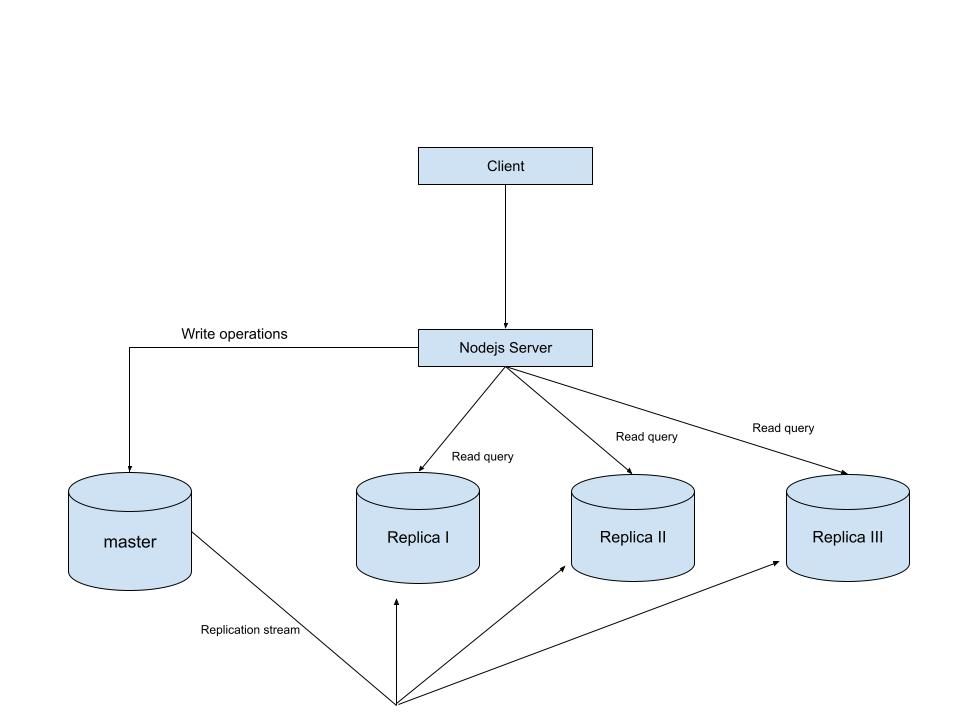
Modern applications demand high availability and the ability to scale reads without compromising performance. One of the most common strategies to achieve this is Replication. In this setup, we configured a single database to act as the leader (master) and handle all write operations, while three replicas handle read operations. In this article, we’ll walk through how to set up MySQL single-leader replication on your local machine using Docker. Once the replication is working, we’ll connect it to a Node.js application using Sequelize ORM, so that reads are routed to the replica and writes go to the master. By the end, you’ll have a working environment where you can see replication in real time Prerequisites knowledge of database replication Background knowledge of docker and docker compose Background knowledge of Nodejs and how to run a NodeJS server An Overview of what we are building Setup Setup our database servers on docker compose in the root of our project directory, create a file named docker-compose.yml with the following content to setup our mysql primary and replica databases. \ \ name: "learn-replica" volumes: mysqlMasterDatabase: mysqlSlaveDatabase: mysqlSlaveDatabaseII: mysqlSlaveDatabaseIII: networks: mysql-replication-network: services: mysql-master: image: mysql:latest container_name: mysql-master command: --server-id=1 --log-bin=ON environment: MYSQL_ROOT_PASSWORD: master MYSQL_DATABASE: replicaDb ports: - "3306:3306" volumes: - mysqlMasterDatabase:/var/lib/mysql networks: - mysql-replication-network mysql-slave: image: mysql:latest container_name: mysql-slave command: --server-id=2 --log-bin=ON environment: MYSQL_ROOT_PASSWORD: slave MYSQL_DATABASE: replicaDb MYSQL_ROOT_HOST: "%" ports: - "3307:3306" volumes: - mysqlSlaveDatabase:/var/lib/mysql depends_on: - mysql-master networks: - mysql-replication-network mysql-slaveII: image: mysql:latest container_name: mysql-slaveII command: --server-id=2 --log-bin=ON environment: MYSQL_ROOT_PASSWORD: slave MYSQL_DATABASE: replicaDb MYSQL_ROOT_HOST: "%" ports: - "3308:3306" volumes: - mysqlSlaveDatabaseII:/var/lib/mysql depends_on: - mysql-master networks: - mysql-replication-network mysql-slaveIII: image: mysql:latest container_name: mysql-slaveIII command: --server-id=3 --log-bin=ON environment: MYSQL_ROOT_PASSWORD: slave MYSQL_DATABASE: replicaDb MYSQL_ROOT_HOST: "%" ports: - "3309:3306" volumes: - mysqlSlaveDatabaseIII:/var/lib/mysql depends_on: - mysql-master networks: - mysql-replication-network In this setup, I’m creating a master database container called mysql-master and 3 replica containers called mysql-slave, mysql-slaveII and mysql-slaveIII. I won’t go too deep into the docker-compose.yml file since it’s just a basic setup, but I do want to walk you through the command line instructions used in all four services because that’s where things get interesting.
command: --server-id=1 --log-bin=ON The --server-id option gives each MySQL server in your replication setup its own name tag. Each one has to be unique and without it, replication won’t work at all. Another cool option not included here is binlog_format=ROW. This tells MySQL how to keep track of changes before passing them along to the replicas. By default, MySQL already uses row-based replication, but you can explicitly set it to ROW to be sure or switch it to STATEMENT if you’d rather log the actual SQL statements instead of row-by-row changes. \ Run our containers on docker Now, in the terminal, we can run the following command to spin up our database containers: docker-compose up -d \ Setting Up Our Master (Primary) Server To configure our master server, we would have to first access the running instance on docker using the following command docker exec -it mysql-master bash This command opens an interactive Bash shell inside the running Docker container named mysql-master, allowing us to run commands directly inside that container. \ Now that we’re inside the container, we can access the MySQL server and start running commands. type: mysql -uroot -p This will log you into MySQL as the root user. You’ll be prompted to enter the password you set in your docker-compose.yml file. \ Next, we need to create a special user that our replicas will use to connect to the master server and pull data. Inside the MySQL prompt, run the following commands: \ CREATE USER 'repl_user'@'%' IDENTIFIED BY 'replication_pass'; GRANT REPLICATION SLAVE ON . TO 'repl_user'@'%'; FLUSH PRIVILEGES; Here’s what’s happening: CREATE USER makes a new MySQL user called repl_user with the password replication_pass. GRANT REPLICATION SLAVE gives this user permission to act as a replication client. FLUSH PRIVILEGES tells MySQL to reload the user permissions so they take effect immediately. \ Time to Configure the Replica (Secondary) Servers a. First, let’s access the replica containers the same way we did with the master. Run this command in your terminal for each of the replica containers: \ docker exec -it <replica_container_name> bash mysql -uroot -p <replica_container_name> should be replace with the name of the replica container you are trying to setup b. Now it’s time to tell our replica where to get its data from. While inside the replica’s MySQL shell, run the following command to configure replication using the master’s details: CHANGE REPLICATION SOURCE TO SOURCE_HOST='mysql-master', SOURCE_USER='repl_user', SOURCE_PASSWORD='replication_pass', GET_SOURCE_PUBLIC_KEY=1; With the replication settings in place, let’s fire up the replica and get it syncing with the master. Still inside the MySQL shell on the replica, run: START REPLICA; This starts the replication process. To make sure everything is working, check the replica’s status with:
SHOW REPLICA STATUS\G; Look for Replica_IO_Running and Replica_SQL_Running — if both say Yes, congratulations! 🎉 Your replica is now successfully connected to the master and replicating data in real time.
Testing Our Replication Setup from the Node.js App Now that our replication is successfully set up, we can configure our Node.js server to observe the real-time effect of data being replicated from the master server to the replica server whenever we write to it. We start by installing the following dependencies:
npm i express mysql2 sequelize \ Now create a folder called src in the root directory and add the following files inside that folder connection.js, index.js and model.js. Our current directory should look like this We can now set up our connections to our master and replica server in the connection.js file as shown below
const Sequelize = require("sequelize"); const sequelize = new Sequelize({ dialect: "mysql", replication: { write: { host: "127.0.0.1", username: "root", password: "master", database: "replicaDb", }, read: [ { host: "127.0.0.1", username: "root", password: "slave", database: "replicaDb", port: 3307 }, { host: "127.0.0.1", username: "root", password: "slave", database: "replicaDb", port: 3308 }, { host: "127.0.0.1", username: "root", password: "slave", database: "replicaDb", port: 3309 }, ], }, }); async function connectdb() { try { await sequelize.authenticate(); } catch (error) { console.error("❌ unable to connect to the follower database", error); } } connectdb(); module.exports = { sequelize, }; \ We can now create a User table in the model.js file
const {DataTypes} = require("sequelize"); const { sequelize } = require("./connection"); const User = sequelize.define("User", { name: { type: DataTypes.STRING, allowNull: false, }, email: { type: DataTypes.STRING, unique: true, allowNull: false, }, }); module.exports = User \ and finally in our index.js file we can start our server and listen for connections on port 3000. from the code sample below, all inserts or updates will be routed by sequelize to the master server. while all read queries will be routed to the read replicas.
const express = require("express"); const { sequelize } = require("./connection"); const User = require("./model"); const app = express(); app.use(express.json()); async function main() { await sequelize.sync({ alter: true }); app.get("/", (req, res) => { res.status(200).json({ message: "first step to setting server up", }); }); app.post("/user", async (req, res) => { const { email, name } = req.body; let newUser = await User.build({ name, email, }); // This INSERT will go to the write (master) connection newUser = newUser.save({ returning: false }); res.status(201).json({ message: "User successfully created", }); }); app.get("/user", async (req, res) => { // This SELECT query will go to one of the read replicas const users = await User.findAll(); res.status(200).json(users); }); app.listen(3000, () => { console.log("server has connected"); }); } main(); When you make a POST request to the /users endpoint, take a moment to check both the master and replica servers to observe how data is replicated in real time. Right now, we are relying on Sequelize to automatically route requests, which works for development but isn’t robust enough for a production environment. In particular, if the master node goes down, Sequelize cannot automatically redirect requests to a newly elected leader. In the next part of this series, we’ll explore strategies to handle these challenges
Share
Hackernoon2025/09/18 14:44
Robinhood: Investors Are Looking Beyond BTC

Robinhood: Investors Are Looking Beyond BTC

The post Robinhood: Investors Are Looking Beyond BTC appeared on BitcoinEthereumNews.com. Investors Diversifying Beyond BTC and ETH Robinhood’s crypto division
Share
BitcoinEthereumNews2026/02/24 08:32