BitcoinWorld Disney’s OpenAI Deal: The One-Year Exclusivity Window That Will Transform Generative AI In a move that signals a seismic shift in how entertainmentBitcoinWorld Disney’s OpenAI Deal: The One-Year Exclusivity Window That Will Transform Generative AI In a move that signals a seismic shift in how entertainment

Disney’s OpenAI Deal: The One-Year Exclusivity Window That Will Transform Generative AI
Disney's OpenAI Deal: The One-Year Exclusivity Window That Will Transform Generative AI

BitcoinWorld
Disney’s OpenAI Deal: The One-Year Exclusivity Window That Will Transform Generative AI

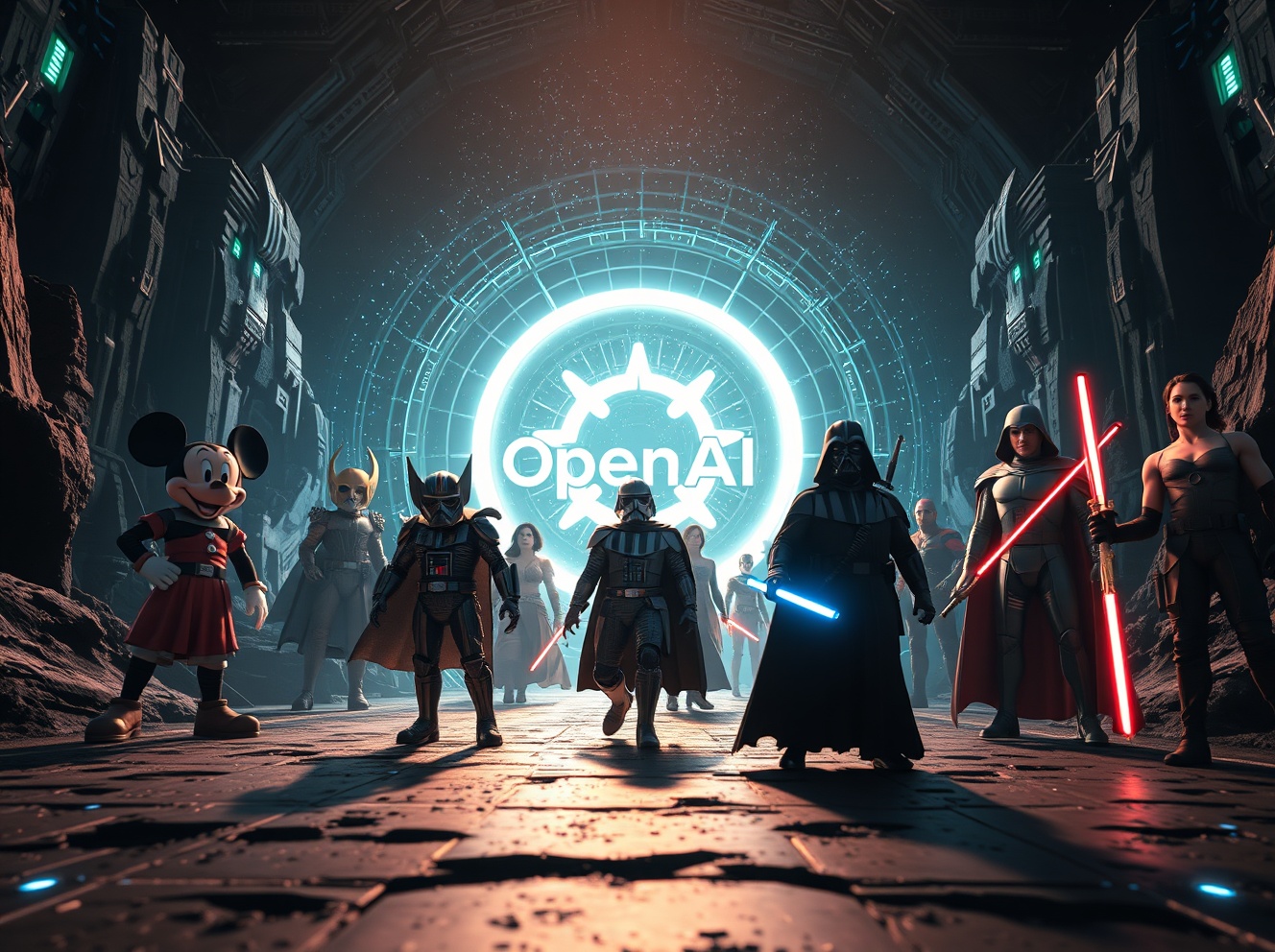
In a move that signals a seismic shift in how entertainment giants approach artificial intelligence, Disney has revealed that its landmark partnership with OpenAI includes just one year of exclusivity. This strategic decision opens the door for what CEO Bob Iger calls “open season” on AI partnerships after 2026, creating ripple effects across both the media and technology sectors. For cryptocurrency enthusiasts watching the intersection of digital assets and emerging tech, this development represents a crucial test case for how intellectual property will be valued and traded in the AI era.

What Does the Disney OpenAI Deal Actually Include?

The three-year licensing agreement between Disney and OpenAI centers around Sora, OpenAI’s revolutionary video generation platform. During the first year, OpenAI enjoys exclusive access to more than 200 iconic characters from Disney’s vast portfolio, including Marvel superheroes, Pixar animations, and Star Wars legends. This exclusive window gives OpenAI a significant competitive advantage in the generative AI video space while providing Disney with a controlled environment to test how its intellectual property performs in AI-generated content.

ComponentDetailsTimeline
Exclusivity PeriodOpenAI has sole legal access to Disney IP for AI generation1 year (2025-2026)
Total PartnershipLicensing agreement for character usage3 years (2025-2028)
Character Access200+ characters from Disney, Marvel, Pixar, Star WarsImmediate upon signing
PlatformSora video generator exclusivelyFirst year only

Why Is Disney Testing Generative AI Waters Cautiously?

Disney’s approach reveals a sophisticated strategy for navigating the disruptive potential of artificial intelligence. Rather than fully embracing or rejecting the technology, the company is implementing what amounts to a controlled experiment. The one-year exclusivity period serves multiple purposes:

  • Risk Management: Disney can assess how AI-generated content affects brand perception without widespread exposure
  • Market Testing: The company gains valuable data on user engagement with AI-created character content
  • Partnership Evaluation: Disney can judge OpenAI’s execution before committing to broader AI relationships
  • Revenue Modeling: The deal establishes baseline licensing values for future AI partnerships

Iger’s statement to CNBC captures this pragmatic approach: “No human generation has ever stood in the way of technological advance, and we don’t intend to try. We’ve always felt that if it’s going to happen, including disruption of our current business models, then we should get on board.”

How Will This AI Partnership Impact Content Creation?

The integration of Disney’s intellectual property into Sora’s video generator represents a watershed moment for creative industries. For the first time, users will have legal access to generate content featuring some of the world’s most valuable characters through artificial intelligence. This development raises crucial questions about:

  • Creative Control: How will Disney maintain quality standards with user-generated AI content?
  • Monetization: What revenue models will emerge from AI-generated character content?
  • Copyright Protection: How will Disney prevent unauthorized use beyond the Sora platform?
  • Market Expansion: Will AI-generated content create new audiences for Disney properties?

What Does the Google Cease-and-Desist Reveal About Disney’s Strategy?

In a revealing parallel action, Disney sent a cease-and-desist letter to Google on the same day it announced the OpenAI partnership. This dual approach demonstrates Disney’s comprehensive intellectual property strategy:

  1. Partnership Path: Working collaboratively with OpenAI through formal licensing agreements
  2. Enforcement Path: Taking legal action against perceived copyright infringement by Google
  3. Market Positioning: Establishing clear boundaries for how AI companies can access Disney content
  4. Value Protection: Ensuring that Disney’s intellectual property maintains its premium status

Google’s response—neither confirming nor denying the allegations but promising to “engage” with Disney—suggests the complex negotiations likely to unfold as traditional media companies navigate the AI landscape.

What Happens After the One-Year Exclusivity Ends?

The post-2026 landscape presents fascinating possibilities for the generative AI market. Once Disney’s exclusivity period with OpenAI concludes, the company becomes free to pursue similar deals with other AI platforms. This could trigger:

  • Competitive Bidding: Multiple AI companies vying for Disney character access
  • Market Fragmentation: Different characters available on different AI platforms
  • Price Discovery: Establishing market rates for AI access to premium intellectual property
  • Innovation Acceleration: AI companies developing better tools to justify partnership costs

Why Should Cryptocurrency Observers Care About This Deal?

For those monitoring digital assets and blockchain technology, Disney’s AI partnership offers critical insights into how intellectual property rights might evolve in decentralized environments. The deal establishes precedents for:

  • Digital Ownership: How traditional IP translates to AI-generated content
  • Licensing Models: Potential blockchain-based solutions for AI content rights management
  • Value Transfer: Mechanisms for compensating IP owners in AI-generated ecosystems
  • Market Dynamics: How scarcity and access affect digital asset valuation

The intersection of AI-generated content and intellectual property rights could eventually leverage blockchain technology for verification, ownership tracking, and royalty distribution—making Disney’s current experiments directly relevant to future crypto applications.

Conclusion: The Beginning of a New Era for Media and AI

Disney’s carefully structured partnership with OpenAI represents more than just another corporate deal—it’s a blueprint for how established media giants will navigate the AI revolution. The one-year exclusivity window provides Disney with crucial learning time while giving OpenAI a formidable competitive advantage in the short term. As Iger’s “open season” comment suggests, the real transformation begins in 2026, when Disney’s iconic characters could become available across multiple AI platforms, fundamentally changing how audiences interact with beloved franchises.

This strategic move demonstrates that traditional entertainment companies can engage with disruptive technology without surrendering control. By establishing clear boundaries, testing cautiously, and maintaining enforcement options, Disney is writing the playbook for intellectual property management in the age of artificial intelligence.

To learn more about the latest AI market trends, explore our article on key developments shaping AI features and institutional adoption.

Frequently Asked Questions

What is the duration of Disney’s exclusive deal with OpenAI?
The exclusivity period lasts for one year, after which Disney can partner with other AI companies, though the overall licensing agreement spans three years.

Which AI platform currently has legal access to Disney characters?
OpenAI‘s Sora video generator is the only AI platform with legal permission to use Disney’s intellectual property for content generation during the exclusivity period.

How many characters are included in the Disney OpenAI deal?
The partnership includes access to more than 200 characters from Disney’s portfolio, including properties from Marvel, Pixar, and Star Wars.

What was Disney’s simultaneous action regarding Google?
On the same day as the OpenAI announcement, Disney sent a cease-and-desist letter to Google, alleging copyright infringement related to its intellectual property.

Who announced the details of the Disney OpenAI partnership?
Disney CEO Bob Iger revealed the exclusivity details during an interview with CNBC, emphasizing the company’s strategic approach to technological disruption.

This post Disney’s OpenAI Deal: The One-Year Exclusivity Window That Will Transform Generative AI first appeared on BitcoinWorld.

Market Opportunity
Sleepless AI Logo
Sleepless AI Price(AI)
$0.03822
$0.03822$0.03822
-0.15%
USD
Sleepless AI (AI) Live Price Chart
Disclaimer: The articles reposted on this site are sourced from public platforms and are provided for informational purposes only. They do not necessarily reflect the views of MEXC. All rights remain with the original authors. If you believe any content infringes on third-party rights, please contact service@support.mexc.com for removal. MEXC makes no guarantees regarding the accuracy, completeness, or timeliness of the content and is not responsible for any actions taken based on the information provided. The content does not constitute financial, legal, or other professional advice, nor should it be considered a recommendation or endorsement by MEXC.

You May Also Like

South Korea Launches Innovative Stablecoin Initiative

South Korea Launches Innovative Stablecoin Initiative

The post South Korea Launches Innovative Stablecoin Initiative appeared on BitcoinEthereumNews.com. South Korea has witnessed a pivotal development in its cryptocurrency landscape with BDACS introducing the nation’s first won-backed stablecoin, KRW1, built on the Avalanche network. This stablecoin is anchored by won assets stored at Woori Bank in a 1:1 ratio, ensuring high security. Continue Reading:South Korea Launches Innovative Stablecoin Initiative Source: https://en.bitcoinhaber.net/south-korea-launches-innovative-stablecoin-initiative
Share
BitcoinEthereumNews2025/09/18 17:54
Trump Cancels Tech, AI Trade Negotiations With The UK
Trump Cancels Tech, AI Trade Negotiations With The UK

The US pauses a $41B UK tech and AI deal as trade talks stall, with disputes over food standards, market access, and rules abroad.   The US has frozen a major tech
Share
LiveBitcoinNews2025/12/17 01:00
Summarize Any Stock’s Earnings Call in Seconds Using FMP API

Summarize Any Stock’s Earnings Call in Seconds Using FMP API

Turn lengthy earnings call transcripts into one-page insights using the Financial Modeling Prep APIPhoto by Bich Tran Earnings calls are packed with insights. They tell you how a company performed, what management expects in the future, and what analysts are worried about. The challenge is that these transcripts often stretch across dozens of pages, making it tough to separate the key takeaways from the noise. With the right tools, you don’t need to spend hours reading every line. By combining the Financial Modeling Prep (FMP) API with Groq’s lightning-fast LLMs, you can transform any earnings call into a concise summary in seconds. The FMP API provides reliable access to complete transcripts, while Groq handles the heavy lifting of distilling them into clear, actionable highlights. In this article, we’ll build a Python workflow that brings these two together. You’ll see how to fetch transcripts for any stock, prepare the text, and instantly generate a one-page summary. Whether you’re tracking Apple, NVIDIA, or your favorite growth stock, the process works the same — fast, accurate, and ready whenever you are. Fetching Earnings Transcripts with FMP API The first step is to pull the raw transcript data. FMP makes this simple with dedicated endpoints for earnings calls. If you want the latest transcripts across the market, you can use the stable endpoint /stable/earning-call-transcript-latest. For a specific stock, the v3 endpoint lets you request transcripts by symbol, quarter, and year using the pattern: https://financialmodelingprep.com/api/v3/earning_call_transcript/{symbol}?quarter={q}&year={y}&apikey=YOUR_API_KEY here’s how you can fetch NVIDIA’s transcript for a given quarter: import requestsAPI_KEY = "your_api_key"symbol = "NVDA"quarter = 2year = 2024url = f"https://financialmodelingprep.com/api/v3/earning_call_transcript/{symbol}?quarter={quarter}&year={year}&apikey={API_KEY}"response = requests.get(url)data = response.json()# Inspect the keysprint(data.keys())# Access transcript contentif "content" in data[0]: transcript_text = data[0]["content"] print(transcript_text[:500]) # preview first 500 characters The response typically includes details like the company symbol, quarter, year, and the full transcript text. If you aren’t sure which quarter to query, the “latest transcripts” endpoint is the quickest way to always stay up to date. Cleaning and Preparing Transcript Data Raw transcripts from the API often include long paragraphs, speaker tags, and formatting artifacts. Before sending them to an LLM, it helps to organize the text into a cleaner structure. Most transcripts follow a pattern: prepared remarks from executives first, followed by a Q&A session with analysts. Separating these sections gives better control when prompting the model. In Python, you can parse the transcript and strip out unnecessary characters. A simple way is to split by markers such as “Operator” or “Question-and-Answer.” Once separated, you can create two blocks — Prepared Remarks and Q&A — that will later be summarized independently. This ensures the model handles each section within context and avoids missing important details. Here’s a small example of how you might start preparing the data: import re# Example: using the transcript_text we fetched earliertext = transcript_text# Remove extra spaces and line breaksclean_text = re.sub(r'\s+', ' ', text).strip()# Split sections (this is a heuristic; real-world transcripts vary slightly)if "Question-and-Answer" in clean_text: prepared, qna = clean_text.split("Question-and-Answer", 1)else: prepared, qna = clean_text, ""print("Prepared Remarks Preview:\n", prepared[:500])print("\nQ&A Preview:\n", qna[:500]) With the transcript cleaned and divided, you’re ready to feed it into Groq’s LLM. Chunking may be necessary if the text is very long. A good approach is to break it into segments of a few thousand tokens, summarize each part, and then merge the summaries in a final pass. Summarizing with Groq LLM Now that the transcript is clean and split into Prepared Remarks and Q&A, we’ll use Groq to generate a crisp one-pager. The idea is simple: summarize each section separately (for focus and accuracy), then synthesize a final brief. Prompt design (concise and factual) Use a short, repeatable template that pushes for neutral, investor-ready language: You are an equity research analyst. Summarize the following earnings call sectionfor {symbol} ({quarter} {year}). Be factual and concise.Return:1) TL;DR (3–5 bullets)2) Results vs. guidance (what improved/worsened)3) Forward outlook (specific statements)4) Risks / watch-outs5) Q&A takeaways (if present)Text:<<<{section_text}>>> Python: calling Groq and getting a clean summary Groq provides an OpenAI-compatible API. Set your GROQ_API_KEY and pick a fast, high-quality model (e.g., a Llama-3.1 70B variant). We’ll write a helper to summarize any text block, then run it for both sections and merge. import osimport textwrapimport requestsGROQ_API_KEY = os.environ.get("GROQ_API_KEY") or "your_groq_api_key"GROQ_BASE_URL = "https://api.groq.com/openai/v1" # OpenAI-compatibleMODEL = "llama-3.1-70b" # choose your preferred Groq modeldef call_groq(prompt, temperature=0.2, max_tokens=1200): url = f"{GROQ_BASE_URL}/chat/completions" headers = { "Authorization": f"Bearer {GROQ_API_KEY}", "Content-Type": "application/json", } payload = { "model": MODEL, "messages": [ {"role": "system", "content": "You are a precise, neutral equity research analyst."}, {"role": "user", "content": prompt}, ], "temperature": temperature, "max_tokens": max_tokens, } r = requests.post(url, headers=headers, json=payload, timeout=60) r.raise_for_status() return r.json()["choices"][0]["message"]["content"].strip()def build_prompt(section_text, symbol, quarter, year): template = """ You are an equity research analyst. Summarize the following earnings call section for {symbol} ({quarter} {year}). Be factual and concise. Return: 1) TL;DR (3–5 bullets) 2) Results vs. guidance (what improved/worsened) 3) Forward outlook (specific statements) 4) Risks / watch-outs 5) Q&A takeaways (if present) Text: <<< {section_text} >>> """ return textwrap.dedent(template).format( symbol=symbol, quarter=quarter, year=year, section_text=section_text )def summarize_section(section_text, symbol="NVDA", quarter="Q2", year="2024"): if not section_text or section_text.strip() == "": return "(No content found for this section.)" prompt = build_prompt(section_text, symbol, quarter, year) return call_groq(prompt)# Example usage with the cleaned splits from Section 3prepared_summary = summarize_section(prepared, symbol="NVDA", quarter="Q2", year="2024")qna_summary = summarize_section(qna, symbol="NVDA", quarter="Q2", year="2024")final_one_pager = f"""# {symbol} Earnings One-Pager — {quarter} {year}## Prepared Remarks — Key Points{prepared_summary}## Q&A Highlights{qna_summary}""".strip()print(final_one_pager[:1200]) # preview Tips that keep quality high: Keep temperature low (≈0.2) for factual tone. If a section is extremely long, chunk at ~5–8k tokens, summarize each chunk with the same prompt, then ask the model to merge chunk summaries into one section summary before producing the final one-pager. If you also fetched headline numbers (EPS/revenue, guidance) earlier, prepend them to the prompt as brief context to help the model anchor on the right outcomes. Building the End-to-End Pipeline At this point, we have all the building blocks: the FMP API to fetch transcripts, a cleaning step to structure the data, and Groq LLM to generate concise summaries. The final step is to connect everything into a single workflow that can take any ticker and return a one-page earnings call summary. The flow looks like this: Input a stock ticker (for example, NVDA). Use FMP to fetch the latest transcript. Clean and split the text into Prepared Remarks and Q&A. Send each section to Groq for summarization. Merge the outputs into a neatly formatted earnings one-pager. Here’s how it comes together in Python: def summarize_earnings_call(symbol, quarter, year, api_key, groq_key): # Step 1: Fetch transcript from FMP url = f"https://financialmodelingprep.com/api/v3/earning_call_transcript/{symbol}?quarter={quarter}&year={year}&apikey={api_key}" resp = requests.get(url) resp.raise_for_status() data = resp.json() if not data or "content" not in data[0]: return f"No transcript found for {symbol} {quarter} {year}" text = data[0]["content"] # Step 2: Clean and split clean_text = re.sub(r'\s+', ' ', text).strip() if "Question-and-Answer" in clean_text: prepared, qna = clean_text.split("Question-and-Answer", 1) else: prepared, qna = clean_text, "" # Step 3: Summarize with Groq prepared_summary = summarize_section(prepared, symbol, quarter, year) qna_summary = summarize_section(qna, symbol, quarter, year) # Step 4: Merge into final one-pager return f"""# {symbol} Earnings One-Pager — {quarter} {year}## Prepared Remarks{prepared_summary}## Q&A Highlights{qna_summary}""".strip()# Example runprint(summarize_earnings_call("NVDA", 2, 2024, API_KEY, GROQ_API_KEY)) With this setup, generating a summary becomes as simple as calling one function with a ticker and date. You can run it inside a notebook, integrate it into a research workflow, or even schedule it to trigger after each new earnings release. Free Stock Market API and Financial Statements API... Conclusion Earnings calls no longer need to feel overwhelming. With the Financial Modeling Prep API, you can instantly access any company’s transcript, and with Groq LLM, you can turn that raw text into a sharp, actionable summary in seconds. This pipeline saves hours of reading and ensures you never miss the key results, guidance, or risks hidden in lengthy remarks. Whether you track tech giants like NVIDIA or smaller growth stocks, the process is the same — fast, reliable, and powered by the flexibility of FMP’s data. Summarize Any Stock’s Earnings Call in Seconds Using FMP API was originally published in Coinmonks on Medium, where people are continuing the conversation by highlighting and responding to this story
Share
Medium2025/09/18 14:40