US Fed Cuts Rates, Bitcoin Price Stabilizes Above $90K, ZEC Reignates Rally: Your Weekly Crypto Recap
It was an eventful week in all financial markets, especially in crypto, as the US Federal Reserve cut the interest rates for a third consecutive time in 2025.
But before we head into the central bank’s decision, let’s recap what had happened with BTC’s price ahead of that major move. The asset was already rejected on a couple of occasions at $94,000 since the start of the month, and slid to under $88,000 last week after failing to maintain the $90,000 support.
However, that nosedive was relatively brief, and the bulls quickly drove the cryptocurrency to and above that coveted level of $90,000. They went on an even more impressive run on Tuesday, just a day before the highly anticipated FOMC meeting, and drove BTC to a multi-week peak of $94,500.
Following an instant rejection, the asset was on the rise again and retapped that level after the US central bank reduced the rates by another 25 BPS on Wednesday. However, bitcoin saw little success during this attempt as well, and the subsequent retracement drove it hard to $89,500 once again.
The bulls defended that line and quickly rebounded above $90,000 and even jumped past $92,000 as of press time. This puts it slightly in the green on a weekly scale, with a 1.1% increase. In contrast, HYPE has slumped by over 7%, while ZEC has resumed its Q4 rally. It has surged by more than 18% weekly to $460 as of now.
Market Data
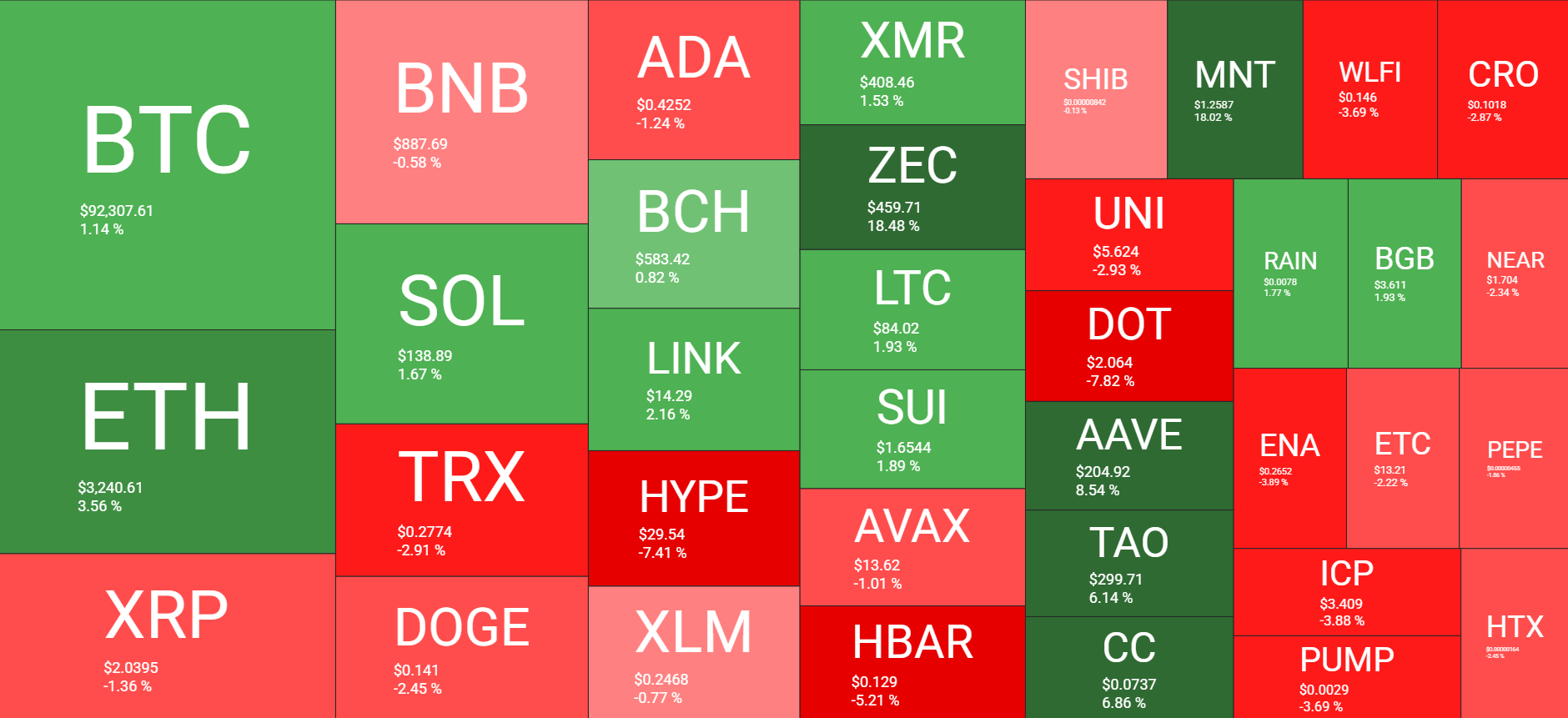 Cryptocurrency Market Overview Weekly. Source QuantifyCrypto
Market Cap: $3.230T | 24H Vol: $129B | BTC Dominance: 57%
BTC: $92,350 (+1.1%) | ETH: $3,240 (+3.6%) | XRP: $2.04 (-1.3%)
This Week’s Crypto Headlines You Can’t Miss
Terra’s Fall Comes Full Circle: Do Kwon Hit With 15-Year Prison Term in US Court. After more than three years following the massive collapse of the Terra ecosystem, its founder, Do Kwon, who was widely believed to be the main culprit behind the crash, received a 15-year prison term in a US court.
YouTube Enables PayPal Stablecoin Payments for Content Creators. The largest video content sharing platform, Google’s YouTube, has enabled stablecoin payments via PayPal’s PYSUD. However, PayPal’s head of crypto said his company will do all the work as YouTube will not handle any digital assets.
Satoshi Nakamoto Lands on Wall Street: NYSE Unveils New Statue. Bitcoin’s anonymous creator, Satoshi Nakamoto, has seen another statue created in their honor. This time, it was placed at the New York Stock Exchange by Twenty One Capital. The NYSE described it as a “shared ground between emerging systems and established institutions.”
Coinbase Launches Solana DEX Trading for 100M Users. The largest US-based cryptocurrency exchange expanded its support for Solana by introducing DEX trading inside its application. This allows more than 100 million Coinbase users to gain immediate access to every token launched on Solana without waiting for listings.
Strategy Announces a Huge Bitcoin Purchase, It Now Holds Over 660,000 BTC. After a few weeks of more modest BTC purchases, the largest corporate holder of the cryptocurrency splashed over $960 million to accumulate another 10,624 bitcoins at an average price of $90,615 per unit. Its stash has skyrocketed to a whopping 660,624 BTC.
HashKey Seeks Historic IPO as Hong Kong Bets Big on Regulated Crypto. HashKey Holdings Limited made a major step toward becoming the first publicly listed cryptocurrency exchange in Hong Kong by filing for an IPO and opening subscriptions to local and international investors.
Charts
This week, we have a chart analysis of Ethereum, Ripple, Cardano, Binance Coin, and Hyperliquid – click here for the complete price analysis.
The post US Fed Cuts Rates, Bitcoin Price Stabilizes Above $90K, ZEC Reignates Rally: Your Weekly Crypto Recap appeared first on CryptoPotato.
You May Also Like

The Channel Factories We’ve Been Waiting For

RBI Says Bitcoin Lacks Real Value and Should Not Be Treated as Currency
Highlights: RBI Deputy Governor says Bitcoin lacks real value and should not be treated as money. RBI highlights sharp price swings and warns inves