By Katherine K. Chan THE Bangko Sentral ng Pilipinas (BSP) on Thursday lowered its benchmark policy rate anew by 25 basis points (bps) to 4.5% and signaled the By Katherine K. Chan THE Bangko Sentral ng Pilipinas (BSP) on Thursday lowered its benchmark policy rate anew by 25 basis points (bps) to 4.5% and signaled the

BSP cuts key rate, signals easing cycle nears end

2025/12/12 00:45
6 min read

By Katherine K. Chan

THE Bangko Sentral ng Pilipinas (BSP) on Thursday lowered its benchmark policy rate anew by 25 basis points (bps) to 4.5% and signaled the current easing cycle is nearing its end.

The Monetary Board cut its target reverse repurchase rate for a fifth meeting in a row, bringing the rate to its lowest in over three years or since September 2022.

It likewise trimmed rates on the overnight deposit and lending facilities by 25 bps each to 4% and 5%, respectively.

This was in line with a BusinessWorld poll conducted last week where 17 out of 18 analysts anticipated a 25-bp cut at the Board’s last meeting of the year.

“Depending on the data, (the easing cycle) may have ended already. This may be the last cut,” BSP Governor Eli M. Remolona, Jr. said during a press briefing. “But depending on what else we see, we can still con-sider another cut.”

The central bank has so far lowered key borrowing costs by 200 bps since it began its easing cycle in August last year. It delivered a 25-bp cut at each of its meetings in April, June, August and October this year.

“On balance, the Monetary Board sees the monetary policy easing cycle nearing its end,” it said in a statement.

The Monetary Board’s decision to deliver a fifth straight cut came on the back of expectations that the economy will continue to weaken due to downbeat business sentiment amid the ongoing flood control controversy.

“The Monetary Board noted that the outlook for domestic economic growth has weakened further. Overall business sentiment has continued to decline on concerns about governance issues and lingering uncertainty over global trade policy,” it said.

“Nevertheless, domestic demand is expected to rebound slowly as the full impact of monetary policy easing works its way through the economy and as the pace and quality of public spending improves.”

The Philippine economy saw its weakest growth in over four years at 4%, a slump from the 5.5% seen in the second quarter and the 5.2% a year ago. This brought gross domestic product (GDP) growth to an average of 5% as of September, below the government’s 5.5-6.5% growth target.

“Sentiment remains weak due to the corruption issue as we can gauge from various sentiment indices,” Mr. Remolona said.

Business and investor sentiment has weakened as an ongoing probe revealed some government officials, lawmakers and private contractors received billions in kickbacks from anomalous infrastructure projects.

“The (rate) cut will revive economic activity a bit at a time when painful governance issues around infrastructure investments have weakened government spending, business confidence, and domestic demand,” Mr. Remolona said.

BSP Deputy Governor Zeno Ronald R. Abenoja said the GDP growth may settle around 5% by yearend.

The central bank chief said the economy might only start to rebound by the second half of 2026, noting that rate cuts usually take one to two years to take full effect.

“I was hoping we would recover by the first half,” Mr. Remolona said. “With the new data we’re getting, it looks like it’s more (going to) be in the second half rather than the first half.”

“And we’re hoping by 2027, we will be more or less back on target,” he added.

Still benign inflation likewise prompted the BSP to cut benchmark rates, after the consumer price index (CPI) eased to 1.5% in November on negative food inflation, slower than the 1.7% in October and 2.5% a year ago.

November marked the ninth consecutive month that inflation settled below the central bank’s 2%-4% target and brought the 11-month CPI to average 1.6%.

“The outlook for inflation continues to be benign, and inflation expectations remain firmly anchored,” the BSP said.

The central bank now expects inflation to end at 1.6% this year, lower than its earlier projection of 1.7%. However, it hiked its inflation forecasts for next year to 3.2% from 3.1% and for 2027 to 3% from 2.8%.

Mr. Remolona noted that supply shocks may push inflation faster, but negative investor sentiment could help it slow down.

“The high inflation scenario would be due to possible supply shocks such as power rate adjustments and increased rice tariffs. The low inflation scenario would be if investor sentiment remained negative for a protracted period,” he said.

The peso hitting the P59-per-dollar level has not impacted inflation “for now,” he said.

“It hasn’t weakened enough, and the oil prices have been benign,” the BSP chief said. “It’s when the two of them move in an adverse direction together that we begin to worry about.”

On Tuesday, the peso sank to its lowest ever at P59.22 against the dollar after the greenback strengthened on expectations of a Fed cut.

However, it recovered on Thursday after closing at P58.99 per dollar, up 22 centavos from its P59.21 finish on Wednesday, Bankers Association of the Philippines data showed.

FURTHER EASING LIMITED

While Thursday’s cut may be the end of the central bank’s easing cycle, Mr. Remolona still left the door open for another reduction if economic conditions turn “worse than they thought.”

“Any additional easing will likely be limited and will be guided by incoming data,” the BSP said in a statement.

“Looking ahead, the BSP will ensure that overall policy settings remain consistent with maintaining price stability conducive to sustainable economic growth.”

Oxford Economics Lead Economist Sunny Liu also said that this could be the last cut following the BSP’s cautious monetary policy signals, but dismal economic growth may still call for further easing.

“We expect no further rate cuts in 2026. That said, a sharper-than-expected slowdown in economic activity could still prompt additional easing,” she said in a note.

However, Pantheon Macroeconomics Chief Emerging Asia Economist Miguel Chanco said the Monetary Board may deliver another 25-bp cut at its first meeting next year.

“We continue to believe that the Board won’t stop easing until its benchmark interest rate falls to a terminal level of 4.25%; we now expect the last 25-bp move to come almost immediately at its first meeting in 2026,” he said in a note.

“It’s clear that the Board still sees space and a reason to potentially ease further in the foreseeable future,” he added.

Rizal Commercial Banking Corp. Chief Economist Michael L. Ricafort said that benign inflation and the need to boost economic growth provide the BSP additional room to ease more next year.

He projects inflation to remain below target until March next year, before accelerating to between 2% and 3% by April until December.

Market Opportunity
4 Logo
4 Price(4)
$0.008578
$0.008578$0.008578
-4.55%
USD
4 (4) Live Price Chart
Disclaimer: The articles reposted on this site are sourced from public platforms and are provided for informational purposes only. They do not necessarily reflect the views of MEXC. All rights remain with the original authors. If you believe any content infringes on third-party rights, please contact service@support.mexc.com for removal. MEXC makes no guarantees regarding the accuracy, completeness, or timeliness of the content and is not responsible for any actions taken based on the information provided. The content does not constitute financial, legal, or other professional advice, nor should it be considered a recommendation or endorsement by MEXC.

You May Also Like

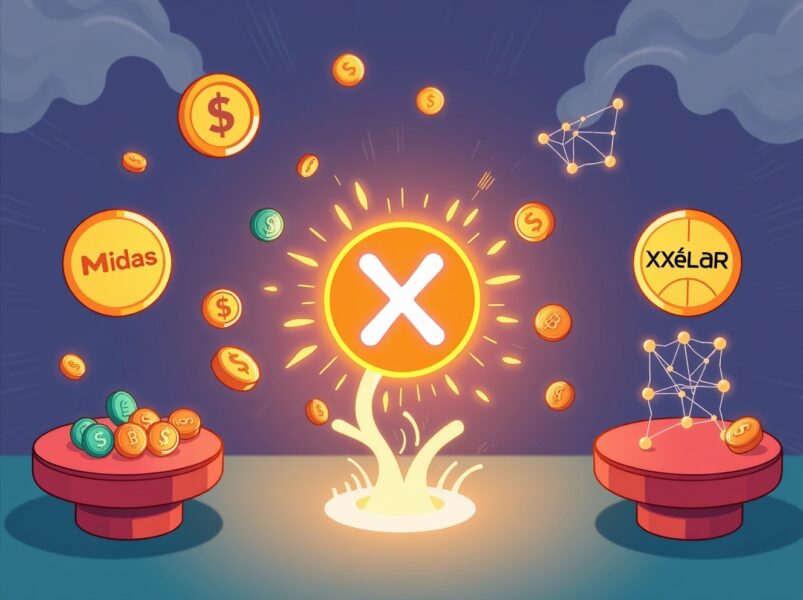
Revolutionary: Midas and Axelar Launch Tokenized XRP with 8% Target Yield

Revolutionary: Midas and Axelar Launch Tokenized XRP with 8% Target Yield

BitcoinWorld Revolutionary: Midas and Axelar Launch Tokenized XRP with 8% Target Yield The cryptocurrency world is constantly evolving, bringing exciting new opportunities for investors. A recent development has captured significant attention: the launch of tokenized XRP by Midas and Axelar. This innovative collaboration aims to transform how you interact with your XRP holdings, potentially offering an attractive yield. What is Tokenized XRP (mXRP) and Why Does it Matter? Imagine holding your favorite digital asset, XRP, but also having the ability to earn a passive income from it. That is precisely what Midas, an asset tokenization platform, has achieved by partnering with Axelar, a leading blockchain interoperability protocol. Together, they have introduced mXRP, a tokenized version of XRP that comes with a compelling target annual yield. This initiative is more than just another crypto product; it represents a significant step forward in making digital assets work harder for their holders. By tokenizing XRP, Midas is essentially creating a digital representation of the asset on a different blockchain, allowing it to participate in decentralized finance (DeFi) activities that were previously inaccessible to native XRP. The immediate appeal lies in the product’s base annual yield, which currently hovers around 8%. Midas and Axelar have publicly stated their commitment to maintaining this yield within a 6% to 8% range, providing a degree of stability and predictability often sought after in the volatile crypto market. This stable yield target is a crucial differentiator, aiming to attract both new and experienced crypto participants looking for reliable returns. How Does This Partnership Benefit XRP Holders? The collaboration between Midas and Axelar brings distinct advantages to the XRP community and the broader crypto ecosystem. Here’s a closer look at the key benefits: Enhanced Utility for XRP: Traditionally, XRP has been known for its speed and low transaction costs, primarily used for cross-border payments. With mXRP, the asset gains new utility within the DeFi space, expanding its potential applications beyond its native blockchain. Attractive Yield Opportunities: The 8% target yield on tokenized XRP is highly competitive, especially when compared to traditional savings accounts or even some other crypto staking options. This allows XRP holders to potentially grow their assets passively. Increased Accessibility: Axelar’s interoperability protocol ensures that mXRP can seamlessly move across various blockchain networks. This means greater flexibility and access to a wider range of DeFi protocols and applications for mXRP holders. Diversification of Investment Strategies: For investors looking to diversify their crypto portfolio, mXRP offers a unique blend of exposure to XRP’s value proposition combined with the income-generating potential of DeFi. Institutional Interest: The structured nature and targeted yield of products like mXRP could attract more institutional investors to the XRP ecosystem, further validating its market presence and utility. Moreover, the partnership leverages the strengths of both platforms. Midas excels in asset tokenization, providing the infrastructure to create and manage mXRP. Axelar, on the other hand, ensures secure and efficient cross-chain communication, making mXRP truly interoperable. This synergy is vital for the product’s success and broad adoption. Navigating the Future of Tokenized XRP: What Should Investors Consider? While the launch of tokenized XRP presents exciting prospects, it is important for investors to approach it with a clear understanding of the crypto landscape. The target yield, while appealing, is not guaranteed and can be subject to market conditions and the underlying mechanisms used to generate that yield. As with any crypto investment, understanding the technology, the partners involved, and the potential risks is paramount. Investors should research Midas and Axelar thoroughly, understanding their security practices, audit reports, and track records. Always remember that the crypto market can be volatile, and while attractive yields are offered, capital is always at risk. The emergence of mXRP underscores a broader trend in the digital asset space: the increasing sophistication of financial products built on blockchain technology. As more assets become tokenized and interoperability improves, we can expect to see even more innovative offerings that bridge traditional finance with the decentralized world. This evolution offers unprecedented opportunities for those willing to learn and adapt. Conclusion: A New Horizon for XRP and DeFi The collaboration between Midas and Axelar to launch tokenized XRP with an 8% target yield marks a significant milestone. It not only enhances the utility and earning potential for XRP holders but also demonstrates the power of blockchain interoperability and asset tokenization in creating new financial instruments. This development opens up a new horizon for investors seeking to integrate passive income strategies with their digital asset holdings, pushing the boundaries of what is possible in decentralized finance. Frequently Asked Questions (FAQs) Q1: What is mXRP? A1: mXRP is a tokenized XRP, a digital representation of XRP created by Midas in partnership with Axelar. It aims to offer holders a base annual yield, currently around 8%, by enabling XRP to participate in broader DeFi activities. Q2: How is the 8% target yield generated? A2: While the specific mechanisms are managed by Midas, such yields in DeFi typically come from activities like lending protocols, liquidity provision, or other yield-generating strategies. Midas and Axelar aim to maintain the base yield between 6% and 8%. Q3: Is mXRP the same as native XRP? A3: No, mXRP is a tokenized version of XRP, meaning it is a representation of XRP on a different blockchain, enabled by Midas and Axelar’s technology. Native XRP exists on the XRP Ledger. Q4: What role does Axelar play in this launch? A4: Axelar is a blockchain interoperability protocol. Its role is crucial in ensuring that mXRP can securely and seamlessly move and operate across various blockchain networks, enhancing its utility and accessibility within the DeFi ecosystem. Q5: What are the risks associated with investing in mXRP? A5: Like all cryptocurrency investments, mXRP carries risks including market volatility, smart contract risks, and potential fluctuations in the target yield. Investors should conduct their own research and understand these risks before investing. Share This Insight! Found this article on tokenized XRP insightful? Share it with your network and help others understand this exciting development in the crypto space! Your shares help us bring more valuable content to the community. To learn more about the latest crypto market trends, explore our article on key developments shaping the future of decentralized finance price action. This post Revolutionary: Midas and Axelar Launch Tokenized XRP with 8% Target Yield first appeared on BitcoinWorld.
Share
Coinstats2025/09/22 19:30
Wormhole’s W token enters ‘value accrual’ phase with strategic reserve

Wormhole’s W token enters ‘value accrual’ phase with strategic reserve

Wormhole has moved beyond its distribution phase, initiating a new strategy. By allocating on-chain and off-chain protocol revenue to a dedicated treasury, the cross-chain protocol is creating a direct link between its commercial success and the value of its native…
Share
Crypto.news2025/09/18 03:05
XRP Price Prediction February 2026: Senator Warren Warns Fed as Pepeto’s 100x Presale Steals the Spotlight From Ripple

XRP Price Prediction February 2026: Senator Warren Warns Fed as Pepeto’s 100x Presale Steals the Spotlight From Ripple

Senator Elizabeth Warren reportedly sent a letter to Fed Chair Jerome Powell and Treasury Secretary Scott Bessent demanding they not […] The post XRP Price Prediction
Share
Coindoo2026/02/22 05:55