Today's top news highlights: Animoca executives: Plans to expand business focus to stablecoins, AI, and DePIN by 2026. New doubts in the Qian Zhimin case: 120,000 of the 195,000 BTC are missing, and the wallet owner claims to have lost the password for 20,000 BTC. South Korean Financial Services Commission Chairman: Crackdown on cryptocurrency money laundering; travel regulations expanded to include amounts under 1 million won. Analyst Murphy: The densest trading range for BTC is $94,000-$98,000 and $101,000-$118,000. Only 11 public blockchains have earned more than $100,000 in the past 7 days. Macro New doubts in the Qian Zhimin case: 120,000 of the 195,000 BTC are missing, and the wallet owner claims to have lost the password for 20,000 BTC. An article published in China Newsweek, titled "Can the 40 Billion Yuan in Bitcoins Taken Away by Qian Zhimin Be Returned to China?", points out that Qian Zhimin, the main culprit in a money laundering case involving 60,000 Bitcoins, purchased a total of 194,951 Bitcoins, exceeding the 61,000 Bitcoins seized by the police. However, the court did not disclose the situation of the remaining 120,000+ Bitcoins, meaning that there is a high probability that more Bitcoins in Qian Zhimin's assets have not yet been discovered or confiscated. London Metropolitan Police detective Joe Lane revealed that Qian Zhimin claimed that the password to a wallet containing 20,000 Bitcoins had been lost. Based on the latest market price, these "lost" Bitcoins alone are worth approximately 12.5 billion yuan. South Korean Financial Services Commission Chairman: Crackdown on cryptocurrency money laundering; travel regulations expanded to include amounts under 1 million won. According to Yonhap News Agency, on the 28th local time, Lee Eok-woon, Chairman of the Financial Services Commission of South Korea, stated at the 19th Anti-Money Laundering Day commemoration ceremony of the Financial Intelligence Analysis Institute that the scope of the "travel rule," also known as the "cryptocurrency real-name system," will be expanded to include transactions below 1 million won (approximately US$680). He emphasized that money laundering activities using virtual asset transactions will be severely cracked down on, and virtual asset transactions with overseas exchanges with high money laundering risks will be prohibited. Furthermore, a strict review mechanism will be established to comprehensively examine the criminal records, financial status, and social creditworthiness of major shareholders of virtual asset businesses. Analysis: Upbit may have been subjected to long-term infiltration by an advanced persistent threat organization. Security firm GoPlus analysis indicates that the Upbit attack raises several serious concerns: the hot wallet leak points to vulnerabilities in key management and internal network security vulnerabilities. Cold wallets remain secure. The incident is noteworthy for several reasons: 1. It was an "anniversary attack"—the date coincided with the $50 million hack in 2019 (six years ago); 2. The timing was opportune—launching the attack hours after the major merger announcement of Dunamu and Naver; 3. It exhibited typical Lazarus characteristics—the speed, methods, and symbolic significance of the attack; 4. Sophisticated money laundering methods—using multiple DEXs, potentially circumventing regulations (2200 SOL tokens transferred to Binance). All these signs suggest that the platform may have been under long-term infiltration by an Advanced Persistent Threat (APT) group. Previously, Upbit disclosed the theft of approximately 54 billion won in assets from its Solana network; South Korean authorities suspect the North Korean hacking group Lazarus is behind the attack. Bitcoin holders accuse JPMorgan Chase of market manipulation. According to Cointelegraph, after JPMorgan Chase filed an application with the U.S. SEC to launch leveraged Bitcoin-backed notes, Bitcoin enthusiasts accused the company of manipulating rules to suppress Strategy and Digital Asset Reserves (DATs). Previously, JPMorgan Chase launched structured notes linked to the BlackRock Bitcoin ETF, matching the four-year Bitcoin halving cycle. The UK has proposed introducing a "no profit, no loss" tax rule for DeFi. According to CoinDesk, the UK government is developing a new tax framework that could benefit DeFi users. A proposal released this week shows that HM Revenue and Customs supports a "no profit, no loss" principle for cryptocurrency lending and liquidity pool arrangements. Under the current system, DeFi users depositing funds into protocols, even just for profit or as collateral for loans, can trigger capital gains tax. The new measure will postpone tax payment until an economically meaningful asset disposal occurs. This means that users depositing cryptocurrency into lending protocols or providing tokens to automated market makers will no longer need to pay tax on the deposit itself, but only when they eventually sell or trade the assets and realize a profit or loss. The proposal aims to align tax rules with the actual operation of DeFi, thereby reducing the administrative burden and avoiding unreasonable tax outcomes. The new principle also applies to complex multi-token arrangements; if a user withdraws more tokens than they deposited, the profit will be taxed; if less, it will be considered a loss. However, this model is not yet finalized, and the government is still consulting with professionals and DeFi developers. While HM Revenue and Customs has not set a timetable for legislation, it has stated that it will continue to engage with the industry to assess the necessity of such legislation. Bitwise has updated its filing for the spot Avalanche ETF, proposing to add staking functionality. According to CoinDesk, Bitwise has updated its filing with the U.S. Securities and Exchange Commission (SEC) for its spot Avalanche ETF. This revision changes the ETF's ticker symbol to BAVA and sets the sponsorship fee rate at 0.34%, currently the lowest among similar products. In comparison, VanEck's Avalanche ETF has a fee rate of 0.40%, and Grayscale's is 0.50%. The updated S-1 filing also states that the trust will be allowed to stake up to 70% of its AVAX holdings on Avalanche's proof-of-stake network to earn additional tokens. However, the issuer is considering deducting 12% of the proceeds as fees, with the remainder distributed to shareholders. Since competitors have not yet launched staking services, their fees are currently limited to sponsorship fees. Bitwise is also offering a full fee waiver for the first month on its initial $500 million in assets, aiming to position BAVA as the lowest-cost way for traditional investors to gain exposure to Avalanche and earn staking income. Opinion Analyst Murphy: The densest trading range for BTC is $94,000-$98,000 and $101,000-$118,000. According to a BTC Cost Base Distribution (CBD) heatmap shared by analyst Murphy, the most concentrated areas of BTC holdings are currently $94,000-$98,000 and $101,000-$118,000, corresponding to the historical fair price ($98,000) and the average cost of short-term holders ($104,000), respectively, serving as important reference lines for bull-bear market transitions. Furthermore, data shows that between November 21st and 23rd, 950,000 BTC accumulated in the $84,000-$85,000 range, of which 550,000 are related to Coinbase's wallet consolidation, and the remaining 400,000 represent actual trading, possibly related to whale activity. CBD uses an address-based calculation method, providing an important reference for observing market BTC distribution. Arthur Hayes: Price discovery for the largest U.S. tech stocks and major stock indices is expected to occur in the perpetual contract market. BitMEX co-founder Arthur Hayes published an article today titled "Survival of the Fittest: How Perpetual Contracts Are Disrupting Traditional Finance," pointing out that traditional finance (TradFi) is desperately trying to maintain its dominance in stock trading. It will be very interesting to observe how they respond to the rapid market acceptance of stock index perpetual contracts. The first perpetual contract sector to dominate the market will be offshore trading of US stock price risk. US stocks, and all stocks, will eventually be tokenized. However, stock index perpetual contracts do not rely on stock tokenization to succeed. Stock perpetual contracts already have mature infrastructure that allows for rapid scaling. Alliance DAO co-founder: L1 token lacks a moat; betting on the application layer may be the way out. QwQiao, co-founder of Alliance DAO, stated in an article on the X platform that he finds it difficult to convince himself to hold L1 public chain tokens long-term. The reason is not their high price-to-earnings ratio (P/E), but rather the lack of a moat, making them easily commoditized and difficult to capture meaningful value. Currently, cross-chain transfers are very convenient for users, and most application developers can quickly migrate their applications from one chain to another. Furthermore, launching a new chain is significantly easier than before, and the switching costs are far lower than infrastructure like AWS. QwQiao also mentioned that the only way for a chain to strengthen its moat is to develop vertically and control the application layer. He observed that chains like Solana, Base, and Hyperliquid have realized this and are actively taking action, as is the emerging enterprise-level chain Tempo. He firmly believes that the crypto industry will experience exponential growth, and betting on the application layer is the best way to express this view. Project Updates OKX donated HK$10 million to Hong Kong to support emergency relief and recovery efforts. According to official sources, OKX has donated HK$10 million to Hong Kong to support local emergency relief and disaster recovery efforts. YZi Labs seeks to expand the board of directors of BNB treasury company CEA Industries to improve strategy execution and oversight. YZi Labs announced on its X platform that, as a significant shareholder of CEA Industries Inc. (NASDAQ: BNC), it has filed a preliminary consent statement with the U.S. Securities and Exchange Commission (SEC) seeking written shareholder consent to expand the company's board of directors and add new board seats. YZi Labs stated that despite a significant increase in the value of BNC's main asset under management, BNB, the company's performance since the completion of its $500 million PIPE financing deal this summer has fallen far short of the expected results from that investment rationale. It believes BNC's poor performance is a direct result of poor strategy execution, insufficient investor communication, and a lack of effective oversight. YZi Labs also expressed concern about delays in key SEC filings, failure to promptly update investors on digital asset fund management and net asset value (NAV), and continued investor confusion regarding the company's identity, communication, and strategy. The Wormhole Foundation announced the purchase of $5 million worth of W tokens. According to official sources, the Wormhole Foundation announced that it has purchased $5 million worth of W tokens and added them to its balance sheet. Balancer security incident update: DAO begins discussions on an $8 million recovery plan. According to CoinDesk, weeks after a major vulnerability in Balancer v2 vaults led to the loss of over $110 million, the Balancer DAO has begun discussing a plan to distribute approximately $8 million in recovered assets to affected limited partners (LPs). The proposed scheme includes structured rewards for white-hat hackers and compensation based on snapshots of user pool assets at the time of the exploit, consistent with the Safe Harbor Protocol. This protocol stipulates a bounty cap of $1 million per incident, requiring white-hat hackers to undergo comprehensive KYC and sanctions screening. Several anonymous rescuers on Arbitrum have waived their bounty claims. Recovered tokens cover networks including Ethereum, Polygon, Base, and Arbitrum, with liquidity providers receiving compensation proportionally to the tokens initially provided and per pool. A claims mechanism is currently under development; if the proposal is approved, users will need to accept updated terms of use. Additionally, $19.7 million in osETH and osGNO were recovered by StakeWise and will be processed separately; $4.1 million recovered internally in collaboration with Certora is ineligible for a bounty due to a previous agreement. This exploit, caused by a smart contract flaw, marks Balancer's third major security incident, resulting in a plunge in total value locked (TVL) from approximately $775 million to $258 million, and a loss of about 30% in the value of BAL tokens. Bitget will donate HK$12 million to support fire relief and reconstruction efforts in Tai Po, Hong Kong. Bitget will donate a total of HK$12 million to Hong Kong to support emergency relief efforts, assistance to affected families, and post-disaster reconstruction following the Hung Fook Court fire. The donation will be received and implemented by three reputable local charitable organizations. Binance donated HK$10 million to Hong Kong to support fire relief and reconstruction. According to an official announcement from Binance, Binance will donate HK$10 million to the fire-stricken area of Hung Fook Court in Tai Po, Hong Kong, to support rescue and reconstruction efforts. Binance stated that it will implement the donation through relevant channels and extend its condolences to the affected people. Matrixport Group and its employees jointly donated HK$3 million to support fire relief and reconstruction efforts in Hong Kong. To fully support emergency relief, disaster relief, and reconstruction efforts following the Tai Po fire in Hong Kong, Matrixport Group, through its Hong Kong branch, donated HK$3 million to relevant relief organizations. This donation, jointly made by the Group and its employees, will be specifically used for disaster relief and reconstruction. Important data Only 11 public blockchains have earned more than $100,000 in the past 7 days. According to crypto KOL AB Kuai.Dong, citing Nansen data, only 11 public blockchains have generated over $100,000 in revenue in the past seven days. The top six are Tron, Ethereum, Solana, BNB, Bitcoin, and Base. They account for over 95% of on-chain user spending. The vast majority of the remaining public blockchains have low activity, with some generating close to zero revenue. The "insider whale" on October 11th has closed out its long positions of 15,000 ETH in batches, making a profit of $846,000. According to on-chain analyst @ai_9684xtpa, the "whale that opened short positions on October 11th" has closed its long positions. He just closed his long positions of 15,000 ETH (US$45.32 million) in batches, ultimately making a profit of US$846,000. This long position ultimately ended in profit in less than four days. As of now, only the BTC long position from November 8th is in a loss position; all others are profitable, with the account accumulating a total profit of US$101 million. Data: Over the past 30 days, Bitcoin whales have flowed $7.5 billion into Binance, the highest level in a year. CryptoQuant analyst Martunn wrote that the latest data shows that over the past 30 days, Bitcoin whales have poured $7.5 billion into Binance, the highest level in a year. This surge in inflows is similar to the pattern seen during previous periods of high market volatility (such as March 2025), when Bitcoin's price plummeted from approximately $102,000 to a low of $70,000. In these situations, whales typically move funds into exchanges to take profits or manage risk when the market weakens. Given that the 30-day inflow indicator is still climbing, the current data does not yet indicate that selling pressure has stabilized. For investors, this mainly means that the risk zone has not yet been fully resolved. Large inflows into exchanges often act as a barometer of pressure: they indicate that funds are being mobilized, but do not necessarily predict when a trend reversal will occur. In similar periods in the past, it took the market about a month to find a local bottom. Investment and Financing/Acquisition Entrée Capital raises $300 million in new fund, focusing on early-stage investments in AI, cryptocurrencies, and other sectors. According to official news, Entrée Capital has announced the successful raising of a new $300 million fund focused on early-stage investments. This brings the company's total assets under management to $1.5 billion. The new funds will primarily be deployed in pre-seed, seed, and Series A investments in Israel, the UK, Europe, and the US. The new fund will target founders in the following areas: Artificial Intelligence (covering native AI applications, vertical AI, and enabling infrastructure); Deep Technology and Quantum Computing (including computing technologies, science-driven systems, and advanced materials); Software, Data, and B2B Productivity Enhancement; Cryptocurrency (primarily focusing on infrastructure and security); and unconventional cutting-edge innovation. Entrée Capital has previously invested in Web3 domain registrars such as Freename and Bitcoin payment startup Breez. Animoca executives: Plans to expand business focus to stablecoins, AI, and DePIN by 2026. According to Cointelegraph, Keyvan Peymani, Chief Strategy Officer of Animoca Brands, stated that the company plans to expand beyond the gaming sector next year, enriching its existing portfolio of approximately 600 companies. In an interview with CNBC on Tuesday, he elaborated, “We invest in dozens of companies every year, covering artificial intelligence, DePIN, DeFi, gaming, and any emerging areas and new opportunities related to stablecoins. Our core objective has always been to focus on the expansion of the ecosystem we operate in.” He further emphasized, “We strive to be a market leader whenever there are interesting and exciting developments in areas like stablecoins and RWA.” He added that Animoca is committed to bridging the gap between the retail industry and the transformation within the Web3 ecosystem, “You can expect us to continue to delve deeper and uncover potential projects that we believe will disrupt the industry. Stablecoins are a major focus for the company recently.” Institutional holdings The Bhutanese government transferred 160.35 ETH, worth $483,000, to QCP Capital. According to Onchain Lens, the Royal Government of Bhutan transferred 160.35 ETH (worth $483,000) to QCP Capital and may deposit more funds thereafter. Bitmine has purchased 14,618 ETH from BitGo, worth $44.34 million. According to OnchainLens monitoring, Bitmine has purchased 14,618 ETH from BitGo, worth $44.34 million.Today's top news highlights: Animoca executives: Plans to expand business focus to stablecoins, AI, and DePIN by 2026. New doubts in the Qian Zhimin case: 120,000 of the 195,000 BTC are missing, and the wallet owner claims to have lost the password for 20,000 BTC. South Korean Financial Services Commission Chairman: Crackdown on cryptocurrency money laundering; travel regulations expanded to include amounts under 1 million won. Analyst Murphy: The densest trading range for BTC is $94,000-$98,000 and $101,000-$118,000. Only 11 public blockchains have earned more than $100,000 in the past 7 days. Macro New doubts in the Qian Zhimin case: 120,000 of the 195,000 BTC are missing, and the wallet owner claims to have lost the password for 20,000 BTC. An article published in China Newsweek, titled "Can the 40 Billion Yuan in Bitcoins Taken Away by Qian Zhimin Be Returned to China?", points out that Qian Zhimin, the main culprit in a money laundering case involving 60,000 Bitcoins, purchased a total of 194,951 Bitcoins, exceeding the 61,000 Bitcoins seized by the police. However, the court did not disclose the situation of the remaining 120,000+ Bitcoins, meaning that there is a high probability that more Bitcoins in Qian Zhimin's assets have not yet been discovered or confiscated. London Metropolitan Police detective Joe Lane revealed that Qian Zhimin claimed that the password to a wallet containing 20,000 Bitcoins had been lost. Based on the latest market price, these "lost" Bitcoins alone are worth approximately 12.5 billion yuan. South Korean Financial Services Commission Chairman: Crackdown on cryptocurrency money laundering; travel regulations expanded to include amounts under 1 million won. According to Yonhap News Agency, on the 28th local time, Lee Eok-woon, Chairman of the Financial Services Commission of South Korea, stated at the 19th Anti-Money Laundering Day commemoration ceremony of the Financial Intelligence Analysis Institute that the scope of the "travel rule," also known as the "cryptocurrency real-name system," will be expanded to include transactions below 1 million won (approximately US$680). He emphasized that money laundering activities using virtual asset transactions will be severely cracked down on, and virtual asset transactions with overseas exchanges with high money laundering risks will be prohibited. Furthermore, a strict review mechanism will be established to comprehensively examine the criminal records, financial status, and social creditworthiness of major shareholders of virtual asset businesses. Analysis: Upbit may have been subjected to long-term infiltration by an advanced persistent threat organization. Security firm GoPlus analysis indicates that the Upbit attack raises several serious concerns: the hot wallet leak points to vulnerabilities in key management and internal network security vulnerabilities. Cold wallets remain secure. The incident is noteworthy for several reasons: 1. It was an "anniversary attack"—the date coincided with the $50 million hack in 2019 (six years ago); 2. The timing was opportune—launching the attack hours after the major merger announcement of Dunamu and Naver; 3. It exhibited typical Lazarus characteristics—the speed, methods, and symbolic significance of the attack; 4. Sophisticated money laundering methods—using multiple DEXs, potentially circumventing regulations (2200 SOL tokens transferred to Binance). All these signs suggest that the platform may have been under long-term infiltration by an Advanced Persistent Threat (APT) group. Previously, Upbit disclosed the theft of approximately 54 billion won in assets from its Solana network; South Korean authorities suspect the North Korean hacking group Lazarus is behind the attack. Bitcoin holders accuse JPMorgan Chase of market manipulation. According to Cointelegraph, after JPMorgan Chase filed an application with the U.S. SEC to launch leveraged Bitcoin-backed notes, Bitcoin enthusiasts accused the company of manipulating rules to suppress Strategy and Digital Asset Reserves (DATs). Previously, JPMorgan Chase launched structured notes linked to the BlackRock Bitcoin ETF, matching the four-year Bitcoin halving cycle. The UK has proposed introducing a "no profit, no loss" tax rule for DeFi. According to CoinDesk, the UK government is developing a new tax framework that could benefit DeFi users. A proposal released this week shows that HM Revenue and Customs supports a "no profit, no loss" principle for cryptocurrency lending and liquidity pool arrangements. Under the current system, DeFi users depositing funds into protocols, even just for profit or as collateral for loans, can trigger capital gains tax. The new measure will postpone tax payment until an economically meaningful asset disposal occurs. This means that users depositing cryptocurrency into lending protocols or providing tokens to automated market makers will no longer need to pay tax on the deposit itself, but only when they eventually sell or trade the assets and realize a profit or loss. The proposal aims to align tax rules with the actual operation of DeFi, thereby reducing the administrative burden and avoiding unreasonable tax outcomes. The new principle also applies to complex multi-token arrangements; if a user withdraws more tokens than they deposited, the profit will be taxed; if less, it will be considered a loss. However, this model is not yet finalized, and the government is still consulting with professionals and DeFi developers. While HM Revenue and Customs has not set a timetable for legislation, it has stated that it will continue to engage with the industry to assess the necessity of such legislation. Bitwise has updated its filing for the spot Avalanche ETF, proposing to add staking functionality. According to CoinDesk, Bitwise has updated its filing with the U.S. Securities and Exchange Commission (SEC) for its spot Avalanche ETF. This revision changes the ETF's ticker symbol to BAVA and sets the sponsorship fee rate at 0.34%, currently the lowest among similar products. In comparison, VanEck's Avalanche ETF has a fee rate of 0.40%, and Grayscale's is 0.50%. The updated S-1 filing also states that the trust will be allowed to stake up to 70% of its AVAX holdings on Avalanche's proof-of-stake network to earn additional tokens. However, the issuer is considering deducting 12% of the proceeds as fees, with the remainder distributed to shareholders. Since competitors have not yet launched staking services, their fees are currently limited to sponsorship fees. Bitwise is also offering a full fee waiver for the first month on its initial $500 million in assets, aiming to position BAVA as the lowest-cost way for traditional investors to gain exposure to Avalanche and earn staking income. Opinion Analyst Murphy: The densest trading range for BTC is $94,000-$98,000 and $101,000-$118,000. According to a BTC Cost Base Distribution (CBD) heatmap shared by analyst Murphy, the most concentrated areas of BTC holdings are currently $94,000-$98,000 and $101,000-$118,000, corresponding to the historical fair price ($98,000) and the average cost of short-term holders ($104,000), respectively, serving as important reference lines for bull-bear market transitions. Furthermore, data shows that between November 21st and 23rd, 950,000 BTC accumulated in the $84,000-$85,000 range, of which 550,000 are related to Coinbase's wallet consolidation, and the remaining 400,000 represent actual trading, possibly related to whale activity. CBD uses an address-based calculation method, providing an important reference for observing market BTC distribution. Arthur Hayes: Price discovery for the largest U.S. tech stocks and major stock indices is expected to occur in the perpetual contract market. BitMEX co-founder Arthur Hayes published an article today titled "Survival of the Fittest: How Perpetual Contracts Are Disrupting Traditional Finance," pointing out that traditional finance (TradFi) is desperately trying to maintain its dominance in stock trading. It will be very interesting to observe how they respond to the rapid market acceptance of stock index perpetual contracts. The first perpetual contract sector to dominate the market will be offshore trading of US stock price risk. US stocks, and all stocks, will eventually be tokenized. However, stock index perpetual contracts do not rely on stock tokenization to succeed. Stock perpetual contracts already have mature infrastructure that allows for rapid scaling. Alliance DAO co-founder: L1 token lacks a moat; betting on the application layer may be the way out. QwQiao, co-founder of Alliance DAO, stated in an article on the X platform that he finds it difficult to convince himself to hold L1 public chain tokens long-term. The reason is not their high price-to-earnings ratio (P/E), but rather the lack of a moat, making them easily commoditized and difficult to capture meaningful value. Currently, cross-chain transfers are very convenient for users, and most application developers can quickly migrate their applications from one chain to another. Furthermore, launching a new chain is significantly easier than before, and the switching costs are far lower than infrastructure like AWS. QwQiao also mentioned that the only way for a chain to strengthen its moat is to develop vertically and control the application layer. He observed that chains like Solana, Base, and Hyperliquid have realized this and are actively taking action, as is the emerging enterprise-level chain Tempo. He firmly believes that the crypto industry will experience exponential growth, and betting on the application layer is the best way to express this view. Project Updates OKX donated HK$10 million to Hong Kong to support emergency relief and recovery efforts. According to official sources, OKX has donated HK$10 million to Hong Kong to support local emergency relief and disaster recovery efforts. YZi Labs seeks to expand the board of directors of BNB treasury company CEA Industries to improve strategy execution and oversight. YZi Labs announced on its X platform that, as a significant shareholder of CEA Industries Inc. (NASDAQ: BNC), it has filed a preliminary consent statement with the U.S. Securities and Exchange Commission (SEC) seeking written shareholder consent to expand the company's board of directors and add new board seats. YZi Labs stated that despite a significant increase in the value of BNC's main asset under management, BNB, the company's performance since the completion of its $500 million PIPE financing deal this summer has fallen far short of the expected results from that investment rationale. It believes BNC's poor performance is a direct result of poor strategy execution, insufficient investor communication, and a lack of effective oversight. YZi Labs also expressed concern about delays in key SEC filings, failure to promptly update investors on digital asset fund management and net asset value (NAV), and continued investor confusion regarding the company's identity, communication, and strategy. The Wormhole Foundation announced the purchase of $5 million worth of W tokens. According to official sources, the Wormhole Foundation announced that it has purchased $5 million worth of W tokens and added them to its balance sheet. Balancer security incident update: DAO begins discussions on an $8 million recovery plan. According to CoinDesk, weeks after a major vulnerability in Balancer v2 vaults led to the loss of over $110 million, the Balancer DAO has begun discussing a plan to distribute approximately $8 million in recovered assets to affected limited partners (LPs). The proposed scheme includes structured rewards for white-hat hackers and compensation based on snapshots of user pool assets at the time of the exploit, consistent with the Safe Harbor Protocol. This protocol stipulates a bounty cap of $1 million per incident, requiring white-hat hackers to undergo comprehensive KYC and sanctions screening. Several anonymous rescuers on Arbitrum have waived their bounty claims. Recovered tokens cover networks including Ethereum, Polygon, Base, and Arbitrum, with liquidity providers receiving compensation proportionally to the tokens initially provided and per pool. A claims mechanism is currently under development; if the proposal is approved, users will need to accept updated terms of use. Additionally, $19.7 million in osETH and osGNO were recovered by StakeWise and will be processed separately; $4.1 million recovered internally in collaboration with Certora is ineligible for a bounty due to a previous agreement. This exploit, caused by a smart contract flaw, marks Balancer's third major security incident, resulting in a plunge in total value locked (TVL) from approximately $775 million to $258 million, and a loss of about 30% in the value of BAL tokens. Bitget will donate HK$12 million to support fire relief and reconstruction efforts in Tai Po, Hong Kong. Bitget will donate a total of HK$12 million to Hong Kong to support emergency relief efforts, assistance to affected families, and post-disaster reconstruction following the Hung Fook Court fire. The donation will be received and implemented by three reputable local charitable organizations. Binance donated HK$10 million to Hong Kong to support fire relief and reconstruction. According to an official announcement from Binance, Binance will donate HK$10 million to the fire-stricken area of Hung Fook Court in Tai Po, Hong Kong, to support rescue and reconstruction efforts. Binance stated that it will implement the donation through relevant channels and extend its condolences to the affected people. Matrixport Group and its employees jointly donated HK$3 million to support fire relief and reconstruction efforts in Hong Kong. To fully support emergency relief, disaster relief, and reconstruction efforts following the Tai Po fire in Hong Kong, Matrixport Group, through its Hong Kong branch, donated HK$3 million to relevant relief organizations. This donation, jointly made by the Group and its employees, will be specifically used for disaster relief and reconstruction. Important data Only 11 public blockchains have earned more than $100,000 in the past 7 days. According to crypto KOL AB Kuai.Dong, citing Nansen data, only 11 public blockchains have generated over $100,000 in revenue in the past seven days. The top six are Tron, Ethereum, Solana, BNB, Bitcoin, and Base. They account for over 95% of on-chain user spending. The vast majority of the remaining public blockchains have low activity, with some generating close to zero revenue. The "insider whale" on October 11th has closed out its long positions of 15,000 ETH in batches, making a profit of $846,000. According to on-chain analyst @ai_9684xtpa, the "whale that opened short positions on October 11th" has closed its long positions. He just closed his long positions of 15,000 ETH (US$45.32 million) in batches, ultimately making a profit of US$846,000. This long position ultimately ended in profit in less than four days. As of now, only the BTC long position from November 8th is in a loss position; all others are profitable, with the account accumulating a total profit of US$101 million. Data: Over the past 30 days, Bitcoin whales have flowed $7.5 billion into Binance, the highest level in a year. CryptoQuant analyst Martunn wrote that the latest data shows that over the past 30 days, Bitcoin whales have poured $7.5 billion into Binance, the highest level in a year. This surge in inflows is similar to the pattern seen during previous periods of high market volatility (such as March 2025), when Bitcoin's price plummeted from approximately $102,000 to a low of $70,000. In these situations, whales typically move funds into exchanges to take profits or manage risk when the market weakens. Given that the 30-day inflow indicator is still climbing, the current data does not yet indicate that selling pressure has stabilized. For investors, this mainly means that the risk zone has not yet been fully resolved. Large inflows into exchanges often act as a barometer of pressure: they indicate that funds are being mobilized, but do not necessarily predict when a trend reversal will occur. In similar periods in the past, it took the market about a month to find a local bottom. Investment and Financing/Acquisition Entrée Capital raises $300 million in new fund, focusing on early-stage investments in AI, cryptocurrencies, and other sectors. According to official news, Entrée Capital has announced the successful raising of a new $300 million fund focused on early-stage investments. This brings the company's total assets under management to $1.5 billion. The new funds will primarily be deployed in pre-seed, seed, and Series A investments in Israel, the UK, Europe, and the US. The new fund will target founders in the following areas: Artificial Intelligence (covering native AI applications, vertical AI, and enabling infrastructure); Deep Technology and Quantum Computing (including computing technologies, science-driven systems, and advanced materials); Software, Data, and B2B Productivity Enhancement; Cryptocurrency (primarily focusing on infrastructure and security); and unconventional cutting-edge innovation. Entrée Capital has previously invested in Web3 domain registrars such as Freename and Bitcoin payment startup Breez. Animoca executives: Plans to expand business focus to stablecoins, AI, and DePIN by 2026. According to Cointelegraph, Keyvan Peymani, Chief Strategy Officer of Animoca Brands, stated that the company plans to expand beyond the gaming sector next year, enriching its existing portfolio of approximately 600 companies. In an interview with CNBC on Tuesday, he elaborated, “We invest in dozens of companies every year, covering artificial intelligence, DePIN, DeFi, gaming, and any emerging areas and new opportunities related to stablecoins. Our core objective has always been to focus on the expansion of the ecosystem we operate in.” He further emphasized, “We strive to be a market leader whenever there are interesting and exciting developments in areas like stablecoins and RWA.” He added that Animoca is committed to bridging the gap between the retail industry and the transformation within the Web3 ecosystem, “You can expect us to continue to delve deeper and uncover potential projects that we believe will disrupt the industry. Stablecoins are a major focus for the company recently.” Institutional holdings The Bhutanese government transferred 160.35 ETH, worth $483,000, to QCP Capital. According to Onchain Lens, the Royal Government of Bhutan transferred 160.35 ETH (worth $483,000) to QCP Capital and may deposit more funds thereafter. Bitmine has purchased 14,618 ETH from BitGo, worth $44.34 million. According to OnchainLens monitoring, Bitmine has purchased 14,618 ETH from BitGo, worth $44.34 million.

PA Daily News | Major crypto VCs and exchanges donate to support Hong Kong; Qian Zhimin actually bought 194,000 BTC, of which the whereabouts of 120,000 are unknown.

2025/11/28 17:30
15 min read

Today's top news highlights:

Animoca executives: Plans to expand business focus to stablecoins, AI, and DePIN by 2026.

New doubts in the Qian Zhimin case: 120,000 of the 195,000 BTC are missing, and the wallet owner claims to have lost the password for 20,000 BTC.

South Korean Financial Services Commission Chairman: Crackdown on cryptocurrency money laundering; travel regulations expanded to include amounts under 1 million won.

Analyst Murphy: The densest trading range for BTC is $94,000-$98,000 and $101,000-$118,000.

Only 11 public blockchains have earned more than $100,000 in the past 7 days.

Macro

New doubts in the Qian Zhimin case: 120,000 of the 195,000 BTC are missing, and the wallet owner claims to have lost the password for 20,000 BTC.

An article published in China Newsweek, titled "Can the 40 Billion Yuan in Bitcoins Taken Away by Qian Zhimin Be Returned to China?", points out that Qian Zhimin, the main culprit in a money laundering case involving 60,000 Bitcoins, purchased a total of 194,951 Bitcoins, exceeding the 61,000 Bitcoins seized by the police. However, the court did not disclose the situation of the remaining 120,000+ Bitcoins, meaning that there is a high probability that more Bitcoins in Qian Zhimin's assets have not yet been discovered or confiscated. London Metropolitan Police detective Joe Lane revealed that Qian Zhimin claimed that the password to a wallet containing 20,000 Bitcoins had been lost. Based on the latest market price, these "lost" Bitcoins alone are worth approximately 12.5 billion yuan.

South Korean Financial Services Commission Chairman: Crackdown on cryptocurrency money laundering; travel regulations expanded to include amounts under 1 million won.

According to Yonhap News Agency, on the 28th local time, Lee Eok-woon, Chairman of the Financial Services Commission of South Korea, stated at the 19th Anti-Money Laundering Day commemoration ceremony of the Financial Intelligence Analysis Institute that the scope of the "travel rule," also known as the "cryptocurrency real-name system," will be expanded to include transactions below 1 million won (approximately US$680). He emphasized that money laundering activities using virtual asset transactions will be severely cracked down on, and virtual asset transactions with overseas exchanges with high money laundering risks will be prohibited. Furthermore, a strict review mechanism will be established to comprehensively examine the criminal records, financial status, and social creditworthiness of major shareholders of virtual asset businesses.

Analysis: Upbit may have been subjected to long-term infiltration by an advanced persistent threat organization.

Security firm GoPlus analysis indicates that the Upbit attack raises several serious concerns: the hot wallet leak points to vulnerabilities in key management and internal network security vulnerabilities. Cold wallets remain secure. The incident is noteworthy for several reasons: 1. It was an "anniversary attack"—the date coincided with the $50 million hack in 2019 (six years ago); 2. The timing was opportune—launching the attack hours after the major merger announcement of Dunamu and Naver; 3. It exhibited typical Lazarus characteristics—the speed, methods, and symbolic significance of the attack; 4. Sophisticated money laundering methods—using multiple DEXs, potentially circumventing regulations (2200 SOL tokens transferred to Binance). All these signs suggest that the platform may have been under long-term infiltration by an Advanced Persistent Threat (APT) group. Previously, Upbit disclosed the theft of approximately 54 billion won in assets from its Solana network; South Korean authorities suspect the North Korean hacking group Lazarus is behind the attack.

Bitcoin holders accuse JPMorgan Chase of market manipulation.

According to Cointelegraph, after JPMorgan Chase filed an application with the U.S. SEC to launch leveraged Bitcoin-backed notes, Bitcoin enthusiasts accused the company of manipulating rules to suppress Strategy and Digital Asset Reserves (DATs). Previously, JPMorgan Chase launched structured notes linked to the BlackRock Bitcoin ETF, matching the four-year Bitcoin halving cycle.

The UK has proposed introducing a "no profit, no loss" tax rule for DeFi.

According to CoinDesk, the UK government is developing a new tax framework that could benefit DeFi users. A proposal released this week shows that HM Revenue and Customs supports a "no profit, no loss" principle for cryptocurrency lending and liquidity pool arrangements. Under the current system, DeFi users depositing funds into protocols, even just for profit or as collateral for loans, can trigger capital gains tax. The new measure will postpone tax payment until an economically meaningful asset disposal occurs. This means that users depositing cryptocurrency into lending protocols or providing tokens to automated market makers will no longer need to pay tax on the deposit itself, but only when they eventually sell or trade the assets and realize a profit or loss. The proposal aims to align tax rules with the actual operation of DeFi, thereby reducing the administrative burden and avoiding unreasonable tax outcomes. The new principle also applies to complex multi-token arrangements; if a user withdraws more tokens than they deposited, the profit will be taxed; if less, it will be considered a loss. However, this model is not yet finalized, and the government is still consulting with professionals and DeFi developers. While HM Revenue and Customs has not set a timetable for legislation, it has stated that it will continue to engage with the industry to assess the necessity of such legislation.

Bitwise has updated its filing for the spot Avalanche ETF, proposing to add staking functionality.

According to CoinDesk, Bitwise has updated its filing with the U.S. Securities and Exchange Commission (SEC) for its spot Avalanche ETF. This revision changes the ETF's ticker symbol to BAVA and sets the sponsorship fee rate at 0.34%, currently the lowest among similar products. In comparison, VanEck's Avalanche ETF has a fee rate of 0.40%, and Grayscale's is 0.50%. The updated S-1 filing also states that the trust will be allowed to stake up to 70% of its AVAX holdings on Avalanche's proof-of-stake network to earn additional tokens. However, the issuer is considering deducting 12% of the proceeds as fees, with the remainder distributed to shareholders. Since competitors have not yet launched staking services, their fees are currently limited to sponsorship fees. Bitwise is also offering a full fee waiver for the first month on its initial $500 million in assets, aiming to position BAVA as the lowest-cost way for traditional investors to gain exposure to Avalanche and earn staking income.

Opinion

Analyst Murphy: The densest trading range for BTC is $94,000-$98,000 and $101,000-$118,000.

According to a BTC Cost Base Distribution (CBD) heatmap shared by analyst Murphy, the most concentrated areas of BTC holdings are currently $94,000-$98,000 and $101,000-$118,000, corresponding to the historical fair price ($98,000) and the average cost of short-term holders ($104,000), respectively, serving as important reference lines for bull-bear market transitions. Furthermore, data shows that between November 21st and 23rd, 950,000 BTC accumulated in the $84,000-$85,000 range, of which 550,000 are related to Coinbase's wallet consolidation, and the remaining 400,000 represent actual trading, possibly related to whale activity. CBD uses an address-based calculation method, providing an important reference for observing market BTC distribution.

Arthur Hayes: Price discovery for the largest U.S. tech stocks and major stock indices is expected to occur in the perpetual contract market.

BitMEX co-founder Arthur Hayes published an article today titled "Survival of the Fittest: How Perpetual Contracts Are Disrupting Traditional Finance," pointing out that traditional finance (TradFi) is desperately trying to maintain its dominance in stock trading. It will be very interesting to observe how they respond to the rapid market acceptance of stock index perpetual contracts. The first perpetual contract sector to dominate the market will be offshore trading of US stock price risk. US stocks, and all stocks, will eventually be tokenized. However, stock index perpetual contracts do not rely on stock tokenization to succeed. Stock perpetual contracts already have mature infrastructure that allows for rapid scaling.

Alliance DAO co-founder: L1 token lacks a moat; betting on the application layer may be the way out.

QwQiao, co-founder of Alliance DAO, stated in an article on the X platform that he finds it difficult to convince himself to hold L1 public chain tokens long-term. The reason is not their high price-to-earnings ratio (P/E), but rather the lack of a moat, making them easily commoditized and difficult to capture meaningful value. Currently, cross-chain transfers are very convenient for users, and most application developers can quickly migrate their applications from one chain to another. Furthermore, launching a new chain is significantly easier than before, and the switching costs are far lower than infrastructure like AWS. QwQiao also mentioned that the only way for a chain to strengthen its moat is to develop vertically and control the application layer. He observed that chains like Solana, Base, and Hyperliquid have realized this and are actively taking action, as is the emerging enterprise-level chain Tempo. He firmly believes that the crypto industry will experience exponential growth, and betting on the application layer is the best way to express this view.

Project Updates

OKX donated HK$10 million to Hong Kong to support emergency relief and recovery efforts.

According to official sources, OKX has donated HK$10 million to Hong Kong to support local emergency relief and disaster recovery efforts.

YZi Labs seeks to expand the board of directors of BNB treasury company CEA Industries to improve strategy execution and oversight.

YZi Labs announced on its X platform that, as a significant shareholder of CEA Industries Inc. (NASDAQ: BNC), it has filed a preliminary consent statement with the U.S. Securities and Exchange Commission (SEC) seeking written shareholder consent to expand the company's board of directors and add new board seats. YZi Labs stated that despite a significant increase in the value of BNC's main asset under management, BNB, the company's performance since the completion of its $500 million PIPE financing deal this summer has fallen far short of the expected results from that investment rationale. It believes BNC's poor performance is a direct result of poor strategy execution, insufficient investor communication, and a lack of effective oversight. YZi Labs also expressed concern about delays in key SEC filings, failure to promptly update investors on digital asset fund management and net asset value (NAV), and continued investor confusion regarding the company's identity, communication, and strategy.

The Wormhole Foundation announced the purchase of $5 million worth of W tokens.

According to official sources, the Wormhole Foundation announced that it has purchased $5 million worth of W tokens and added them to its balance sheet.

Balancer security incident update: DAO begins discussions on an $8 million recovery plan.

According to CoinDesk, weeks after a major vulnerability in Balancer v2 vaults led to the loss of over $110 million, the Balancer DAO has begun discussing a plan to distribute approximately $8 million in recovered assets to affected limited partners (LPs). The proposed scheme includes structured rewards for white-hat hackers and compensation based on snapshots of user pool assets at the time of the exploit, consistent with the Safe Harbor Protocol. This protocol stipulates a bounty cap of $1 million per incident, requiring white-hat hackers to undergo comprehensive KYC and sanctions screening. Several anonymous rescuers on Arbitrum have waived their bounty claims. Recovered tokens cover networks including Ethereum, Polygon, Base, and Arbitrum, with liquidity providers receiving compensation proportionally to the tokens initially provided and per pool. A claims mechanism is currently under development; if the proposal is approved, users will need to accept updated terms of use. Additionally, $19.7 million in osETH and osGNO were recovered by StakeWise and will be processed separately; $4.1 million recovered internally in collaboration with Certora is ineligible for a bounty due to a previous agreement. This exploit, caused by a smart contract flaw, marks Balancer's third major security incident, resulting in a plunge in total value locked (TVL) from approximately $775 million to $258 million, and a loss of about 30% in the value of BAL tokens.

Bitget will donate HK$12 million to support fire relief and reconstruction efforts in Tai Po, Hong Kong.

Bitget will donate a total of HK$12 million to Hong Kong to support emergency relief efforts, assistance to affected families, and post-disaster reconstruction following the Hung Fook Court fire. The donation will be received and implemented by three reputable local charitable organizations.

Binance donated HK$10 million to Hong Kong to support fire relief and reconstruction.

According to an official announcement from Binance, Binance will donate HK$10 million to the fire-stricken area of Hung Fook Court in Tai Po, Hong Kong, to support rescue and reconstruction efforts. Binance stated that it will implement the donation through relevant channels and extend its condolences to the affected people.

Matrixport Group and its employees jointly donated HK$3 million to support fire relief and reconstruction efforts in Hong Kong.

To fully support emergency relief, disaster relief, and reconstruction efforts following the Tai Po fire in Hong Kong, Matrixport Group, through its Hong Kong branch, donated HK$3 million to relevant relief organizations. This donation, jointly made by the Group and its employees, will be specifically used for disaster relief and reconstruction.

Important data

Only 11 public blockchains have earned more than $100,000 in the past 7 days.

According to crypto KOL AB Kuai.Dong, citing Nansen data, only 11 public blockchains have generated over $100,000 in revenue in the past seven days. The top six are Tron, Ethereum, Solana, BNB, Bitcoin, and Base. They account for over 95% of on-chain user spending. The vast majority of the remaining public blockchains have low activity, with some generating close to zero revenue.

The "insider whale" on October 11th has closed out its long positions of 15,000 ETH in batches, making a profit of $846,000.

According to on-chain analyst @ai_9684xtpa, the "whale that opened short positions on October 11th" has closed its long positions. He just closed his long positions of 15,000 ETH (US$45.32 million) in batches, ultimately making a profit of US$846,000. This long position ultimately ended in profit in less than four days. As of now, only the BTC long position from November 8th is in a loss position; all others are profitable, with the account accumulating a total profit of US$101 million.

Data: Over the past 30 days, Bitcoin whales have flowed $7.5 billion into Binance, the highest level in a year.

CryptoQuant analyst Martunn wrote that the latest data shows that over the past 30 days, Bitcoin whales have poured $7.5 billion into Binance, the highest level in a year. This surge in inflows is similar to the pattern seen during previous periods of high market volatility (such as March 2025), when Bitcoin's price plummeted from approximately $102,000 to a low of $70,000. In these situations, whales typically move funds into exchanges to take profits or manage risk when the market weakens. Given that the 30-day inflow indicator is still climbing, the current data does not yet indicate that selling pressure has stabilized. For investors, this mainly means that the risk zone has not yet been fully resolved. Large inflows into exchanges often act as a barometer of pressure: they indicate that funds are being mobilized, but do not necessarily predict when a trend reversal will occur. In similar periods in the past, it took the market about a month to find a local bottom.

Investment and Financing/Acquisition

Entrée Capital raises $300 million in new fund, focusing on early-stage investments in AI, cryptocurrencies, and other sectors.

According to official news, Entrée Capital has announced the successful raising of a new $300 million fund focused on early-stage investments. This brings the company's total assets under management to $1.5 billion. The new funds will primarily be deployed in pre-seed, seed, and Series A investments in Israel, the UK, Europe, and the US. The new fund will target founders in the following areas: Artificial Intelligence (covering native AI applications, vertical AI, and enabling infrastructure); Deep Technology and Quantum Computing (including computing technologies, science-driven systems, and advanced materials); Software, Data, and B2B Productivity Enhancement; Cryptocurrency (primarily focusing on infrastructure and security); and unconventional cutting-edge innovation. Entrée Capital has previously invested in Web3 domain registrars such as Freename and Bitcoin payment startup Breez.

Animoca executives: Plans to expand business focus to stablecoins, AI, and DePIN by 2026.

According to Cointelegraph, Keyvan Peymani, Chief Strategy Officer of Animoca Brands, stated that the company plans to expand beyond the gaming sector next year, enriching its existing portfolio of approximately 600 companies. In an interview with CNBC on Tuesday, he elaborated, “We invest in dozens of companies every year, covering artificial intelligence, DePIN, DeFi, gaming, and any emerging areas and new opportunities related to stablecoins. Our core objective has always been to focus on the expansion of the ecosystem we operate in.” He further emphasized, “We strive to be a market leader whenever there are interesting and exciting developments in areas like stablecoins and RWA.” He added that Animoca is committed to bridging the gap between the retail industry and the transformation within the Web3 ecosystem, “You can expect us to continue to delve deeper and uncover potential projects that we believe will disrupt the industry. Stablecoins are a major focus for the company recently.”

Institutional holdings

The Bhutanese government transferred 160.35 ETH, worth $483,000, to QCP Capital.

According to Onchain Lens, the Royal Government of Bhutan transferred 160.35 ETH (worth $483,000) to QCP Capital and may deposit more funds thereafter.

Bitmine has purchased 14,618 ETH from BitGo, worth $44.34 million.

According to OnchainLens monitoring, Bitmine has purchased 14,618 ETH from BitGo, worth $44.34 million.

Market Opportunity
Major Logo
Major Price(MAJOR)
$0.08451
$0.08451$0.08451
+2.71%
USD
Major (MAJOR) Live Price Chart
Disclaimer: The articles reposted on this site are sourced from public platforms and are provided for informational purposes only. They do not necessarily reflect the views of MEXC. All rights remain with the original authors. If you believe any content infringes on third-party rights, please contact service@support.mexc.com for removal. MEXC makes no guarantees regarding the accuracy, completeness, or timeliness of the content and is not responsible for any actions taken based on the information provided. The content does not constitute financial, legal, or other professional advice, nor should it be considered a recommendation or endorsement by MEXC.

You May Also Like

SEC greenlights new generic standards to expedite crypto ETP listings

SEC greenlights new generic standards to expedite crypto ETP listings

The post SEC greenlights new generic standards to expedite crypto ETP listings appeared on BitcoinEthereumNews.com. The U.S. Securities and Exchange Commission (SEC) has approved a new set of generic listing standards for commodity-based trust shares on Nasdaq, Cboe, and the New York Stock Exchange. The move is expected to streamline the approval process for exchange-traded products (ETPs) tied to digital assets, according to Fox Business reporter Eleanor Terret. However, she added that the Generic Listing Standards don’t open up every type of crypto ETP because threshold requirements remain in place, meaning not all products will immediately qualify. To add context, she quoted Tushar Jain of Multicoin Capital, who noted that the standards don’t apply to every type of crypto ETP and that threshold requirements remain. He expects the SEC will iterate further on these standards. The order, issued on Sept. 17, grants accelerated approval of proposed rule changes filed by the exchanges. By adopting the standards, the SEC aims to shorten the time it takes to bring new commodity-based ETPs to market, potentially clearing a path for broader crypto investment products. The regulator has been delaying the decision on several altcoin ETFs, most of which are set to reach their final deadlines in October. The move was rumored to be the SEC’s way of expediting approvals for crypto ETFs. The approval follows years of back-and-forth between the SEC and exchanges over how to handle crypto-based products, with past applications facing lengthy reviews. The new process is expected to reduce delays and provide more clarity for issuers, though the SEC signaled it may revisit and refine the standards as the market evolves. While the decision marks progress, experts emphasized that the so-called “floodgates” for crypto ETPs are not yet fully open. Future SEC actions will determine how broadly these standards can be applied across different digital asset products. Source: https://cryptoslate.com/sec-greenlights-new-generic-standards-to-expedite-crypto-etp-listings/
Share
BitcoinEthereumNews2025/09/18 08:43
Optimizely Named a Leader in the 2026 Gartner® Magic Quadrant™ for Personalization Engines
Optimizely Named a Leader in the 2026 Gartner® Magic Quadrant™ for Personalization Engines

Company recognized as a Leader for the second consecutive year NEW YORK, Feb. 5, 2026 /PRNewswire/ — Optimizely, the leading digital experience platform (DXP) provider
Share
AI Journal2026/02/06 00:47
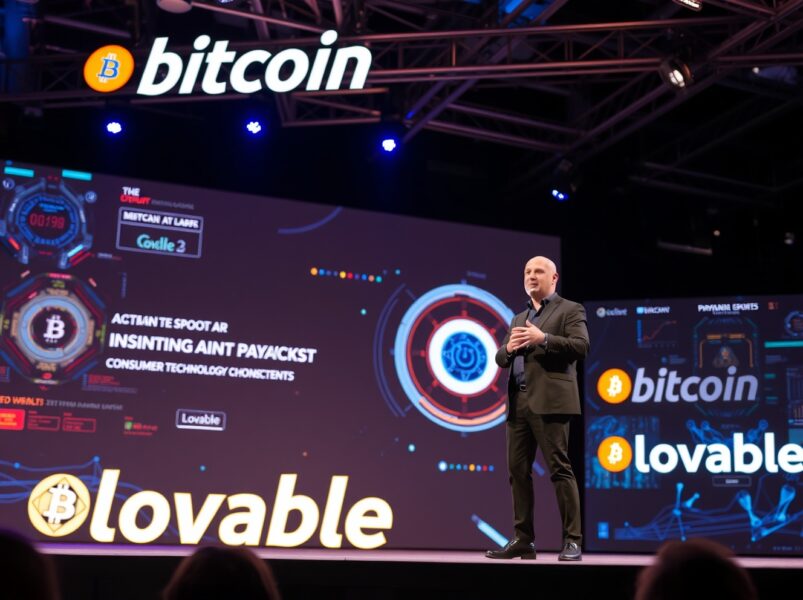
Lovable AI’s Astonishing Rise: Anton Osika Reveals Startup Secrets at Bitcoin World Disrupt 2025

Lovable AI’s Astonishing Rise: Anton Osika Reveals Startup Secrets at Bitcoin World Disrupt 2025

BitcoinWorld Lovable AI’s Astonishing Rise: Anton Osika Reveals Startup Secrets at Bitcoin World Disrupt 2025 Are you ready to witness a phenomenon? The world of technology is abuzz with the incredible rise of Lovable AI, a startup that’s not just breaking records but rewriting the rulebook for rapid growth. Imagine creating powerful apps and websites just by speaking to an AI – that’s the magic Lovable brings to the masses. This groundbreaking approach has propelled the company into the spotlight, making it one of the fastest-growing software firms in history. And now, the visionary behind this sensation, co-founder and CEO Anton Osika, is set to share his invaluable insights on the Disrupt Stage at the highly anticipated Bitcoin World Disrupt 2025. If you’re a founder, investor, or tech enthusiast eager to understand the future of innovation, this is an event you cannot afford to miss. Lovable AI’s Meteoric Ascent: Redefining Software Creation In an era where digital transformation is paramount, Lovable AI has emerged as a true game-changer. Its core premise is deceptively simple yet profoundly impactful: democratize software creation. By enabling anyone to build applications and websites through intuitive AI conversations, Lovable is empowering the vast majority of individuals who lack coding skills to transform their ideas into tangible digital products. This mission has resonated globally, leading to unprecedented momentum. The numbers speak for themselves: Achieved an astonishing $100 million Annual Recurring Revenue (ARR) in less than a year. Successfully raised a $200 million Series A funding round, valuing the company at $1.8 billion, led by industry giant Accel. Is currently fielding unsolicited investor offers, pushing its valuation towards an incredible $4 billion. As industry reports suggest, investors are unequivocally “loving Lovable,” and it’s clear why. This isn’t just about impressive financial metrics; it’s about a company that has tapped into a fundamental need, offering a solution that is both innovative and accessible. The rapid scaling of Lovable AI provides a compelling case study for any entrepreneur aiming for similar exponential growth. The Visionary Behind the Hype: Anton Osika’s Journey to Innovation Every groundbreaking company has a driving force, and for Lovable, that force is co-founder and CEO Anton Osika. His journey is as fascinating as his company’s success. A physicist by training, Osika previously contributed to the cutting-edge research at CERN, the European Organization for Nuclear Research. This deep technical background, combined with his entrepreneurial spirit, has been instrumental in Lovable’s rapid ascent. Before Lovable, he honed his skills as a co-founder of Depict.ai and a Founding Engineer at Sana. Based in Stockholm, Osika has masterfully steered Lovable from a nascent idea to a global phenomenon in record time. His leadership embodies a unique blend of profound technical understanding and a keen, consumer-first vision. At Bitcoin World Disrupt 2025, attendees will have the rare opportunity to hear directly from Osika about what it truly takes to build a brand that not only scales at an incredible pace in a fiercely competitive market but also adeptly manages the intense cultural conversations that inevitably accompany such swift and significant success. His insights will be crucial for anyone looking to understand the dynamics of high-growth tech leadership. Unpacking Consumer Tech Innovation at Bitcoin World Disrupt 2025 The 20th anniversary of Bitcoin World is set to be marked by a truly special event: Bitcoin World Disrupt 2025. From October 27–29, Moscone West in San Francisco will transform into the epicenter of innovation, gathering over 10,000 founders, investors, and tech leaders. It’s the ideal platform to explore the future of consumer tech innovation, and Anton Osika’s presence on the Disrupt Stage is a highlight. His session will delve into how Lovable is not just participating in but actively shaping the next wave of consumer-facing technologies. Why is this session particularly relevant for those interested in the future of consumer experiences? Osika’s discussion will go beyond the superficial, offering a deep dive into the strategies that have allowed Lovable to carve out a unique category in a market long thought to be saturated. Attendees will gain a front-row seat to understanding how to identify unmet consumer needs, leverage advanced AI to meet those needs, and build a product that captivates users globally. The event itself promises a rich tapestry of ideas and networking opportunities: For Founders: Sharpen your pitch and connect with potential investors. For Investors: Discover the next breakout startup poised for massive growth. For Innovators: Claim your spot at the forefront of technological advancements. The insights shared regarding consumer tech innovation at this event will be invaluable for anyone looking to navigate the complexities and capitalize on the opportunities within this dynamic sector. Mastering Startup Growth Strategies: A Blueprint for the Future Lovable’s journey isn’t just another startup success story; it’s a meticulously crafted blueprint for effective startup growth strategies in the modern era. Anton Osika’s experience offers a rare glimpse into the practicalities of scaling a business at breakneck speed while maintaining product integrity and managing external pressures. For entrepreneurs and aspiring tech leaders, his talk will serve as a masterclass in several critical areas: Strategy Focus Key Takeaways from Lovable’s Journey Rapid Scaling How to build infrastructure and teams that support exponential user and revenue growth without compromising quality. Product-Market Fit Identifying a significant, underserved market (the 99% who can’t code) and developing a truly innovative solution (AI-powered app creation). Investor Relations Balancing intense investor interest and pressure with a steadfast focus on product development and long-term vision. Category Creation Carving out an entirely new niche by democratizing complex technologies, rather than competing in existing crowded markets. Understanding these startup growth strategies is essential for anyone aiming to build a resilient and impactful consumer experience. Osika’s session will provide actionable insights into how to replicate elements of Lovable’s success, offering guidance on navigating challenges from product development to market penetration and investor management. Conclusion: Seize the Future of Tech The story of Lovable, under the astute leadership of Anton Osika, is a testament to the power of innovative ideas meeting flawless execution. Their remarkable journey from concept to a multi-billion-dollar valuation in record time is a compelling narrative for anyone interested in the future of technology. By democratizing software creation through Lovable AI, they are not just building a company; they are fostering a new generation of creators. His appearance at Bitcoin World Disrupt 2025 is an unmissable opportunity to gain direct insights from a leader who is truly shaping the landscape of consumer tech innovation. Don’t miss this chance to learn about cutting-edge startup growth strategies and secure your front-row seat to the future. Register now and save up to $668 before Regular Bird rates end on September 26. To learn more about the latest AI market trends, explore our article on key developments shaping AI features. This post Lovable AI’s Astonishing Rise: Anton Osika Reveals Startup Secrets at Bitcoin World Disrupt 2025 first appeared on BitcoinWorld.
Share
Coinstats2025/09/17 23:40