By Sangmi Cha and Haram Lim Compiled by Luffy, Foresight News Tony Kim, a manager at a textile company in Seoul, will buy all of a stock if he likes it. Tony Kim, a 34-year-old father of two, never holds two stocks simultaneously in his 140 million won (US$98,500) portfolio. "Koreans, including me, are obsessed with that dopamine rush," he said. "It's like it's in our genes." Tony Kim For many retail investors, this move might seem reckless or a test of their ability to withstand pressure. But for South Korea's roughly 14 million retail investors, known as the "ant colony," it's just a glimpse into their desperate thirst for returns and their rising risk appetite. This eagerness is driving a near-record influx of funds into investment accounts. Over the past five years, South Korean retail investors have tripled their margin lending by increasing their positions through leverage. They have also poured into highly speculative leveraged and inverse exchange-traded funds (ETFs), accounting for as much as 40% of the total assets of some US-domiciled leveraged ETFs. Meanwhile, trading volumes in high-risk cryptocurrencies have soared to all-time highs. The frenzied trading of retail investors has not only reshaped markets but also made them an influential political force. The power and anxiety of these investors are so intense that they even forced the South Korean government to make its first policy reversal. While global markets are reaching historic highs due to a surge in AI infrastructure development, Korean retail investors, operating with high leverage, are extremely vulnerable. A sudden shift in market sentiment could instantly wipe out their speculative positions, further amplifying their losses. A similar turn of events occurred just over a week ago. The escalating US-China tariff dispute triggered a cryptocurrency crash, sending numerous altcoins plummeting to zero. South Korean retail investors are known for their heavy bets on small-cap tokens, which experience volatile prices. Altcoins now account for over 80% of total trading volume on South Korean cryptocurrency exchanges, a stark contrast to global platforms, where Bitcoin and Ethereum typically account for over 50% of trading volume. For many South Korean retail investors, all these high-risk investments aim for a single goal: to accumulate enough wealth in a fiercely competitive market to buy their own home. Koreans use the term "borrowing a soul" to describe this struggle, a term that accurately captures the emotional and financial pressures behind the dream of homeownership. Recent South Korean government policies have further exacerbated risk-taking among retail investors. Mortgage limits implemented by new President Lee Jae-myung and rental market reforms that have led to rising rents have made home ownership even more elusive. Last week, the government introduced several more measures to cool the overheated real estate market, including tightening loan limits in the greater Seoul area and reducing loan-to-value ratios for mortgaged properties. "Our parents' generation built their wealth thanks to the real estate boom of the Miracle on the Han River, but our generation hasn't had that same luck," said 36-year-old Kim Soo-jin, a former business consultant who used her entire severance pay to invest in cryptocurrencies. "About 30 people I know have 'graduated'—meaning they've made enough money to exit high-risk investments," she said. "I hope to 'graduate' one day, too." Han River in Seoul Buyer beware South Korean retail investors' upward momentum is evident across various markets. Since Donald Trump's victory in the US election last year, marking the start of his second term, trading volume on local cryptocurrency exchanges has skyrocketed, at one point accounting for 80% of the turnover of South Korea's benchmark Kospi index. Stablecoins pegged to fiat currencies have also attracted significant retail investment. Investors also flocked to leveraged and inverse ETFs, which use derivatives to magnify gains (and losses) by two to three times. Due to strict regulations in South Korea, such as simulated trading exercises and high margin requirements, retail investors flocked to overseas markets, and now they have become a major player in the global leveraged ETF market. Comparison of South Korean cryptocurrency exchange trading volume and Kospi index turnover The high-risk behavior of South Korean retail investors not only threatens household savings but also strains the financial system, threatening overall economic stability. As investors flock to high-yield, high-risk assets, traditional financial instruments are falling out of favor, and banks' access to funding is being squeezed. In the six weeks following July of this year, major South Korean banks lost nearly 40 trillion won (approximately $28.1 billion) in deposits. “In South Korea, investing is often treated as gambling rather than long-term planning—almost as brutal as Squidward TensorFlow,” said Choi Jae-won, an economics professor at Seoul National University. “Once the bubble bursts, individuals experience a negative wealth shock, and the problem worsens: a personal credit crisis, a decline in spending power, and ultimately, the impact on the entire national economy.” Regulators are equally concerned. "We are worried that if the market collapses, it will have an impact on retail assets and the overall economy," said Lee Yun-soo, a standing member of the Korea Securities and Futures Commission. Psychiatrists point out that the mental toll of high-risk investing is increasing. "Without inherited wealth, a Gangnam apartment (a property in Seoul's affluent district) is a luxury," says Park Jong-seok, who lost approximately $250,000 in investments and now runs a clinic specializing in treating those with investment addiction. "In this anxiety-ridden society, people are drawn to high-risk investments even when they know the risks. It's as if the system is pushing them forward, trapping them in an anxiety-driven cycle of investment addiction." Park Jong-seok "Zero Overnight" For some, the scars of an investment crash are difficult to heal. For example, 35-year-old Han Zhengxun experienced the euphoria of seeing his cryptocurrency wallet balance soar 30-fold to 6.6 billion won, but the 2022 Luna crash wiped out all that. TerraUSD was a failed stablecoin project launched by South Korean Do Kwon. In August, Do Kwon pleaded guilty to fraud, and the project's collapse wiped out approximately $40 billion in market value in a matter of days. "My 6.6 billion won in profits disappeared overnight, and in the end I only got back less than 6 million won," said Han Zhengxun. The crash completely changed his life. While he didn't completely abandon cryptocurrency, he distanced himself from high-risk investments and focused on meditation, even starting a YouTube channel to share his favorite breathing techniques. Today, he lives on the remote island of Jeju and occasionally travels to Bali for meditation. Han Zhengxun Even so, social media platforms like YouTube are still brimming with stories of bold and successful investments. Stories like a couple pouring their entire savings into Bitcoin and a 27-year-old university student earning tens of thousands of dollars a month through high-frequency trading are precisely the kind of bait that attracts investors like Tony Kim. Tony Kim currently holds all his holdings in stocks of companies like Nvidia and Tesla. "I've made money using leverage, and that feeling of easy profit is addictive," he said, recalling how he once "went from $900 to $13,000 overnight," only to lose it all in just three days. "You keep chasing that feeling of instant wealth."By Sangmi Cha and Haram Lim Compiled by Luffy, Foresight News Tony Kim, a manager at a textile company in Seoul, will buy all of a stock if he likes it. Tony Kim, a 34-year-old father of two, never holds two stocks simultaneously in his 140 million won (US$98,500) portfolio. "Koreans, including me, are obsessed with that dopamine rush," he said. "It's like it's in our genes." Tony Kim For many retail investors, this move might seem reckless or a test of their ability to withstand pressure. But for South Korea's roughly 14 million retail investors, known as the "ant colony," it's just a glimpse into their desperate thirst for returns and their rising risk appetite. This eagerness is driving a near-record influx of funds into investment accounts. Over the past five years, South Korean retail investors have tripled their margin lending by increasing their positions through leverage. They have also poured into highly speculative leveraged and inverse exchange-traded funds (ETFs), accounting for as much as 40% of the total assets of some US-domiciled leveraged ETFs. Meanwhile, trading volumes in high-risk cryptocurrencies have soared to all-time highs. The frenzied trading of retail investors has not only reshaped markets but also made them an influential political force. The power and anxiety of these investors are so intense that they even forced the South Korean government to make its first policy reversal. While global markets are reaching historic highs due to a surge in AI infrastructure development, Korean retail investors, operating with high leverage, are extremely vulnerable. A sudden shift in market sentiment could instantly wipe out their speculative positions, further amplifying their losses. A similar turn of events occurred just over a week ago. The escalating US-China tariff dispute triggered a cryptocurrency crash, sending numerous altcoins plummeting to zero. South Korean retail investors are known for their heavy bets on small-cap tokens, which experience volatile prices. Altcoins now account for over 80% of total trading volume on South Korean cryptocurrency exchanges, a stark contrast to global platforms, where Bitcoin and Ethereum typically account for over 50% of trading volume. For many South Korean retail investors, all these high-risk investments aim for a single goal: to accumulate enough wealth in a fiercely competitive market to buy their own home. Koreans use the term "borrowing a soul" to describe this struggle, a term that accurately captures the emotional and financial pressures behind the dream of homeownership. Recent South Korean government policies have further exacerbated risk-taking among retail investors. Mortgage limits implemented by new President Lee Jae-myung and rental market reforms that have led to rising rents have made home ownership even more elusive. Last week, the government introduced several more measures to cool the overheated real estate market, including tightening loan limits in the greater Seoul area and reducing loan-to-value ratios for mortgaged properties. "Our parents' generation built their wealth thanks to the real estate boom of the Miracle on the Han River, but our generation hasn't had that same luck," said 36-year-old Kim Soo-jin, a former business consultant who used her entire severance pay to invest in cryptocurrencies. "About 30 people I know have 'graduated'—meaning they've made enough money to exit high-risk investments," she said. "I hope to 'graduate' one day, too." Han River in Seoul Buyer beware South Korean retail investors' upward momentum is evident across various markets. Since Donald Trump's victory in the US election last year, marking the start of his second term, trading volume on local cryptocurrency exchanges has skyrocketed, at one point accounting for 80% of the turnover of South Korea's benchmark Kospi index. Stablecoins pegged to fiat currencies have also attracted significant retail investment. Investors also flocked to leveraged and inverse ETFs, which use derivatives to magnify gains (and losses) by two to three times. Due to strict regulations in South Korea, such as simulated trading exercises and high margin requirements, retail investors flocked to overseas markets, and now they have become a major player in the global leveraged ETF market. Comparison of South Korean cryptocurrency exchange trading volume and Kospi index turnover The high-risk behavior of South Korean retail investors not only threatens household savings but also strains the financial system, threatening overall economic stability. As investors flock to high-yield, high-risk assets, traditional financial instruments are falling out of favor, and banks' access to funding is being squeezed. In the six weeks following July of this year, major South Korean banks lost nearly 40 trillion won (approximately $28.1 billion) in deposits. “In South Korea, investing is often treated as gambling rather than long-term planning—almost as brutal as Squidward TensorFlow,” said Choi Jae-won, an economics professor at Seoul National University. “Once the bubble bursts, individuals experience a negative wealth shock, and the problem worsens: a personal credit crisis, a decline in spending power, and ultimately, the impact on the entire national economy.” Regulators are equally concerned. "We are worried that if the market collapses, it will have an impact on retail assets and the overall economy," said Lee Yun-soo, a standing member of the Korea Securities and Futures Commission. Psychiatrists point out that the mental toll of high-risk investing is increasing. "Without inherited wealth, a Gangnam apartment (a property in Seoul's affluent district) is a luxury," says Park Jong-seok, who lost approximately $250,000 in investments and now runs a clinic specializing in treating those with investment addiction. "In this anxiety-ridden society, people are drawn to high-risk investments even when they know the risks. It's as if the system is pushing them forward, trapping them in an anxiety-driven cycle of investment addiction." Park Jong-seok "Zero Overnight" For some, the scars of an investment crash are difficult to heal. For example, 35-year-old Han Zhengxun experienced the euphoria of seeing his cryptocurrency wallet balance soar 30-fold to 6.6 billion won, but the 2022 Luna crash wiped out all that. TerraUSD was a failed stablecoin project launched by South Korean Do Kwon. In August, Do Kwon pleaded guilty to fraud, and the project's collapse wiped out approximately $40 billion in market value in a matter of days. "My 6.6 billion won in profits disappeared overnight, and in the end I only got back less than 6 million won," said Han Zhengxun. The crash completely changed his life. While he didn't completely abandon cryptocurrency, he distanced himself from high-risk investments and focused on meditation, even starting a YouTube channel to share his favorite breathing techniques. Today, he lives on the remote island of Jeju and occasionally travels to Bali for meditation. Han Zhengxun Even so, social media platforms like YouTube are still brimming with stories of bold and successful investments. Stories like a couple pouring their entire savings into Bitcoin and a 27-year-old university student earning tens of thousands of dollars a month through high-frequency trading are precisely the kind of bait that attracts investors like Tony Kim. Tony Kim currently holds all his holdings in stocks of companies like Nvidia and Tesla. "I've made money using leverage, and that feeling of easy profit is addictive," he said, recalling how he once "went from $900 to $13,000 overnight," only to lose it all in just three days. "You keep chasing that feeling of instant wealth."

South Korea's real-life "Squid Game": 14 million "ant colonies" plunge into cryptocurrency and leverage

2025/10/21 17:00
6 min read

By Sangmi Cha and Haram Lim

Compiled by Luffy, Foresight News

Tony Kim, a manager at a textile company in Seoul, will buy all of a stock if he likes it.

Tony Kim, a 34-year-old father of two, never holds two stocks simultaneously in his 140 million won (US$98,500) portfolio. "Koreans, including me, are obsessed with that dopamine rush," he said. "It's like it's in our genes."

Tony Kim

For many retail investors, this move might seem reckless or a test of their ability to withstand pressure. But for South Korea's roughly 14 million retail investors, known as the "ant colony," it's just a glimpse into their desperate thirst for returns and their rising risk appetite.

This eagerness is driving a near-record influx of funds into investment accounts. Over the past five years, South Korean retail investors have tripled their margin lending by increasing their positions through leverage. They have also poured into highly speculative leveraged and inverse exchange-traded funds (ETFs), accounting for as much as 40% of the total assets of some US-domiciled leveraged ETFs. Meanwhile, trading volumes in high-risk cryptocurrencies have soared to all-time highs.

The frenzied trading of retail investors has not only reshaped markets but also made them an influential political force. The power and anxiety of these investors are so intense that they even forced the South Korean government to make its first policy reversal.

While global markets are reaching historic highs due to a surge in AI infrastructure development, Korean retail investors, operating with high leverage, are extremely vulnerable. A sudden shift in market sentiment could instantly wipe out their speculative positions, further amplifying their losses.

A similar turn of events occurred just over a week ago. The escalating US-China tariff dispute triggered a cryptocurrency crash, sending numerous altcoins plummeting to zero. South Korean retail investors are known for their heavy bets on small-cap tokens, which experience volatile prices. Altcoins now account for over 80% of total trading volume on South Korean cryptocurrency exchanges, a stark contrast to global platforms, where Bitcoin and Ethereum typically account for over 50% of trading volume.

For many South Korean retail investors, all these high-risk investments aim for a single goal: to accumulate enough wealth in a fiercely competitive market to buy their own home. Koreans use the term "borrowing a soul" to describe this struggle, a term that accurately captures the emotional and financial pressures behind the dream of homeownership.

Recent South Korean government policies have further exacerbated risk-taking among retail investors. Mortgage limits implemented by new President Lee Jae-myung and rental market reforms that have led to rising rents have made home ownership even more elusive. Last week, the government introduced several more measures to cool the overheated real estate market, including tightening loan limits in the greater Seoul area and reducing loan-to-value ratios for mortgaged properties.

"Our parents' generation built their wealth thanks to the real estate boom of the Miracle on the Han River, but our generation hasn't had that same luck," said 36-year-old Kim Soo-jin, a former business consultant who used her entire severance pay to invest in cryptocurrencies. "About 30 people I know have 'graduated'—meaning they've made enough money to exit high-risk investments," she said. "I hope to 'graduate' one day, too."

Han River in Seoul

Buyer beware

South Korean retail investors' upward momentum is evident across various markets. Since Donald Trump's victory in the US election last year, marking the start of his second term, trading volume on local cryptocurrency exchanges has skyrocketed, at one point accounting for 80% of the turnover of South Korea's benchmark Kospi index. Stablecoins pegged to fiat currencies have also attracted significant retail investment.

Investors also flocked to leveraged and inverse ETFs, which use derivatives to magnify gains (and losses) by two to three times. Due to strict regulations in South Korea, such as simulated trading exercises and high margin requirements, retail investors flocked to overseas markets, and now they have become a major player in the global leveraged ETF market.

Comparison of South Korean cryptocurrency exchange trading volume and Kospi index turnover

The high-risk behavior of South Korean retail investors not only threatens household savings but also strains the financial system, threatening overall economic stability. As investors flock to high-yield, high-risk assets, traditional financial instruments are falling out of favor, and banks' access to funding is being squeezed. In the six weeks following July of this year, major South Korean banks lost nearly 40 trillion won (approximately $28.1 billion) in deposits.

“In South Korea, investing is often treated as gambling rather than long-term planning—almost as brutal as Squidward TensorFlow,” said Choi Jae-won, an economics professor at Seoul National University. “Once the bubble bursts, individuals experience a negative wealth shock, and the problem worsens: a personal credit crisis, a decline in spending power, and ultimately, the impact on the entire national economy.”

Regulators are equally concerned. "We are worried that if the market collapses, it will have an impact on retail assets and the overall economy," said Lee Yun-soo, a standing member of the Korea Securities and Futures Commission.

Psychiatrists point out that the mental toll of high-risk investing is increasing. "Without inherited wealth, a Gangnam apartment (a property in Seoul's affluent district) is a luxury," says Park Jong-seok, who lost approximately $250,000 in investments and now runs a clinic specializing in treating those with investment addiction. "In this anxiety-ridden society, people are drawn to high-risk investments even when they know the risks. It's as if the system is pushing them forward, trapping them in an anxiety-driven cycle of investment addiction."

Park Jong-seok

"Zero Overnight"

For some, the scars of an investment crash are difficult to heal. For example, 35-year-old Han Zhengxun experienced the euphoria of seeing his cryptocurrency wallet balance soar 30-fold to 6.6 billion won, but the 2022 Luna crash wiped out all that.

TerraUSD was a failed stablecoin project launched by South Korean Do Kwon. In August, Do Kwon pleaded guilty to fraud, and the project's collapse wiped out approximately $40 billion in market value in a matter of days.

"My 6.6 billion won in profits disappeared overnight, and in the end I only got back less than 6 million won," said Han Zhengxun.

The crash completely changed his life. While he didn't completely abandon cryptocurrency, he distanced himself from high-risk investments and focused on meditation, even starting a YouTube channel to share his favorite breathing techniques. Today, he lives on the remote island of Jeju and occasionally travels to Bali for meditation.

Han Zhengxun

Even so, social media platforms like YouTube are still brimming with stories of bold and successful investments. Stories like a couple pouring their entire savings into Bitcoin and a 27-year-old university student earning tens of thousands of dollars a month through high-frequency trading are precisely the kind of bait that attracts investors like Tony Kim.

Tony Kim currently holds all his holdings in stocks of companies like Nvidia and Tesla. "I've made money using leverage, and that feeling of easy profit is addictive," he said, recalling how he once "went from $900 to $13,000 overnight," only to lose it all in just three days. "You keep chasing that feeling of instant wealth."

Market Opportunity
RealLink Logo
RealLink Price(REAL)
$0.05035
$0.05035$0.05035
-2.44%
USD
RealLink (REAL) Live Price Chart
Disclaimer: The articles reposted on this site are sourced from public platforms and are provided for informational purposes only. They do not necessarily reflect the views of MEXC. All rights remain with the original authors. If you believe any content infringes on third-party rights, please contact service@support.mexc.com for removal. MEXC makes no guarantees regarding the accuracy, completeness, or timeliness of the content and is not responsible for any actions taken based on the information provided. The content does not constitute financial, legal, or other professional advice, nor should it be considered a recommendation or endorsement by MEXC.

You May Also Like

UAE’s Central Bank Approves the DSSC Stablecoin Launch by IHC, FAB, and Sirius

UAE’s Central Bank Approves the DSSC Stablecoin Launch by IHC, FAB, and Sirius

The post UAE’s Central Bank Approves the DSSC Stablecoin Launch by IHC, FAB, and Sirius appeared on BitcoinEthereumNews.com. CBUAE has approved the dirham-backed
Share
BitcoinEthereumNews2026/02/13 04:30
Unyielding Challenges Stall US Crypto Bill Progress
Unyielding Challenges Stall US Crypto Bill Progress

The post Unyielding Challenges Stall US Crypto Bill Progress appeared on BitcoinEthereumNews.com. The enduring quest to establish a regulatory framework for cryptocurrencies
Share
BitcoinEthereumNews2026/02/13 04:04
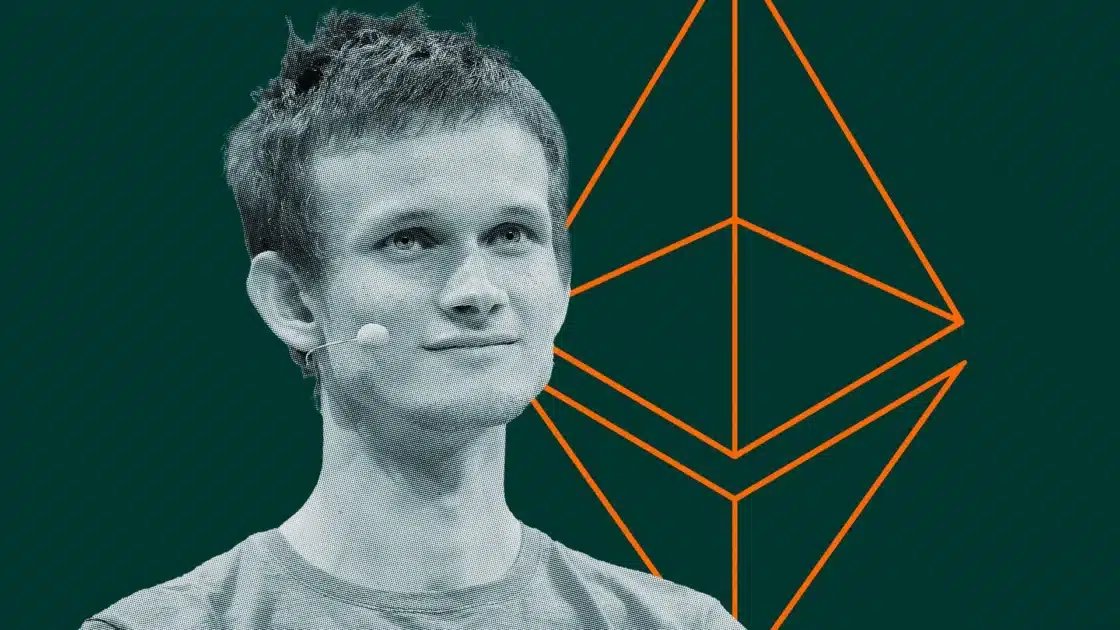
Vitalik Buterin Reveals Ethereum’s Bold Plan to Stay Quantum-Secure and Simple!

Vitalik Buterin Reveals Ethereum’s Bold Plan to Stay Quantum-Secure and Simple!

Buterin unveils Ethereum’s strategy to tackle quantum security challenges ahead. Ethereum focuses on simplifying architecture while boosting security for users. Ethereum’s market stability grows as Buterin’s roadmap gains investor confidence. Ethereum founder Vitalik Buterin has unveiled his long-term vision for the blockchain, focusing on making Ethereum quantum-secure while maintaining its simplicity for users. Buterin presented his roadmap at the Japanese Developer Conference, and splits the future of Ethereum into three phases: short-term, mid-term, and long-term. Buterin’s most ambitious goal for Ethereum is to safeguard the blockchain against the threats posed by quantum computing.  The danger of such future developments is that the future may call into question the cryptographic security of most blockchain systems, and Ethereum will be able to remain ahead thanks to more sophisticated mathematical techniques to ensure the safety and integrity of its protocols. Buterin is committed to ensuring that Ethereum evolves in a way that not only meets today’s security challenges but also prepares for the unknowns of tomorrow. Also Read: Ethereum Giant The Ether Machine Takes Major Step Toward Going Public! However, in spite of such high ambitions, Buterin insisted that Ethereum also needed to simplify its architecture. An important aspect of this vision is to remove unnecessary complexity and make Ethereum more accessible and maintainable without losing its strong security capabilities. Security and simplicity form the core of Buterin’s strategy, as they guarantee that the users of Ethereum experience both security and smooth processes. Focus on Speed and Efficiency in the Short-Term In the short term, Buterin aims to enhance Ethereum’s transaction efficiency, a crucial step toward improving scalability and reducing transaction costs. These advantages are attributed to the fact that, within the mid-term, Ethereum is planning to enhance the speed of transactions in layer-2 networks. According to Butterin, this is part of Ethereum’s expansion, particularly because there is still more need to use blockchain technology to date. The other important aspect of Ethereum’s development is the layer-2 solutions. Buterin supports an approach in which the layer-2 networks are dependent on layer-1 to perform some essential tasks like data security, proof, and censorship resistance. This will enable the layer-2 systems of Ethereum to be concerned with verifying and sequencing transactions, which will improve the overall speed and efficiency of the network. Ethereum’s Market Stability Reflects Confidence in Long-Term Strategy Ethereum’s market performance has remained solid, with the cryptocurrency holding steady above $4,000. Currently priced at $4,492.15, Ethereum has experienced a slight 0.93% increase over the last 24 hours, while its trading volume surged by 8.72%, reaching $34.14 billion. These figures point to growing investor confidence in Ethereum’s long-term vision. The crypto community remains optimistic about Ethereum’s future, with many predicting the price could rise to $5,500 by mid-October. Buterin’s clear, forward-thinking strategy continues to build trust in Ethereum as one of the most secure and scalable blockchain platforms in the market. Also Read: Whales Dump 200 Million XRP in Just 2 Weeks – Is XRP’s Price on the Verge of Collapse? The post Vitalik Buterin Reveals Ethereum’s Bold Plan to Stay Quantum-Secure and Simple! appeared first on 36Crypto.
Share
Coinstats2025/09/18 01:22