Written by: RWA Knowledge Circle 1. Stablecoins: The “Private Money Printing Machine” of the Digital Age Over the past year, "stablecoin" has been one of the hottest buzzwords in the capital markets. A stablecoin is a digital currency pegged to a fiat currency, theoretically trading at a 1:1 ratio with the fiat currency and backed by real assets. This raises the question: If large cross-border e-commerce companies issue stablecoins to reduce transaction costs and potentially save tens of millions of yuan annually, that's reasonable. However, in reality, stablecoins are often issued by blockchain platforms and digital service providers. So, how much profit can this "1:1 money printing power" actually generate? Don't underestimate this business. The global stablecoin market landscape is clear: USDT holds a 60% market share, while USDC holds 25%. Tether, the issuer of USDT, has even made headlines: its average employee salary ranks second globally. Bloomberg also reports that it is considering selling a 3% stake for $15-20 billion, valuing it at $500 billion, comparable to OpenAI and SpaceX. Tether, why is it worth this price? (Ranking of average salary of global companies) 2. The “Money Printing Logic” of Stablecoins Traditional banks profit by accepting deposits and lending them out to earn a profit margin. Stablecoin issuers, on the other hand, collect US dollars and mint them into tokens on the blockchain. The money in hand is the source of profit. Circle (USDC issuer): It has a stable operating style and mainly invests in low-risk assets such as US Treasury bonds and cash after receiving funds to ensure a 1:1 exchange rate with the US dollar. Tether (USDT issuer): This model is more aggressive, currently holding $100 billion in reserves and earning over $4 billion annually from interest alone. Net profit is projected to reach $13.7 billion in 2024, with a profit margin of 99%. Tether's portfolio includes not only cash and US Treasury bonds, but also Bitcoin and equity investments, spanning payment infrastructure, renewable energy, artificial intelligence, tokenization, and other fields. To some extent, Tether no longer resembles a simple stablecoin company, but more like a top investment bank and asset management giant. 3. The “Stablecoin War” of DeFi Protocols Once the “printing money model” was discovered to be so profitable, it naturally attracted countless imitators. Many DeFi protocols have joined the stablecoin war: MakerDAO’s DAI: One of the First Successful Decentralized Stablecoins Innovation: It was the first to include U.S. Treasury bonds in its reserves, and at one point held more than $1 billion in short-term Treasury bonds. Revenue Distribution: Excess revenue goes into a surplus buffer, which is then used to repurchase and burn MKR governance tokens. MKR is no longer just a "governance voting right," but is directly tied to cash flow, becoming an "equity token" with real value. Frax: A small but focused "fine money printing machine" Frax's overall scale is not large, and its circulation volume has been maintained below US$500 million for a long time, but its design is extremely sophisticated. Income distribution: A portion is used to destroy FRAX tokens to maintain scarcity; A portion is allocated to stakers to enhance user stickiness; The remaining portion is invested in the sFRAX vault, which tracks the Federal Reserve interest rate, which is equivalent to providing users with a product that "follows U.S. Treasury returns." Although its scale is far smaller than Tether, Frax can still generate tens of millions of dollars in revenue each year, making it a representative example of "small scale and high efficiency". Aave’s GHO: An extension of DeFi lending The well-known lending protocol Aave launched its own stablecoin GHO in 2023. Model: When users borrow GHO, the interest paid goes directly to Aave DAO instead of to external institutions. Income distribution: approximately $20 million in interest income annually; Half of this amount is distributed to AAVE token stakers, and the other half remains in the DAO treasury for community governance and development. The current scale of GHO is approximately US$350 million, but its logic is to deeply integrate stablecoins with lending businesses to form a "vertical ecological closed loop." It can be said that "Eight Immortals crossing the sea, each showing their magical powers", every stablecoin protocol is trying to build its own private money printing machine. 4. Hidden concerns: Is it really stable? Although stablecoins reduce cross-border transaction costs and improve efficiency, they also pose many hidden risks: The anchored asset is not absolutely stable: Tether's reserves include Bitcoin, and once there is a sharp fluctuation, the stablecoin may "break away from the anchor". The revenue distribution process is not transparent: Many agreements claim that the revenue will be used for token repurchase or rewards, but the actual operation process is a "black box". Hedging strategies involve risks: The use of futures hedging models cannot theoretically guarantee 100% safety. Compared with national credit endorsement, the "creditworthiness" of private stablecoins is always limited. 5. Why is Tether worth $500 billion? Given the numerous risks, why is Tether still valued at $500 billion? The answer is: stablecoins have become the infrastructure of the digital age. It's not just a payment and settlement tool; it can also be embedded in scenarios like lending, trading, and RWA (real-world asset tokenization), providing a new channel for global capital circulation. Tether's high valuation actually reflects the market's huge expectations for the future of RWA. Of course, the implementation of compliance supervision is still a key factor in determining how far stablecoins can go in the future. Stablecoins, while seemingly just a cornerstone of the digital currency market, are actually a new form of "coinage" within the financial system. Whether it's Tether's $500 billion valuation or the proliferation of DeFi protocols, they remind us that the monetary landscape of the digital age is quietly being rewritten.Written by: RWA Knowledge Circle 1. Stablecoins: The “Private Money Printing Machine” of the Digital Age Over the past year, "stablecoin" has been one of the hottest buzzwords in the capital markets. A stablecoin is a digital currency pegged to a fiat currency, theoretically trading at a 1:1 ratio with the fiat currency and backed by real assets. This raises the question: If large cross-border e-commerce companies issue stablecoins to reduce transaction costs and potentially save tens of millions of yuan annually, that's reasonable. However, in reality, stablecoins are often issued by blockchain platforms and digital service providers. So, how much profit can this "1:1 money printing power" actually generate? Don't underestimate this business. The global stablecoin market landscape is clear: USDT holds a 60% market share, while USDC holds 25%. Tether, the issuer of USDT, has even made headlines: its average employee salary ranks second globally. Bloomberg also reports that it is considering selling a 3% stake for $15-20 billion, valuing it at $500 billion, comparable to OpenAI and SpaceX. Tether, why is it worth this price? (Ranking of average salary of global companies) 2. The “Money Printing Logic” of Stablecoins Traditional banks profit by accepting deposits and lending them out to earn a profit margin. Stablecoin issuers, on the other hand, collect US dollars and mint them into tokens on the blockchain. The money in hand is the source of profit. Circle (USDC issuer): It has a stable operating style and mainly invests in low-risk assets such as US Treasury bonds and cash after receiving funds to ensure a 1:1 exchange rate with the US dollar. Tether (USDT issuer): This model is more aggressive, currently holding $100 billion in reserves and earning over $4 billion annually from interest alone. Net profit is projected to reach $13.7 billion in 2024, with a profit margin of 99%. Tether's portfolio includes not only cash and US Treasury bonds, but also Bitcoin and equity investments, spanning payment infrastructure, renewable energy, artificial intelligence, tokenization, and other fields. To some extent, Tether no longer resembles a simple stablecoin company, but more like a top investment bank and asset management giant. 3. The “Stablecoin War” of DeFi Protocols Once the “printing money model” was discovered to be so profitable, it naturally attracted countless imitators. Many DeFi protocols have joined the stablecoin war: MakerDAO’s DAI: One of the First Successful Decentralized Stablecoins Innovation: It was the first to include U.S. Treasury bonds in its reserves, and at one point held more than $1 billion in short-term Treasury bonds. Revenue Distribution: Excess revenue goes into a surplus buffer, which is then used to repurchase and burn MKR governance tokens. MKR is no longer just a "governance voting right," but is directly tied to cash flow, becoming an "equity token" with real value. Frax: A small but focused "fine money printing machine" Frax's overall scale is not large, and its circulation volume has been maintained below US$500 million for a long time, but its design is extremely sophisticated. Income distribution: A portion is used to destroy FRAX tokens to maintain scarcity; A portion is allocated to stakers to enhance user stickiness; The remaining portion is invested in the sFRAX vault, which tracks the Federal Reserve interest rate, which is equivalent to providing users with a product that "follows U.S. Treasury returns." Although its scale is far smaller than Tether, Frax can still generate tens of millions of dollars in revenue each year, making it a representative example of "small scale and high efficiency". Aave’s GHO: An extension of DeFi lending The well-known lending protocol Aave launched its own stablecoin GHO in 2023. Model: When users borrow GHO, the interest paid goes directly to Aave DAO instead of to external institutions. Income distribution: approximately $20 million in interest income annually; Half of this amount is distributed to AAVE token stakers, and the other half remains in the DAO treasury for community governance and development. The current scale of GHO is approximately US$350 million, but its logic is to deeply integrate stablecoins with lending businesses to form a "vertical ecological closed loop." It can be said that "Eight Immortals crossing the sea, each showing their magical powers", every stablecoin protocol is trying to build its own private money printing machine. 4. Hidden concerns: Is it really stable? Although stablecoins reduce cross-border transaction costs and improve efficiency, they also pose many hidden risks: The anchored asset is not absolutely stable: Tether's reserves include Bitcoin, and once there is a sharp fluctuation, the stablecoin may "break away from the anchor". The revenue distribution process is not transparent: Many agreements claim that the revenue will be used for token repurchase or rewards, but the actual operation process is a "black box". Hedging strategies involve risks: The use of futures hedging models cannot theoretically guarantee 100% safety. Compared with national credit endorsement, the "creditworthiness" of private stablecoins is always limited. 5. Why is Tether worth $500 billion? Given the numerous risks, why is Tether still valued at $500 billion? The answer is: stablecoins have become the infrastructure of the digital age. It's not just a payment and settlement tool; it can also be embedded in scenarios like lending, trading, and RWA (real-world asset tokenization), providing a new channel for global capital circulation. Tether's high valuation actually reflects the market's huge expectations for the future of RWA. Of course, the implementation of compliance supervision is still a key factor in determining how far stablecoins can go in the future. Stablecoins, while seemingly just a cornerstone of the digital currency market, are actually a new form of "coinage" within the financial system. Whether it's Tether's $500 billion valuation or the proliferation of DeFi protocols, they remind us that the monetary landscape of the digital age is quietly being rewritten.
How much profit can the “1:1 printing right” of stablecoins bring?

2025/09/27 14:13
5 min read

Written by: RWA Knowledge Circle

1. Stablecoins: The “Private Money Printing Machine” of the Digital Age

Over the past year, "stablecoin" has been one of the hottest buzzwords in the capital markets. A stablecoin is a digital currency pegged to a fiat currency, theoretically trading at a 1:1 ratio with the fiat currency and backed by real assets.

This raises the question: If large cross-border e-commerce companies issue stablecoins to reduce transaction costs and potentially save tens of millions of yuan annually, that's reasonable. However, in reality, stablecoins are often issued by blockchain platforms and digital service providers. So, how much profit can this "1:1 money printing power" actually generate?

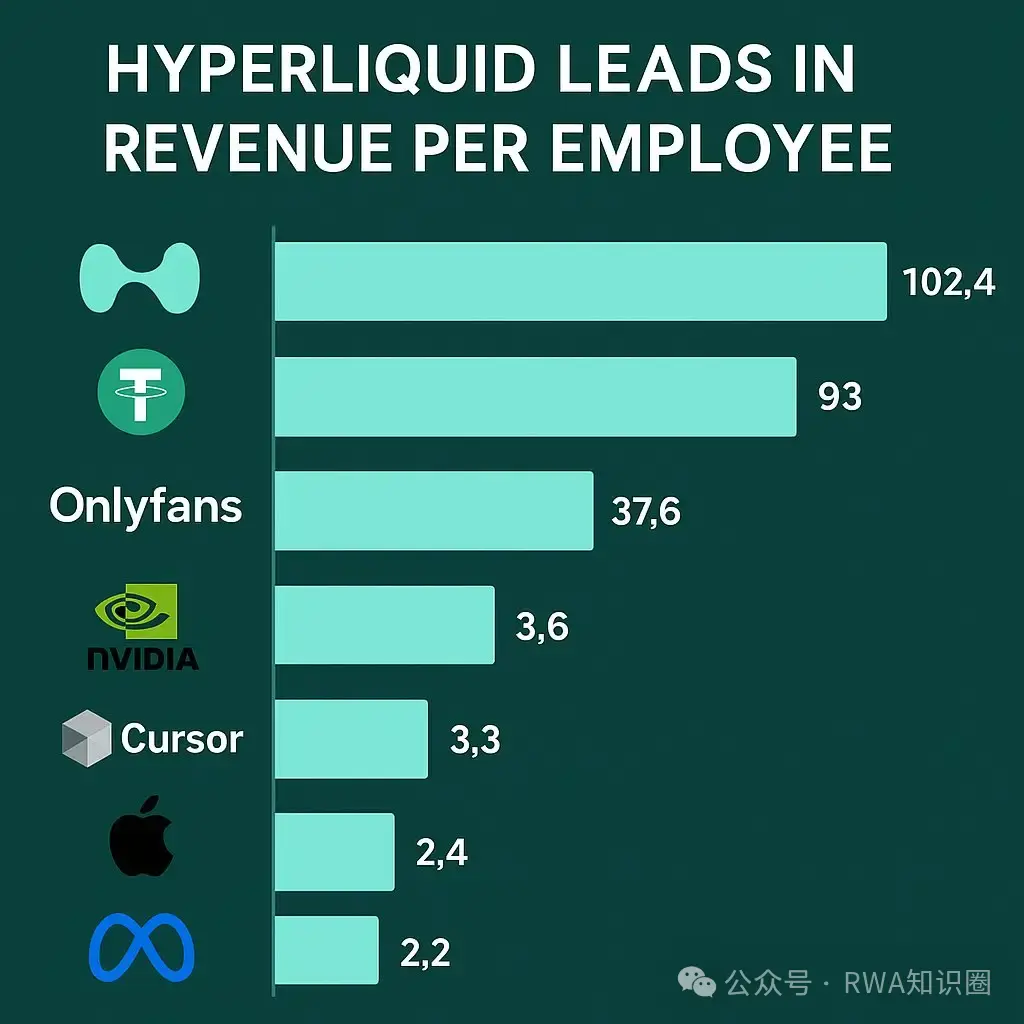
Don't underestimate this business. The global stablecoin market landscape is clear: USDT holds a 60% market share, while USDC holds 25%. Tether, the issuer of USDT, has even made headlines: its average employee salary ranks second globally. Bloomberg also reports that it is considering selling a 3% stake for $15-20 billion, valuing it at $500 billion, comparable to OpenAI and SpaceX.

Tether, why is it worth this price?

 (Ranking of average salary of global companies)

2. The “Money Printing Logic” of Stablecoins

Traditional banks profit by accepting deposits and lending them out to earn a profit margin. Stablecoin issuers, on the other hand, collect US dollars and mint them into tokens on the blockchain. The money in hand is the source of profit.

Circle (USDC issuer): It has a stable operating style and mainly invests in low-risk assets such as US Treasury bonds and cash after receiving funds to ensure a 1:1 exchange rate with the US dollar.

Tether (USDT issuer): This model is more aggressive, currently holding $100 billion in reserves and earning over $4 billion annually from interest alone. Net profit is projected to reach $13.7 billion in 2024, with a profit margin of 99%.

Tether's portfolio includes not only cash and US Treasury bonds, but also Bitcoin and equity investments, spanning payment infrastructure, renewable energy, artificial intelligence, tokenization, and other fields. To some extent, Tether no longer resembles a simple stablecoin company, but more like a top investment bank and asset management giant.

3. The “Stablecoin War” of DeFi Protocols

Once the “printing money model” was discovered to be so profitable, it naturally attracted countless imitators. Many DeFi protocols have joined the stablecoin war:

MakerDAO’s DAI: One of the First Successful Decentralized Stablecoins

Innovation: It was the first to include U.S. Treasury bonds in its reserves, and at one point held more than $1 billion in short-term Treasury bonds.

Revenue Distribution: Excess revenue goes into a surplus buffer, which is then used to repurchase and burn MKR governance tokens. MKR is no longer just a "governance voting right," but is directly tied to cash flow, becoming an "equity token" with real value.

Frax: A small but focused "fine money printing machine"

Frax's overall scale is not large, and its circulation volume has been maintained below US$500 million for a long time, but its design is extremely sophisticated.

Income distribution:

  • A portion is used to destroy FRAX tokens to maintain scarcity;
  • A portion is allocated to stakers to enhance user stickiness;

The remaining portion is invested in the sFRAX vault, which tracks the Federal Reserve interest rate, which is equivalent to providing users with a product that "follows U.S. Treasury returns."

Although its scale is far smaller than Tether, Frax can still generate tens of millions of dollars in revenue each year, making it a representative example of "small scale and high efficiency".

Aave’s GHO: An extension of DeFi lending

The well-known lending protocol Aave launched its own stablecoin GHO in 2023.

Model: When users borrow GHO, the interest paid goes directly to Aave DAO instead of to external institutions.

Income distribution:

  • approximately $20 million in interest income annually;
  • Half of this amount is distributed to AAVE token stakers, and the other half remains in the DAO treasury for community governance and development.
  • The current scale of GHO is approximately US$350 million, but its logic is to deeply integrate stablecoins with lending businesses to form a "vertical ecological closed loop."

It can be said that "Eight Immortals crossing the sea, each showing their magical powers", every stablecoin protocol is trying to build its own private money printing machine.

4. Hidden concerns: Is it really stable?

Although stablecoins reduce cross-border transaction costs and improve efficiency, they also pose many hidden risks:

  1. The anchored asset is not absolutely stable: Tether's reserves include Bitcoin, and once there is a sharp fluctuation, the stablecoin may "break away from the anchor".
  2. The revenue distribution process is not transparent: Many agreements claim that the revenue will be used for token repurchase or rewards, but the actual operation process is a "black box".
  3. Hedging strategies involve risks: The use of futures hedging models cannot theoretically guarantee 100% safety.

Compared with national credit endorsement, the "creditworthiness" of private stablecoins is always limited.

5. Why is Tether worth $500 billion?

Given the numerous risks, why is Tether still valued at $500 billion?

The answer is: stablecoins have become the infrastructure of the digital age.

It's not just a payment and settlement tool; it can also be embedded in scenarios like lending, trading, and RWA (real-world asset tokenization), providing a new channel for global capital circulation. Tether's high valuation actually reflects the market's huge expectations for the future of RWA.

Of course, the implementation of compliance supervision is still a key factor in determining how far stablecoins can go in the future.

Stablecoins, while seemingly just a cornerstone of the digital currency market, are actually a new form of "coinage" within the financial system. Whether it's Tether's $500 billion valuation or the proliferation of DeFi protocols, they remind us that the monetary landscape of the digital age is quietly being rewritten.

Market Opportunity
Allo Logo
Allo Price(RWA)
$0.002003
$0.002003$0.002003
-2.86%
USD
Allo (RWA) Live Price Chart
Disclaimer: The articles reposted on this site are sourced from public platforms and are provided for informational purposes only. They do not necessarily reflect the views of MEXC. All rights remain with the original authors. If you believe any content infringes on third-party rights, please contact service@support.mexc.com for removal. MEXC makes no guarantees regarding the accuracy, completeness, or timeliness of the content and is not responsible for any actions taken based on the information provided. The content does not constitute financial, legal, or other professional advice, nor should it be considered a recommendation or endorsement by MEXC.

You May Also Like

BetFury is at SBC Summit Lisbon 2025: Affiliate Growth in Focus

BetFury is at SBC Summit Lisbon 2025: Affiliate Growth in Focus

The post BetFury is at SBC Summit Lisbon 2025: Affiliate Growth in Focus appeared on BitcoinEthereumNews.com. Press Releases are sponsored content and not a part of Finbold’s editorial content. For a full disclaimer, please . Crypto assets/products can be highly risky. Never invest unless you’re prepared to lose all the money you invest. Curacao, Curacao, September 17th, 2025, Chainwire BetFury steps onto the stage of SBC Summit Lisbon 2025 — one of the key gatherings in the iGaming calendar. From 16 to 18 September, the platform showcases its brand strength, deepens affiliate connections, and outlines its plans for global expansion. BetFury continues to play a role in the evolving crypto and iGaming partnership landscape. BetFury’s Participation at SBC Summit The SBC Summit gathers over 25,000 delegates, including 6,000+ affiliates — the largest concentration of affiliate professionals in iGaming. For BetFury, this isn’t just visibility, it’s a strategic chance to present its Affiliate Program to the right audience. Face-to-face meetings, dedicated networking zones, and affiliate-focused sessions make Lisbon the ideal ground to build new partnerships and strengthen existing ones. BetFury Meets Affiliate Leaders at its Massive Stand BetFury arrives at the summit with a massive stand placed right in the center of the Affiliate zone. Designed as a true meeting hub, the stand combines large LED screens, a sleek interior, and the best coffee at the event — but its core mission goes far beyond style. Here, BetFury’s team welcomes partners and affiliates to discuss tailored collaborations, explore growth opportunities across multiple GEOs, and expand its global Affiliate Program. To make the experience even more engaging, the stand also hosts: Affiliate Lottery — a branded drum filled with exclusive offers and personalized deals for affiliates. Merch Kits — premium giveaways to boost brand recognition and leave visitors with a lasting conference memory. Besides, at SBC Summit Lisbon, attendees have a chance to meet the BetFury team along…
Share
BitcoinEthereumNews2025/09/18 01:20
MAXI DOGE Holders Diversify into $GGs for Fast-Growth 2025 Crypto Presale Opportunities

MAXI DOGE Holders Diversify into $GGs for Fast-Growth 2025 Crypto Presale Opportunities

Presale crypto tokens have become some of the most active areas in Web3, offering early access to projects that blend culture, finance, and technology. Investors are constantly searching for the best crypto presale to buy right now, comparing new token presales across different niches. MAXI DOGE has gained attention for its meme-driven energy, but early [...] The post MAXI DOGE Holders Diversify into $GGs for Fast-Growth 2025 Crypto Presale Opportunities appeared first on Blockonomi.
Share
Blockonomi2025/09/18 00:00
Tether Advances Gold Strategy With $150 Million Stake in Gold.com

Tether Advances Gold Strategy With $150 Million Stake in Gold.com

TLDR Tether buys $150M Gold.com stake to expand digital gold infrastructure Partnership links physical gold supply with blockchain settlement rails XAUT token distribution
Share
Coincentral2026/02/06 10:09