BitcoinWorld Massive USDT Transfer: $220 Million Moves to Aave from Unknown Wallet The cryptocurrency world is abuzz with the news of a monumental USDT transfer. A staggering 219,999,998 USDT, valued at approximately $220 million, recently moved from an undisclosed wallet to the decentralized finance (DeFi) lending protocol, Aave. This significant whale movement, flagged by Whale Alert, has ignited widespread speculation across the market. What Does This Massive USDT Transfer Mean for DeFi? Such a substantial transaction immediately draws attention due to its sheer size. When nearly a quarter of a billion dollars in Tether (USDT) shifts hands, especially from an ‘unknown’ source to a major DeFi platform like Aave, it often signals significant strategic activity. This isn’t just everyday trading; it’s a whale making a calculated move that could influence market dynamics. Whale Alert, a well-known blockchain tracking service, brought this particular USDT transfer to light. Their reports are crucial for transparency in a market often characterized by anonymity. For many, these alerts serve as an early indicator of potential market shifts or large-scale financial strategies by big players, providing valuable insights. Why Aave? Understanding the Destination of This USDT Transfer Aave is one of the leading decentralized lending and borrowing protocols in the DeFi space. It allows users to deposit cryptocurrencies to earn interest or borrow against their crypto assets. The arrival of such a large sum of USDT could have several implications for the platform and its users, potentially boosting liquidity. One primary reason for moving such a large sum to Aave could be to utilize its lending pools. Depositing USDT into Aave allows the wallet owner to earn interest, providing a passive income stream. Alternatively, the funds could be used as collateral to borrow other cryptocurrencies, enabling leveraged positions or complex DeFi strategies without directly selling the stablecoin. Potential Scenarios Behind the $220 Million USDT Transfer While the exact motive behind this specific USDT transfer remains unknown, several plausible scenarios could explain this colossal movement: Yield Farming: The wallet owner might be looking to participate in lucrative yield farming strategies on Aave or other integrated protocols, seeking higher returns on their substantial assets. Liquidity Provision: Injecting such a large amount of USDT could be aimed at boosting liquidity on Aave, potentially in anticipation of increased borrowing demand or to facilitate larger trades within the ecosystem. Institutional Movement: This could represent an institutional player or a high-net-worth individual rebalancing their portfolio or strategically deploying significant capital into the burgeoning DeFi ecosystem. Strategic Borrowing: The USDT might serve as collateral for a significant loan, perhaps to acquire other volatile assets or fund other ventures without liquidating their stablecoin holdings. What are the Market Implications of a Major USDT Transfer? Large USDT transfers, especially to prominent DeFi protocols, often spark discussions about overall market stability and liquidity. While USDT is a stablecoin pegged to the US dollar, massive movements can still subtly impact market sentiment and perceived risk. Increased liquidity on Aave could potentially lead to lower borrowing rates for certain assets or higher lending rates for USDT, depending on prevailing supply and demand dynamics. For the broader market, such a transaction signifies continued confidence, or at least strategic interest, in the DeFi sector from large capital holders, indicating a robust and active ecosystem. The recent USDT transfer of nearly $220 million to Aave is a clear reminder of the dynamic and often opaque nature of the cryptocurrency market. While the ‘unknown wallet’ aspect adds an element of mystery, the transaction underscores the growing utility and importance of DeFi platforms like Aave for managing substantial digital assets. Keeping an eye on these whale movements provides valuable insights into potential market trends and the evolving strategies of major crypto players. Frequently Asked Questions (FAQs) Q1: What is USDT and why is it important in crypto? USDT, or Tether, is the largest stablecoin by market capitalization. It is designed to maintain a value pegged to the US dollar, making it a crucial asset for traders and investors seeking stability within the volatile cryptocurrency market. It facilitates quick and low-cost transfers, acting as a bridge between fiat currencies and the crypto ecosystem. Q2: How does Aave work, and what are its main functions? Aave is a decentralized lending and borrowing protocol built on various blockchains. Users can deposit cryptocurrencies into liquidity pools to earn interest or use their deposited assets as collateral to borrow other cryptocurrencies. It’s a key component of the DeFi landscape, enabling financial services without traditional intermediaries. Q3: Who are ‘whales’ in the cryptocurrency market? In the crypto world, ‘whales’ refer to individuals or entities holding exceptionally large amounts of a particular cryptocurrency. Their large transactions can significantly influence market prices and sentiment, making their movements closely watched by other investors. Q4: Can a large USDT transfer impact the price of USDT? Generally, a large USDT transfer itself does not directly impact the price of USDT, as it is a stablecoin designed to remain pegged to $1. However, if such a transfer signals a broader shift in market sentiment or a major liquidation event, it could indirectly influence the demand for USDT or other crypto assets. Q5: How can I track large crypto transactions like this? Services like Whale Alert specialize in tracking significant cryptocurrency transactions across various blockchains. Many blockchain explorers also allow users to monitor large transfers. Following reputable crypto news outlets and analytics platforms can also provide insights into these whale movements. Found this insight into the massive USDT transfer intriguing? Share this article with your network and join the conversation about significant whale movements in DeFi! To learn more about the latest crypto market trends, explore our article on key developments shaping DeFi institutional adoption. This post Massive USDT Transfer: $220 Million Moves to Aave from Unknown Wallet first appeared on BitcoinWorld.BitcoinWorld Massive USDT Transfer: $220 Million Moves to Aave from Unknown Wallet The cryptocurrency world is abuzz with the news of a monumental USDT transfer. A staggering 219,999,998 USDT, valued at approximately $220 million, recently moved from an undisclosed wallet to the decentralized finance (DeFi) lending protocol, Aave. This significant whale movement, flagged by Whale Alert, has ignited widespread speculation across the market. What Does This Massive USDT Transfer Mean for DeFi? Such a substantial transaction immediately draws attention due to its sheer size. When nearly a quarter of a billion dollars in Tether (USDT) shifts hands, especially from an ‘unknown’ source to a major DeFi platform like Aave, it often signals significant strategic activity. This isn’t just everyday trading; it’s a whale making a calculated move that could influence market dynamics. Whale Alert, a well-known blockchain tracking service, brought this particular USDT transfer to light. Their reports are crucial for transparency in a market often characterized by anonymity. For many, these alerts serve as an early indicator of potential market shifts or large-scale financial strategies by big players, providing valuable insights. Why Aave? Understanding the Destination of This USDT Transfer Aave is one of the leading decentralized lending and borrowing protocols in the DeFi space. It allows users to deposit cryptocurrencies to earn interest or borrow against their crypto assets. The arrival of such a large sum of USDT could have several implications for the platform and its users, potentially boosting liquidity. One primary reason for moving such a large sum to Aave could be to utilize its lending pools. Depositing USDT into Aave allows the wallet owner to earn interest, providing a passive income stream. Alternatively, the funds could be used as collateral to borrow other cryptocurrencies, enabling leveraged positions or complex DeFi strategies without directly selling the stablecoin. Potential Scenarios Behind the $220 Million USDT Transfer While the exact motive behind this specific USDT transfer remains unknown, several plausible scenarios could explain this colossal movement: Yield Farming: The wallet owner might be looking to participate in lucrative yield farming strategies on Aave or other integrated protocols, seeking higher returns on their substantial assets. Liquidity Provision: Injecting such a large amount of USDT could be aimed at boosting liquidity on Aave, potentially in anticipation of increased borrowing demand or to facilitate larger trades within the ecosystem. Institutional Movement: This could represent an institutional player or a high-net-worth individual rebalancing their portfolio or strategically deploying significant capital into the burgeoning DeFi ecosystem. Strategic Borrowing: The USDT might serve as collateral for a significant loan, perhaps to acquire other volatile assets or fund other ventures without liquidating their stablecoin holdings. What are the Market Implications of a Major USDT Transfer? Large USDT transfers, especially to prominent DeFi protocols, often spark discussions about overall market stability and liquidity. While USDT is a stablecoin pegged to the US dollar, massive movements can still subtly impact market sentiment and perceived risk. Increased liquidity on Aave could potentially lead to lower borrowing rates for certain assets or higher lending rates for USDT, depending on prevailing supply and demand dynamics. For the broader market, such a transaction signifies continued confidence, or at least strategic interest, in the DeFi sector from large capital holders, indicating a robust and active ecosystem. The recent USDT transfer of nearly $220 million to Aave is a clear reminder of the dynamic and often opaque nature of the cryptocurrency market. While the ‘unknown wallet’ aspect adds an element of mystery, the transaction underscores the growing utility and importance of DeFi platforms like Aave for managing substantial digital assets. Keeping an eye on these whale movements provides valuable insights into potential market trends and the evolving strategies of major crypto players. Frequently Asked Questions (FAQs) Q1: What is USDT and why is it important in crypto? USDT, or Tether, is the largest stablecoin by market capitalization. It is designed to maintain a value pegged to the US dollar, making it a crucial asset for traders and investors seeking stability within the volatile cryptocurrency market. It facilitates quick and low-cost transfers, acting as a bridge between fiat currencies and the crypto ecosystem. Q2: How does Aave work, and what are its main functions? Aave is a decentralized lending and borrowing protocol built on various blockchains. Users can deposit cryptocurrencies into liquidity pools to earn interest or use their deposited assets as collateral to borrow other cryptocurrencies. It’s a key component of the DeFi landscape, enabling financial services without traditional intermediaries. Q3: Who are ‘whales’ in the cryptocurrency market? In the crypto world, ‘whales’ refer to individuals or entities holding exceptionally large amounts of a particular cryptocurrency. Their large transactions can significantly influence market prices and sentiment, making their movements closely watched by other investors. Q4: Can a large USDT transfer impact the price of USDT? Generally, a large USDT transfer itself does not directly impact the price of USDT, as it is a stablecoin designed to remain pegged to $1. However, if such a transfer signals a broader shift in market sentiment or a major liquidation event, it could indirectly influence the demand for USDT or other crypto assets. Q5: How can I track large crypto transactions like this? Services like Whale Alert specialize in tracking significant cryptocurrency transactions across various blockchains. Many blockchain explorers also allow users to monitor large transfers. Following reputable crypto news outlets and analytics platforms can also provide insights into these whale movements. Found this insight into the massive USDT transfer intriguing? Share this article with your network and join the conversation about significant whale movements in DeFi! To learn more about the latest crypto market trends, explore our article on key developments shaping DeFi institutional adoption. This post Massive USDT Transfer: $220 Million Moves to Aave from Unknown Wallet first appeared on BitcoinWorld.

Massive USDT Transfer: $220 Million Moves to Aave from Unknown Wallet

2025/09/20 04:25
5 min read

BitcoinWorld

Massive USDT Transfer: $220 Million Moves to Aave from Unknown Wallet

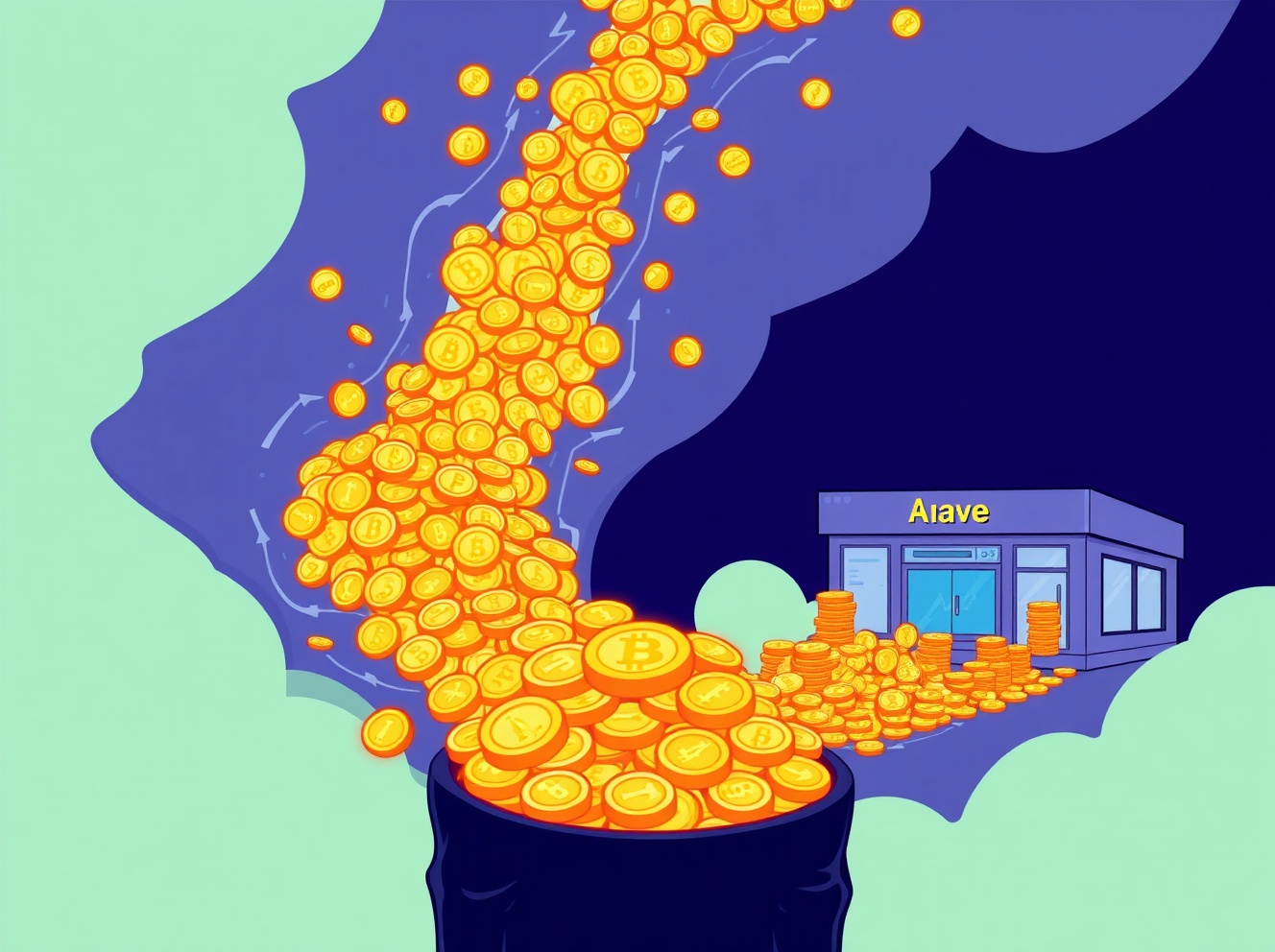
The cryptocurrency world is abuzz with the news of a monumental USDT transfer. A staggering 219,999,998 USDT, valued at approximately $220 million, recently moved from an undisclosed wallet to the decentralized finance (DeFi) lending protocol, Aave. This significant whale movement, flagged by Whale Alert, has ignited widespread speculation across the market.

What Does This Massive USDT Transfer Mean for DeFi?

Such a substantial transaction immediately draws attention due to its sheer size. When nearly a quarter of a billion dollars in Tether (USDT) shifts hands, especially from an ‘unknown’ source to a major DeFi platform like Aave, it often signals significant strategic activity. This isn’t just everyday trading; it’s a whale making a calculated move that could influence market dynamics.

Whale Alert, a well-known blockchain tracking service, brought this particular USDT transfer to light. Their reports are crucial for transparency in a market often characterized by anonymity. For many, these alerts serve as an early indicator of potential market shifts or large-scale financial strategies by big players, providing valuable insights.

Why Aave? Understanding the Destination of This USDT Transfer

Aave is one of the leading decentralized lending and borrowing protocols in the DeFi space. It allows users to deposit cryptocurrencies to earn interest or borrow against their crypto assets. The arrival of such a large sum of USDT could have several implications for the platform and its users, potentially boosting liquidity.

One primary reason for moving such a large sum to Aave could be to utilize its lending pools. Depositing USDT into Aave allows the wallet owner to earn interest, providing a passive income stream. Alternatively, the funds could be used as collateral to borrow other cryptocurrencies, enabling leveraged positions or complex DeFi strategies without directly selling the stablecoin.

Potential Scenarios Behind the $220 Million USDT Transfer

While the exact motive behind this specific USDT transfer remains unknown, several plausible scenarios could explain this colossal movement:

  • Yield Farming: The wallet owner might be looking to participate in lucrative yield farming strategies on Aave or other integrated protocols, seeking higher returns on their substantial assets.
  • Liquidity Provision: Injecting such a large amount of USDT could be aimed at boosting liquidity on Aave, potentially in anticipation of increased borrowing demand or to facilitate larger trades within the ecosystem.
  • Institutional Movement: This could represent an institutional player or a high-net-worth individual rebalancing their portfolio or strategically deploying significant capital into the burgeoning DeFi ecosystem.
  • Strategic Borrowing: The USDT might serve as collateral for a significant loan, perhaps to acquire other volatile assets or fund other ventures without liquidating their stablecoin holdings.

What are the Market Implications of a Major USDT Transfer?

Large USDT transfers, especially to prominent DeFi protocols, often spark discussions about overall market stability and liquidity. While USDT is a stablecoin pegged to the US dollar, massive movements can still subtly impact market sentiment and perceived risk.

Increased liquidity on Aave could potentially lead to lower borrowing rates for certain assets or higher lending rates for USDT, depending on prevailing supply and demand dynamics. For the broader market, such a transaction signifies continued confidence, or at least strategic interest, in the DeFi sector from large capital holders, indicating a robust and active ecosystem.

The recent USDT transfer of nearly $220 million to Aave is a clear reminder of the dynamic and often opaque nature of the cryptocurrency market. While the ‘unknown wallet’ aspect adds an element of mystery, the transaction underscores the growing utility and importance of DeFi platforms like Aave for managing substantial digital assets. Keeping an eye on these whale movements provides valuable insights into potential market trends and the evolving strategies of major crypto players.

Frequently Asked Questions (FAQs)

Q1: What is USDT and why is it important in crypto?

USDT, or Tether, is the largest stablecoin by market capitalization. It is designed to maintain a value pegged to the US dollar, making it a crucial asset for traders and investors seeking stability within the volatile cryptocurrency market. It facilitates quick and low-cost transfers, acting as a bridge between fiat currencies and the crypto ecosystem.

Q2: How does Aave work, and what are its main functions?

Aave is a decentralized lending and borrowing protocol built on various blockchains. Users can deposit cryptocurrencies into liquidity pools to earn interest or use their deposited assets as collateral to borrow other cryptocurrencies. It’s a key component of the DeFi landscape, enabling financial services without traditional intermediaries.

Q3: Who are ‘whales’ in the cryptocurrency market?

In the crypto world, ‘whales’ refer to individuals or entities holding exceptionally large amounts of a particular cryptocurrency. Their large transactions can significantly influence market prices and sentiment, making their movements closely watched by other investors.

Q4: Can a large USDT transfer impact the price of USDT?

Generally, a large USDT transfer itself does not directly impact the price of USDT, as it is a stablecoin designed to remain pegged to $1. However, if such a transfer signals a broader shift in market sentiment or a major liquidation event, it could indirectly influence the demand for USDT or other crypto assets.

Q5: How can I track large crypto transactions like this?

Services like Whale Alert specialize in tracking significant cryptocurrency transactions across various blockchains. Many blockchain explorers also allow users to monitor large transfers. Following reputable crypto news outlets and analytics platforms can also provide insights into these whale movements.

Found this insight into the massive USDT transfer intriguing? Share this article with your network and join the conversation about significant whale movements in DeFi!

To learn more about the latest crypto market trends, explore our article on key developments shaping DeFi institutional adoption.

This post Massive USDT Transfer: $220 Million Moves to Aave from Unknown Wallet first appeared on BitcoinWorld.

Market Opportunity
Threshold Logo
Threshold Price(T)
$0.006953
$0.006953$0.006953
-1.10%
USD
Threshold (T) Live Price Chart
Disclaimer: The articles reposted on this site are sourced from public platforms and are provided for informational purposes only. They do not necessarily reflect the views of MEXC. All rights remain with the original authors. If you believe any content infringes on third-party rights, please contact service@support.mexc.com for removal. MEXC makes no guarantees regarding the accuracy, completeness, or timeliness of the content and is not responsible for any actions taken based on the information provided. The content does not constitute financial, legal, or other professional advice, nor should it be considered a recommendation or endorsement by MEXC.

You May Also Like

CME Group to Launch Solana and XRP Futures Options

CME Group to Launch Solana and XRP Futures Options

The post CME Group to Launch Solana and XRP Futures Options appeared on BitcoinEthereumNews.com. An announcement was made by CME Group, the largest derivatives exchanger worldwide, revealed that it would introduce options for Solana and XRP futures. It is the latest addition to CME crypto derivatives as institutions and retail investors increase their demand for Solana and XRP. CME Expands Crypto Offerings With Solana and XRP Options Launch According to a press release, the launch is scheduled for October 13, 2025, pending regulatory approval. The new products will allow traders to access options on Solana, Micro Solana, XRP, and Micro XRP futures. Expiries will be offered on business days on a monthly, and quarterly basis to provide more flexibility to market players. CME Group said the contracts are designed to meet demand from institutions, hedge funds, and active retail traders. According to Giovanni Vicioso, the launch reflects high liquidity in Solana and XRP futures. Vicioso is the Global Head of Cryptocurrency Products for the CME Group. He noted that the new contracts will provide additional tools for risk management and exposure strategies. Recently, CME XRP futures registered record open interest amid ETF approval optimism, reinforcing confidence in contract demand. Cumberland, one of the leading liquidity providers, welcomed the development and said it highlights the shift beyond Bitcoin and Ethereum. FalconX, another trading firm, added that rising digital asset treasuries are increasing the need for hedging tools on alternative tokens like Solana and XRP. High Record Trading Volumes Demand Solana and XRP Futures Solana futures and XRP continue to gain popularity since their launch earlier this year. According to CME official records, many have bought and sold more than 540,000 Solana futures contracts since March. A value that amounts to over $22 billion dollars. Solana contracts hit a record 9,000 contracts in August, worth $437 million. Open interest also set a record at 12,500 contracts.…
Share
BitcoinEthereumNews2025/09/18 01:39
Microsoft Corp. $MSFT blue box area offers a buying opportunity

Microsoft Corp. $MSFT blue box area offers a buying opportunity

The post Microsoft Corp. $MSFT blue box area offers a buying opportunity appeared on BitcoinEthereumNews.com. In today’s article, we’ll examine the recent performance of Microsoft Corp. ($MSFT) through the lens of Elliott Wave Theory. We’ll review how the rally from the April 07, 2025 low unfolded as a 5-wave impulse followed by a 3-swing correction (ABC) and discuss our forecast for the next move. Let’s dive into the structure and expectations for this stock. Five wave impulse structure + ABC + WXY correction $MSFT 8H Elliott Wave chart 9.04.2025 In the 8-hour Elliott Wave count from Sep 04, 2025, we saw that $MSFT completed a 5-wave impulsive cycle at red III. As expected, this initial wave prompted a pullback. We anticipated this pullback to unfold in 3 swings and find buyers in the equal legs area between $497.02 and $471.06 This setup aligns with a typical Elliott Wave correction pattern (ABC), in which the market pauses briefly before resuming its primary trend. $MSFT 8H Elliott Wave chart 7.14.2025 The update, 10 days later, shows the stock finding support from the equal legs area as predicted allowing traders to get risk free. The stock is expected to bounce towards 525 – 532 before deciding if the bounce is a connector or the next leg higher. A break into new ATHs will confirm the latter and can see it trade higher towards 570 – 593 area. Until then, traders should get risk free and protect their capital in case of a WXY double correction. Conclusion In conclusion, our Elliott Wave analysis of Microsoft Corp. ($MSFT) suggested that it remains supported against April 07, 2025 lows and bounce from the blue box area. In the meantime, keep an eye out for any corrective pullbacks that may offer entry opportunities. By applying Elliott Wave Theory, traders can better anticipate the structure of upcoming moves and enhance risk management in volatile markets. Source: https://www.fxstreet.com/news/microsoft-corp-msft-blue-box-area-offers-a-buying-opportunity-202509171323
Share
BitcoinEthereumNews2025/09/18 03:50
SHIB Price Analysis for February 8

SHIB Price Analysis for February 8

The post SHIB Price Analysis for February 8 appeared on BitcoinEthereumNews.com. Original U.Today article Can traders expect SHIB to test the $0.0000070 range soon
Share
BitcoinEthereumNews2026/02/09 00:26