The post What Is Uniswap’s UNIfication Proposal? Fee Switch, UNI Burns Explained appeared first on Coinpedia Fintech News Uniswap has entered a new chapter afterThe post What Is Uniswap’s UNIfication Proposal? Fee Switch, UNI Burns Explained appeared first on Coinpedia Fintech News Uniswap has entered a new chapter after

What Is Uniswap’s UNIfication Proposal? Fee Switch, UNI Burns Explained

Uniswap Approves UNIfication

The post What Is Uniswap’s UNIfication Proposal? Fee Switch, UNI Burns Explained appeared first on Coinpedia Fintech News

Uniswap has entered a new chapter after its community overwhelmingly approved the long-awaited UNIfication proposal. The vote passed with near-unanimous backing, showing strong confidence in reshaping how value flows through the protocol. More than a governance tweak, the decision marks a shift toward tying Uniswap’s growth more directly to the UNI token itself.

At its core, the proposal reflects a belief that Uniswap has matured enough to move beyond experimentation and into a more sustainable, value-driven phase.

Fee Switch Goes Live, UNI Burn Begins

The biggest change under UNIfication is the activation of Uniswap’s long-discussed protocol fee switch. Until now, trading fees on Uniswap flowed entirely to liquidity providers. Going forward, a portion of those fees will be routed to the protocol and used to burn UNI tokens.

This means Uniswap activity will now directly reduce UNI supply. As trading volume grows, more tokens are removed from circulation, reinforcing a long-term scarcity model. Net sequencer fees from Unichain will also be added to this burn mechanism, strengthening the link between protocol usage and token economics.

After a mandatory two-day timelock, Uniswap will execute a one-time burn of 100 million UNI, an estimate of what could have been burned if the fee switch had existed from the start.

  • Also Read :
  •   Cardano Founder Signals Major Midnight Push, Says 2026 “Is Not Ready”
  •   ,

Internal Restructuring Under Uniswap Labs

Beyond token economics, UNIfication also simplifies Uniswap’s operations. Responsibilities previously split between the Uniswap Foundation and Uniswap Labs will now sit under a single roof. As part of the shift, Uniswap Labs will remove interface, wallet, and API fees, aiming to reduce friction for users and developers.

A recurring UNI-funded growth budget has also been created to support long-term development rather than short-term incentives, signaling a more structured approach to protocol expansion.

Community Reactions Are Split but Engaged

Reaction across crypto has been lively. Crypto user Alexander described the move as a major moment for DeFi, arguing it creates a more level playing field. He noted that liquidity providers unwilling to share a portion of yields now have alternatives like Velodrome and Aerodrome, increasing competition across DeFi.

Others were more skeptical. Another user pushed back on the excitement around token burns, arguing that uncirculated tokens have no real market value and burning them doesn’t meaningfully reduce dilution. In his view, the fee switch is the real story, not the burn headline.

Meanwhile, guto.eth welcomed the change, calling it a defining test for DeFi. He argued that if protocols like Uniswap and Aave can’t turn major upgrades into real value reflected in token prices, the sector risks losing credibility.

Never Miss a Beat in the Crypto World!

Stay ahead with breaking news, expert analysis, and real-time updates on the latest trends in Bitcoin, altcoins, DeFi, NFTs, and more.

bell icon Subscribe to News

FAQs

What is the UNIfication proposal on Uniswap?

UNIfication is a governance upgrade that activates Uniswap’s fee switch, links protocol revenue to UNI burns, and aligns growth more closely with the UNI token.

How does Uniswap’s new fee switch work?

A portion of trading fees now goes to the protocol instead of solely to liquidity providers, and those funds are used to permanently burn and reduce the circulating supply of UNI tokens.

Why is UNIfication important for DeFi overall?

It tests whether major DeFi protocols can convert real usage into sustainable token value, a key step for long-term credibility and growth.

Market Opportunity
UNISWAP Logo
UNISWAP Price(UNI)
$5.806
$5.806$5.806
-0.05%
USD
UNISWAP (UNI) Live Price Chart
Disclaimer: The articles reposted on this site are sourced from public platforms and are provided for informational purposes only. They do not necessarily reflect the views of MEXC. All rights remain with the original authors. If you believe any content infringes on third-party rights, please contact service@support.mexc.com for removal. MEXC makes no guarantees regarding the accuracy, completeness, or timeliness of the content and is not responsible for any actions taken based on the information provided. The content does not constitute financial, legal, or other professional advice, nor should it be considered a recommendation or endorsement by MEXC.

You May Also Like

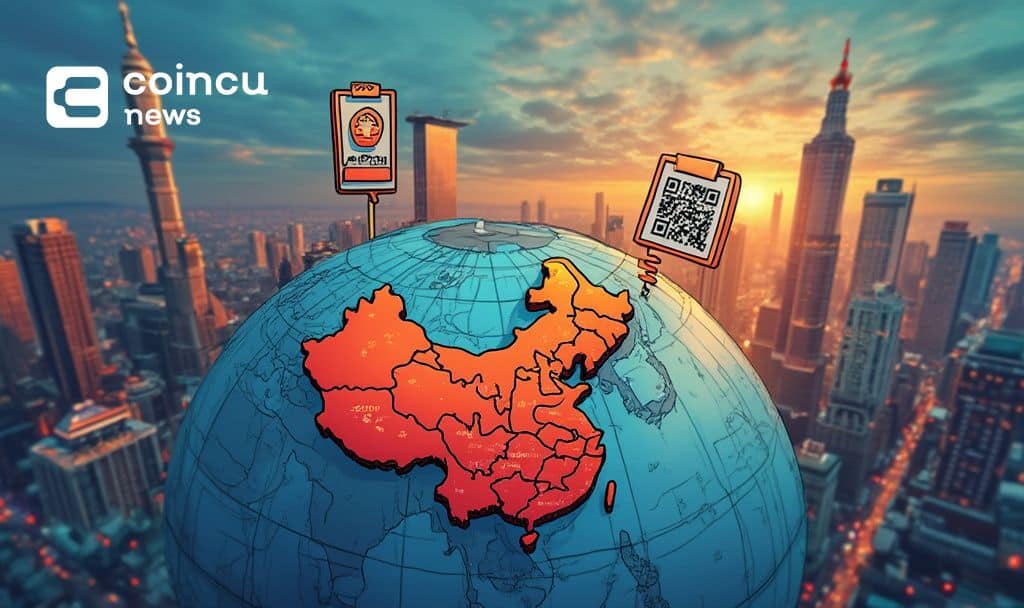
China Launches Cross-Border QR Code Payment Trial
China Launches Cross-Border QR Code Payment Trial

The post China Launches Cross-Border QR Code Payment Trial appeared on BitcoinEthereumNews.com. Key Points: Main event involves China initiating a cross-border QR code payment trial. Alipay and Ant International are key participants. Impact on financial security and regulatory focus on illicit finance. China’s central bank, led by Deputy Governor Lu Lei, initiated a trial of a unified cross-border QR code payment gateway with Alipay and Ant International as participants. This pilot addresses cross-border fund risks, aiming to enhance financial security amid rising money laundering through digital channels, despite muted crypto market reactions. China’s Cross-Border Payment Gateway Trial with Alipay The trial operation of a unified cross-border QR code payment gateway marks a milestone in China’s financial landscape. Prominent entities such as Alipay and Ant International are at the forefront, participating as the initial institutions in this venture. Lu Lei, Deputy Governor of the People’s Bank of China, highlighted the systemic risks posed by increased cross-border fund flows. Changes are expected in the dynamics of digital transactions, potentially enhancing transaction efficiency while tightening regulations around illicit finance. The initiative underscores China’s commitment to bolstering financial security amidst growing global fund movements. “The scale of cross-border fund flows is expanding, and the frequency is accelerating, providing opportunities for risks such as cross-border money laundering and terrorist financing. Some overseas illegal platforms transfer funds through channels such as virtual currencies and underground banks, creating a ‘resonance’ of risks at home and abroad, posing a challenge to China’s foreign exchange management and financial security.” — Lu Lei, Deputy Governor, People’s Bank of China Bitcoin and Impact of China’s Financial Initiatives Did you know? China’s latest initiative echoes the Payment Connect project of June 2025, furthering real-time cross-boundary remittances and expanding its influence on global financial systems. As of September 17, 2025, Bitcoin (BTC) stands at $115,748.72 with a market cap of $2.31 trillion, showing a 0.97%…
Share
BitcoinEthereumNews2025/09/18 05:28
Sberbank issues Russia’s first crypto-secured loan

Sberbank issues Russia’s first crypto-secured loan

The post Sberbank issues Russia’s first crypto-secured loan appeared on BitcoinEthereumNews.com. The largest Russian financial institution by assets, Sberbank,
Share
BitcoinEthereumNews2025/12/26 23:29
Academic Publishing and Fairness: A Game-Theoretic Model of Peer-Review Bias

Academic Publishing and Fairness: A Game-Theoretic Model of Peer-Review Bias

Exploring how biases in the peer-review system impact researchers' choices, showing how principles of fairness relate to the production of scientific knowledge based on topic importance and hardness.
Share
Hackernoon2025/09/17 23:15