TLDR Indian ED raids 21 locations linked to 4th Bloc Consultants in a multi-state crypto scam. Fake crypto platforms promised high returns, luring investors forTLDR Indian ED raids 21 locations linked to 4th Bloc Consultants in a multi-state crypto scam. Fake crypto platforms promised high returns, luring investors for

Indian Authorities Uncover Multi-State Crypto Fraud Scheme Running Since 2015

TLDR

  • Indian ED raids 21 locations linked to 4th Bloc Consultants in a multi-state crypto scam.
  • Fake crypto platforms promised high returns, luring investors for nearly 10 years.
  • Scam operators used social media to recruit victims and launder proceeds via crypto.
  • ED traces illicit funds, crypto wallets, and assets acquired both in India and abroad.

The Enforcement Directorate (ED) has uncovered a large-scale crypto scam that allegedly operated for nearly a decade. Coordinated raids were conducted across 21 locations in Karnataka, Maharashtra, and Delhi on December 18, 2025, as part of an ongoing investigation. The scam involved 4th Bloc Consultants and its associates, who are accused of running fraudulent crypto investment platforms. These platforms promised high returns but were, in fact, part of a Ponzi scheme that misled both Indian and foreign investors.

Fake Crypto Platforms and Ponzi Scheme

According to the ED, the perpetrators created professional-looking websites that closely mimicked legitimate crypto trading platforms. These sites featured dashboards, account balances, and transaction histories that appeared authentic to potential investors. However, investigators found no real trading activity behind these platforms.

Instead, funds from new investors were recycled to pay returns to earlier participants, typical of a Ponzi scheme. The operation thrived by creating a façade of legitimacy and encouraging larger investments from individuals.

The scam operators also misused the photographs of public figures and crypto commentators without their consent to build trust. This tactic was used to give the platforms an appearance of credibility. Social media played a key role in luring investors, with platforms like Facebook, Instagram, WhatsApp, and Telegram being used to promote these fake investment opportunities. The operators used referral bonuses to entice users into recruiting more people into the scheme, thus expanding the network.

Proceeds of Crime Laundered Through Crypto and Overseas Accounts

The ED investigation has revealed that the proceeds of the scam were funneled through a complex web of financial channels. The illicit funds were laundered via crypto wallets, foreign bank accounts, shell companies, and hawala networks. Investigators traced these funds to peer-to-peer crypto transfers and subsequent conversions into cash, which was then parked in bank accounts.

During the raids, the ED identified multiple crypto wallet addresses allegedly controlled by the suspects. Additionally, assets acquired in India and abroad using the proceeds from the scam were seized. Authorities are also investigating the involvement of foreign entities that were used to conceal the money trail. These entities helped mask the true scale of the operation, which spanned across multiple countries.

A Scam That Dates Back to 2015

The scam’s operations date back to at least 2015, and it evolved over time to evade detection. As scrutiny of cryptocurrency markets increased, the operators adapted their tactics to stay under the radar. The scam continued to grow, attracting more victims both in India and internationally.

By the time the ED initiated its raids, the operation had become a complex network of fraud, involving large sums of money and multiple financial layers designed to obscure the flow of illicit funds.

Despite the authorities’ crackdown, the investigation is ongoing. As the ED continues to trace the funds and uncover more details about the scam, it is clear that the perpetrators had a well-established operation in place for almost a decade. The case has raised concerns about the growing use of cryptocurrencies in illicit activities, underscoring the need for stronger regulation and monitoring of crypto markets to protect investors from such fraud schemes.

The post Indian Authorities Uncover Multi-State Crypto Fraud Scheme Running Since 2015 appeared first on CoinCentral.

Market Opportunity
Multichain Logo
Multichain Price(MULTI)
$0.03704
$0.03704$0.03704
+4.16%
USD
Multichain (MULTI) Live Price Chart
Disclaimer: The articles reposted on this site are sourced from public platforms and are provided for informational purposes only. They do not necessarily reflect the views of MEXC. All rights remain with the original authors. If you believe any content infringes on third-party rights, please contact service@support.mexc.com for removal. MEXC makes no guarantees regarding the accuracy, completeness, or timeliness of the content and is not responsible for any actions taken based on the information provided. The content does not constitute financial, legal, or other professional advice, nor should it be considered a recommendation or endorsement by MEXC.

You May Also Like

Building a DEXScreener Clone: A Step-by-Step Guide

Building a DEXScreener Clone: A Step-by-Step Guide

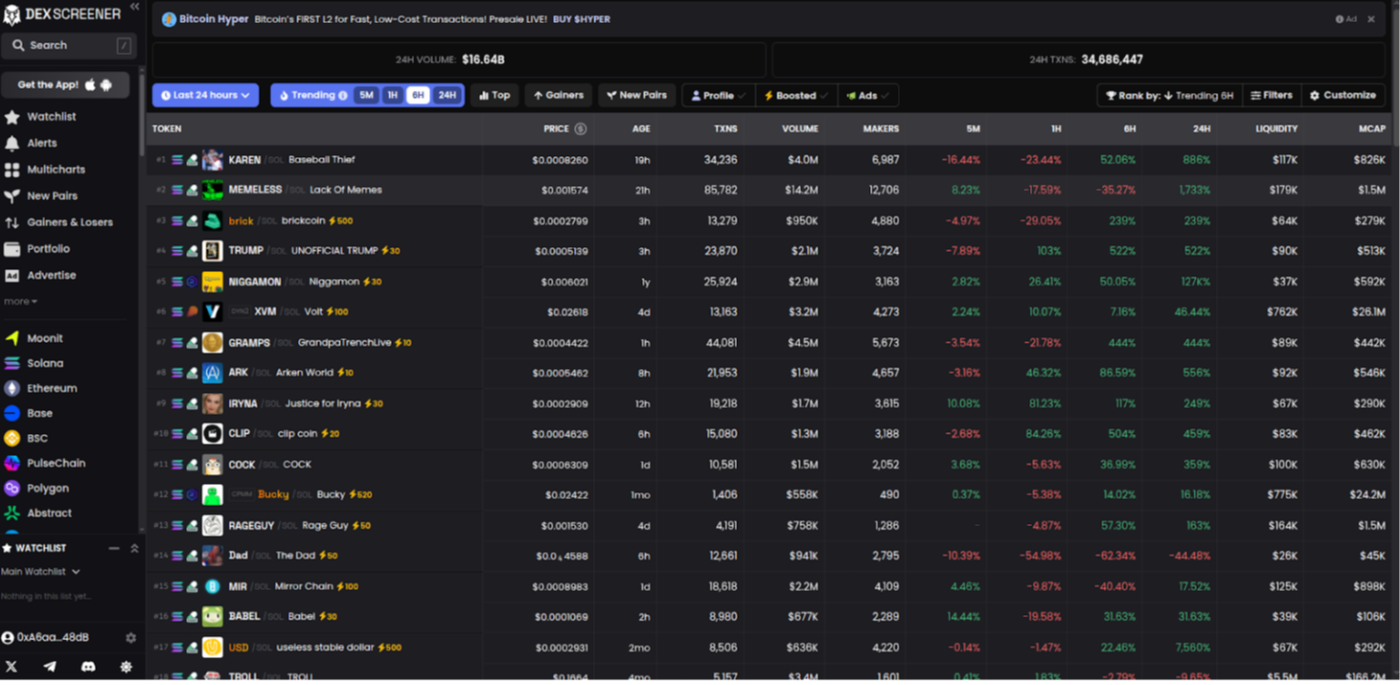
DEX Screener is used by crypto traders who need access to on-chain data like trading volumes, liquidity, and token prices. This information allows them to analyze trends, monitor new listings, and make informed investment decisions. In this tutorial, I will build a DEXScreener clone from scratch, covering everything from the initial design to a functional app. We will use Streamlit, a Python framework for building full-stack apps.
Share
Hackernoon2025/09/18 15:05
China Blocks Nvidia’s RTX Pro 6000D as Local Chips Rise

China Blocks Nvidia’s RTX Pro 6000D as Local Chips Rise

The post China Blocks Nvidia’s RTX Pro 6000D as Local Chips Rise appeared on BitcoinEthereumNews.com. China Blocks Nvidia’s RTX Pro 6000D as Local Chips Rise China’s internet regulator has ordered the country’s biggest technology firms, including Alibaba and ByteDance, to stop purchasing Nvidia’s RTX Pro 6000D GPUs. According to the Financial Times, the move shuts down the last major channel for mass supplies of American chips to the Chinese market. Why Beijing Halted Nvidia Purchases Chinese companies had planned to buy tens of thousands of RTX Pro 6000D accelerators and had already begun testing them in servers. But regulators intervened, halting the purchases and signaling stricter controls than earlier measures placed on Nvidia’s H20 chip. Image: Nvidia An audit compared Huawei and Cambricon processors, along with chips developed by Alibaba and Baidu, against Nvidia’s export-approved products. Regulators concluded that Chinese chips had reached performance levels comparable to the restricted U.S. models. This assessment pushed authorities to advise firms to rely more heavily on domestic processors, further tightening Nvidia’s already limited position in China. China’s Drive Toward Tech Independence The decision highlights Beijing’s focus on import substitution — developing self-sufficient chip production to reduce reliance on U.S. supplies. “The signal is now clear: all attention is focused on building a domestic ecosystem,” said a representative of a leading Chinese tech company. Nvidia had unveiled the RTX Pro 6000D in July 2025 during CEO Jensen Huang’s visit to Beijing, in an attempt to keep a foothold in China after Washington restricted exports of its most advanced chips. But momentum is shifting. Industry sources told the Financial Times that Chinese manufacturers plan to triple AI chip production next year to meet growing demand. They believe “domestic supply will now be sufficient without Nvidia.” What It Means for the Future With Huawei, Cambricon, Alibaba, and Baidu stepping up, China is positioning itself for long-term technological independence. Nvidia, meanwhile, faces…
Share
BitcoinEthereumNews2025/09/18 01:37
Ripple-Backed Evernorth Faces $220M Loss on XRP Holdings Amid Market Slump

Ripple-Backed Evernorth Faces $220M Loss on XRP Holdings Amid Market Slump

TLDR Evernorth invested $947M in XRP, now valued at $724M, a loss of over $220M. XRP’s price dropped 16% in the last 30 days, leading to Evernorth’s paper losses
Share
Coincentral2025/12/26 03:56