How Circle’s IPO and USDC Expansion Shaped Digital Finance in 2025
TLDR:
- Circle’s IPO reinforced transparency and regulatory trust for stablecoin adoption.
- USDC expanded to 30 blockchains, boosting liquidity and crosschain transfers.
- Arc blockchain enabled enterprise-grade financial workflows and onchain settlement.
- Applications like CPN and StableFX facilitated faster global payments and FX operations.
Circle’s IPO and stablecoin expansion in 2025 played a pivotal role in advancing internet-native financial infrastructure.
By combining regulatory alignment, asset growth, and technological innovation, Circle strengthened the adoption of digital dollars across global markets.
The company focused on integrating USDC, EURC, and USYC into mainstream financial workflows, moving digital assets from experimental tools to operational instruments.
The IPO, coupled with conditional approval for a national trust charter, reinforced institutional confidence and transparency.
Circle leveraged this momentum to scale USDC across multiple blockchains, expand liquidity, and integrate it into cross-border payments, FX, and treasury operations. These initiatives positioned Circle as a central player in modernizing digital finance.
IPO and Regulatory Foundations
Circle’s IPO marked a critical step toward operating at the core of regulated financial markets. Conditional approval for the First National Digital Currency Bank, N.A., strengthened federal oversight over USDC reserves, supporting safe custody and fiduciary services for institutional clients.
Regulatory clarity in the U.S. under the GENIUS Act established fully reserved stablecoins as a legal foundation for financial infrastructure.
In Europe, MiCA-compliant stablecoins, including USDC and EURC, gained acceptance, while Dubai and Abu Dhabi recognized Circle’s digital assets for cross-border payments and treasury operations.
These frameworks encouraged banks, fintechs, and exchanges to integrate stablecoins into their core systems.
Circle’s platforms, such as CPN and Circle Gateway, incorporated compliance tools, enabling partners to adopt digital assets confidently without building separate infrastructure.
USDC Expansion and Market Integration
USDC experienced substantial growth throughout 2025, with market capitalization reaching $77 billion by December. Native support expanded across 30 blockchains, while CCTP enabled crosschain transfers, making USDC a cornerstone of internet-native liquidity. 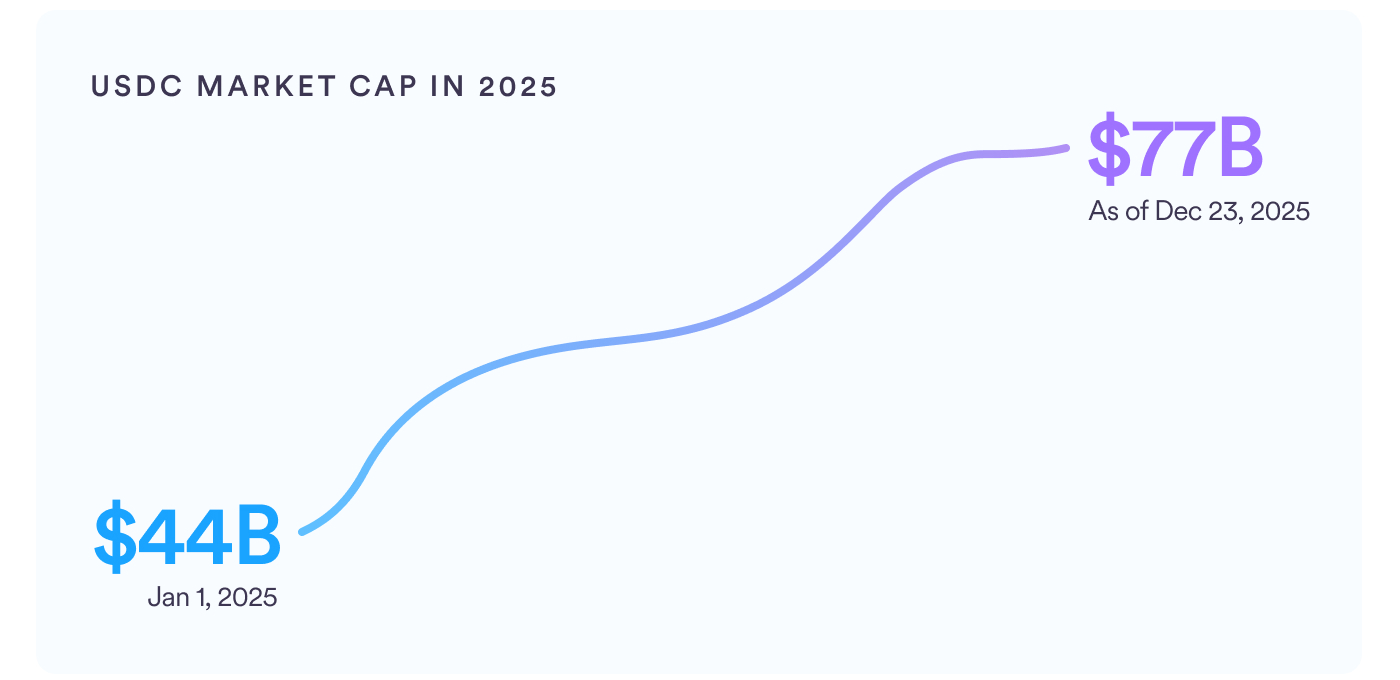
Source: Circle
Exchanges such as Binance, Kraken, Bybit, and OKX increased USDC depth and trading volumes, improving market resilience and execution efficiency.
EURC also gained prominence as Europe’s largest euro-denominated stablecoin under MiCA, supporting payments and FX flows.
USYC, Circle’s tokenized money market fund, saw assets grow to $1.54 billion, providing institutional-grade, yield-bearing collateral with real-time onchain settlement.
This expansion strengthened Circle’s role as a provider of operational cash and collateral for global markets. Financial institutions leveraged USDC and USYC for treasury operations, cross-border settlement, and capital market workflows.
Applications, Infrastructure, and Real-World Use
Circle extended the utility of USDC and other assets through applications like CPN, StableFX, Mint, Gateway, and Wallets.
CPN enabled near-instant cross-border payments, reducing operational delays for businesses and remittance services. StableFX offered onchain FX execution for multiple currencies, including regional stablecoins.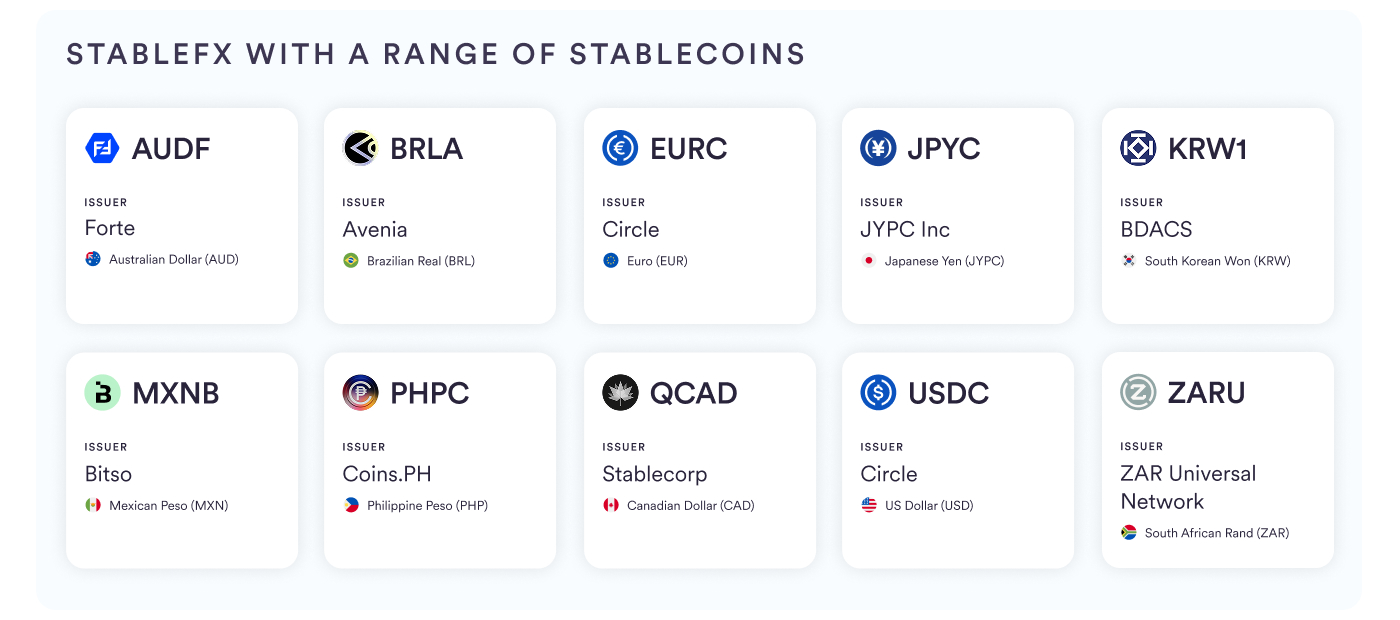
Source: Circle
Arc, Circle’s EVM-compatible Layer-1 blockchain, provided a high-performance environment for real-world economic activity. Institutions and developers tested financial workflows, credit, FX, and autonomous agent payments.
AI-driven payments and machine-to-machine transactions demonstrated new capabilities for programmable finance.
Real-world adoption also included payroll, remittances, and small-business finance. Partners such as Nubank and Thunes used USDC to deliver faster, more reliable services to users, while the Circle Foundation advanced financial inclusion in underserved communities.
Through its IPO, regulatory compliance, and USDC expansion, Circle positioned itself as a central driver of digital finance in 2025.
Its full-stack ecosystem, combining digital assets, applications, and Arc blockchain, established a foundation for scalable, internet-native financial infrastructure.
The post How Circle’s IPO and USDC Expansion Shaped Digital Finance in 2025 appeared first on Blockonomi.
You May Also Like

China Blocks Nvidia’s RTX Pro 6000D as Local Chips Rise

Ripple-Backed Evernorth Faces $220M Loss on XRP Holdings Amid Market Slump