The post EU backs offline and online digital euro payments appeared on BitcoinEthereumNews.com. European Union governments agreed to support both offline and onlineThe post EU backs offline and online digital euro payments appeared on BitcoinEthereumNews.com. European Union governments agreed to support both offline and online

EU backs offline and online digital euro payments

European Union governments agreed to support both offline and online versions of a digital euro, marking a key step in negotiations over the bloc’s future public digital money. The decision came as the Council of the European Union adopted its formal negotiating position, allowing talks with the European Parliament to advance.

The Council framed the digital euro as a complement to cash, not a replacement. At the same time, it tied the project to new rules aimed at strengthening the role of physical euro banknotes and coins across member states.

Offline and online payments move together

Under the Council’s position, the digital euro would launch with both online and offline functionality. Online payments would rely on standard digital infrastructure and authorised intermediaries. Offline payments, by contrast, would work without an internet connection and sync later, allowing transactions during outages or in low-connectivity areas.

This approach reflects a shift in the policy debate. Earlier discussions focused heavily on offline use as a way to mirror cash. However, governments now argue that offering both modes together improves usability while keeping resilience and privacy goals in scope.

In addition, the Council endorsed limits on how much digital euro individuals can hold. The European Central Bank would set these caps and review them regularly, aiming to prevent large shifts of deposits away from commercial banks while still enabling everyday payments.

Privacy, fees, and cash protections

Alongside functionality, the Council addressed privacy and cost concerns. It supported a design where basic digital euro services remain free for users. Payment providers could charge only for optional features, and even then under defined conditions.

Moreover, the Council backed transitional caps on merchant and interchange fees. These caps would apply for several years after launch and later align with actual processing costs. Lawmakers argued this structure would support merchant adoption while avoiding new payment monopolies.

At the same time, governments linked the digital euro file to stronger cash protections. The Council called for clearer rules to ensure cash acceptance across the euro area, subject to limited exceptions. Member states would also need to monitor access to cash and prepare contingency plans for disruptions to electronic payments.

Separately, European data protection experts continued to examine whether an offline digital euro could achieve cash-like privacy. Their recent technical work suggested such a model remains possible but requires careful cryptographic design and realistic security assumptions.

With the Council’s position now set, negotiations with the European Parliament will determine the final balance between privacy, resilience, and financial stability as the digital euro project enters its next phase.

Source: https://coinpaper.com/13288/eu-backs-digital-euro-with-offline-and-online-use-as-talks-move-forward
Market Opportunity
FUTURECOIN Logo
FUTURECOIN Price(FUTURE)
$0,12103
$0,12103$0,12103
-0,18%
USD
FUTURECOIN (FUTURE) Live Price Chart
Disclaimer: The articles reposted on this site are sourced from public platforms and are provided for informational purposes only. They do not necessarily reflect the views of MEXC. All rights remain with the original authors. If you believe any content infringes on third-party rights, please contact service@support.mexc.com for removal. MEXC makes no guarantees regarding the accuracy, completeness, or timeliness of the content and is not responsible for any actions taken based on the information provided. The content does not constitute financial, legal, or other professional advice, nor should it be considered a recommendation or endorsement by MEXC.

You May Also Like

Building a DEXScreener Clone: A Step-by-Step Guide

Building a DEXScreener Clone: A Step-by-Step Guide

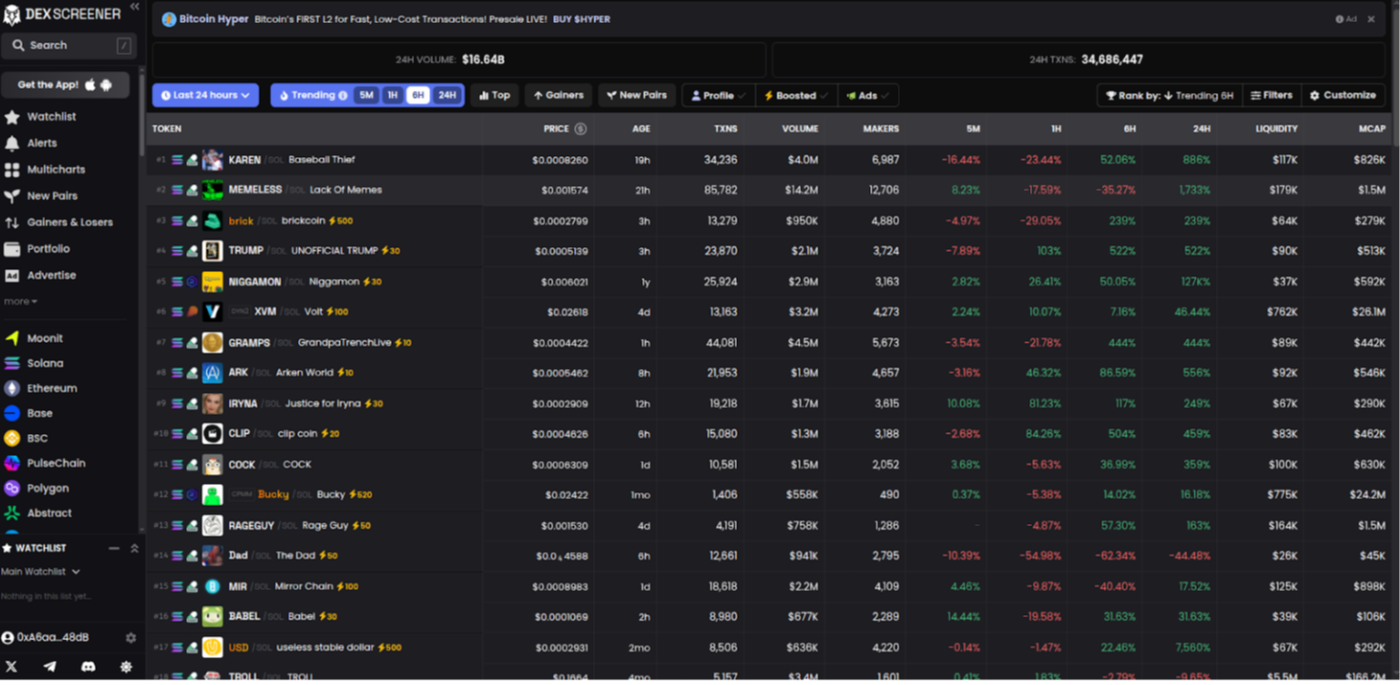
DEX Screener is used by crypto traders who need access to on-chain data like trading volumes, liquidity, and token prices. This information allows them to analyze trends, monitor new listings, and make informed investment decisions. In this tutorial, I will build a DEXScreener clone from scratch, covering everything from the initial design to a functional app. We will use Streamlit, a Python framework for building full-stack apps.
Share
Hackernoon2025/09/18 15:05
China Blocks Nvidia’s RTX Pro 6000D as Local Chips Rise

China Blocks Nvidia’s RTX Pro 6000D as Local Chips Rise

The post China Blocks Nvidia’s RTX Pro 6000D as Local Chips Rise appeared on BitcoinEthereumNews.com. China Blocks Nvidia’s RTX Pro 6000D as Local Chips Rise China’s internet regulator has ordered the country’s biggest technology firms, including Alibaba and ByteDance, to stop purchasing Nvidia’s RTX Pro 6000D GPUs. According to the Financial Times, the move shuts down the last major channel for mass supplies of American chips to the Chinese market. Why Beijing Halted Nvidia Purchases Chinese companies had planned to buy tens of thousands of RTX Pro 6000D accelerators and had already begun testing them in servers. But regulators intervened, halting the purchases and signaling stricter controls than earlier measures placed on Nvidia’s H20 chip. Image: Nvidia An audit compared Huawei and Cambricon processors, along with chips developed by Alibaba and Baidu, against Nvidia’s export-approved products. Regulators concluded that Chinese chips had reached performance levels comparable to the restricted U.S. models. This assessment pushed authorities to advise firms to rely more heavily on domestic processors, further tightening Nvidia’s already limited position in China. China’s Drive Toward Tech Independence The decision highlights Beijing’s focus on import substitution — developing self-sufficient chip production to reduce reliance on U.S. supplies. “The signal is now clear: all attention is focused on building a domestic ecosystem,” said a representative of a leading Chinese tech company. Nvidia had unveiled the RTX Pro 6000D in July 2025 during CEO Jensen Huang’s visit to Beijing, in an attempt to keep a foothold in China after Washington restricted exports of its most advanced chips. But momentum is shifting. Industry sources told the Financial Times that Chinese manufacturers plan to triple AI chip production next year to meet growing demand. They believe “domestic supply will now be sufficient without Nvidia.” What It Means for the Future With Huawei, Cambricon, Alibaba, and Baidu stepping up, China is positioning itself for long-term technological independence. Nvidia, meanwhile, faces…
Share
BitcoinEthereumNews2025/09/18 01:37
Ripple-Backed Evernorth Faces $220M Loss on XRP Holdings Amid Market Slump

Ripple-Backed Evernorth Faces $220M Loss on XRP Holdings Amid Market Slump

TLDR Evernorth invested $947M in XRP, now valued at $724M, a loss of over $220M. XRP’s price dropped 16% in the last 30 days, leading to Evernorth’s paper losses
Share
Coincentral2025/12/26 03:56