

Funding in Africa: Kenya, Nigeria slump as Benin and Ivory Coast break into Big 4
The African Big 4 tech startup ecosystems list experienced a rejigging in February 2026, with the two largest ecosystems on the continent falling off the rankings in the venture funding scene.
Kenya, which has been the continent’s most preferred tech investment destination, did not record a single big round in February. Save for the acknowledgement of its glaring absence, the country would not have been mentioned.
This is quite surprising for a country which has been the choicest destination for venture funding for three consecutive years. Powered by a widespread adoption of clean energy and solar and electric-powered systems, energy companies quickly became the toast of venture capitalists as they jostled to obtain a share of East Africa’s clean energy market.
In 2024, Kenya emerged as the most preferred destination for venture funding in Africa, despite not minting any unicorns in a year in which three new unicorns were produced on the continent. During the year, startups in the East African country raised $638 million, representing 29 per cent of the total $2.2 billion raised on the continent.
The numbers were even more impressive in 2025 when startups in the East African country raised $984 million, representing a 54.2 per cent increase from the $638 million raised in 2024, and nearly a third of total funding into the continent (30.7 per cent).
However, after the first two months of 2026, Kenya has contributed less than 4 per cent of the total funding in Africa. In contrast, by February 2025, Kenyan startups, PowerGen and Hakki Africa, had secured $50 million and $13 million, respectively. Added to other smaller rounds, by this time in 2025, Kenya already holds a 20 per cent share of investments into Africa.
Indeed, the country is yet to record a major deal this year, prompting questions around the possibility of hitting an inflexion point after three years at the top. Despite Kenya’s leadership in 2025, a Technext analysis highlighted a general decline in the number of startups that received funding, with only 75 startups raising $100k or more.
This represents a 22% decline and the lowest performance on this metric among the Big Four.
Essentially, a bulk of Kenya’s total was down to large rounds by bigger energy companies like d.light, Sun King, M-Kopa, Burn and PowerGen. With those large rounds not forthcoming, the country appears to be lagging.
The story is quite different for Nigeria, where the defence technology startup, Terra Industries, secured a $22 million investment. This marks Nigeria’s only large deal of the month. While $22 million was quite large, it nonetheless didn’t earn the country a place in the top 4 for the month.
This is not surprising however, as the country’s share of venture funding has continued to decline, from third in 2024 to fourth in 2025.
Startups in Nigeria raised $343 million in 2025, a decline of 16.3 per cent from the $410 million raised in 2024. It also means the country was only responsible for 10.7 per cent of the $3.2 billion raised across the continent during the year. This is a sharp decline from the previous year, when Nigeria was responsible for 18.6 per cent of the $2.2 billion raised on the continent.
Nonetheless, the country appears to be rebounding in 2026, with both mobility company, MAX, and defence tech startup, Terra Industries, raising $24 million and $34 million respectively. Coupled with smaller rounds, Nigeria is responsible for around 16 per cent of total funding so far in 2026.
See also: Nigerian startups raised $343 million in 2025 as venture funding declined by 16.3%
Aside from Kenya and Nigeria, here are the other countries in Africa’s Big 4 for February
African startups raised $272 million in February 2026. At the top of the contributions list is Egypt which has kept up its impressive run of 2025 when it finally displaced Nigeria in second place after coming close in 2024.
Startups in the country raised $64 million in February to uphold their leadership on the continent.
Benin, an unlikely candidate, emerged second in February. The West African country’s position was secured by just one venture, with Spiro announcing a $57 million in debt funding. The round, raised across two transactions, will be used to build more battery swap stations and provide more electric motorcycles to riders in Africa.
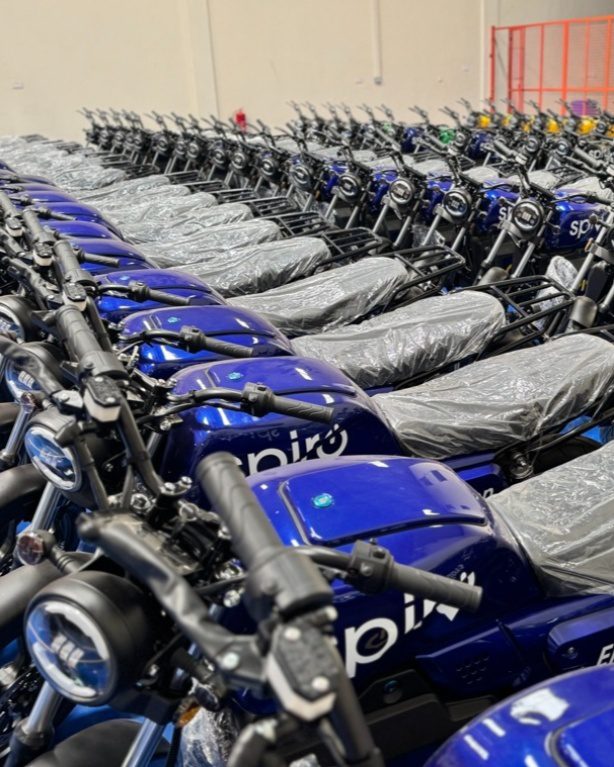 Fleets if e-bikes from the Spiro’s Ekon series
Another unlikely candidate, the Ivory Coast, emerged third on the log. Just like Benin, its place was secured by one round, with e-mobility platform, GoCab announcing $45 million in equity and debt financing. The new funding will be used to expand its “drive-to-own” model across emerging markets.
South Africa emerged as the last of February’s Big 4, attracting $44 million during the month. Two startups are responsible for the country’s total: Enko Education which secured $22 million in debt; and Lula which secured $21 million from DFI FMO.
From a regional point of view, West Africa emerged as the most dominant region with 53 per cent of all the funding. Next is the Northern African region with 24 per cent of February’s funding. Southern Africa contributed 21 per cent while East Africa which was the choice destination in 2025 has just 3 per cent of the total.
The post Funding in Africa: Kenya, Nigeria slump as Benin and Ivory Coast break into Big 4 first appeared on Technext.
You May Also Like

Leonardo AI Unveils Comprehensive Image Editing Suite with Six Model Options

RBA warns high and rising risk of severe shock to world economy amid Iran war

