There is a lot of advantages of blockchain technology but its transparency, combined with the deterministic nature of computers is a stumbling block in creating true on-chain randomness. Yet, random number generators (RNGs) are essential tools for solving various algorithmic problems. Here we will discuss the approach Oasis has adopted to ensure smart contract developers can integrate randomness into their applications in a hassle-free manner. What is RNG As deterministic machines, computers function by following predictable instructions. So, randomness is never truly possible. However, almost random numbers can be generated with external inputs or complex algorithms. But how feasible is this? Not very. For example, a deterministic RNG can only mimic randomness and produce pseudo-random outputs using algorithms transforming a starting “seed” value into sequences. If the “seed” is known, it all becomes predictable. On the other hand, non-deterministic RNG can generate completely random numbers by using erratic physical phenomena, like dice rolls or photon scattering, as a workaround for the computer reading predictable patterns. Why blockchains need RNG? When you try to replicate RNG in the smart contract framework, it gets interesting. Whether you are developing dApps for the web3 at large or the cryptoAI space, you will need provable fairness or unbiased and tamperproof outcomes based on unpredictable inputs. Even from a core blockchain point of view, RNG plays a crucial role in cryptographic operations. It produces the unique keys or values needed for securing transactions, encrypting data, or authenticating users, ensuring that outputs cannot be guessed or replicated. Without secure on-chain RNG, reverse engineering of keys, outcome manipulation and all kinds of exploits become possible. Now, blockchain technology also use deterministic rules, and all nodes reaching a consensus is a non-negotiable criteria. This makes on-chain randomness tricky but it is still doable. For example, verifiable random functions, commit-reveal schemes, or the method Oasis has adopted — using Verifiable Random Function (VRF) and some other cryptographic primitives. Let’s now take a closer look into Oasis. How Oasis RNG works? With its default focus on smart privacy and scalability, Oasis uses its confidential EVM runtime, Sapphire to streamline RNG through its randomBytes precompile. By abstracting a simple Solidity function, any smart contract developer can integrate randomness into their applications without dealing with the complexities of blockchain RNG. It basically works like this. Generating the Per-Block Root RNG Sapphire communicates with a key manager runtime to generate secret keys. The key manager supports multiple kinds of keys, some of which are long-term and some of which are ephemeral. The ephemeral keys are used for encrypting transactions and also the RNG. To improve security, these keys are never persisted anywhere and are rotated each epoch. This means fresh keys are generated, and after a while, old keys get securely erased and cannot be recovered even if any component is later compromised. The RNG exposed to Sapphire contracts is initialized on every block. Each block uses private ephemeral entropy obtained from the key manager runtime. Only remotely attested Sapphire instances can obtain this private entropy inside the TEE, which ensures that no external observers can learn anything about the RNG state. Next, this entropy is processed and used as a root VRF key. To turn this entropy into a usable key, Sapphire employs SHA-3-derived algorithms like TupleHash, KMAC256, and cSHAKE. These functions process the epoch-specific entropy from the key manager runtime, producing a unique per-block root RNG that anchors all subsequent randomness in the block with consistency and security. Domain Separation for Per-Transaction RNGs The per-block root RNG alone isn’t enough. Each transaction needs its own private RNG, which is where domain separation comes in. Sapphire builds on the key manager’s output by using Merlin transcripts to initialize per-transaction RNGs from the root RNG, customizing randomness for individual interactions using transaction-specific data. This customization is implemented in the Rust Runtime SDK used to build Sapphire, which handles the VRF and domain separation schemes. Together with the key manager’s private entropy, it ensures private, unbiased, and unpredictable outputs are exposed to developers via the randomBytes precompile. Code examples Basic Random Number Generation This snippet shows how to generate a 32-byte random value, ideal for straightforward RNG needs in a dApp like a poker game. bytes memory randomPad = Sapphire.randomBytes(32, ""); Random Number for Signing Key Pair This snippet uses randomBytes to seed a signing key pair generation, which you can use as a part of a more complex RNG-driven mechanism while ensuring cryptographic security. Sapphire.SigningAlg alg = Sapphire.SigningAlg.Ed25519Pure;bytes memory pk;bytes memory sk;(pk, sk) = Sapphire.generateSigningKeyPair(alg, Sapphire.randomBytes(32, "")); Key Resources: Sapphire docsSapphire repositoryrandomBytesOasis ROFLOasis playground for demo dApps Have a question or need help? Join our Discord and head over to the #dev-central channel. Originally published at https://dev.to on September 22, 2025. Secure On-chain Randomness By Oasis Is A Great Way To Answer The Blockchain Need For RNG was originally published in Coinmonks on Medium, where people are continuing the conversation by highlighting and responding to this storyThere is a lot of advantages of blockchain technology but its transparency, combined with the deterministic nature of computers is a stumbling block in creating true on-chain randomness. Yet, random number generators (RNGs) are essential tools for solving various algorithmic problems. Here we will discuss the approach Oasis has adopted to ensure smart contract developers can integrate randomness into their applications in a hassle-free manner. What is RNG As deterministic machines, computers function by following predictable instructions. So, randomness is never truly possible. However, almost random numbers can be generated with external inputs or complex algorithms. But how feasible is this? Not very. For example, a deterministic RNG can only mimic randomness and produce pseudo-random outputs using algorithms transforming a starting “seed” value into sequences. If the “seed” is known, it all becomes predictable. On the other hand, non-deterministic RNG can generate completely random numbers by using erratic physical phenomena, like dice rolls or photon scattering, as a workaround for the computer reading predictable patterns. Why blockchains need RNG? When you try to replicate RNG in the smart contract framework, it gets interesting. Whether you are developing dApps for the web3 at large or the cryptoAI space, you will need provable fairness or unbiased and tamperproof outcomes based on unpredictable inputs. Even from a core blockchain point of view, RNG plays a crucial role in cryptographic operations. It produces the unique keys or values needed for securing transactions, encrypting data, or authenticating users, ensuring that outputs cannot be guessed or replicated. Without secure on-chain RNG, reverse engineering of keys, outcome manipulation and all kinds of exploits become possible. Now, blockchain technology also use deterministic rules, and all nodes reaching a consensus is a non-negotiable criteria. This makes on-chain randomness tricky but it is still doable. For example, verifiable random functions, commit-reveal schemes, or the method Oasis has adopted — using Verifiable Random Function (VRF) and some other cryptographic primitives. Let’s now take a closer look into Oasis. How Oasis RNG works? With its default focus on smart privacy and scalability, Oasis uses its confidential EVM runtime, Sapphire to streamline RNG through its randomBytes precompile. By abstracting a simple Solidity function, any smart contract developer can integrate randomness into their applications without dealing with the complexities of blockchain RNG. It basically works like this. Generating the Per-Block Root RNG Sapphire communicates with a key manager runtime to generate secret keys. The key manager supports multiple kinds of keys, some of which are long-term and some of which are ephemeral. The ephemeral keys are used for encrypting transactions and also the RNG. To improve security, these keys are never persisted anywhere and are rotated each epoch. This means fresh keys are generated, and after a while, old keys get securely erased and cannot be recovered even if any component is later compromised. The RNG exposed to Sapphire contracts is initialized on every block. Each block uses private ephemeral entropy obtained from the key manager runtime. Only remotely attested Sapphire instances can obtain this private entropy inside the TEE, which ensures that no external observers can learn anything about the RNG state. Next, this entropy is processed and used as a root VRF key. To turn this entropy into a usable key, Sapphire employs SHA-3-derived algorithms like TupleHash, KMAC256, and cSHAKE. These functions process the epoch-specific entropy from the key manager runtime, producing a unique per-block root RNG that anchors all subsequent randomness in the block with consistency and security. Domain Separation for Per-Transaction RNGs The per-block root RNG alone isn’t enough. Each transaction needs its own private RNG, which is where domain separation comes in. Sapphire builds on the key manager’s output by using Merlin transcripts to initialize per-transaction RNGs from the root RNG, customizing randomness for individual interactions using transaction-specific data. This customization is implemented in the Rust Runtime SDK used to build Sapphire, which handles the VRF and domain separation schemes. Together with the key manager’s private entropy, it ensures private, unbiased, and unpredictable outputs are exposed to developers via the randomBytes precompile. Code examples Basic Random Number Generation This snippet shows how to generate a 32-byte random value, ideal for straightforward RNG needs in a dApp like a poker game. bytes memory randomPad = Sapphire.randomBytes(32, ""); Random Number for Signing Key Pair This snippet uses randomBytes to seed a signing key pair generation, which you can use as a part of a more complex RNG-driven mechanism while ensuring cryptographic security. Sapphire.SigningAlg alg = Sapphire.SigningAlg.Ed25519Pure;bytes memory pk;bytes memory sk;(pk, sk) = Sapphire.generateSigningKeyPair(alg, Sapphire.randomBytes(32, "")); Key Resources: Sapphire docsSapphire repositoryrandomBytesOasis ROFLOasis playground for demo dApps Have a question or need help? Join our Discord and head over to the #dev-central channel. Originally published at https://dev.to on September 22, 2025. Secure On-chain Randomness By Oasis Is A Great Way To Answer The Blockchain Need For RNG was originally published in Coinmonks on Medium, where people are continuing the conversation by highlighting and responding to this story

Secure On-chain Randomness By Oasis Is A Great Way To Answer The Blockchain Need For RNG

2025/09/23 16:40
5 min read
For feedback or concerns regarding this content, please contact us at crypto.news@mexc.com

There is a lot of advantages of blockchain technology but its transparency, combined with the deterministic nature of computers is a stumbling block in creating true on-chain randomness. Yet, random number generators (RNGs) are essential tools for solving various algorithmic problems. Here we will discuss the approach Oasis has adopted to ensure smart contract developers can integrate randomness into their applications in a hassle-free manner.

What is RNG

As deterministic machines, computers function by following predictable instructions. So, randomness is never truly possible. However, almost random numbers can be generated with external inputs or complex algorithms. But how feasible is this?

Not very. For example, a deterministic RNG can only mimic randomness and produce pseudo-random outputs using algorithms transforming a starting “seed” value into sequences. If the “seed” is known, it all becomes predictable.

On the other hand, non-deterministic RNG can generate completely random numbers by using erratic physical phenomena, like dice rolls or photon scattering, as a workaround for the computer reading predictable patterns.

Why blockchains need RNG?

When you try to replicate RNG in the smart contract framework, it gets interesting. Whether you are developing dApps for the web3 at large or the cryptoAI space, you will need provable fairness or unbiased and tamperproof outcomes based on unpredictable inputs.

Even from a core blockchain point of view, RNG plays a crucial role in cryptographic operations. It produces the unique keys or values needed for securing transactions, encrypting data, or authenticating users, ensuring that outputs cannot be guessed or replicated. Without secure on-chain RNG, reverse engineering of keys, outcome manipulation and all kinds of exploits become possible.

Now, blockchain technology also use deterministic rules, and all nodes reaching a consensus is a non-negotiable criteria. This makes on-chain randomness tricky but it is still doable. For example, verifiable random functions, commit-reveal schemes, or the method Oasis has adopted — using Verifiable Random Function (VRF) and some other cryptographic primitives. Let’s now take a closer look into Oasis.

How Oasis RNG works?

With its default focus on smart privacy and scalability, Oasis uses its confidential EVM runtime, Sapphire to streamline RNG through its randomBytes precompile. By abstracting a simple Solidity function, any smart contract developer can integrate randomness into their applications without dealing with the complexities of blockchain RNG.

It basically works like this.

Generating the Per-Block Root RNG

  • Sapphire communicates with a key manager runtime to generate secret keys. The key manager supports multiple kinds of keys, some of which are long-term and some of which are ephemeral.
  • The ephemeral keys are used for encrypting transactions and also the RNG. To improve security, these keys are never persisted anywhere and are rotated each epoch. This means fresh keys are generated, and after a while, old keys get securely erased and cannot be recovered even if any component is later compromised.
  • The RNG exposed to Sapphire contracts is initialized on every block. Each block uses private ephemeral entropy obtained from the key manager runtime. Only remotely attested Sapphire instances can obtain this private entropy inside the TEE, which ensures that no external observers can learn anything about the RNG state.
  • Next, this entropy is processed and used as a root VRF key. To turn this entropy into a usable key, Sapphire employs SHA-3-derived algorithms like TupleHash, KMAC256, and cSHAKE. These functions process the epoch-specific entropy from the key manager runtime, producing a unique per-block root RNG that anchors all subsequent randomness in the block with consistency and security.

Domain Separation for Per-Transaction RNGs

  • The per-block root RNG alone isn’t enough. Each transaction needs its own private RNG, which is where domain separation comes in. Sapphire builds on the key manager’s output by using Merlin transcripts to initialize per-transaction RNGs from the root RNG, customizing randomness for individual interactions using transaction-specific data.
  • This customization is implemented in the Rust Runtime SDK used to build Sapphire, which handles the VRF and domain separation schemes. Together with the key manager’s private entropy, it ensures private, unbiased, and unpredictable outputs are exposed to developers via the randomBytes precompile.

Code examples

Basic Random Number Generation
This snippet shows how to generate a 32-byte random value, ideal for straightforward RNG needs in a dApp like a poker game.

bytes memory randomPad = Sapphire.randomBytes(32, "");

Random Number for Signing Key Pair
This snippet uses randomBytes to seed a signing key pair generation, which you can use as a part of a more complex RNG-driven mechanism while ensuring cryptographic security.

Sapphire.SigningAlg alg = Sapphire.SigningAlg.Ed25519Pure;
bytes memory pk;
bytes memory sk;
(pk, sk) = Sapphire.generateSigningKeyPair(alg, Sapphire.randomBytes(32, ""));

Key Resources:

Sapphire docs
Sapphire repository
randomBytes
Oasis ROFL
Oasis playground for demo dApps

Have a question or need help? Join our Discord and head over to the #dev-central channel.

Originally published at https://dev.to on September 22, 2025.


Secure On-chain Randomness By Oasis Is A Great Way To Answer The Blockchain Need For RNG was originally published in Coinmonks on Medium, where people are continuing the conversation by highlighting and responding to this story.

Disclaimer: The articles reposted on this site are sourced from public platforms and are provided for informational purposes only. They do not necessarily reflect the views of MEXC. All rights remain with the original authors. If you believe any content infringes on third-party rights, please contact crypto.news@mexc.com for removal. MEXC makes no guarantees regarding the accuracy, completeness, or timeliness of the content and is not responsible for any actions taken based on the information provided. The content does not constitute financial, legal, or other professional advice, nor should it be considered a recommendation or endorsement by MEXC.

You May Also Like

Franklin Templeton CEO Dismisses 50bps Rate Cut Ahead FOMC

Franklin Templeton CEO Dismisses 50bps Rate Cut Ahead FOMC

The post Franklin Templeton CEO Dismisses 50bps Rate Cut Ahead FOMC appeared on BitcoinEthereumNews.com. Franklin Templeton CEO Jenny Johnson has weighed in on whether the Federal Reserve should make a 25 basis points (bps) Fed rate cut or 50 bps cut. This comes ahead of the Fed decision today at today’s FOMC meeting, with the market pricing in a 25 bps cut. Bitcoin and the broader crypto market are currently trading flat ahead of the rate cut decision. Franklin Templeton CEO Weighs In On Potential FOMC Decision In a CNBC interview, Jenny Johnson said that she expects the Fed to make a 25 bps cut today instead of a 50 bps cut. She acknowledged the jobs data, which suggested that the labor market is weakening. However, she noted that this data is backward-looking, indicating that it doesn’t show the current state of the economy. She alluded to the wage growth, which she remarked is an indication of a robust labor market. She added that retail sales are up and that consumers are still spending, despite inflation being sticky at 3%, which makes a case for why the FOMC should opt against a 50-basis-point Fed rate cut. In line with this, the Franklin Templeton CEO said that she would go with a 25 bps rate cut if she were Jerome Powell. She remarked that the Fed still has the October and December FOMC meetings to make further cuts if the incoming data warrants it. Johnson also asserted that the data show a robust economy. However, she noted that there can’t be an argument for no Fed rate cut since Powell already signaled at Jackson Hole that they were likely to lower interest rates at this meeting due to concerns over a weakening labor market. Notably, her comment comes as experts argue for both sides on why the Fed should make a 25 bps cut or…
Share
BitcoinEthereumNews2025/09/18 00:36
Trump White House Registers Aliens.gov—Is the UFO File Drop Imminent?
Trump White House Registers Aliens.gov—Is the UFO File Drop Imminent?

The post Trump White House Registers Aliens.gov—Is the UFO File Drop Imminent? appeared on BitcoinEthereumNews.com. In brief The White House registered aliens.gov
Share
BitcoinEthereumNews2026/03/19 05:33
Lovable AI’s Astonishing Rise: Anton Osika Reveals Startup Secrets at Bitcoin World Disrupt 2025

Lovable AI’s Astonishing Rise: Anton Osika Reveals Startup Secrets at Bitcoin World Disrupt 2025

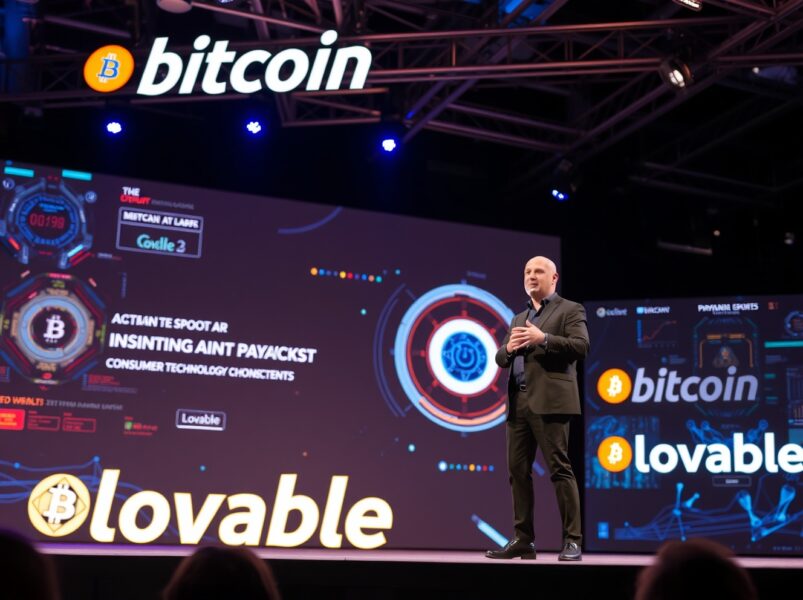
BitcoinWorld Lovable AI’s Astonishing Rise: Anton Osika Reveals Startup Secrets at Bitcoin World Disrupt 2025 Are you ready to witness a phenomenon? The world of technology is abuzz with the incredible rise of Lovable AI, a startup that’s not just breaking records but rewriting the rulebook for rapid growth. Imagine creating powerful apps and websites just by speaking to an AI – that’s the magic Lovable brings to the masses. This groundbreaking approach has propelled the company into the spotlight, making it one of the fastest-growing software firms in history. And now, the visionary behind this sensation, co-founder and CEO Anton Osika, is set to share his invaluable insights on the Disrupt Stage at the highly anticipated Bitcoin World Disrupt 2025. If you’re a founder, investor, or tech enthusiast eager to understand the future of innovation, this is an event you cannot afford to miss. Lovable AI’s Meteoric Ascent: Redefining Software Creation In an era where digital transformation is paramount, Lovable AI has emerged as a true game-changer. Its core premise is deceptively simple yet profoundly impactful: democratize software creation. By enabling anyone to build applications and websites through intuitive AI conversations, Lovable is empowering the vast majority of individuals who lack coding skills to transform their ideas into tangible digital products. This mission has resonated globally, leading to unprecedented momentum. The numbers speak for themselves: Achieved an astonishing $100 million Annual Recurring Revenue (ARR) in less than a year. Successfully raised a $200 million Series A funding round, valuing the company at $1.8 billion, led by industry giant Accel. Is currently fielding unsolicited investor offers, pushing its valuation towards an incredible $4 billion. As industry reports suggest, investors are unequivocally “loving Lovable,” and it’s clear why. This isn’t just about impressive financial metrics; it’s about a company that has tapped into a fundamental need, offering a solution that is both innovative and accessible. The rapid scaling of Lovable AI provides a compelling case study for any entrepreneur aiming for similar exponential growth. The Visionary Behind the Hype: Anton Osika’s Journey to Innovation Every groundbreaking company has a driving force, and for Lovable, that force is co-founder and CEO Anton Osika. His journey is as fascinating as his company’s success. A physicist by training, Osika previously contributed to the cutting-edge research at CERN, the European Organization for Nuclear Research. This deep technical background, combined with his entrepreneurial spirit, has been instrumental in Lovable’s rapid ascent. Before Lovable, he honed his skills as a co-founder of Depict.ai and a Founding Engineer at Sana. Based in Stockholm, Osika has masterfully steered Lovable from a nascent idea to a global phenomenon in record time. His leadership embodies a unique blend of profound technical understanding and a keen, consumer-first vision. At Bitcoin World Disrupt 2025, attendees will have the rare opportunity to hear directly from Osika about what it truly takes to build a brand that not only scales at an incredible pace in a fiercely competitive market but also adeptly manages the intense cultural conversations that inevitably accompany such swift and significant success. His insights will be crucial for anyone looking to understand the dynamics of high-growth tech leadership. Unpacking Consumer Tech Innovation at Bitcoin World Disrupt 2025 The 20th anniversary of Bitcoin World is set to be marked by a truly special event: Bitcoin World Disrupt 2025. From October 27–29, Moscone West in San Francisco will transform into the epicenter of innovation, gathering over 10,000 founders, investors, and tech leaders. It’s the ideal platform to explore the future of consumer tech innovation, and Anton Osika’s presence on the Disrupt Stage is a highlight. His session will delve into how Lovable is not just participating in but actively shaping the next wave of consumer-facing technologies. Why is this session particularly relevant for those interested in the future of consumer experiences? Osika’s discussion will go beyond the superficial, offering a deep dive into the strategies that have allowed Lovable to carve out a unique category in a market long thought to be saturated. Attendees will gain a front-row seat to understanding how to identify unmet consumer needs, leverage advanced AI to meet those needs, and build a product that captivates users globally. The event itself promises a rich tapestry of ideas and networking opportunities: For Founders: Sharpen your pitch and connect with potential investors. For Investors: Discover the next breakout startup poised for massive growth. For Innovators: Claim your spot at the forefront of technological advancements. The insights shared regarding consumer tech innovation at this event will be invaluable for anyone looking to navigate the complexities and capitalize on the opportunities within this dynamic sector. Mastering Startup Growth Strategies: A Blueprint for the Future Lovable’s journey isn’t just another startup success story; it’s a meticulously crafted blueprint for effective startup growth strategies in the modern era. Anton Osika’s experience offers a rare glimpse into the practicalities of scaling a business at breakneck speed while maintaining product integrity and managing external pressures. For entrepreneurs and aspiring tech leaders, his talk will serve as a masterclass in several critical areas: Strategy Focus Key Takeaways from Lovable’s Journey Rapid Scaling How to build infrastructure and teams that support exponential user and revenue growth without compromising quality. Product-Market Fit Identifying a significant, underserved market (the 99% who can’t code) and developing a truly innovative solution (AI-powered app creation). Investor Relations Balancing intense investor interest and pressure with a steadfast focus on product development and long-term vision. Category Creation Carving out an entirely new niche by democratizing complex technologies, rather than competing in existing crowded markets. Understanding these startup growth strategies is essential for anyone aiming to build a resilient and impactful consumer experience. Osika’s session will provide actionable insights into how to replicate elements of Lovable’s success, offering guidance on navigating challenges from product development to market penetration and investor management. Conclusion: Seize the Future of Tech The story of Lovable, under the astute leadership of Anton Osika, is a testament to the power of innovative ideas meeting flawless execution. Their remarkable journey from concept to a multi-billion-dollar valuation in record time is a compelling narrative for anyone interested in the future of technology. By democratizing software creation through Lovable AI, they are not just building a company; they are fostering a new generation of creators. His appearance at Bitcoin World Disrupt 2025 is an unmissable opportunity to gain direct insights from a leader who is truly shaping the landscape of consumer tech innovation. Don’t miss this chance to learn about cutting-edge startup growth strategies and secure your front-row seat to the future. Register now and save up to $668 before Regular Bird rates end on September 26. To learn more about the latest AI market trends, explore our article on key developments shaping AI features. This post Lovable AI’s Astonishing Rise: Anton Osika Reveals Startup Secrets at Bitcoin World Disrupt 2025 first appeared on BitcoinWorld.
Share
Coinstats2025/09/17 23:40
