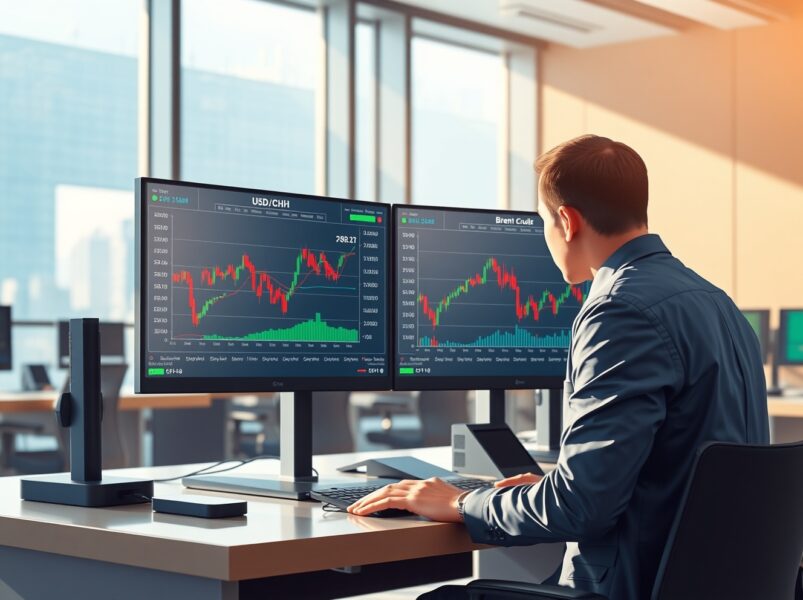
The modern cryptocurrency trader in Belgium operates in a complex, information-saturated environment that would be unrecognizable to the speculators of just a few years ago. Gone are the days when trading decisions could be based primarily on gut feeling, speculative whispers in Telegram groups, or the hope of catching a quick “moon shot.”
In 2026, the market is driven by a constant, relentless flow of real-time cryptocurrency prices across thousands of assets on platforms like trading view, complex macroeconomic signals from institutions such as the National Bank of Belgium and the European Central Bank, and a 24/7 global stream of cryptocurrency news today that can shift market sentiment and trigger significant volatility in an instant.

The successful trader in Belgium has evolved. They are no longer a gambler but a data-driven professional, a digital-age analyst who synthesizes information from diverse and often disparate sources. Their goal is to identify actionable trading patterns, manage risk with precision, and capture opportunities in a cryptocurrency market that is maturing rapidly under the watchful eye of European regulators. This approach requires not just access to raw data, but the right analytical tools and platforms to interpret it effectively.
Resources like steenluxerisai.com can be instrumental in helping traders aggregate, filter, and analyze the vast amounts of information needed to make informed and timely decisions, whether one is engaging in high-frequency day trading, strategic swing trading, or long-term portfolio management. The era of the data-driven trader has truly arrived, and nowhere is this evolution more apparent than in the increasingly sophisticated crypto landscape of Belgium.
The Foundations of a Data-Driven Approach: The Three Pillars of Information
Being a data-driven trader means basing every decision on objective, verifiable information rather than emotion or unsubstantiated hype. This systematic approach involves the continuous monitoring and analysis of a triad of core data types, each providing a crucial piece of the overall market puzzle.
Pillar 1: Market Data – The Technical Foundation
This is the most fundamental layer of data and includes real-time and historical cryptocurrency prices, trading volumes, order book depth, funding rates for perpetual swaps, and detailed price movements across different cryptocurrency marketplaces. The primary tool for analyzing this data is trading view, which has become the industry standard for providing advanced, customizable trading charts for technical analysis.
By studying chart patterns and applying technical indicators, a trader can formulate probabilistic hypotheses about future price movements. For example, analyzing the cryptocurrency bitcoin price on a 4-hour trading view chart might reveal a classic “head and shoulders” top pattern, suggesting a potential trend reversal and signaling a possible short-selling opportunity.
Conversely, identifying a “bull flag” pattern on an Ethereum chart could indicate a continuation of an uptrend, offering a chance to enter a long position. Volume analysis is equally critical; a price breakout on low volume is often a false signal, while a breakout accompanied by a surge in volume confirms genuine market interest and participation.
Pillar 2: Economic Signals – The Macro Context
The broader economy has a profound and undeniable impact on the cryptocurrency market. Digital assets do not exist in a vacuum; they are increasingly correlated with global liquidity and risk appetite. Data related to trading economics, such as inflation rates (CPI, PPI), central bank policy decisions (interest rate changes, quantitative tightening/easing), employment figures (non-farm payrolls), and geopolitical events, can significantly influence investor risk tolerance.
For a Belgian trader, domestic economic signals are particularly relevant for understanding local capital flows and investor sentiment. The National Bank of Belgium (NBB) and the Federal Planning Bureau regularly publish key indicators. For instance, the NBB’s Business Barometer provides a real-time snapshot of economic confidence. A sharp drop in this barometer, such as the one recorded in February 2026, signals growing pessimism among local businesses, which can lead to decreased investment in risk-on assets like cryptocurrencies .
The IMF’s 2026 Article IV consultation with Belgium projects slower GDP growth of 1.0% in 2026 and a gradual easing of inflation to 1.8%. This macroeconomic backdrop of modest growth and cooling inflation paints a picture of a stable but unexciting environment, which might lead investors to seek higher returns in alternative assets, potentially benefiting the crypto market .
Pillar 3: Real-Time News – The Immediate Catalyst
The crypto market is exceptionally sensitive to news, often reacting more violently than traditional financial markets. Regulatory announcements, technological breakthroughs, security breaches, institutional adoption, and even influential social media sentiment can cause rapid and dramatic price swings.
Following cryptocurrency news today from a curated list of reputable sources is crucial for understanding the “why” behind sudden market movements. A single tweet from a prominent figure, a leaked document about new EU regulations, or an announcement of a major company adding Bitcoin to its treasury can instantly invalidate a technical setup or accelerate a trend.
News of a major traditional financial institution like KBC Bank entering the crypto space is a prime example . This is not just a news item; it’s a powerful signal of mainstream adoption and can boost market confidence for weeks, as it validates the asset class for millions of potential new, conservative investors. The data-driven trader doesn’t just react to news; they analyze its potential impact, assess its credibility, and position themselves ahead of the crowd.
The Belgian Context: A Maturing Market with Unique and Powerful Signals
The Belgian market provides a unique laboratory for the data-driven trader. The local economy sends clear, well-documented signals that can directly influence investment strategies and provide an informational edge.
Domestic Economic Indicators: The Local Pulse
The National Bank of Belgium and the statistical office Statbel are goldmines of localized data. A trader monitoring the Belgian economy might note that business confidence dipped to -13.7 in February 2026 . While this is a single data point, it signals a broader sentiment that can affect how Belgian investors, both retail and institutional, approach risk.
A trader combining this local pessimism with a global bullish signal on Bitcoin might deduce that local capital is less likely to fuel a rally, but that Belgian investors holding foreign assets (like US-based crypto ETFs) could still benefit from global trends.
Furthermore, Belgium’s unique position as a hub for international institutions and its highly digital-savvy population create a distinct market dynamic. The relatively high rate of cryptocurrency ownership among Belgians under 35 (around 17%, according to some surveys ) means that local market sentiment can be a leading indicator for broader European adoption trends.
The MiCA Era and Unprecedented Regulatory Clarity
The most significant game-changer for Belgian traders in 2026 is the full implementation of the EU’s Markets in Crypto-Assets (MiCA) regulation. As of 2026, the Belgian market has entered an era of strict, pan-European regulation, providing a safer, more transparent, and more predictable environment for all participants . For the data-driven trader, this is a profoundly positive development. It means that any platform claiming to be a best cryptocurrency exchange operating in Belgium must meet rigorous standards for consumer protection, capital reserves, transparent governance, and regular proof-of-reserves audits.
This regulatory clarity reduces a major source of uncertainty counterparty risk that has plagued the market for years. Traders can now focus on market data and economic signals with greater confidence, knowing that the platforms they use are subject to oversight by authorities like the Belgian Financial Services and Markets Authority (FSMA) and the National Bank of Belgium . This shift from the “Wild West” to a regulated framework is the bedrock upon which a truly professional, data-driven trading culture can be built.
KBC’s Entry: A Landmark Institutional Data Point
A landmark event for the Belgian crypto ecosystem is KBC Bank’s plan to offer Bitcoin and Ethereum investments to its millions of retail clients through its Bolero investment platform . This move by a major, established traditional financial institution is, in itself, a powerful and actionable data point. It is not a speculative rumor; it is a confirmed, strategic business decision. For the data-driven trader, this development has several implications:
- Mainstream Validation: It signals a massive vote of confidence in digital assets as a legitimate, long-term investment class, not just a speculative fad. This can be used to inform long-term bullish strategies.
- New Capital Flows: It will likely open the door for a new wave of conservative, long-term investors who were previously hesitant to use crypto-native exchanges. This influx of new capital can provide a strong, steady bid under the market.
- Competitive Pressure: KBC’s move puts pressure on other Belgian banks like Belfius, BNP Paribas Fortis, and ING to offer similar services, potentially leading to a cascade of institutional adoption announcements. A trader can watch for these follow-on announcements as confirmation of the trend.
Essential Tools and Platforms for the Data-Driven Trader
To effectively process, analyze, and act on the torrent of information, Belgian traders rely on a suite of powerful tools and platforms. The choice of which best cryptocurrency exchange to use is a strategic decision that depends on one’s trading style.
Top Cryptocurrency Exchanges for Belgian Traders
Selecting a primary exchange is the first critical infrastructure decision. Based on current market analysis and their adaptation to the MiCA framework, several platforms stand out for Belgian traders in 2026, each catering to different needs :
Bybit: Best Overall Cryptocurrency Exchange for Active Traders
Bybit is a top choice for many active traders, thanks to its successful navigation of MiCA compliance, its extensive support for euro deposit methods, and its competitive low fees . With over 2,400 cryptocurrencies listed and a standard spot trading fee of just 0.1%, it is highly versatile and cost-effective for high-volume traders. Its revamped AI-Trade bots, which now offer localized backtesting specifically for European market hours, are a powerful feature for automating and stress-testing strategies .
- Strengths: Holds a MiCA license (from Austria’s Financial Market Authority – FMA). Supports numerous euro deposit methods (SEPA Instant, credit/debit cards, Apple Pay, Google Pay). Offers regular, independent proof-of-reserves audits demonstrating 1:1 backing of user funds .
- Considerations: The platform’s extensive features can be overwhelming for absolute beginners. Due to MiCA restrictions, futures and margin trading products are not available for European retail investors. Customer support response times can be delayed during periods of extreme market volatility.
Kraken: Institutional-Grade Security and Liquidity
For traders who prioritize security, transparency, and deep liquidity above all else, Kraken is the leading choice. It has maintained an impeccable security record since its founding in 2011 and is highly regarded for its verifiable Proof of Reserves, ensuring that user funds are never rehypothecated or used for proprietary trading . Its euro order books, particularly for BTC/EUR and ETH/EUR, are among the deepest in the world, which minimizes slippage—a critical factor for executing large-volume trades.
- Strengths: Holds a MiCA license (from the Central Bank of Ireland – CBI). Offers the highest liquidity for major euro pairs in the European market. The Kraken Pro mobile app provides a sophisticated technical environment with high-frequency APIs suitable for algorithmic trading .
- Considerations: The standard, non-pro version of the app is feature-limited. Its strict Know Your Customer (KYC) and Anti-Money Laundering (AML) procedures, while essential for security, can make the initial onboarding process feel more tedious than on other platforms.
eToro: The Hybrid Platform for Diversified Portfolios
eToro is the ideal platform for investors who want to trade and hold cryptocurrencies alongside traditional assets like stocks and ETFs within a single, unified dashboard. With over 5,000 assets available, its unique social trading ecosystem (CopyTrader) allows users to automatically replicate the strategies of experienced, top-performing investors.
- Strengths: Seamlessly integrates crypto trading with stocks, commodities, and ETFs. The CopyTrader feature is a powerful tool for learning and for passive investment strategies. It is regulated by multiple Tier-1 authorities across Europe, providing a high level of consumer protection .
- Considerations: Spreads on crypto trades are often significantly higher than on dedicated crypto-native exchanges like Bybit or Kraken. Not all cryptocurrencies held on the platform can be withdrawn to an external private wallet, limiting user sovereignty.
Uphold: Simplicity and Unmatched Transparency for Beginners
Uphold is renowned for its simplicity and its radical approach to transparency. Its “Anything-to-Anything” trading feature allows users to swap directly between any two supported assets (e.g., gold to Bitcoin) with a single click, bypassing the multi-step processes required on other platforms . It is also one of the very few exchanges that publishes its assets and liabilities on a public ledger, updated every 30 seconds, providing an unparalleled level of trust.
- Strengths: Unmatched ease of use, especially for beginners. Industry-leading transparency with its real-time public reserve ledger. Zero deposit fees for SEPA transfers .
- Considerations: The spread (the difference between the buy and sell price) is often wider than on other major exchanges. The platform lacks advanced trading tools like complex limit orders, making it unsuitable for active day traders.
Charting and Analysis Tools: The Trader’s Workbench
Beyond the exchange itself, data-driven traders rely on specialized analysis platforms. Trading view remains the undisputed industry standard for charting and technical analysis. It provides an extensive library of built-in indicators, sophisticated drawing tools, and the ability to create custom scripts using its Pine Script programming language. This is where the trader’s hypotheses are formed and tested.
It is the workspace for analyzing trading patterns on detailed trading charts for cryptocurrencies, but also for tracking traditional assets like the BEL 20 index to get a sense of overall local market health. The ability to recognize and act on patterns such as “Bullish Engulfing” candles, “Doji” stars, or complex formations like “Cup and Handle” can provide a significant trading edge .
From Data to Strategy: A Practical Guide for the Belgian Trader
Possessing data is not enough; the key is to synthesize it into a coherent and actionable strategy. Here’s a practical breakdown of how a data-driven Belgian trader might approach the market in 2026.
A Day in the Life: Synthesizing Information
Imagine a Belgian swing trader, Marie, starting her trading day. Her routine is built around data consolidation:
- Macro Check (06:00 AM): She first checks a curated feed of global and local cryptocurrency news today for any major overnight developments. She notes that business confidence in Belgium has dipped slightly, a signal that might temper domestic risk appetite .
- Technical Scan (07:00 AM): She opens a trading view to scan the charts for her watchlist. She notices the cryptocurrency bitcoin price on the 4-hour chart is approaching a key support level she had previously identified from a prior swing low. Simultaneously, the Relative Strength Index (RSI) is hovering near 30, indicating it’s entering oversold territory. This confluence of support and a momentum signal creates a classic, high-probability swing trading setup for a potential long entry.
- On-Chain Confirmation (08:00 AM): Before committing, she switches to an on-chain analytics tool. She checks for any large, unusual transactions moving Bitcoin to exchanges, which could signal an impending sell order. The data is calm, with no major “whale” movements detected.
- Liquidity Check (08:30 AM): Finally, she logs into her primary exchange, Bybit, and checks the order book depth for BTC/EUR. She confirms there is sufficient liquidity to execute her planned trade size without causing significant slippage. She sets her buy limit order, stop-loss just below the support level, and take-profit at the next resistance level, defining her 1:3 risk/reward ratio.
By synthesizing macro news, local economic sentiment, technical analysis, on-chain data, and real-time exchange metrics, Marie has made a single, data-informed decision that is robust and has a high probability of success.
Navigating the New Paradigm: From “Buy and Hold” to Active Rotation
The data reveals that the old paradigm of “buy and hold” is becoming a less effective strategy . With the explosion in the number of new tokens analysts suggest there are now 24 times more tokens per user than in 2021 liquidity moves much faster. It concentrates around compelling new narratives, surges, and then rapidly withdraws.
This new market structure demands a more active approach. Data-driven traders focus on identifying these narratives early by monitoring news, social trends, and on-chain capital flows. They look for the start of a rotation, for instance, from AI-themed tokens to Real World Asset (RWA) protocols. They enter the rotation early, capture the momentum, and take profits before the liquidity narrative shifts again. This is a far cry from passive investing and relies entirely on continuous data analysis.
Frequently Asked Questions (FAQ)
How can I, as a beginner in Belgium, start becoming a data-driven crypto trader?
Start by building your information infrastructure.
First, bookmark reputable sources: financial news sites like Reuters and Bloomberg for global macro, the National Bank of Belgium’s statistics page for local data, and established crypto news platforms like CoinDesk or The Block for industry-specific information.
Second, open a free account on trading view and spend time daily just looking at trading charts. Learn to identify basic trading patterns like support and resistance levels, trend lines, and simple candlestick formations.
Third, choose a best cryptocurrency exchange that matches your skill level. For a beginner, Uphold’s simplicity might be best; for someone ready to learn more advanced trading, Bybit’s educational resources and demo account are excellent. Start with very small amounts of capital and treat every trade as a learning experiment. Keep a trading journal where you record not just what you did, but what data influenced your decision.
What are the most important economic indicators for a Belgian crypto trader to watch on a daily or weekly basis?
On a daily basis, the most impactful indicators come from the US, as the dollar’s strength and US Federal Reserve policy drive global liquidity. Watch for US inflation data (CPI) and employment reports (Non-Farm Payrolls). For a more localized view, the weekly and monthly releases from the National Bank of Belgium are key. The “Business Cycle Barometer” is a great leading indicator of local economic sentiment .
The Belgian consumer confidence index is also valuable. On a monthly and quarterly basis, follow the reports from the Federal Planning Bureau on GDP growth projections and the Federal Public Service Finance on budget deficits and public debt levels, as these macro factors shape the long-term investment environment .
Is swing trading or day trading more suitable for a data-driven approach in the current market?
Both can be highly effective data-driven strategies, but they require different types of data and analytical focus. Day trading relies heavily on low-timeframe real-time price action, order book imbalances, tape reading, and immediate news catalysts. It demands constant attention and rapid execution. Swing trading, which involves holding positions for days or weeks, allows for a more holistic and measured analysis.
It synthesizes data from higher-timeframe technical patterns, on-chain metrics, macroeconomic trends, and sustained news narratives. For most people with full-time jobs, the data requirements and time commitment of swing trading are far more manageable and sustainable. It allows you to be data-driven without being glued to a screen 24/7.
How has the MiCA regulation changed the data landscape and made it more reliable for traders?
MiCA has fundamentally improved the quality and trustworthiness of market data. Before MiCA, the reported trading volume on many exchanges was notoriously unreliable due to practices like wash trading. Now, regulated platforms operating in the EU must adhere to strict standards of transparency and governance.
They are required to undergo regular audits and provide proof-of-reserves, which are verifiable on-chain . This means that when you look at the volume or liquidity data on a compliant platform like Kraken or Bybit, you can have far greater confidence that the data reflects genuine market activity. This reduction in “noise” allows for more accurate analysis and safer, more reliable trading decisions.
Where can I learn to interpret trading patterns on charts without losing money?
Platforms like trading view are excellent for this. They have a massive, built-in educational library and a vibrant community where traders publicly share their analyses, often in real-time. You can browse charts and see how others are interpreting the same patterns you’re looking at. Additionally, the platform offers a “Pine Script” feature that allows you to create or copy custom indicators.
Most importantly, use the free “paper trading” or demo accounts offered by many exchanges, including Bybit and Kraken. This allows you to practice identifying and trading patterns with virtual money for as long as you need, building your skills and confidence without any financial risk.
Conclusion: Thriving on Information in the Belgian Crypto Market
The modern crypto market in Belgium is not a place for the uninformed or the emotionally driven. It is a complex, sophisticated domain for those who can navigate the intricate interplay of global macroeconomic news, hyper-local economic signals, and torrents of real-time market data. The data-driven trader, armed with a curated set of digital tools and a disciplined, analytical approach, is uniquely positioned not just to survive, but to thrive in this environment.
By leveraging industry-standard analysis platforms like trading view, choosing secure and transparent best cryptocurrency exchange platforms like Bybit or Kraken, and staying perpetually attuned to the economic rhythms of their own country through official statistics from the NBB and the FPB, Belgian traders can transform overwhelming information into their greatest competitive advantage.
As the market continues its inexorable maturation under the stabilizing and clarifying framework of MiCA, the premium placed on data literacy will only intensify. The shift to a fully data-driven approach is no longer a futuristic concept; it is a present-day necessity for achieving consistent, long-term success in the dynamic and opportunity-rich world of cryptocurrency trading.
Read More From Techbullion