Crypto.com collaborates with Sirius International Holding to promote digital asset tokenization in UAE, expanding the region's blockchain leadership.Crypto.com collaborates with Sirius International Holding to promote digital asset tokenization in UAE, expanding the region's blockchain leadership.

UAE Blockchain Hub Strengthens as Crypto.com Partners with Sirius International

building uae 2

December saw another great leap forward for the UAE’s growing status as a global Digital Asset Hub with the announcement of Crypto.com’s Strategic Partnership with Sirius International Holding (SIH), the technology investment arm of International Holdings Company (IHC). Their shared aim will be building and enhancing the digital asset/tokenization ecosystems in both areas. This is an important milestone in the fast growth in blockchain technology and clear rules around it.  

Strategic Fitting in a Growing Market  

The partnership is coming at the right time, as the UAE is emerging as top in the Middle East for cryptocurrency and blockchain projects. The UAE stands out as a pivotal hub in the MENA region for asset tokenization and settlement systems, proudly holding the 6th position globally in cryptocurrency adoption, as highlighted by industry data.

Sirius International Holding, founded in 2022 and headquartered in Abu Dhabi, has positioned itself at the forefront of the UAE’s digital transformation initiatives. Sirius, the digital arm of $240 billion conglomerate IHC, builds sovereign blockchain and digital finance infrastructure and builds secure, government-backed digital assets and currencies.

Crypto.com’s choice to go with Sirius is a strategic choice for the exchange to strengthen its institutional presence in the region. The exchange has established a significant presence in the UAE in compliance with the regulations set by Dubai’s Virtual Assets Regulatory Authority and Abu Dhabi Global Market. Crypto.com, Binance, and Bybit received UAE licenses due to the country’s zero personal income tax, attractive corporate tax rates, and transparent regulatory structure.

Tokenization and Establishing the Institutional Infrastructure

The association comes at a moment in which tokenization of real-world assets has become one of the most revolutionary trends in the global financial marketplace. Analysts believe the tokenization business is valued at $30 trillion with institutional adoption growing rapidly in advanced financial hubs.

Sirius International Holding has taken sovereign blockchain and digital finance as an integral part of our investment strategy. The company channels resources into infrastructure that transforms how governments and enterprises handle digital transactions. Sirius gets access to one of the world’s largest cryptocurrency platforms, Crypto.com, with its large user base and technology infrastructure.

In the case of Crypto.Com, such partnership provides access to the network of government connections and institutional relationships that Sirius has in the region. Sirius operates in an ecosystem comprising over fifty government and industry efforts in 20 countries, ranging from real estate tokenization to blockchain banking.

Regulatory Environment and Market Momentum

This partnership announcement coincides with what industry observers are calling a blockbuster month for cryptocurrency activity in the UAE. In December 2025, Emirates held more than 50,000 international guests at 8 key crypto conferences and summits, allowing key industry executives, institutional investors and policymakers to network as never before.

The regulatory environment has been one of the key differentiators in the UAE being able to attract digital asset companies. The VARA and ADGM frameworks balance innovation and investor protection with the international Financial Action Task Force-recommended anti-money laundering criteria.

Recent market data indicates that stablecoins account for over 90% of crypto payments to professionals in the region. The UAE attracts high-net-worth individuals and institutional investors with its 72% crypto adoption rate and no capital gains tax on digital assets.

Conclusion

Sirius International Holdings and Crypto.com have partnered to accelerate the movement of the Middle East from a largely retail-driven crypto marketplace to one that is based on institutional-level infrastructure. This collaboration seeks to leverage Crypto.com’s established global presence and technological capabilities with Sirius’ connections to government and sovereign digital infrastructure development to promote widespread adoption of blockchain technology within both governments and large enterprises. Partnerships such as this show how the UAE’s legislative and regulatory framework is supporting bridging the gap between blockchain technology and conventional financial institutions. This approach is supporting the growth of an institutionally built, and vibrant, digital asset marketplace.

Market Opportunity
First Reply Logo
First Reply Price(SIRIUS)
$0.00009818
$0.00009818$0.00009818
+4.30%
USD
First Reply (SIRIUS) Live Price Chart
Disclaimer: The articles reposted on this site are sourced from public platforms and are provided for informational purposes only. They do not necessarily reflect the views of MEXC. All rights remain with the original authors. If you believe any content infringes on third-party rights, please contact service@support.mexc.com for removal. MEXC makes no guarantees regarding the accuracy, completeness, or timeliness of the content and is not responsible for any actions taken based on the information provided. The content does not constitute financial, legal, or other professional advice, nor should it be considered a recommendation or endorsement by MEXC.

You May Also Like

U.S. Coinbase Premium Turns Negative Amid Asian Buying Surge
U.S. Coinbase Premium Turns Negative Amid Asian Buying Surge

U.S. institutional demand falls as Asian markets buy Bitcoin dips, causing negative Coinbase premium.
Share
CoinLive2025/12/23 14:20
Crucial ETH Unstaking Period: Vitalik Buterin’s Unwavering Defense for Network Security

Crucial ETH Unstaking Period: Vitalik Buterin’s Unwavering Defense for Network Security

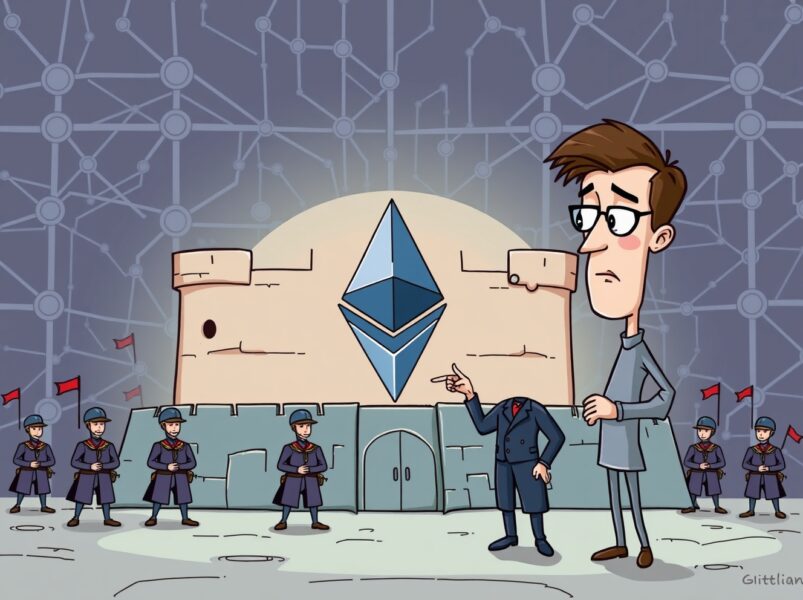
BitcoinWorld Crucial ETH Unstaking Period: Vitalik Buterin’s Unwavering Defense for Network Security Ever wondered why withdrawing your staked Ethereum (ETH) isn’t an instant process? It’s a question that often sparks debate within the crypto community. Ethereum founder Vitalik Buterin recently stepped forward to defend the network’s approximately 45-day ETH unstaking period, asserting its crucial role in safeguarding the network’s integrity. This lengthy waiting time, while sometimes seen as an inconvenience, is a deliberate design choice with profound implications for security. Why is the ETH Unstaking Period a Vital Security Measure? Vitalik Buterin’s defense comes amidst comparisons to other networks, like Solana, which boast significantly shorter unstaking times. He drew a compelling parallel to military operations, explaining that an army cannot function effectively if its soldiers can simply abandon their posts at a moment’s notice. Similarly, a blockchain network requires a stable and committed validator set to maintain its security. The current ETH unstaking period isn’t merely an arbitrary delay. It acts as a critical buffer, providing the network with sufficient time to detect and respond to potential malicious activities. If validators could instantly exit, it would open doors for sophisticated attacks, jeopardizing the entire system. Currently, Ethereum boasts over one million active validators, collectively staking approximately 35.6 million ETH, representing about 30% of the total supply. This massive commitment underpins the network’s robust security model, and the unstaking period helps preserve this stability. Network Security: Ethereum’s Paramount Concern A shorter ETH unstaking period might seem appealing for liquidity, but it introduces significant risks. Imagine a scenario where a large number of validators, potentially colluding, could quickly withdraw their stake after committing a malicious act. Without a substantial delay, the network would have limited time to penalize them or mitigate the damage. This “exit queue” mechanism is designed to prevent sudden validator exodus, which could lead to: Reduced decentralization: A rapid drop in active validators could concentrate power among fewer participants. Increased vulnerability to attacks: A smaller, less stable validator set is easier to compromise. Network instability: Frequent and unpredictable changes in validator numbers can lead to performance issues and consensus failures. Therefore, the extended period is not a bug; it’s a feature. It’s a calculated trade-off between immediate liquidity for stakers and the foundational security of the entire Ethereum ecosystem. Ethereum vs. Solana: Different Approaches to Unstaking When discussing the ETH unstaking period, many point to networks like Solana, which offers a much quicker two-day unstaking process. While this might seem like an advantage for stakers seeking rapid access to their funds, it reflects fundamental differences in network architecture and security philosophies. Solana’s design prioritizes speed and immediate liquidity, often relying on different consensus mechanisms and validator economics to manage security risks. Ethereum, on the other hand, with its proof-of-stake evolution from proof-of-work, has adopted a more cautious approach to ensure its transition and long-term stability are uncompromised. Each network makes design choices based on its unique goals and threat models. Ethereum’s substantial value and its role as a foundational layer for countless dApps necessitate an extremely robust security posture, making the current unstaking duration a deliberate and necessary component. What Does the ETH Unstaking Period Mean for Stakers? For individuals and institutions staking ETH, understanding the ETH unstaking period is crucial for managing expectations and investment strategies. It means that while staking offers attractive rewards, it also comes with a commitment to the network’s long-term health. Here are key considerations for stakers: Liquidity Planning: Stakers should view their staked ETH as a longer-term commitment, not immediately liquid capital. Risk Management: The delay inherently reduces the ability to react quickly to market volatility with staked assets. Network Contribution: By participating, stakers contribute directly to the security and decentralization of Ethereum, reinforcing its value proposition. While the current waiting period may not be “optimal” in every sense, as Buterin acknowledged, simply shortening it without addressing the underlying security implications would be a dangerous gamble for the network’s reliability. In conclusion, Vitalik Buterin’s defense of the lengthy ETH unstaking period underscores a fundamental principle: network security cannot be compromised for the sake of convenience. It is a vital mechanism that protects Ethereum’s integrity, ensuring its stability and trustworthiness as a leading blockchain platform. This deliberate design choice, while requiring patience from stakers, ultimately fortifies the entire ecosystem against potential threats, paving the way for a more secure and reliable decentralized future. Frequently Asked Questions (FAQs) Q1: What is the main reason for Ethereum’s long unstaking period? A1: The primary reason is network security. A lengthy ETH unstaking period prevents malicious actors from quickly withdrawing their stake after an attack, giving the network time to detect and penalize them, thus maintaining stability and integrity. Q2: How long is the current ETH unstaking period? A2: The current ETH unstaking period is approximately 45 days. This duration can fluctuate based on network conditions and the number of validators in the exit queue. Q3: How does Ethereum’s unstaking period compare to other blockchains? A3: Ethereum’s unstaking period is notably longer than some other networks, such as Solana, which has a two-day period. This difference reflects varying network architectures and security priorities. Q4: Does the unstaking period affect ETH stakers? A4: Yes, it means stakers need to plan their liquidity carefully, as their staked ETH is not immediately accessible. It encourages a longer-term commitment to the network, aligning staker interests with Ethereum’s stability. Q5: Could the ETH unstaking period be shortened in the future? A5: While Vitalik Buterin acknowledged the current period might not be “optimal,” any significant shortening would likely require extensive research and network upgrades to ensure security isn’t compromised. For now, the focus remains on maintaining robust network defenses. Found this article insightful? Share it with your friends and fellow crypto enthusiasts on social media to spread awareness about the critical role of the ETH unstaking period in Ethereum’s security! To learn more about the latest Ethereum trends, explore our article on key developments shaping Ethereum’s institutional adoption. This post Crucial ETH Unstaking Period: Vitalik Buterin’s Unwavering Defense for Network Security first appeared on BitcoinWorld.
Share
Coinstats2025/09/18 15:30
USD/JPY jumps to near 148.30 as Fed Powell’s caution on rate cuts boosts US Dollar

USD/JPY jumps to near 148.30 as Fed Powell’s caution on rate cuts boosts US Dollar

The post USD/JPY jumps to near 148.30 as Fed Powell’s caution on rate cuts boosts US Dollar appeared on BitcoinEthereumNews.com. USD/JPY climbs to near 148.30 as Fed’s Powell didn’t endorse aggressive dovish stance. Fed’s Powell warns of slowing job demand and upside inflation risks. Japan’s Jibun Bank Manufacturing PMI declines at a faster pace in September. The USD/JPY pair trades 0.45% higher to near 148.30 during the European trading session on Wednesday. The pair gains sharply as the US Dollar (USD) outperforms a majority of its peers, following comments from Federal Reserve (Fed) Chair Jerome Powell that the central bank needs to be cautious on further interest rate cuts. During the press time, the US Dollar Index (DXY), which tracks the Greenback’s value against six major currencies, rises almost 0.4% to near 97.60. The USD Index resumes its upside journey after a two-day corrective move. On Tuesday, Fed’s Powell stated at the Greater Providence Chamber of Commerce that the upside inflation risks and labor market concerns have posed a challenging situation for the central bank, which is prompting officials to exercise caution on further monetary policy easing. Powell also stated that the current interest rate range is “well positioned to respond to potential economic developments”. Fed Powell’s comments were similar to statements from Federal Open Market Committee (FOMC) members St. Louis Fed President Alberto Musalem, Atlanta Fed President Raphael Bostic, and Cleveland Fed President Beth Hammack who stated on Monday that the central bank needs to cautious over unwinding monetary policy restrictiveness further, citing persistent inflation risks. Going forward, investors will focus on the US Durable Goods Orders and Personal Consumption Expenditure Price Index (PCE) data for August, which will be released on Thursday and Friday, respectively. In Japan, the manufacturing business activity has declined again in September. Preliminary Jibun Bank Manufacturing PMI data came in lower at 48.4 against 49.7 in August. Economists had anticipated the Manufacturing PMI to…
Share
BitcoinEthereumNews2025/09/25 01:31
